

Nepal has more public holidays than almost any other country. The Ministry of Home Affairs usually announces about 35 national public holidays a year in the Nepal Gazette. The typical country has 13, and Myanmar, at the top of a 2026 global count, has 30. That count excludes Nepal only because its 2026 calendar has not yet been published, and notes that Nepal usually ranks among countries with the most holidays. Many Nepalis treat the ranking as a joke or a point of pride. I think it deserves a harder look. Each holiday has a cost, and the state has never measured that cost.
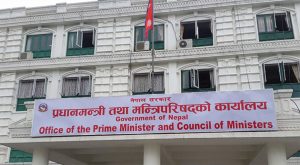
The problem is larger this year. Since 6 April, government offices are closed on both Saturday and Sunday, and office hours run from 9:00 am to 5:00 pm to maintain a 40-hour week. Weekly holidays double from 52 to 104 a year. Add festivals and local closures, and offices now stay shut for about 145 days, close to 40 per cent of the year. The longer working day makes up for the second weekend day in hours. It does not make up for the festival days on top.
The case for holidays deserves a fair hearing. Festivals hold families and communities together. In a country with many faiths and ethnic groups, a shared calendar tells people that they belong. Since Nepal became a republic, the state recognises the festivals of different communities through public holidays. Holidays also move financial resources and activities. People travel home and spend on clothes, food, goats and gifts during Dashain and Tihar. These benefits are real, and I do not dismiss them.
Yet the spending argument is weaker than it looks. Final consumption is about 90 per cent of GDP, and remittances equal about 33 per cent of GDP in 2025/26. Much festival spending therefore comes from money earned abroad. A large part of it is spent on imported goods, so the demand leaks out of the country. More importantly, a holiday mostly shifts spending from one week to the next. Households that buy more in October tend to buy less in November. The lost working day, by contrast, does not come back.
So how large is the loss? No official estimate exists, so I make one. I ask a simple question: what would Nepal gain if it had the calendar of the country with the fewest holidays? Among countries with a single national calendar, Uruguay has the fewest in 2026: five. Bosnia and Herzegovina counts four, but it lacks unified national holidays because its political system is decentralised. Switzerland has one federal holiday, but every canton adds at least eight more. Uruguay is therefore the fairest benchmark.
The gap between Nepal and Uruguay is 30 holidays. With a Saturday-and-Sunday weekend, about two in seven of these would fall on a day off anyway. That leaves about 21 extra working days, which add roughly 9 per cent to Nepal’s current 236 working days. To turn days into rupees, I use the best cross-country evidence I can find. Two economists, Lucas Rosso and Rodrigo Wagner, study public holidays in more than 200 countries. They find that one per cent more working days raises output by about 0.2 per cent. Because they measure total output, their figure already allows for the extra sales that shops, hotels and buses make on holidays.
Applied to a GDP of Rs 6,600 billion, this gives a cost of about Rs 120 billion a year, or 1.8 per cent of GDP. That sum equals close to 8 per cent of everything the federal government spent in 2025/26, which came to Rs 1,582 billion. Nepal’s large farm and informal sectors may respond less to the office calendar than the average economy does. If I halve the effect, the cost is still about Rs 60 billion a year. Even compared with the global median of 13 holidays, the cost ranges from Rs 44 billion to Rs 88 billion a year. Table 1 sets out each case.
Table 1. Estimated annual cost of Nepal’s extra public holidays against three benchmark calendars
| Benchmark calendar | Public holidays | Extra working days in Nepal | Cost, low case (Rs billion) | Cost, central case (Rs billion) | Share of GDP (%) |
| Uruguay (fewest, single national calendar) | 5 | 21.4 | 60 | 120 | 0.9 to 1.8 |
| Switzerland (federal level only) | 1 | 24.3 | 68 | 136 | 1.0 to 2.1 |
| Global median | 13 | 15.7 | 44 | 88 | 0.7 to 1.3 |
Note: Estimates compare Nepal’s roughly 35 public holidays with national non-working days in 2026. Additional working days account for weekends, while output costs are calculated using GDP of Rs 6,600 billion and an assumed working-day elasticity of 0.1–0.2. Switzerland’s count covers federal holidays only; cantons add at least eight. All figures are the author’s estimates, not official statistics.
These numbers are my estimates, not measured facts, and I want to be clear about their limits. The 0.2 figure reflects one-off calendar shifts, such as a holiday falling on a weekend. A permanent change may have more effect because firms plan around it. It may also do less, because workers take back their leisure in other ways. Many private firms already set their own calendars and close on fewer days than the government does. Still, the scale is clear. The cost runs to tens of billions of rupees every year. Denmark scrapped a single holiday from 2024 to raise labour supply, output and tax revenue, and used the money to fund defence. Nepal carries seven times Uruguay’s holiday load and has never priced even one day.
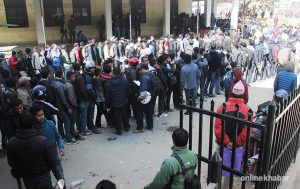
The higher costs are harder to put in rupees. Offices that serve citizens directly, such as land revenue, transport management, survey and passport offices, face long disruptions, and service seekers wait for days. Experts link the holiday load to weak project delivery and poor capital spending. Contractors make the same point. The president of the Nepal Construction Entrepreneurs’ Federation says private firms incur heavy losses because government staff stay home on holidays. A site cannot pour concrete when the engineer who must sign off is absent. The new weekend also hurts some of the most exposed users of public services. Public health experts criticise the suspension of a telemedicine service for migrant workers on weekends, public holidays and after office hours.
None of this is new, and that is the worrying part. A task force formed in 2009/10 recommended fewer holidays, a two-day weekend, and 9-to-5 office hours, but the government did not act on its advice. In March 2018, the Oli cabinet cut public holidays on the Home Ministry’s advice. Reports at the time put the cut at 22 days, while later reports by the same newspaper put it at 15. Within a year, a ministerial task force recommended adding 12 holidays back for the festivals of various communities. By 2021, the home minister promised to restore every holiday removed in 2018. A former secretary who sat on an earlier reform committee says holidays are announced on an ad hoc basis, without proper study. The pattern repeats. Governments cut holidays when they talk about growth, then restore them when groups protest.
I should add a caution against my own argument. Holidays are not the main reason Nepal grows slowly. Manufacturing ran at only about 42 per cent of installed capacity in the first half of 2025/26. That problem has little to do with the calendar. Factories with idle machines on working days gain little from one more working day. Experts also warn that cutting holidays alone will not fix service delivery without better systems, more technology and a stronger work culture. Anyone who blames holidays for everything is avoiding harder reforms.
So what should the government do? In July, it formed a four-member task force under a Home Ministry joint secretary to review the holiday system. Reports gave it 15 days or 25 days to report. Four months later, to the best of my efforts, I find no public record of its findings. The report should be published in full. Beyond that, four steps make sense.
First, Parliament should fix a ceiling on national holidays in law. A ceiling stops each cabinet from adding days for short-term political gain. Second, the state should give the festivals of particular communities as optional holidays to those who observe them. A precedent exists. In 2018, the government removed Loshar as a national holiday and granted it only to those who celebrate it. This approach respects diversity without closing every office for everyone. Third, offices that serve the public directly, such as passport and land revenue offices, should run on staff rotas through long breaks. Fourth, the Ministry of Finance should publish the cost of each new holiday before the cabinet approves it. The method in this article uses only public data, so the ministry has no reason not to.
Nepal can keep its festivals and still keep its offices open. The two goals do not conflict, provided the state plans the calendar rather than adding to it one occasion at a time. On my estimate, a calendar like Uruguay’s would add about Rs 60 billion to Rs 120 billion to the economy each year. Right now, every new holiday arrives with a ceremony and no price tag. That is the part worth changing.