


Kathmandu, November 29
Gold is becoming cheaper by the day in the international market. Yet in Nepal, where prices have fallen by nearly Rs 100,000 per tola from their record high, buyers are finding it increasingly difficult to get their hands on the precious metal.
International gold prices have dropped to their lowest level in 14 months, falling from a peak of around $5,590 per ounce on January 29 to approximately $3,550. The decline has also been reflected in Nepal, where gold that once cost a record Rs 339,300 per tola is now priced at Rs 245,200.
That is a fall of Rs 94,100 per tola in roughly 10 months.
The decline amounts to around 36 per cent in the international market and 27.7 per cent in Nepal. The relatively smaller drop in domestic prices is partly attributed to the appreciation of the US dollar and the government’s decision to double customs duty on gold from 10 to 20 per cent through the budget.
Silver has fared even worse. After reaching Rs 7,500 per tola in Nepal on January 29, its price has fallen to Rs 3,110. In the international market, silver has dropped from $121 per ounce to around $42.
But what is driving the sudden reversal in precious metal prices, and why is gold in short supply in Nepal even as it becomes cheaper?
Higher US interest rates put pressure on gold
Traders attribute the fall in gold prices to an increase in supply relative to demand in the international market. But expectations of higher interest rates in the United States have also played a significant role.
Mani Ratna Shakya, former president of the Federation of Nepal Gold and Silver Dealers’ Association, said concerns over rising inflation and the possibility of higher US interest rates had put additional pressure on gold.
“Prices had risen excessively earlier, so some decline was natural. But speculation that interest rates in the US could rise further has pushed prices down even more,” he said.
Attention is now turning to the US Federal Reserve’s December 8–9 meeting. With inflation in the United States not falling as expected, markets are increasingly anticipating another rate hike.
According to Reuters, markets have priced in a 96.8 per cent probability of a 0.25 percentage-point increase in December and a 3.2 per cent probability of a 0.50 percentage-point increase. The possibility of further increases after December has also added to the pressure on gold.
The reason is straightforward. When interest rates rise, investments that offer regular returns, such as bank deposits and US government bonds, become more attractive. Gold, on the other hand, does not pay interest or provide a regular return. Investors anticipating higher rates may therefore move their money away from gold and into interest-bearing assets.
There is another reason behind the recent sell-off. As technology stocks have come under pressure, investors facing losses in other parts of their portfolios have reportedly been selling gold to raise cash.
Nicky Shiels, metals strategist at MKS PAMP told Reuters that gold can serve as a source of liquidity in the short term. When investors need cash, they can sell their gold holdings, adding to the downward pressure on prices.
Cheaper gold, but buyers in Nepal cannot find it

While international prices have been falling, Nepal’s gold market is facing an unusual problem. The metal is cheaper, but there is very little of it available for customers.
Traders say commercial banks have stopped supplying gold, leaving jewellery shops struggling to meet demand. The shortage has become particularly frustrating with the wedding season underway and more customers looking to buy as prices fall.
Shakya said traders were sometimes left with no option but to close their shops because they could not obtain gold.
“On the one hand, the wedding season has started, and on the other, more customers are coming in because prices have fallen. But we are unable to serve them,” he said.
The Nepal Bankers’ Association says stocks have almost run out. An association official said only around 5.5 kilograms of gold remained, while a shipment of 100 kilograms was expected to arrive next Monday. The association believes the incoming supply will be enough to meet traders’ demand, although dealers are not so sure.
The shortage is not simply a matter of banks failing to bring in fresh supplies. Some traders are also reluctant to sell the gold they already hold because they bought it at much higher prices.
Shakya said a trader who purchased gold at Rs 280,000 per tola would incur a loss of around Rs 35,000 by selling it at the current market rate.
“When prices are rising, traders sometimes sell gold to one another at a small profit when someone needs it. But when prices are falling, even those who have stocks are reluctant to sell,” he said.
For consumers, this creates a frustrating situation: the market price has dropped considerably, but finding gold to buy remains a challenge.
How much further could gold prices fall?
With gold losing ground, investors and traders are now looking for signs of where the decline might stop.
Some analysts believe prices could fall further before finding a stable footing. According to a report published in Singapore’s The Straits Times, Justin Lin, a strategist at Global X ETFs, said gold was currently in a weak position.
He identified the $3,300–$3,400 per ounce range as a possible technical support level. If prices fall to that range, gold could lose another 7 per cent, equivalent to roughly Rs 17,000 per tola in Nepal. This is a technical estimate, however, not a guaranteed price target.
The World Bank also expects gold prices to remain under some pressure in the coming years. Its latest projections put the average price at $4,250 per ounce in 2027 and $4,000 in 2028.
But the outlook is far from unanimous. UBS has maintained its forecast that gold could reach $4,500 per ounce by the end of 2026 and $5,000 by the end of 2027. Joni Teves, the bank’s precious metals strategist, has said that the long-term outlook remains positive despite the current weakness.
The difference in these forecasts reflects the competing forces shaping the gold market. Higher interest rates and a stronger dollar could continue to weigh on prices in the short term. Over a longer period, however, central bank purchases, geopolitical tensions and demand for portfolio diversification could provide support.
Central banks continue to add gold to their reserves
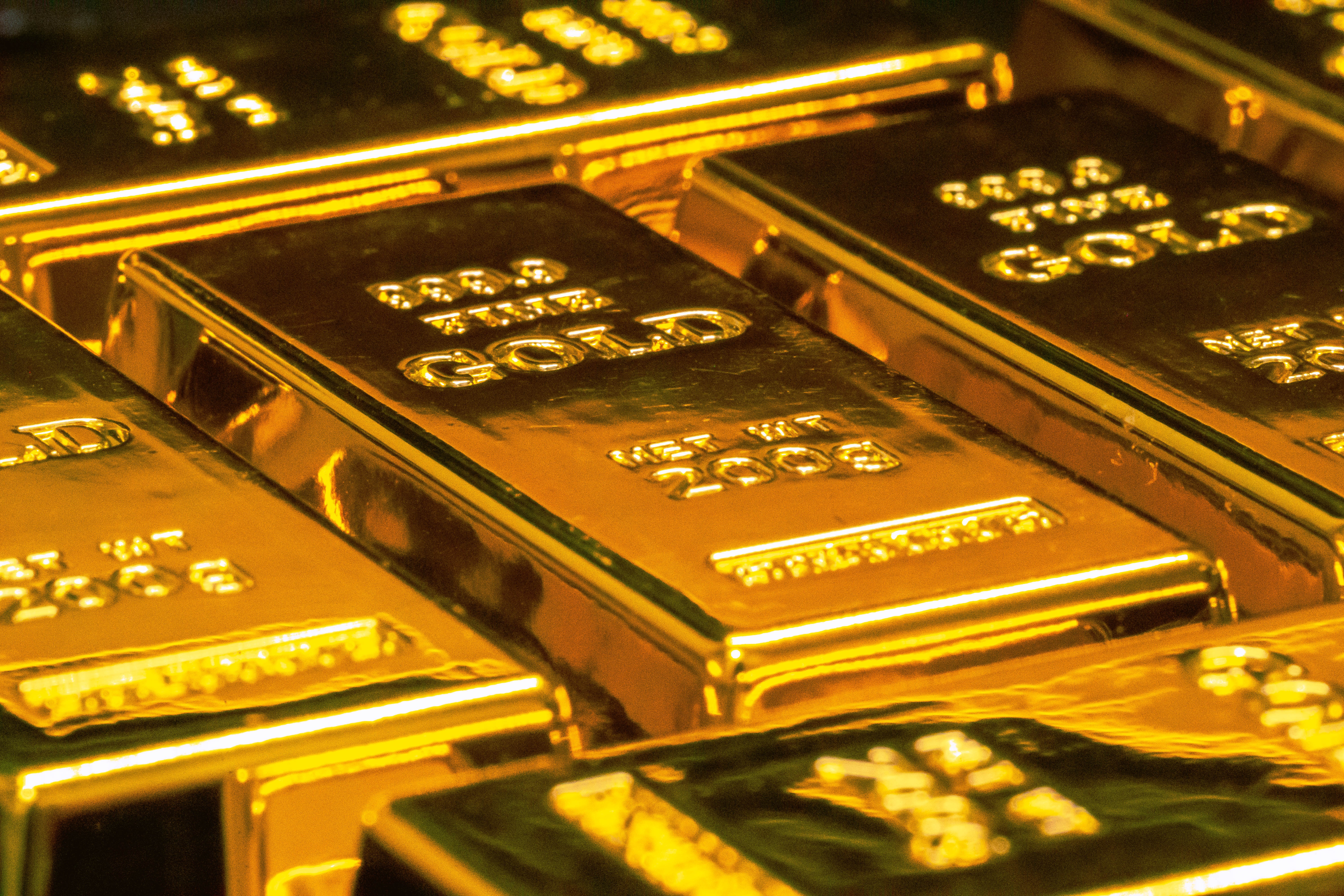
One of the more striking features of the current downturn is that central banks are continuing to buy gold even as other investors retreat.
Central banks hold gold as part of their foreign exchange reserves, using it to diversify their assets, reduce dependence on the US dollar and protect against geopolitical and financial risks. Their decisions are generally guided by long-term reserve management rather than short-term price movements.
According to the World Gold Council’s third-quarter report, published on November 3, central banks and other official institutions bought 321 tonnes of gold in the third quarter of 2026. That was 42 per cent more than in the same period a year earlier.
Their net purchases reached 675 tonnes between January and September, a 6 per cent increase compared with the corresponding period in 2025.
Poland and China were among the leading buyers. In September alone, central banks purchased a net 61 tonnes, the largest monthly total recorded in 2026. Uzbekistan, Kazakhstan, Jordan, the Czech Republic and Bolivia also increased their gold reserves.
Reuters has reported that Poland has been the largest central bank buyer of gold between 2024 and 2026.
The continued buying suggests that central banks still see gold as an important long-term reserve asset, even as its market price fluctuates. Their purchases also provide a source of demand at a time when some private investors are selling.
Why silver has fallen even more sharply
Gold’s decline has been significant, but silver has taken an even harder hit. The difference lies partly in how the two metals are used.
Gold is primarily held as an investment and reserve asset, while silver has an additional role in industrial production. It is used in electronics, solar panels and other manufacturing processes, making its price more sensitive to changes in industrial demand.
Silver is currently trading at around $42 per ounce, down from a peak of $121.60 in January 2026. That represents a fall of approximately 65 per cent.
One pressure point is the solar energy industry. Silver is used in photovoltaic cells, but as its price has surged, manufacturers have been looking for ways to reduce consumption. Some are exploring technologies that require less silver, while others are considering alternatives such as copper.
The shift could have a significant impact on demand. Research by Metals Focus and the Silver Institute, cited by Reuters, estimates that global silver demand will fall by 5 per cent in 2026 from the previous year to around 1.08 billion ounces.
Industrial demand is expected to decline by 3 per cent, while demand for silver jewellery could fall by 22 per cent and silverware by 17 per cent.
For now, both precious metals are facing pressure, although the reasons and scale of their declines differ. Gold is contending with interest rate expectations and investor selling, while silver is also dealing with changing industrial demand. And in Nepal, the sharp fall in prices has brought an unexpected problem of its own: a market where customers are ready to buy, but traders have little gold to sell.