

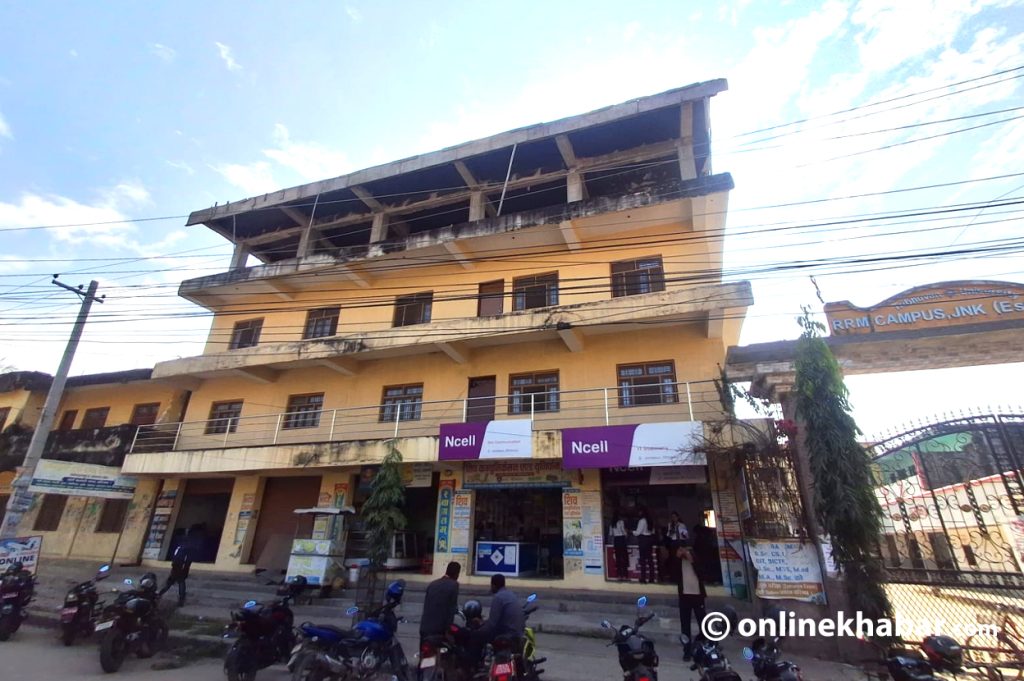
Kathmandu, November 26
The receipts were proof that they had paid. Yet when students at Ram Sagar Ram Swaroop (RRM) Multiple Campus in Janakpurdham, Dhanusha, went to fill out their examination forms in January and February 2025, some were told they still owed semester fees.
They had already paid at the campus accounts section. They had the receipts to prove it. But the money, it turned out, was missing from the campus records.
What began with complaints from 36 students would eventually expose an alleged fee embezzlement scheme involving more than Rs 200 million over five years at one of Tribhuvan University’s (TU) largest campuses, raising questions about the handling of student fees, the destruction of financial records and the failure of successive administrators and auditors to detect the irregularities.
The investigation has pointed to accounting assistant Sanjay Das as the principal suspect. But the discrepancies uncovered, the duration of the alleged fraud and the destruction of records have also cast a shadow over the campus administration, TU’s internal auditors and the Office of the Auditor General.
The alleged scam at a campus with around 20,000 students appears to have unfolded through a series of manipulated receipts, unrecorded cash collections and deposits that never made it into the bank.
And when investigators began piecing together what had happened, some of the records they needed had already gone up in flames.
The fire that wiped out much of the paper trail
Students had begun noticing discrepancies in late 2024, when fees they had paid were not reflected in the campus’s bank deposits. Despite the discrepancies, they were allowed to fill out examination forms after presenting their receipts, and their studies continued without disruption.
Following the complaints, TU’s central office in Kirtipur sent an investigation team to RRM Campus. The team collected students’ receipts, examined them and returned to Kathmandu within 24 hours, submitting a report.
TU officials later described the first investigation as superficial. Dissatisfied with its findings, the university decided to send another team to Janakpurdham for a more thorough investigation.
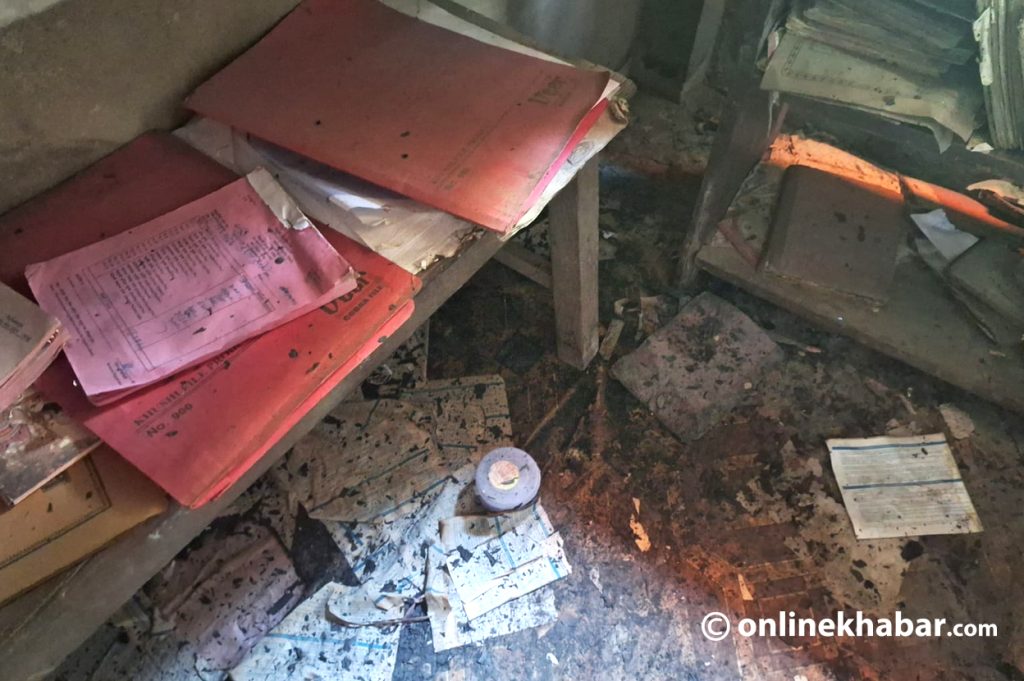
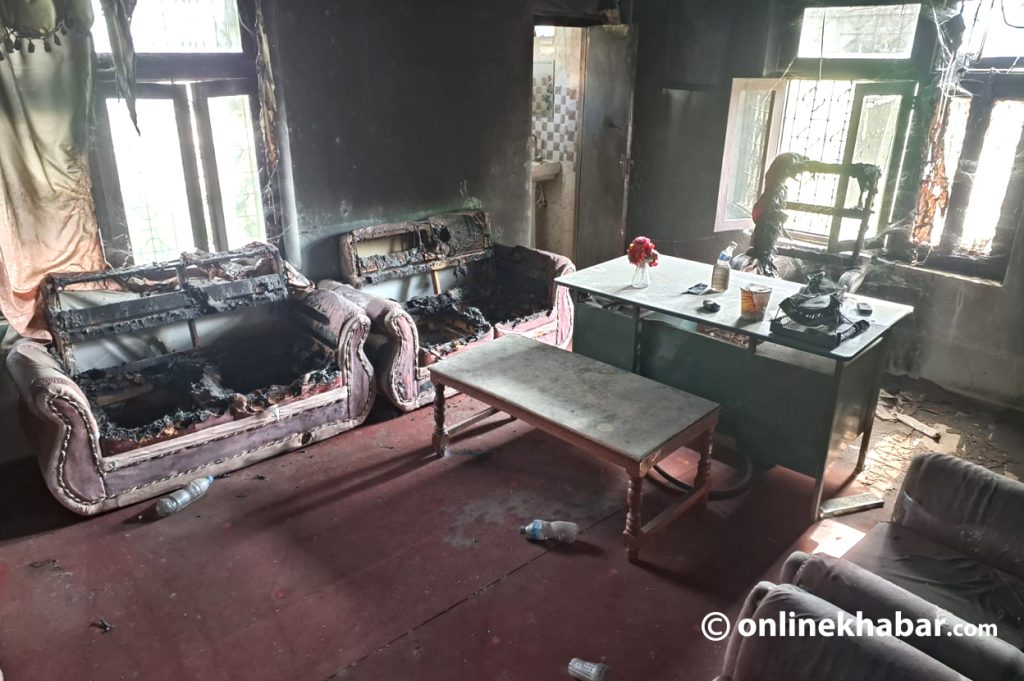
But before the second team could leave, the Gen Z protests of September 8 and 9, 2025, broke out. The accounts section and the campus chief’s office at RRM Campus were set on fire. Most of the receipts collected by the first investigation team were destroyed.
No other office at the campus was set ablaze. Teachers, staff and students suspect the fires were deliberately set to destroy evidence linked to the alleged embezzlement.
“The first investigation team had collected all the receipts in one place. Before the second team could arrive, the accounts section and the campus chief’s office were set on fire under the pretext of the protests,” a teacher said. “It was done at the direction of Sanjay Das, and some students were also used to carry out the arson.”
The receipts that survived the fire, however, offered investigators a glimpse into the scale of the alleged fraud. Their examination uncovered evidence of Rs 62.4 million allegedly embezzled by Das.
Even after the investigation began, attempts to remove or destroy records reportedly continued.
Das was transferred to another section of the campus after the irregularities came to light. In October 2025, a group led by Das reportedly entered the accounts section in an attempt to steal files. A campus employee said the group was removed from the room after being spotted on CCTV footage.
The former campus chief and accounts chief have denied knowing about the alleged embezzlement. Questions have also been raised about TU’s internal audit teams and the Office of the Auditor General, which audited the campus during the period in which the irregularities allegedly occurred.
The campus administration eventually filed a criminal complaint against Das at the District Police Office, Dhanusha. According to police records, the complaint was filed on November 13, 2025, under a criminal mischief charge. Das was arrested and released on Rs 30,000 bail on November 26, 2025.
He later attempted to return to the campus, but the administration stopped him. The campus had sought guidance from TU on whether he could resume attendance while the case was pending, but no response had been received. Das has not returned to the campus since.
Five years of receipts, and multiple ways the money allegedly disappeared
Documents obtained by Onlinekhabar indicate that more than Rs 200 million was embezzled between July 2020 and January 2026. Most of the receipts examined during the investigation were issued by accounting assistant Sanjay Das.
Investigators found that the alleged embezzlement was carried out through several methods, many of them involving discrepancies between the receipts given to students and the copies retained by the campus.
In one method, different amounts were recorded on the receipts handed to students and the office copies (OCs). This allegedly accounted for Rs 41.4 million.
Another Rs 12.7 million was collected and recorded on receipts but never deposited in the bank. Rs 1.07 million was allegedly misappropriated under the pretext of fee reconciliation, while Rs 499,000 was collected without recording receipt numbers.
Investigators also found that receipts bearing the same number had been issued to different individuals, allegedly allowing Das to collect Rs 2.867 million. A further Rs 3.85 million was collected through receipts for which the campus had no office copies, with the money not deposited.
Together, these discrepancies account for Rs 62.4 million in alleged embezzlement identified from the records that investigators were able to examine.
But the investigation did not end there.
Investigators found that Das had also collected fees using 22 additional receipt pads containing 2,200 receipts. The amount collected through these receipts remains unknown because the pads were burnt during the Gen Z protests.
Based on average fee collections, TU officials estimate that another Rs 130 million to Rs 140 million may have been embezzled through the missing receipts.
“Each pad contains 100 receipts. There were 22 pads, meaning 2,200 receipts. Even a conservative estimate suggests embezzlement of Rs 130 million to Rs 140 million through these receipts,” a TU official said. “If the amounts are recovered along with penalties from those responsible, the total would exceed Rs 200 million.”
Students enrolled in programmes such as BBA, BIT, CSIT, BA and BSc Microbiology pay fees across eight semesters. Investigators found that Das collected an average of Rs 56,000 to Rs 60,000 per receipt.
The investigation covers only five years. Whether similar irregularities occurred before that period remains unknown.
“Only the past five years have been investigated. How much was misappropriated before that?” a campus professor said. “Sanjay Das has been working at RRM Campus for 10 years.”
Das joined the campus accounts section as a permanent employee in 2016. Attempts to contact him for comment were unsuccessful.
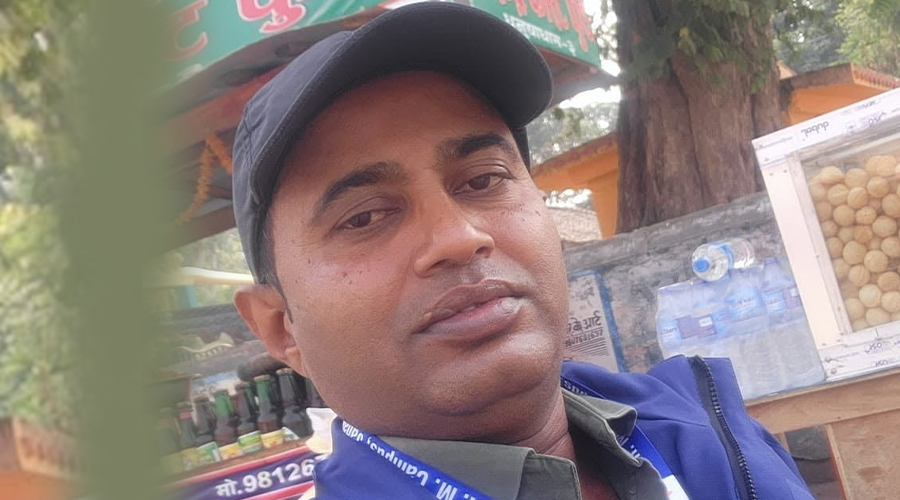
Campus officials say the scale of the alleged embezzlement raises questions about whether Das could have acted alone.
“It would be difficult for Sanjay Das to do this alone. This is the largest fee-related embezzlement at TU,” an official said. “The silence of the accounts chief and campus chief despite such a massive scandal raises suspicions.”
During the five-year period under investigation, Pradeep Prasad served as campus chief for around four and a half years, while Devendra Shah was the accounts chief. Both have denied knowing about the irregularities.
“The counter staff worked under the accounts chief. There were no transactions with the campus chief. The accounts chief was responsible for checking whether the receipts issued had been deposited in the bank,” former campus chief Pradeep Prasad said. “Nobody informed me about Sanjay Das’s embezzlement during that period.”
Prasad also questioned why the university’s internal audit teams and the Office of the Auditor General had failed to detect the discrepancies.
“Teams from TU and the Office of the Auditor General came every year to audit the campus. They would spend a week or 10 days checking how much money had been collected, how many receipts had been issued and how much revenue had been recorded before submitting their reports,” he said. “Why was nothing mentioned in those reports?”
Former accounts chief Devendra Shah also denied responsibility, saying he was only acting in the position and had been working with limited staff.
“There were supposed to be eight employees, but I was the only one there. Someone else was issuing the receipts. I was only the acting chief, and Sanjay Das had been working there for a long time,” he said.
The receipts told two different stories
The alleged fraud was not simply a case of money collected and never deposited. Investigators found discrepancies in how payments were recorded, with some receipts showing one amount to students and another in the campus records.
Das collected fees from students enrolled in internal programmes, including BA, BBA, BIT, CSIT and BSc. According to an accounts staff member, he was stationed at counters that handled large amounts of money.
Receipts were supposed to record students’ full names, roll numbers, faculties and the purpose of their payments. But many of the receipts issued by Das contained incomplete details. Some amounts were written illegibly or appeared to contain mathematical errors, while in some cases students’ names could not be deciphered.
Fees collected through receipts were supposed to be entered into the daily revenue ledger. Investigators allege that Das recorded only a portion of the amounts collected.
For most student payments, the actual amount was recorded on the white copy of the receipt handed to the student, while the office copy carried a significantly lower amount.
The difference could be substantial.
For instance, the fee for the second semester of BBA was Rs 45,500. Students received receipts showing the full amount, but some office copies were found to record payments of as little as Rs 450 or Rs 4,500.
The campus also has a bank counter on its premises, established on October 21, 2022. Yet Das allegedly continued collecting fees in cash from students.
“Students were made to pay in cash with the intention of misappropriating the money,” a campus employee said. “It was later discovered that the fees had never been deposited in the bank.”
Investigators also found receipts bearing identical numbers that had been used to collect money from different students.
In one instance, receipt number 122347 for fiscal year 2025/26 was used to collect Rs 45,500 from a BBA student. The same receipt number was also found to have been used to collect fees from a student enrolled in BSc CSIT.
One of the payments was recorded as campus revenue, while the other was allegedly pocketed by Das.
The discrepancies have raised questions not only about the handling of receipts but also about the campus’s financial oversight and the auditing systems that were supposed to detect irregularities.
“The report has been submitted. We are studying it. Those responsible will be punished in accordance with TU regulations and prevailing laws,” TU Vice-Chancellor Bhola Thapa said.
The numbers were falling. Nobody raised the alarm.
The alleged embezzlement also appears to have left a trail in the campus’s annual revenue deposits. Over the five fiscal years examined, the amounts deposited into the campus account fell well short of what it was expected to collect from students.
Under TU regulations, fees payable by students enrolled in programmes from the first to the eighth semester are determined in advance. Based on enrolment, the amount the campus should collect and deposit can be calculated.
Yet the figures show substantial discrepancies year after year.
In fiscal year 2020/21, the campus was supposed to deposit Rs 27.9 million collected from students enrolled in BBA, BIT, CSIT, BA, BSc and BSc Microbiology programmes. Only Rs 2.524 million was deposited, leaving a discrepancy of Rs 25.4 million.
In fiscal year 2021/22, Rs 41.5 million was supposed to be deposited, but only Rs 6.549 million reached the bank, leaving a gap of Rs 35 million.
In fiscal year 2022/23, the expected deposit was Rs 41.2 million. The campus deposited only Rs 13.1 million, leaving a discrepancy of Rs 28.1 million.
The pattern continued in fiscal year 2023/24, when Rs 35.9 million was supposed to be deposited, but only Rs 14.7 million was recorded, leaving Rs 21.1 million unaccounted for.
In fiscal year 2024/25, the campus was supposed to deposit Rs 25.6 million. But no deposit was recorded.
Across the five fiscal years, the difference between expected deposits and amounts recorded in the bank totalled Rs 135.3 million.
Despite the recurring shortfalls, former campus chief Pradeep Prasad says financial oversight was the responsibility of the accounts chief.
“The accounts chief is responsible for checking the financial records. That was not my responsibility,” he said when asked why the discrepancies had not been investigated.
The second investigation team sent by TU has also submitted its report. According to a university official, the report identifies Das as the principal person responsible for the alleged embezzlement.
“The report recommends immediate recovery of Rs 62.4 million and notes that receipts accounting for another Rs 130 million to Rs 140 million are missing. It also recommends action against those responsible,” the official said.
An investigation completed, but accountability remains pending
The investigation has identified discrepancies, traced alleged irregularities to receipts and bank deposits, and pointed to an employee as the principal suspect. But the campus is still waiting for TU’s central administration to decide what happens next.
RRM Campus chief Professor Dr Basant Kumar Karna said the campus had yet to receive a decision from the university’s central administration.
“The central office conducted the investigation based on students’ complaints. We will know what happens next once the report is received and the necessary decisions are made,” he said.
Karn was appointed campus chief on January 15, 2025.
No disciplinary proceedings against Das have been initiated so far, despite TU’s staff regulations allowing the university to dismiss employees involved in corruption or financial irregularities. Nor has a broader investigation into other possible individuals involved in the alleged embezzlement been reported.
TU Vice-Chancellor Professor Dr Bhola Thapa said the report was submitted after he assumed office and that the university would take action in accordance with the law.
“Since taking responsibility at the university, I have been gradually becoming aware of the situation. The report was submitted recently, and we are studying it. Those responsible will face action under TU regulations and prevailing laws,” Thapa said.
“Our main objective is to ensure good governance at the university. Wherever irregularities have occurred, there will be investigations and action. We will recover the money,” he said.
For the students who had paid their fees and kept their receipts, the investigation has exposed how a payment could be acknowledged on paper yet disappear from the institution’s accounts. For the university, the remaining task is to establish who was responsible, recover the money and explain how the discrepancies went undetected for so long.