
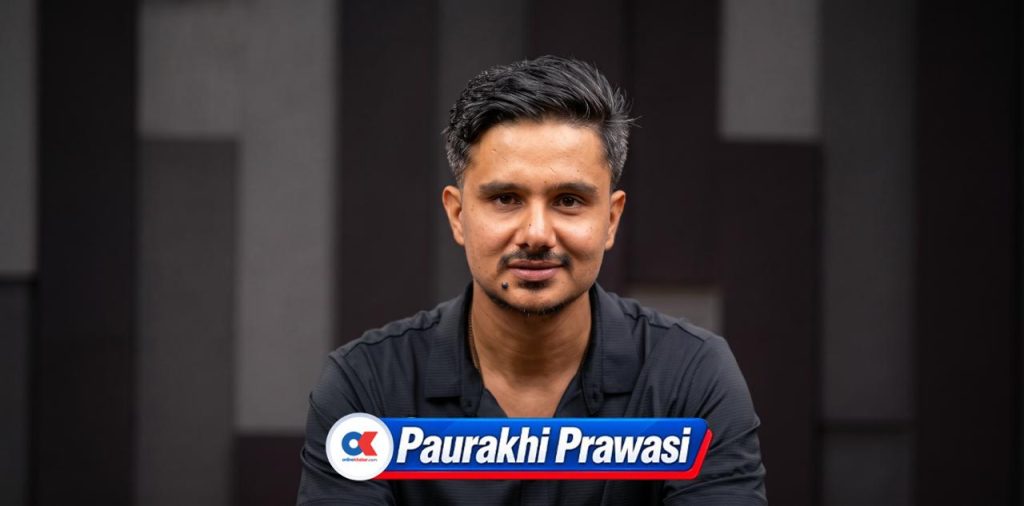
When Sunrise Gyawali landed in Australia on May 20, 2018, he was 18 years old. He had little money, no established support system and a debt of around Rs 7 million hanging over his head.
His father had died just three months earlier after battling a brain tumour. The family’s savings had gone towards treatment, and the process of sending Sunrise to Australia had added another financial burden.
He had travelled abroad to study, but education alone was not going to pay the bills. He needed a job, and he needed one immediately.
Two days after arriving, he was already washing dishes at a catering business. Sitting on a milk crate in the mud and grass behind a house, he washed utensils used to prepare meals for 400 to 500 people. He earned $10 an hour.
Eight years later, that same young man is the founder and director of Sunrise Saves Energy, an Australian energy company with an estimated net worth of $2.2 million (approximately Rs 300 million). The company employs around 82 people and works in Australia’s energy-efficiency sector.
At 26, Gyawali has travelled a considerable distance from the circumstances in which he arrived. But his story is not simply about making money in a foreign country. It is about learning to recognise opportunities in unfamiliar places, accepting short-term sacrifices for long-term gains and building something of his own when the odds were hardly in his favour.
And, perhaps most importantly, it is about what he wants to do next.
The boy who wanted to become a doctor
Sunrise Gyawali was born in 2000 in Bhatechaur, Nerva, in Gulmi. His father, Girdhariprasad Gyawali, was studying for his postgraduate degree in Kathmandu at the time. In 2008, after securing a permanent secondary-level teaching position, his father moved the family to Bahrabise in Sindhupalchok.
Their life there was modest. The family lived in a rented two-room house. The kitchen doubled as a bedroom, with a single bed shared by Sunrise and his elder brother. Their parents slept in the other room, one wall of which was lined with books.
His father’s monthly salary was Rs 32,500. Both sons studied at Kathmandu Medical College and stayed in hostels in Kathmandu. Their combined college and hostel expenses amounted to Rs 32,000 a month.
Almost the entire salary went towards their education.
“My hostel and college fees were Rs 16,000, and my brother’s were another Rs 16,000. My parents survived on the money my father earned through tutoring,” Gyawali recalls. “But my father never let our education suffer.”
Education was a priority in the family, and Gyawali took that seriously. He attended government schools in Gulmi and Bahrabise until grade four before securing a scholarship at Glory Academy in Balkhu, Kathmandu, after seeing an advertisement in a newspaper.
He studied there for three years, from grades five to seven, without paying tuition fees. He also learned music during that period. From grade eight onwards, he returned to Shree Sharda Higher Secondary School in Bahrabise, where his father taught.
He was consistently among the top students and had ambitions of becoming a doctor. His plan was to get into a medical college in Patan.
Then 2018 arrived, and with it, a tragedy that would change the course of his life.
A loss, a debt and a difficult departure
In early 2018, Sunrise Gyawali had completed his IELTS examination in Butwal and was preparing to obtain the necessary clearance to study abroad.
Instead, he received news that his father had been diagnosed with a brain tumour.
His father underwent a complicated operation at Annapurna Neuro Hospital in Kathmandu under senior neurosurgeon Basant Pant. The family spent five months dealing with treatment and hospitalisation, accumulating around Rs 5 million in debt.
On February 4, 2018, his father died at the age of 47.
Gyawali initially decided that he would not leave Nepal. Having lost his father, he wanted to stay with his mother. But she had other plans for him.
“She told me that a river does not stop flowing. She said I would regret my decision ten years later if I stayed just because of her. She told me not to think only about her and insisted that I go,” he says.
So he did.
On April 24, the day he turned 18, he applied for an Australian student visa. It arrived on May 17. Three days later, he was on a flight to Australia.
He was carrying around Rs 7 million in debt, including the money spent on his father’s treatment and the expenses of arranging his education abroad.
Australia was supposed to be the beginning of a new chapter. But the first few years would be anything but easy.
Learning to survive before learning to succeed
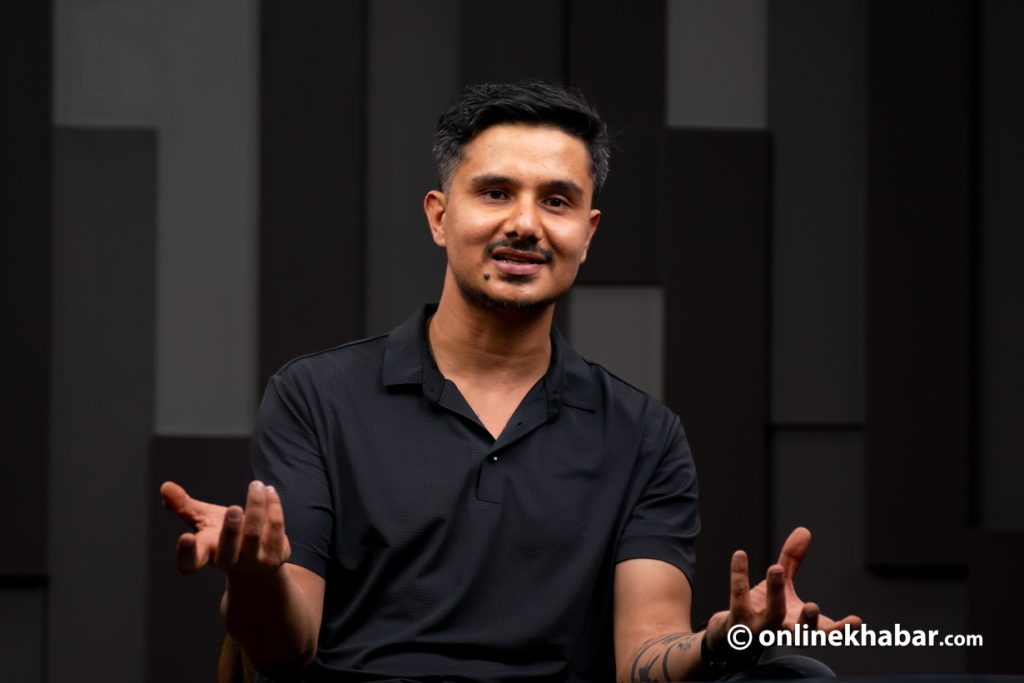
Sunrise Gyawali’s first job in Australia was in a Bangladeshi catering business. He was paid $10 an hour, significantly less than the $25 his friends were earning.
His workplace was hardly glamorous. He washed cooking utensils for hundreds of people while sitting outside on a milk crate, surrounded by mud and grass.
He subsequently worked at a car wash, earning $15 an hour, and at KFC. Eventually, he found work driving trucks at night.
The truck-driving job paid around $1,200 a week, but it demanded an unusual routine. To balance work and university, he divided his eight hours of sleep into two four-hour blocks. He slept from 6am to 10am after his shift and again from 6pm to 10pm before returning to work.
For many international students, balancing education and employment is a struggle. For Gyawali, it was also a matter of financial survival.
He did not have the luxury of calling home for money when work became difficult.
In 2019, he began experimenting with another source of income. Using his employer’s truck during the day, he started a house-removal service, paying for the fuel himself. He charged customers $70 an hour, while competitors were charging around $110.
The business grew quickly. By the end of 2019, he had six workers.
When the Covid-19 pandemic disrupted the lives of international students, he used his removal business to help more than 70 Nepali students move houses free of charge.
The experience was an early indication that he was not content simply to work for someone else. He wanted to understand how businesses operated, how services were delivered and how opportunities could be turned into something sustainable.
His next move, however, would require him to give up a substantial part of his income.
Why he gave up $1,200 for $500
Gyawali was studying for a bachelor’s degree in Information Technology, but he did not see himself building a career in the field.
As graduation approached in late 2019, he began researching other industries. He eventually became interested in Australia’s energy sector, particularly its growing market for solar systems and energy-efficient household installations.
He decided to enter the industry, even if it meant starting from the bottom.
He left his truck-driving job, which earned him $1,200 a week, and joined All Star Energy for $500 a week.
His initial role was essentially warehouse work. He loaded air-conditioning units, solar equipment and hot-water systems into technicians’ vehicles and handled waste disposal.
The pay cut was considerable, but Gyawali viewed it differently.
“I did not go there to earn money. I went there to learn. If I had gone there just for money, I would never have left a job paying me $1,200 a week for one paying $500,” he says.
He began assisting an Indian installation manager without asking for additional payment. In return, he wanted to learn how installations worked, how teams were managed and how the business operated.
When the manager resigned, Gyawali approached the company owner and offered to take over the role.
He asked for two weeks to prove himself, without demanding any additional salary.
The trial worked. He moved from the warehouse to the office as an installation manager, earning an annual salary of $60,000.
When the operations manager later left, he saw another opportunity. He took on those responsibilities too and eventually became operations manager, earning $90,000 a year.
By then, he was no longer just learning how the energy industry worked. He was helping run a substantial operation.
During the Covid-19 period, while still completing his bachelor’s degree, he was managing 96 employees.
The experience would become the foundation of his own business.
Turning experience into an energy business
Gyawali registered Sunrise Saves Energy on May 17, 2022. The date held particular significance for him. It was exactly four years after his Australian visa had been granted.
He completed his bachelor’s degree in July that year and began full-scale business operations in August.
The following year, another important milestone arrived on May 17. He received confirmation that his company had obtained accreditation from the Australian government as an accredited certificate provider.
The accreditation allowed Sunrise Saves Energy to participate in Australia’s energy-efficiency certificate market.
The business model is built around a government-backed framework that encourages energy efficiency and helps energy companies meet their emissions-related obligations.
Sunrise Saves Energy installs solar systems, batteries, air-conditioning units and hot-water systems in residential properties in accordance with government requirements.
The energy savings generated through these installations can be converted into energy certificates. Electricity and gas companies purchase these certificates from accredited providers and use them to meet their regulatory obligations.
This creates a commercial arrangement in which households receive subsidised energy-efficient upgrades, while the certificate provider earns revenue from the sale of certificates.
It is a business that requires technical knowledge, regulatory compliance, installation capacity and an understanding of the energy market.
Sunrise Gyawali now oversees the company as its director. Its workforce fluctuates between 70 and 90 employees, with around 82 currently working for the business.
For someone who began his Australian journey washing dishes for $10 an hour, the transformation is striking.
Yet Gyawali does not attribute his progress to one breakthrough or a single stroke of luck.
He points to discipline, time management and an almost obsessive willingness to learn.
“In eight years in Australia, I have not taken a single sick day. I always felt that I would rather die working than say I did not want to learn something,” he says.
He describes his working philosophy as giving everything to the job for five days and enjoying the remaining two days of the week.
His life outside work is considerably different from the milk-crate days. He enjoys playing drums, travelling internationally and driving luxury vehicles. He owns four cars, including a Mustang and a Raptor, and travels to seven or eight countries a year, often in business class.
He is also active in the Nepali community in Australia and has contested an election for NRNA Australia.
Building something in Nepal, too
Australia may be where Gyawali built his primary business, but Nepal has remained part of his plans.
In 2022, he established GPG Services Pvt Ltd in Ravibhawan, Kathmandu. The company currently employs 22 Nepali youths.
It previously handled outbound call-centre operations for Australian clients. However, following changes to Australian government regulations in 2024, that particular operation has been suspended.
He is also interested in bringing Australia’s energy-efficiency certificate model to Nepal.
During the 2024 Nepal Investment Summit, Gyawali travelled to Kathmandu at the special request of Nepal’s then ambassador to Australia, Kailash Raj Pokhrel.
He held meetings with then Prime Minister Pushpa Kamal Dahal, Energy Minister Shakti Basnet and Energy Secretary Sushil Tiwari, presenting a proposal to explore the possibility of introducing a similar green-energy model in Nepal.
For Gyawali, the opportunity is significant. He believes Nepal could benefit from mechanisms that encourage households to adopt cleaner and more efficient energy technologies while creating a new market for energy-related businesses.
But he also sees a more fundamental problem in Nepal’s relationship with its skilled workforce.
The other side of the Australian dream
Having experienced the struggles of an international student himself, Sunrise Gyawali is concerned about the financial realities facing many Nepalis who move to Australia.
He believes many become trapped in what he describes as an Australian loop, a cycle of working, paying expenses and struggling to build long-term financial security.
A worker earning around $1,000 a week may bring in $4,000 a month, but rent alone can consume $2,500 in Melbourne and $3,000 to $4,000 in Sydney, according to his estimates.
Everyday expenses add up. Fuel can cost $3 to $4 a litre, a small soft drink around $5 and a coffee $7 to $8.
The pressure does not necessarily end after securing permanent residency. Many people then take out large mortgages to purchase houses worth around $1 million, with monthly repayments potentially reaching $8,000 to $10,000.
Childcare is another major expense, leading some families to bring their parents from Nepal to help look after their children.
“From Nepal, Australia looks like a dream. But once people arrive, many find themselves caught in a cycle they do not even realise they are in,” he says.
He believes the problem is not necessarily Australia itself, but the gap between expectations and economic realities.
His own experience has made him particularly conscious of the importance of having a clear plan before moving abroad. Earning money, he argues, is not the same as building a future.
At the same time, he believes Nepal must take responsibility for the conditions that push skilled young people overseas.
He says he would be willing to return and work for Nepal without remuneration for ten years if the government created the right environment and gave him an opportunity to contribute.
“There are many skilled Nepalis abroad. But the government must create an environment that encourages them to return,” he says.
The next chapter is in Nepal
Sunrise Gyawali’s ambition is to return to Nepal within the next ten years, bringing with him the experience he has accumulated in Australia’s energy industry.
He wants to expand his business interests at home, introduce new energy-sector models and, above all, create employment.
He also has an interest in entering politics someday, although he says he would want to do so with integrity and a genuine commitment to public service.
For now, he measures his contribution to Nepal in terms of the people he can employ.
His Kathmandu-based company currently provides jobs to 22 young people. He wants to increase that number to 100.
“In Nepal, one person often earns to support three others. I am currently providing employment to 22 people in Nepal. If I can increase that number to 100, I cannot think of a greater form of service than that,” he says.
There is a certain irony in Gyawali’s journey. He left Nepal because he needed an opportunity, spent years working in jobs far removed from his ambitions, and eventually built a business in a country that offered him the space to learn and grow.
Now, having found success there, he wants to help create some of those opportunities back home.
The boy who once wanted to become a doctor may have taken a different route. But the underlying motivation appears to have remained the same: to build something meaningful, take responsibility and make a difference in the lives of others.
At 26, he is already thinking about what the next ten years could look like. This time, he hopes, they will be spent building something in Nepal.