
Kathmandu, November 26
A proposal to allow children as young as 13 to work in certain jobs has sparked debate in a parliamentary committee, with lawmakers divided over whether the minimum age for employment should be 13 or 15.
The government has proposed allowing children who have completed 13 years of age to undertake specified light work with the consent of their parents or guardians. The work would have to be carried out outside school hours and must not affect children’s education or development.
However, lawmakers from opposition parties have registered amendments seeking to prohibit all forms of labour or employment for children below 15.
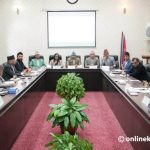
The issue was raised during a theoretical discussion on the Child Labour (Prohibition and Regulation) Bill, 2026, at the House of Representatives’ Industry, Commerce, Labour and Consumer Welfare Committee on Wednesday.
At the meeting, CPN-UML lawmaker Kriparam Rana questioned whether the proposed legislation adequately protected children’s constitutional rights and complied with international labour standards.
He referred to Article 39(4) of the Constitution, which prohibits employing children in factories, mines and other hazardous work, and asked whether the bill incorporated those protections.
Rana also raised the issue of the minimum age for employment under International Labour Organisation (ILO) Convention No. 138, which sets the minimum age for admission to employment.
“ILO Convention No. 138 has provisions on the minimum age. It mentions that a person should have completed 15 years. What is the age specified in the bill we have introduced?” he asked.
Rana, however, argued that Nepal should consider its own social and economic circumstances when determining the age threshold. He said children’s growth and development were influenced by their health, nutrition, family environment and geographical conditions.
“The stage of growth and development children reach at a certain age in Europe may not be the same in Nepal. We need to think carefully about the age limit,” he said.
Responding to the concerns, Minister for Youth, Labour and Employment Ramji Yadav said a complete legal prohibition on child labour would not, by itself, resolve the problem.
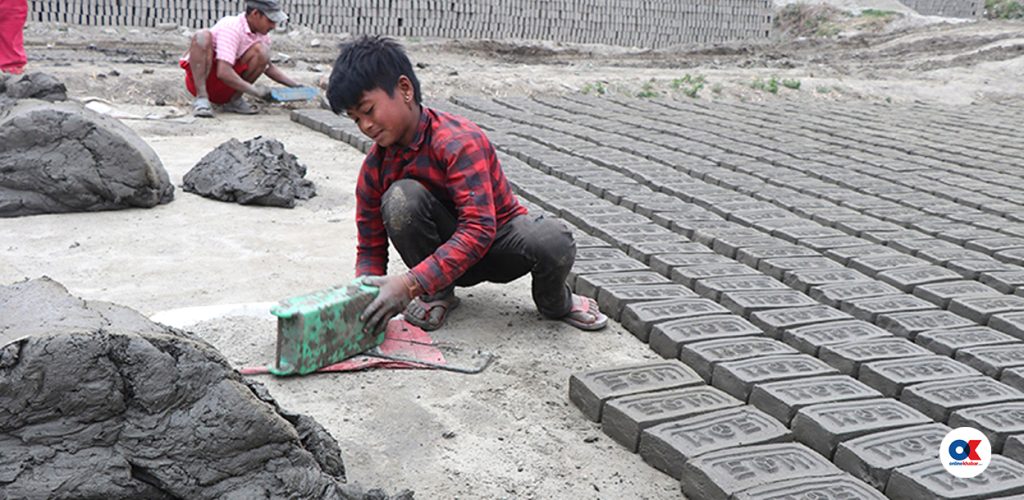
“Statistics show that around 1.1 million children in Nepal are still engaged in child labour. We are thinking about how to reduce that number,” he said.
Yadav said the government had considered children’s education, health, physical and mental development, poverty, family circumstances and the state’s ability to enforce the law while drafting the bill.
He argued that legislation must reflect conditions on the ground and be capable of implementation.
“Prohibiting children from working altogether may be an ideal approach, but it may not be a practical solution when the state cannot take responsibility for children affected by poverty, difficult family circumstances or the absence of guardians,” he said.
The minister defended the proposed age of 13 for certain light work, saying it had been determined after considering Nepal’s circumstances.
“We have categorised work according to age. We set the age at 13 based on scientific considerations. Rather than simply following the ILO provision, this proposal has been made according to our country’s situation,” he said.
What the bill allows
Clause 3 of the proposed bill states that children who have not completed 15 years of age cannot be employed in any work other than activities related to child development.
However, a provision under the same clause creates an exception for children who have completed 13 years of age. They may be employed in light work listed in Schedule 1, provided the child and their parents or guardians give consent.
The proposed provision states that such work must not affect the child’s educational activities or development and can only be performed before or after school hours or during holidays.
The schedule includes a wide range of activities under five categories. In agriculture and animal husbandry, children may sow seeds, plant seedlings, water and weed kitchen gardens, pick flowers and fruit within their reach, feed animals, help with milking and tend crops.
Household work includes sweeping and cleaning, washing light utensils, helping with cooking, caring for younger siblings, using washing machines, carrying light groceries and performing other routine household tasks assigned by parents or guardians.
The proposed list also includes handicrafts such as spinning and weaving wool, making baskets and clay pots by hand, basic sewing, stitching buttons and making garlands. In commercial and office settings, children may arrange goods in shops, undertake basic cleaning, file documents, distribute goods, issue bills, maintain accounts, assist in libraries and offices, answer telephone calls and provide reception services.
Community and social activities permitted under the schedule include cleaning public gardens and school premises, arranging library books, tutoring younger children, assisting literacy campaigns and participating in religious, cultural, school theatre and safe media activities.
The bill proposes limiting the working hours of children aged 13 to below 15 to two hours a day and 12 hours a week.
For children aged 15 to below 18, it proposes a maximum of six working hours a day and 36 hours a week.
The bill also prohibits employing children between 6pm and 6am. Employers would have to provide a 30-minute break after every three consecutive hours of work and one paid day off each week.
Before employing children, employers would be required to provide necessary training and conduct health examinations. Children whose health conditions are found to be unsuitable for work cannot be employed.
Local governments would also be required to inspect workplaces employing children at least once every three months.
Opposition wants a complete ban below 15
Several opposition lawmakers have argued that allowing children aged 13 and 14 to work, even under restrictions, could weaken protections against child labour.
Nepali Congress lawmakers Rekha Kumari Yadav, Kalibahadur Sahakari, Harinadevi Kami and Ninukumari Karna have jointly proposed an amendment explicitly prohibiting all forms of labour or employment for children below 15.
Their proposal seeks to rewrite Clauses 2 and 3 of the bill, stating that children who have not completed 15 years of age must be completely prohibited from being engaged in any form of labour or employment.
Ramesh Kumar Malla of the Nepali Communist Party has also proposed raising the minimum age for permitted work from 13 to 15. Other lawmakers have called for clearer definitions of age groups, permitted work and working-hour limits, arguing that the provisions should be reviewed from a child rights perspective.
The committee discussion also focused on what happens to children after they are rescued from labour. Lawmakers stressed the need for safe accommodation, reintegration into schools and programmes to improve the financial circumstances of their families.
Congress lawmaker Kalibahadur Sahakari said children as young as 11 or 12 were already working in schools, health institutions, hotels and other sectors. He said the law must ensure that employment does not affect children’s education, health, nutrition, rest or overall development.
He also called for clearer responsibilities for local governments, government agencies and non-governmental organisations, alongside a regular monitoring mechanism to control child labour.
CPN-UML lawmaker Gangadevi Shrestha said child labour, which was once more visible on streets and in public spaces, was increasingly taking place in hidden settings. She urged the government to investigate the reasons behind the shift.
Shrestha identified poverty, unemployment, disasters, parental migration, the loss of parents, children leaving residential facilities and unequal access to education as factors that increase the risk of child labour.
She also called for clearer provisions addressing children working in the entertainment sector, including dohori performances, fairs, festivals and other entertainment activities.
“Children’s involvement in dohori, fairs, festivals and other entertainment activities at a young age needs to be controlled,” she said.
Ruling party lawmakers also seek stronger safeguards
Lawmakers from the ruling Rastriya Swatantra Party have also called for improvements to the proposed legislation, particularly its provisions on family poverty, protection and rehabilitation.
RSP lawmaker Som Sharma said child labour was closely linked to poverty, lack of parental protection and the economic circumstances of families. He argued that legal provisions must be accompanied by financial security and employment opportunities for parents.
“The government should ensure that even families with very low incomes are not forced to send their children to work,” he said.
Sharma said children who had lost parental care or whose families could not afford their education were particularly vulnerable. He also expressed concern about children sent from rural areas to cities by their parents in the hope that they would receive an education, only to be exploited.
RSP lawmaker Prabha Karki said the state must take immediate responsibility for children rescued from labour, including providing safe accommodation.
She warned that children who report exploitation could face retaliation, violence or further risks from employers. The law, she said, should clearly establish arrangements for their protection and rehabilitation.
Karki also called for provisions addressing domestic child labour and ensuring that children from areas declared free of child labour are reintegrated into schools.
She said action against employers must be accompanied by measures to improve the economic circumstances of vulnerable families, including social security, skills training and employment opportunities for parents, targeted financial assistance and programmes to keep school-age children in education.
RSP lawmaker Prakash Pathak suggested that the bill should also address child labour involving refugees and children arriving across Nepal’s open border. He called for special protection measures for these groups.
Committee chair Rahbar Ansari said the bill should be made more progressive and ensure that employing children becomes financially costly for employers.
He argued that since child labour provides employers with cheap labour, fines, legal accountability and rehabilitation provisions must be strong enough to make employers responsible.
Ansari said the committee would discuss the registered amendments clause by clause and consult experts and the relevant ministry before finalising the legislation.
“We will hold clause-wise discussions on the amendments submitted by lawmakers and determine what needs to be changed,” he said. “If we can incorporate expert opinions and the ministry’s proposals, we can prepare an excellent bill.”