

Kathmandu, September 30
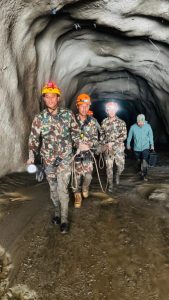
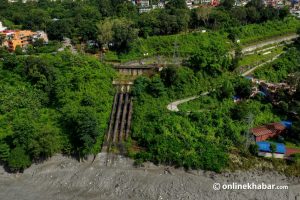
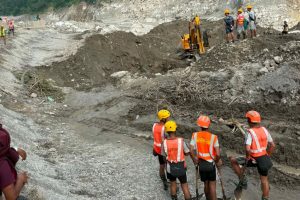
The devastating flood in the Bhotekoshi River on August 26 caused extensive damage to hydropower projects in Rasuwa, Nuwakot and Dhading.
A month later, floods and landslides triggered by incessant rainfall since September 25 also affected hydropower projects under construction and in operation in districts including Kaski, Myagdi, Baglung and Tanahun.
According to the Ministry of Energy, Water Resources and Irrigation, the August 26 flood alone damaged 14 hydropower projects with a combined capacity of around 783 MW.
The Nepal Electricity Authority said electricity generated by projects with a combined capacity of around 190 MW has been disconnected from the national grid due to the recent floods and landslides.
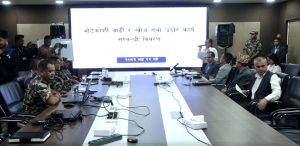
Along with collecting detailed data on the damage caused by the floods, the government has begun preparations to develop financial and regulatory models for the reconstruction and resumption of affected projects.
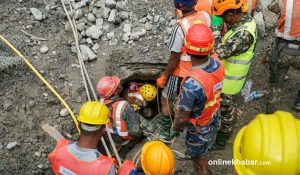
Energy Ministry spokesperson Mohan Dev Shakya said detailed damage data is being collected through the Post Disaster Needs Assessment (PDNA), led by the National Planning Commission.
He said the assessment covers various subsectors of the energy sector, including electricity generation, irrigation and embankments.
“Work is currently being carried out in coordination in the energy sector. Teams from various subsectors have been mobilised in the field under the leadership of Dr Sudan Jha, the National Planning Commission member overseeing the energy sector,” he said. “Detailed data is currently being collected.”
According to the ministry, the teams deployed for the PDNA are expected to complete data collection within a few days. This will provide greater clarity on the actual damage caused by the floods, the resources required for reconstruction and the condition of the affected projects.
A rapid assessment conducted earlier had estimated damage to the energy sector at around Rs 134 billion. However, as that was only a preliminary assessment, more detailed figures will emerge after the PDNA, said ministry spokesperson Shakya. “A rapid assessment was conducted. The details will become clearer once the PDNA report is released,” he said.
Question of whether to rebuild projects
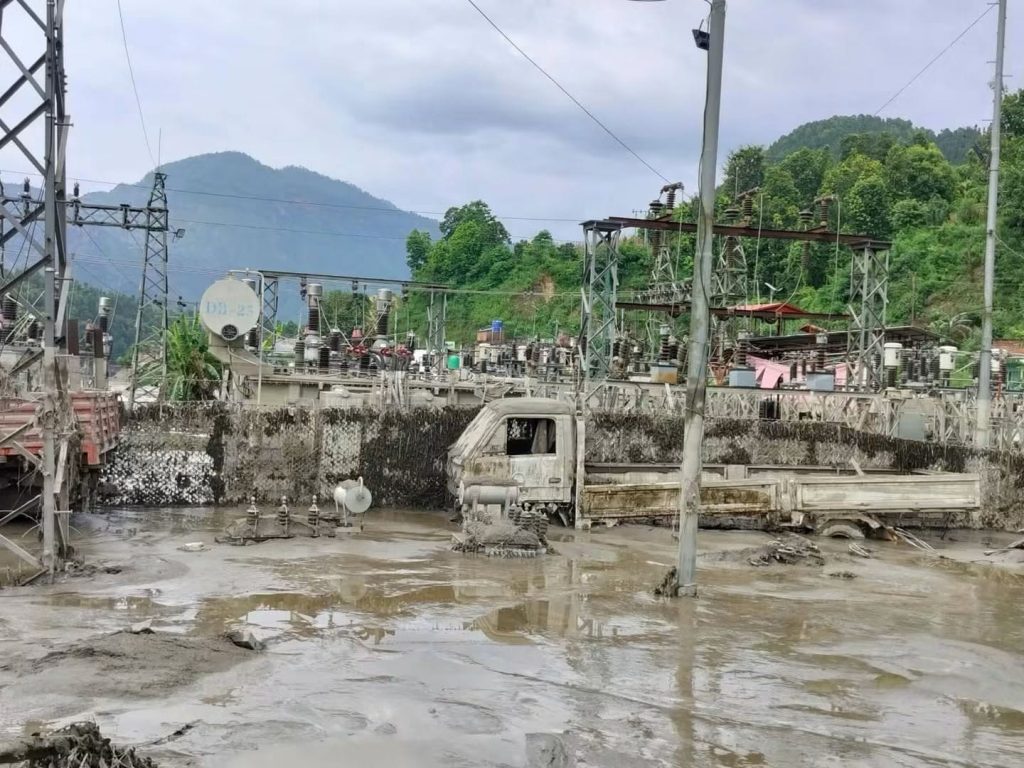
It is not certain that all projects will be rebuilt in their original form once the damage assessment is completed.
The floods have not only damaged project structures but also raised questions about the future financial viability of the projects. Therefore, technical, financial and climate-related risks will need to be addressed simultaneously during reconstruction.
According to Energy Ministry spokesperson Shakya, the PDNA will not provide the final assessment of the damage alone; additional project-specific studies will also be required.
“We are only at the initial stage of discussions on how to facilitate individual projects and what measures should be taken,” he said. “Which projects will be reconstructed and which will be shut down is also a matter for further discussion.”
He said project-specific technical studies would have to be conducted after the PDNA. Consultants and expert teams would need to be mobilised to ensure that damaged structures are redesigned so that they do not suffer similar damage in the event of another disaster.
“We should not rebuild them in the same way and allow them to be destroyed again if a similar flood occurs,” he said. “The technical improvements that need to be made will be considered afterwards.”
Higher reconstruction costs: Who will bear the burden?
Managing financial resources appears to be the biggest challenge in reconstructing damaged projects. According to Prajesh Bikram Thapa, executive director of Hydroelectricity Investment and Development Company Limited (HIDCL), the financial model for damaged projects is currently at the preliminary concept and exercise stage.
This is because the affected projects are not all of the same type. Projects owned by the Nepal Electricity Authority, its subsidiary companies, publicly listed companies, foreign-invested projects, private-sector projects and solar projects have all been affected.
“The financial framework is complex because all types of projects are involved,” Thapa said. “Technically, everyone’s costs have increased, and it is not clear whether they will be able to generate the same amount of power. Another question is whether the developers will rebuild them.”
Reconstructing damaged projects while taking climate and disaster risks into account will require stronger structures. This will also increase project costs.
According to Thapa, once additional costs are added, it may be difficult to reconstruct the projects under their existing financial models.
“We have to make them capable of withstanding disasters, and such a design inevitably adds to the cost,” he said. “Once that additional cost is added, the question arises of how the financial model will cover it.”
Therefore, the government may need to decide on various concessions and incentives for damaged projects.
Thapa said discussions could also be held on extending loan repayment periods, extending the generation period or providing other financial concessions.
“It is currently 35 years, while our Electricity Act has a provision allowing it to go up to 50 years,” he said. “There are many technical issues involved, such as how long it should be extended.”
However, the form and extent of government concessions have not yet been finalised. Energy entrepreneurs have also been demanding concessional loans and an extension of the generation period from 35 to 50 years, among other measures.
Reviewing old standards, introducing new ones
Following the floods, the Electricity Regulatory Commission has also begun work on developing a new regulatory framework to manage risks to hydropower projects.
According to commission chairperson Dr Ram Prasad Dhital, work is underway to develop a regulatory framework for “disaster-resilient energy infrastructure.”
The commission plans to address this in three phases: before, during and after a disaster.
Technical and safety standards that projects must meet before a disaster will be reviewed. Dhital said the commission would study whether the technical standards of the Department of Electricity Development, provisions of the Nepal Electricity Authority and regulatory conditions required during the commission’s approval process are adequate.
“We will evaluate the existing standards and see whether anything needs to be added or removed,” he said. “Before granting approval, we will certify whether those standards have been met.”
Safety measures to be adopted at projects and structures during disasters will also be included in the regulatory framework. The standards are also expected to cover issues such as sirens and information systems at tunnels and powerhouses, as well as coordination with relevant disaster management agencies.
However, the most important question in post-disaster reconstruction will be who bears the cost.
According to Dhital, the commission is studying the issue of not placing the entire burden of natural disasters solely on developers or consumers.
“The developer should not be made to bear the cost of a mistake it did not make, or the authority for a mistake it did not make, when the cause was natural,” he said.
The commission is also working on the concept of setting insurance premiums according to risk. It believes a risk-based insurance system should be developed under which projects facing higher risks would pay higher insurance premiums and those facing lower risks would pay lower premiums.
The study also covers how much insurance would cover of the total reconstruction cost, how much support would come from government relief or other funds, how much would be provided through concessional loans and how much of the eventual burden would be passed on to electricity tariffs.
“The costs have to be verified. If the cost is Rs 100, we need to examine how much insurance will pay, how much will come from the relief fund, how much will be provided through soft loans and how much impact there will be on consumers’ electricity tariffs,” Dhital said.
Efforts to develop a common framework from South Asian experience
Energy infrastructure in other South Asian countries is also facing disaster risks. Therefore, Nepal is preparing to incorporate the experiences of other countries into its regulatory framework, according to the commission.
As the Electricity Regulatory Commission is also a member of a group of South Asian regulators, efforts are underway to prepare a common technical and regulatory document incorporating experiences from countries including India, Bangladesh, Sri Lanka and Bhutan, Dhital said.
“Disasters are not limited to Nepal. Similar situations exist in India, Bangladesh, Sri Lanka and Bhutan,” he said. “We are trying to prepare a common document by incorporating the experiences of other countries as well.”
The commission is preparing to mobilise experts on the issue. Dhital said experts would be consulted on the regulatory role before, during and after disasters.
Scientific study and naming of Bhotekoshi flood
The Energy Ministry has formed a seven-member committee to conduct a scientific study and determine a name for the unusual flood that occurred in the Bhotekoshi River on August 26.
The committee, coordinated by water policy and governance expert Devesh Belbase, includes hydrologist Dr Narendra Man Shakya, glaciologist Dr Rijan Bhakta Kayastha, remote sensing expert Dr Uttambabu Shrestha, geologist Dr Meghraj Dhital, hydropower infrastructure expert Dr Hari Pandit and disaster risk reduction expert Anil Pokharel.
According to Tika Baral, joint secretary at the Water and Energy Commission Secretariat, names including “glacier rock avalanche,” “ice-rock avalanche/landslide” and “Rasuwa Bhotekoshi Great Disaster” have emerged during preliminary discussions. However, he said the name of the event would not be finalised until the scientific study is completed.
“This is a rare event globally. We cannot conclude without a detailed study,” Baral said. “An appropriate name will be given after all scientific bases and evidence of the climate disaster have been collected.”
According to ministry spokesperson Shakya, preparations are also underway to facilitate the study by forming a technical committee within the government alongside the scientific committee. He said decisions would be made by the ministry, while implementation and coordination would be handled by the Water and Energy Commission Secretariat.
Challenge is to reduce risks, not just count losses
The recent floods and landslides, including the Bhotekoshi flood, have exposed both the risks facing hydropower infrastructure and the challenges of reconstruction. Although the government is currently collecting detailed damage data, an even bigger question will follow: how should the damaged projects be rebuilt, and how can they be protected from similar disasters in the future?
The government’s preliminary preparations indicate that reconstruction is being considered not simply as restoring damaged structures to their previous condition, but in connection with technical risks, insurance, financial resources, electricity tariffs and regulatory arrangements.
According to HIDCL Executive Director Thapa, the financial model can be finalised only after there is clarity on the actual damage and the future of individual projects.
“Once the exact loss figure is available, it may not be possible under the existing financial model,” he said. “The issue of what incentives the Nepal government should provide to make the projects financially viable will come afterwards.”
The reconstruction of flood-damaged hydropower projects is likely to be effective in the long term only if the government can integrate the PDNA, scientific studies, financial models and a new regulatory framework into a single process.