

Uttargaya, September 13
Everyone loves their village. For the Thapa family, however, the thought of returning to theirs is unbearable.
They have survived an earthquake, been driven out by a landslide and, most recently, watched a flash flood erase their home—and take 15 members of their family with it.
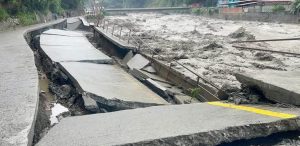
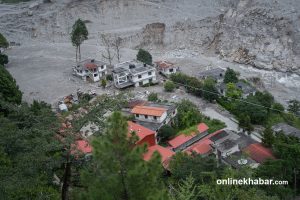
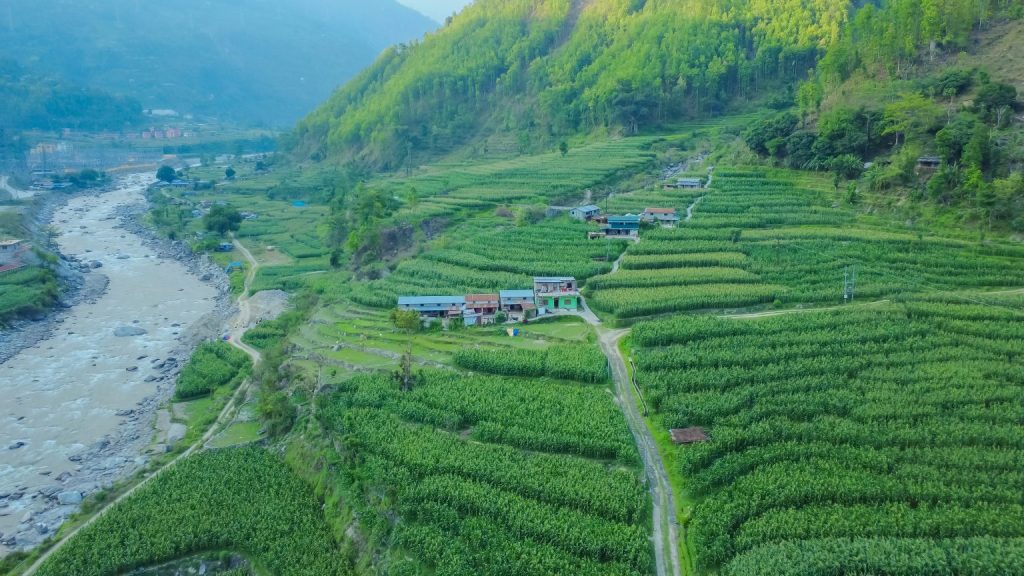
In Lower Pairebeshi of Uttargaya-4, Rasuwa, five houses belonging to the Thapa family once stood in a row. On August 26, the flood swept them away.
It took 70-year-old Durgadevi Thapa; her 53-year-old middle son; his 47-year-old wife, Sarita; their 10-year-old grandson, Sanchit; and nine-year-old grandson, Nishan. Across the settlement, an entire family of 10 from Durgadevi’s daughter’s side was lost.
Their homes became riverbed. Their farmland, livestock and possessions disappeared. The Thapa family, which had spent years rebuilding after earlier disasters, was left with almost nothing.
Of the 28 family members who lived in the two households, 13 survived.
“We don’t want to go back there. We don’t even want to remember that place,” they say.
For a family that has repeatedly rebuilt its life after disaster, this time feels different.
They have loans they still need to repay. They have grief they cannot escape. And they have nowhere of their own to go.
Eleven years of displacement
The flood was not the first disaster to uproot the Thapas. In 2015, they lived in Kuwapani when the earthquake destroyed their home.
They moved to Tupche Sahugaun in Nuwakot, hoping to start again. But government resettlement rules tied reconstruction grants to rebuilding on the original site. They were eventually forced to return to Kuwapani.
“After six months, we returned to the same old place,” recalls 42-year-old Tara Bahadur Thapa. “At first, we built a tin shed.”
The reconstruction grant was not enough to build a concrete house. So the family borrowed more money. Some had laid foundations and completed the damp-proof course. Others were preparing to put on their roofs.
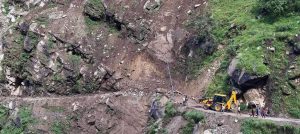
Then, in 2017, a landslide struck.
“The landslide took it before the house was even finished,” says 37-year-old Asmita Thapa, her voice breaking. “The roof wasn’t even on yet. The landslide destroyed everything. We were uprooted again.”
It was their second displacement.
For three or four months, they stayed in Colony of Bidur Municipality-9, Nuwakot.
The family again decided they could not return to Kuwapani. After discussions with the government, they became eligible for Rs 200,000 to purchase land and Rs 300,000 to build a house.
In 2018–19, they bought land in Lower Pairebeshi, roughly half an hour below their old settlement.
A soil test declared the land safe.
Five Thapa brothers built their homes side by side.
“We invested more than Rs 2 million in a single house. We took loans from organisations and microfinance institutions to build the settlement,” Asmita says. “We still haven’t paid them off.”
After years of displacement, they believed they had finally found somewhere they could stay. They were wrong.
“We didn’t even get to live in those houses for three or four years. The flood took everything.”
Fifteen family members gone
On the morning of August 26, Gita Thapa had cooked breakfast before going to the fields to cut grass.
Then she heard a sound she compared to a tyre bursting. It was a flash flood.
“It wasn’t raining. But suddenly, a flash flood was surging in. It felt like some kind of catastrophe. I started screaming for my daughters. The flood reached right where I was standing,” says the 47-year-old.
What happened next remains almost impossible for her to describe.
“Right before my eyes, it took all 10 members of my daughter’s family. And five from my own house.”
Among those swept away were people ranging from a 70-year-old grandmother to a four-month-old infant.
“My daughter’s daughter was two years old. My daughter’s sister-in-law had come to her parents’ home for postpartum care. There was a four-month-old baby boy. It took everyone right in front of our eyes,” Gita says.
“Even those trying to run away were caught by the surge. How could anyone bear it?”
None of those swept away was recovered.
“We saw them being swept away with our own eyes, so we began the funeral rites from the eighth day and completed them on the thirteenth,” says Tara Bahadur. “We’ve also given DNA samples.”
For Gita, the loss has made sleep almost impossible.
Her eyes remain wet as she remembers the children who were taken.
A phone call before the flood
Forty-year-old Khadga Bahadur Thapa has spent the past 15 years working in Dubai. On the morning of August 26, at around 6 am Nepal time, he spoke to his children and mother.
His children wanted money to go to the Lakhe festival. He sent Rs 10,000. He also told them he would come home for Dashain. Within hours, he was trying desperately to reach them.
No one answered.
“I sent that money saying I’d be home for Dashain, so they could buy what they needed to go to the festival. Everything here was swept away,” he says.
“My father never even got to withdraw the money I sent.”
Khadga eventually booked a flight and arrived in Nepal on the evening of August 27. The following day, he met the surviving family members in Kathmandu.
Only then did he learn that he had lost his mother, his son, his elder brother, his sister-in-law, his brother’s daughter and his granddaughter.
“Fifteen years of savings from abroad were gone in five minutes. How long would it take to build all that again?” he asks.
“I went abroad to fulfil my children’s dreams. My whole life has been destroyed.”
He has not returned to Pairebeshi.
“I haven’t gone to the site. I don’t want to go there. I hope I never have to go back. I’d rather beg and sift gravel and sand for a living here in Kathmandu. But I won’t go to Rasuwa.”
Swept away in his sleep
Twenty-one-year-old Sijal Thapa survived almost by chance. He had returned home after a night shift at a hydropower project and gone to sleep.m When the flood arrived, he was unconscious.
“At first, I thought I was dreaming about a flood. But when I woke up, I was already in the river.”
The flood carried away everything around him. Somehow, he survived.
Sijal suffered injuries to his head and leg. He was rescued and airlifted through Dhunche to Kathmandu’s Teaching Hospital. He has since been discharged, but has not fully recovered.
The family estimates that the five Thapa households lost property worth around Rs 100 million.
Homes, land, farmland and livestock were destroyed.
During the COVID-19 lockdown, Tara Bahadur had returned from Saudi Arabia with Rs 2 million in savings. He invested about Rs 1 million in a farm building and used the rest to establish a livestock farm.
The goats, along with the family’s cows and buffaloes, were all swept away.
“No cows, buffaloes or goats are left. Everything is gone,” he says.
Starting over—again
Tara Bahadur had been living in Hetauda, Makwanpur, for work when the flood struck. At 9 am on August 26, he called his elder brother.
“We talked for about five minutes, then the call dropped,” he recalls. “I waited for him to call back.”
He never did. The next morning, at 4 am, Tara Bahadur headed to Pairebeshi to bring back the surviving family members. They waited for two days, hoping for rescue. No helicopter came.
“We walked for nine hours and reached Suryagadhi Rural Municipality at around 7 pm,” he says.
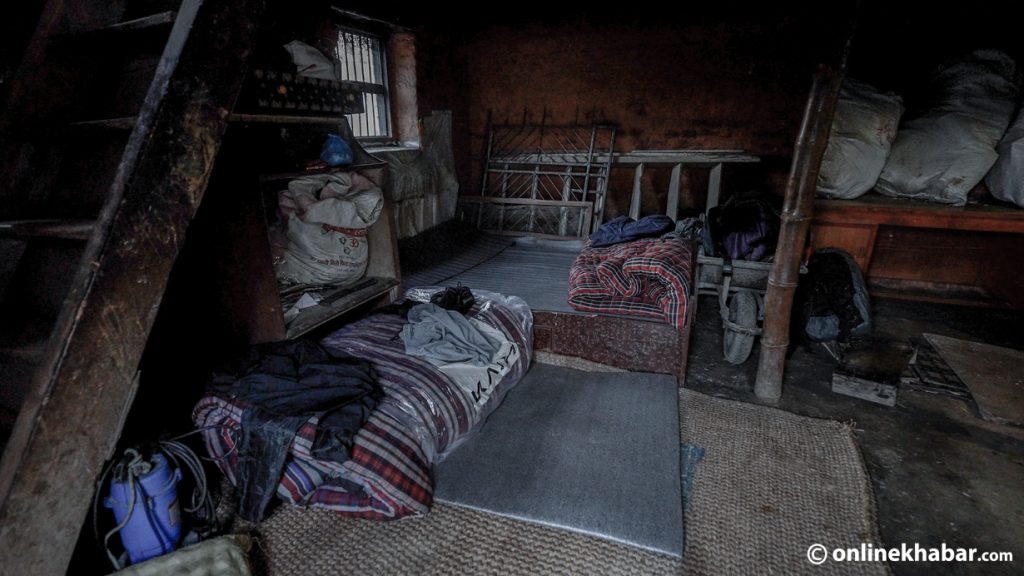
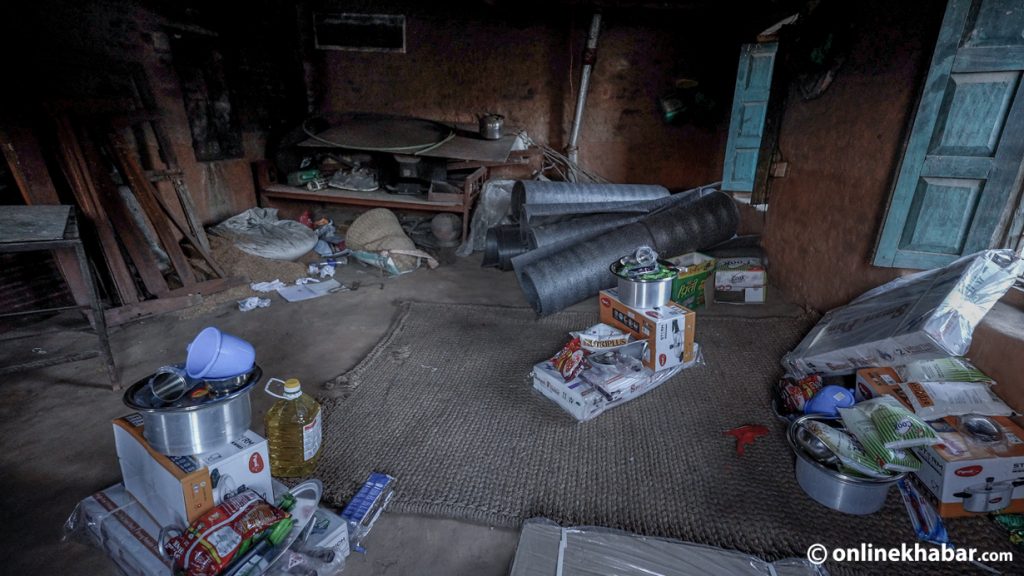
They eventually reached Kathmandu on the fourth day after the flood. Now, all 13 survivors are staying with their niece in Hiletol Heights, Tarakeshwar Municipality. There are around 20 people in the house. The niece’s one-storey concrete home and an old mud-and-brick shed are both full.
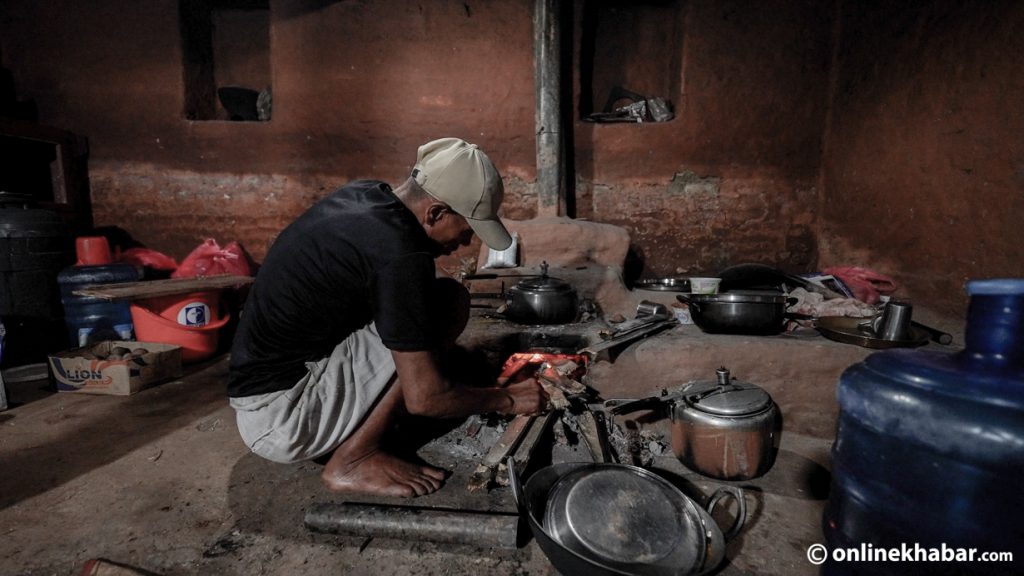
There are a few mattresses, a small collection of cooking utensils and a wood stove. Smoke from the firewood fills the room where the displaced family sits together.
They cannot even eat at the same time.
“We have to take turns and wait. When it is time to eat, we look at each other’s faces, and tears fall from everyone’s eyes,” says 47-year-old Gita.
They have shelter for now, but no home. Their children need to return to school. They have no gas, little money and no place of their own. Returning to Pairebeshi is not an option.
“We hope the government resettles us quickly,” Tara Bahadur says.
But this time, they want a say in where they go.
“We’ve been through disasters three or four times. Even the first time, we wanted to stay in Makwanpur, but the rural municipality’s decision didn’t allow it,” the family says.
“We want long-term resettlement in a genuinely safe place.”
After 11 years of rebuilding, displacement and loss, the Thapas are asking for something that should never have been too much to ask:
A place where they can finally live without waiting for the next disaster.
“We don’t want to go through another disaster again.”