

Kathmandu, September 18
Twenty-two days after floods swept through the Bhotekoshi and Trishuli river corridors, 898 people working at 13 hydropower projects remain unaccounted for.
According to data collected by the Nepal Engineers’ Association, 188 of those missing are engineers and technicians.
The prolonged uncertainty has pushed some families to perform final rites using symbolic bodies made of kusha grass, despite the absence of their relatives’ remains.
The Upper Trishuli-1 hydropower project has recorded the highest number of missing engineers and technicians, with 60 still unaccounted for.
The association’s data shows that 42 engineers and technicians from Upper Trishuli-3B, 30 from Upper Trishuli-3A, 25 from Rasuwagadhi Hydropower Project, 20 from Langtang Khola, six from Mailung Khola and five from Chilime Hydropower Project remain missing.
Of the engineers and technicians reported missing, 17 bodies have been recovered so far. Two others, Sanjay Sah and Kabir Maharjan, were rescued.
On Wednesday, four bodies and one human body part recovered from the Chilime project site were found to include one engineer or technician.
Project-wise, 575 people working at the 216-MW Upper Trishuli-1 project are still missing.
Similarly, 93 people from the 111-MW Rasuwagadhi Hydropower Project, four from the 120-MW Rasuwaghoshi project, 42 from the 20-MW Langtang Khola project, six from the 22-MW Chilime project, seven from the 5-MW Mailung Khola project, 42 from the 60-MW Upper Trishuli-3A project and 122 from the 37-MW Upper Trishuli-3B project remain unaccounted for.
Four-member family’s wait ends in final rites
For the family of electrical engineer Somnath Paudel, the 22 days since the flood have been marked by uncertainty.
Paudel, from Bansgadhi Municipality-8 in Bardiya, was living in the Upper Trishuli-3B project quarters with his wife Tara Upadhyay and their 28-month-old twins, Shivansh and Tisia.
All four went missing after the flood on August 26.
The family had spoken to them until the evening before the disaster. There has been no contact since.
“We spoke to them until the evening before. Something happened the next morning, and we have not been able to contact them since,” said Sagar Paudel, Somnath’s cousin.
After repeated searches failed to establish their whereabouts, the family performed the final rites of all four at Parewa Odar Ghat on the Babai River in Bardiya, using symbolic bodies made from kusha grass.
Somnath’s 81-year-old father, Umanath Paudel, has begun the mourning rituals after receiving no information about his son, daughter-in-law and grandchildren.
Umanath provided a blood sample at the District Hospital in Gulariya on September 6 for DNA testing to help establish Somnath’s identity. Tara’s father, Chandramani Upadhyay, also provided a blood sample for her DNA test. The results are yet to arrive.
Engineer couple and their four-year-old twins also missing
The family of engineer couple Rajesh Sharma Paudel and Pramila Pathak, who also worked at Upper Trishuli-3B, is facing a similar ordeal.
Rajesh, 33, from Tityang in Baglung Municipality-9, his 31-year-old wife Pramila and their four-year-old twins, Aditya and Aditi, have been missing since the flood.
Their relatives continued searching in the hope that the family would be found alive. Some travelled to the affected area themselves, but there has been no information about them.
With no bodies recovered, the family has already performed the final rites at Pashupati Aryaghat using symbolic bodies made from kusha grass.
According to relative Laxman Rijal, the family eventually gave up hope of finding them alive after they remained out of contact for so long.
Rajesh was the only son in his family and had three sisters. The disappearance of all four members has left his family and relatives in Baglung mourning.
A call that never came
Twenty-six-year-old Subodh Belbase of Thada Amrai in Shitganga Municipality, Arghakhanchi, was also working as an engineer at Upper Trishuli-3B.
He had been working at the project for two years and has been missing since the flood.
Belbase spoke to his mother, Sabitra, by phone on the night of August 25. During the conversation, he told her he would call the following afternoon.
But the flood struck the next day. The call never came.
Subodh was the younger of Surendra and Sabitra Belbase’s two children and their only son. His father, Surendra, works at the Modi Hydropower Project in Parbat.
After learning that his son was missing, Surendra travelled through Kathmandu to Rasuwa in search of him. But Subodh’s whereabouts remain unknown.
Electrical engineer missing at 29
Samir Lamichhane, a 29-year-old electrical engineer at the Rasuwagadhi Hydropower Project, has also been missing since the flood.
Lamichhane had worked at the 111-MW project for around six years and was serving as its operations in-charge.
His father, Madhav Lamichhane, said Samir was also the family’s main source of income.
“A large part of the country’s skilled workforce has been lost, which will affect the entire country. For our family, the person who was our source and means of income is gone,” he said.
A large number of permanent, contract and contractor-employed workers at the Rasuwagadhi project were affected by the flood, he said.
Madhav also questioned the safety arrangements at the project.
He said 34 people working at the project had narrowly survived last year’s flood after taking shelter in the forest before being rescued.
“Last year, 34 of our sons and others barely survived the flood and were later rescued after taking shelter in the forest,” he said. “After all the camps where they stayed were flooded, building another camp near the river was like leaving them there to die.”
According to Madhav, the camp where workers and employees stayed was around 10 metres from the river, in front of the powerhouse.
He said he had spoken to his son two days before the flood, while Samir had spoken to his mother until the evening before the disaster.
“I spoke to my son two days before, and he spoke to his mother until the evening before,” he said.
‘Losing skilled manpower is a major loss for the country’
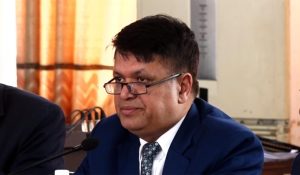
Yam Krishna Paudel, information officer at the Nepal Engineers’ Association, said the disappearance of such a large number of engineers and technicians was a major loss not only for the hydropower sector but for the country as a whole.
He said it would be difficult to quickly replace experienced professionals who had spent years working in the hydropower sector.
“The floods have caused enormous damage to the hydropower sector, and losing skilled manpower is a major loss for the country,” he said. “It will take a long time to train and deploy new personnel in place of those who had gained years of experience working in hydropower.”
Paudel said the disappearance of more than 900 people represented a significant human loss and that it would take years for the state to develop a workforce with comparable experience.
The disaster has also affected the morale of engineers and technicians working at other hydropower projects, he said.
“After seeing their own colleagues disappear in the floods, the morale of other engineers appears to have weakened. They are afraid to go into the field,” he said. “Mental stress has also increased.”
The association is continuing to support efforts to locate those still missing, Paudel said. It has formed committees and is taking initiatives to assist search and rescue operations.
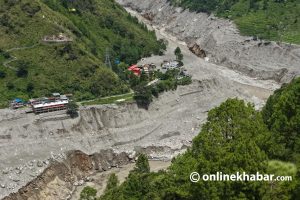
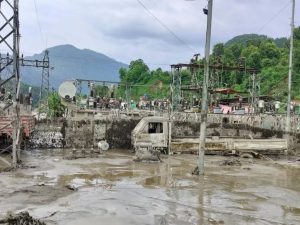
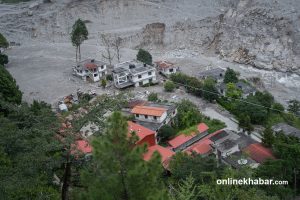
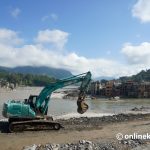
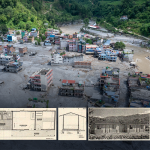
The floods caused extensive damage to hydropower projects in Rasuwa, Nuwakot and Dhading. Residential quarters, offices, access roads, tunnels and other infrastructure have been damaged.
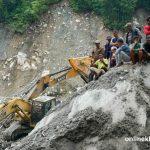
Search and rescue operations are still underway at some projects, while a large number of workers, engineers, technicians and other personnel remain unaccounted for.
Available next action: Create a downloadable PDF file here in this chat containing the finalized decisions and immediate actions above