Kathmandu, September 27
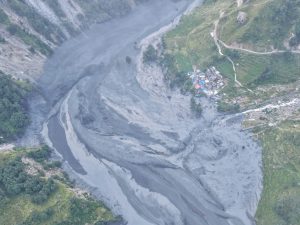
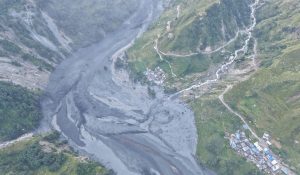
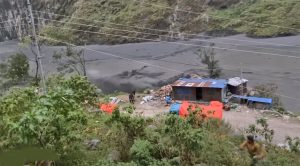
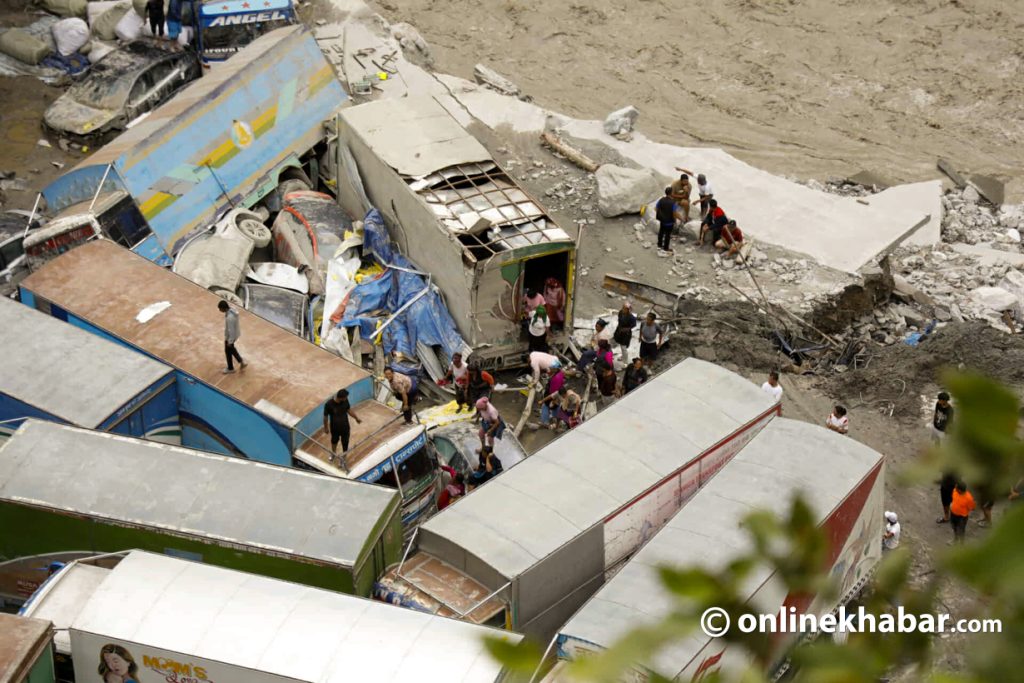
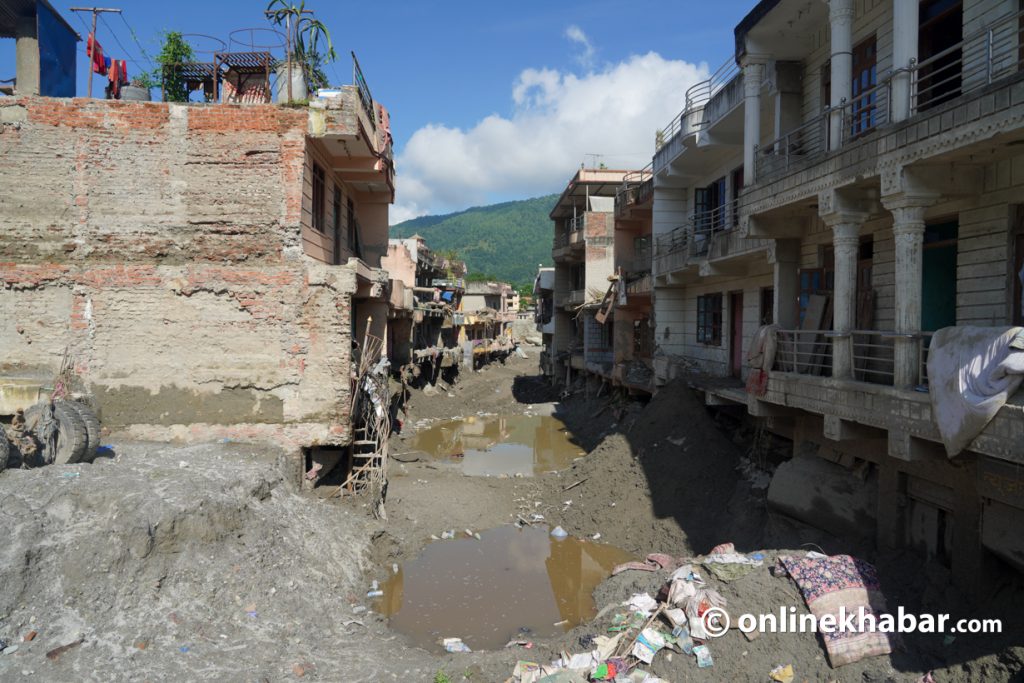
Floods and landslides triggered by continuous rainfall have affected electricity transmission and distribution systems in various parts of the country.
Power supply has been disrupted in several areas after floods caused faults in transmission lines and problems with equipment at power generation plants and substations.
According to the Ministry of Energy, Water Resources and Irrigation, major disruptions have been reported in the electricity systems in Pokhara, Butwal, Hetauda and Kathmandu. The ministry said disruptions affecting various lines, generation facilities and loads have impacted a total of around 1,303 MW of the system.
However, this does not represent the amount of electricity disrupted at a single time. It is the combined total of disruptions to transmission lines, generation and loads recorded at different times and locations.
Pokhara worst affected
The Pokhara area has been the worst affected. A fault in the Kusma-New Butwal 220 kV transmission line affected around 200 MW of electricity. Similarly, disruptions in the RauGhat-Dana lines 1 and 2 affected around 155 MW.
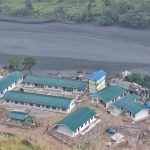
Floods have also affected the generation and supply of several hydropower projects, including Kaligandaki, Upper Madi, Super Madi, Sikles-Namrjung, Seti River-Karuwaseth, Upper Dordi and Modi. More than 400 MW of capacity from various projects in the Pokhara area alone has been affected.
In the Raughat area, a fault in the New Butwal-Kusma 220 kV line affected around 110 MW. The line was expected to resume operation at 9:50 am.
In the Butwal area, a tree fell onto the New Bharatpur-New Butwal 220 kV transmission line, causing a fault. According to the report, the line was charged at 9:51 am. When the Chapar-Pathlaiya 132 kV line went out of service, load shedding of around one hour was carried out at the Kawasoti substation.
The Hetauda area has also been affected by floods. Around 32 MW was affected at the Mandu 66 kV system due to flooding. Supply was also disrupted after a CVT at the Bharatpur substation under the Kawasoti-Bharatpur 132 kV line was damaged by fire.
Around 20 MW at the Simara substation, around 80 MW supplied to industries in Amlekhgunj, Parwanipur and Birgunj, and around 25 MW at the Kamane substation and industries have been affected.
Kathmandu Valley also affected
In the Kathmandu Valley, electricity supply was briefly disrupted in Patan and Teku. The outages occurred from 9 am to 9:10 am in both areas.
According to the report, the problem in Patan occurred after the Pathlaiya line and the KL-1 Syuchatar 66 kV line became overloaded simultaneously. An emergency supply from the MRS was used after floods disrupted regular supply.
Load reduction at several substations
Load reduction has also been carried out at several substations due to flooding and transmission-line problems.
At the Kawasoti substation, 20 MW of load was reduced from 8 am to 9:15 am, while 25 MW was reduced at the Hardi substation during the same period.
Similarly, around 50 MW of load was reduced at industries in Sunwal-Mainiya and the Butwal area from 6:02 am. At the Simara substation, 20 MW was reduced from 6 am to 10 am, while around 80 MW was reduced at industries in Amlekhgunj, Parwanipur and Birgunj from 6:01 am.
Western and central Nepal significantly affected
The main causes of disruption to the electricity system include damage to transmission lines and generation facilities caused by floods, line faults, problems with substation equipment and subsequent overloading.
Disruptions along the Pokhara-Butwal 220 kV transmission corridor and the 132 kV transmission lines around Pathlaiya have particularly affected electricity supply in western and central Nepal.
Nepal Electricity Authority Managing Director Dirghayu Kumar Shrestha said technical and maintenance teams had been deployed to affected areas to collect preliminary details of the damage, identify areas where electricity supply has been disrupted, operate alternative supply arrangements and carry out immediate repairs to damaged infrastructure.
NEA says restoration is a high priority
Shrestha said arrangements had been made to restore electricity supply to areas experiencing outages through alternative feeders and available transmission and distribution infrastructure wherever possible.
He said the authority was assessing the condition of damaged infrastructure and mobilising the necessary equipment, materials and personnel to gradually restore electricity supply.
Despite damage to electricity infrastructure caused by the natural disasters, the authority is giving high priority to restoring power supply to consumers as soon as possible, Shrestha said.
The NEA said heavy rainfall, floods, landslides and blocked roads have made it difficult for technical teams to reach some affected areas. Shrestha said additional technical teams and necessary equipment would be mobilised to accelerate repairs and restoration as soon as roads and access routes are reopened.
The authority said all available resources were being mobilised to maintain electricity supply through alternative arrangements where possible and restore regular supply in the shortest possible time, despite disruptions caused by damage to power infrastructure.
The NEA has urged consumers to remain cautious during the disaster and avoid approaching damaged electrical structures, fallen wires or poles.