

Kathmandu, October 1
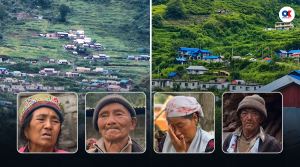
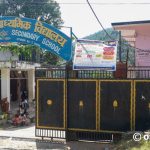
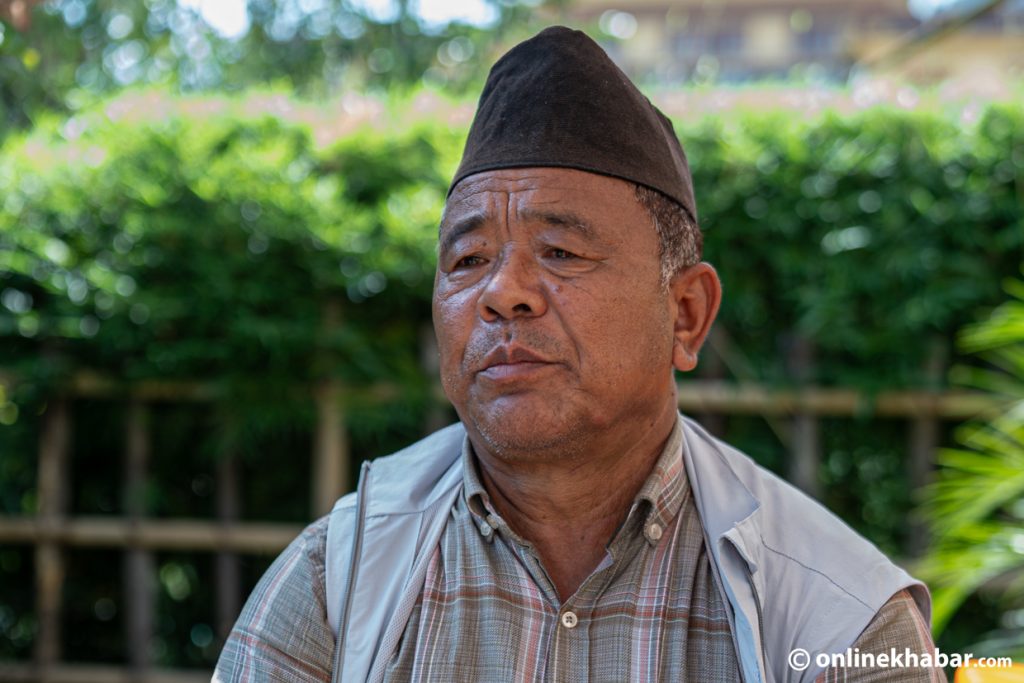
It has been more than a month since Singi Dhindup Tamang, 58, of Syabrubesi in Gosainkunda Rural Municipality-5, Rasuwa, arrived at Yellow Gumba in Swayambhu, Kathmandu.
Tamang was among those displaced by the Bhotekoshi floods and brought to Kathmandu for shelter. Living alone in the monastery, he says memories of Syabrubesi keep returning.
“When I walk around alone, I realise that I am in the monastery; my house was swept away by the flood and my property is gone,” he said.
The monastery has provided them with food and a place to stay. But for Tamang and others displaced from Syabrubesi, the memories of their homes, relatives and neighbours lost in the disaster remain.
According to Tamang, around 300 displaced people from 137 families of Syabrubesi are currently staying at the monastery.
“We are 137 households who have been completely displaced,” he said. “One hundred and twenty-six people have died. Five hundred and twenty of us are alive.”
The survivors were rescued by the government and taken through Dhunche to Batar in Nuwakot. They were later brought to the monastery in Kathmandu with support from Rasuwa Samaj.
Almost every surviving family has lost someone in the floods. Tamang, who narrowly survived, lost his daughter-in-law.
“There is no one here who has not lost a relative,” he said.
They have nowhere to return to
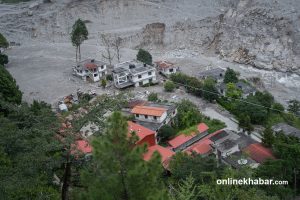
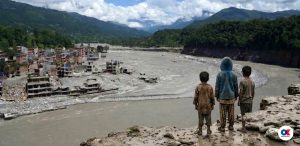
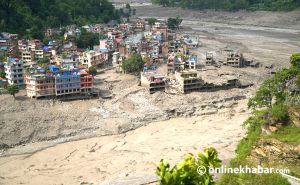
Along with their relatives, the people of Syabrubesi lost their homes and their settlement.
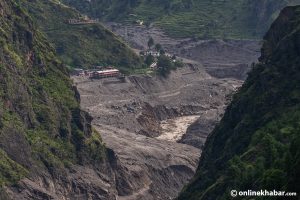
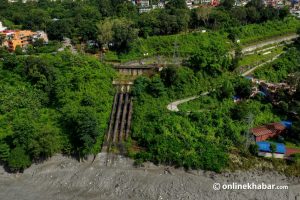
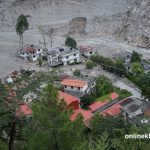
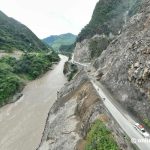
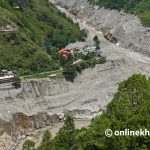
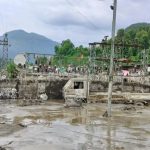
“When we ran uphill and looked back, there was nothing left of the market or the village. The flood wiped out three villages,” Tamang said. “The areas where the rural municipality and police post stood have been turned into a riverbed. We could not take any money or even our mobile phones from our homes.”
The monastery has given them shelter, but they do not know how long they can remain there.
The monastery initially provided beds and bedding. The displaced people slept on the floor at first, before bringing in essential belongings. Others also provided items such as fans.
“We are comfortable here for now. But there is no certainty about how many days we can stay. We may stay for a month, or we may have to stay for two months,” Tamang said.
Returning to Syabrubesi, however, is also not an option yet. There is nowhere to live, the roads are not accessible and they have no food supplies.
“If we were to farm and live off it, it would take six months before we could produce anything. We have been businesspeople from the beginning,” he said. “What would we eat if we went back? Where would we live? We have nothing.”
They want to return to Syabrubesi

The displaced residents are waiting for temporary accommodation, even if it is only a basic shelter.
“The state could build us temporary huts in Syabrubesi and let us live there. Later, it could build a permanent house with up to four rooms for each family,” Tamang said. “We can earn and add to it ourselves later. Large families need houses of up to four rooms.”
They say they have no land elsewhere and therefore want to return to their ancestral home.
“We are thinking of going back there. Where would we go and live elsewhere? We are people from that place. We have our faith, our geography, our culture and all our relatives there,” Tamang said. “In Kathmandu, an organisation may support us for a few days, but we do not know what will happen after that.”
Tamang says they are willing to repay money provided by the state if it is given to them without interest.
“If the government makes arrangements for us to return the money after earning it ourselves, we are willing to run businesses and support ourselves,” he said.
Collective funeral rites, but no money to pay for them
With little hope of finding those swept away by the floods alive, the displaced residents have begun conducting collective Ghewa funeral rites according to Buddhist tradition.
The rites would normally be conducted separately for each deceased person. But because the survivors have lost their homes and are living together, they are conducting collective prayers and funeral ceremonies.
According to Pratima Lama, Buddhist rituals are performed every seven days, with a major Ghewa ceremony held on the 49th day.
“According to our Buddhist tradition, prayers have to be performed every seven days. A major Ghewa has to be held on the 49th day. Until the Ghewa is completed, we are not supposed to go anywhere or move to another place,” she said.
“But we cannot conduct them separately. We are conducting a collective ceremony for 76 people in one place. Other monasteries are also holding collective funeral rites, for around 10 people in some places and seven in others.”
The survivors, however, say they are struggling to pay for the ceremonies.
“Money is needed to conduct Ghewa. Money is needed to light the lamps. According to our religion, we have to provide food and make offerings to the lamas,” Tamang said. “Our gold is gone, our money is gone, our silver is gone, our diamonds are gone. Our houses are gone. Everything is gone. We only have our lives left. We are facing financial difficulties even to conduct the Ghewa.”
The government has issued cards stating that the displaced people will receive Rs 15,000 a month, but the survivors say they have not yet received the money.
“These days, you need money as soon as you step outside. So the government needs to identify and officially declare the dead as soon as possible and distribute relief,” Tamang said. “That is our only hope.”
Crowded holding centre takes a toll
Pratima Lama, 40, from Syabrubesi, is visually impaired. She says staying at the holding centre has begun to affect her mental wellbeing.
“We want to leave this place as soon as possible. Staying here for so long has already affected our mental state,” she said. “We are all living together here. We need separate accommodation. We have been here for a month and it has been painful.”
She said financial assistance from the government would allow them to find rooms and move out.
“If the government simply tells us to start managing on our own and provides us with financial support, we could find rooms and move elsewhere,” she said.
Kami Gyalpo Tamang, 65, described similar difficulties.
“I feel like we will fall sick if we keep staying here. There are too many people. It is noisy. We have not been able to sleep,” he said. “We are becoming unwell because we are not getting enough sleep. The government should quickly provide us with small plots of land somewhere and settle us.”
The displaced residents want to leave the holding centre after completing the Ghewa if temporary accommodation can be arranged.
For now, they have no choice but to live together.
“When four or five people sleep in the same place, it is difficult even to breathe. Some have fractured legs. Some have colds and coughs. Others are sick with different problems,” Kami Gyalpo said.
“We cannot stay here forever.”
Finding rented rooms in Kathmandu is also difficult.
“When we go looking for a room, they ask who we are. When we say we are disaster victims, they tell us there are no rooms available. Perhaps it is also because we have nothing,” Tamang said.
They say they feel as though they are living like refugees.
“Some people do not even have their documents. We are living like refugees. How long are we supposed to stay here?” asked Karsang Tamang.
Residents seek an integrated settlement
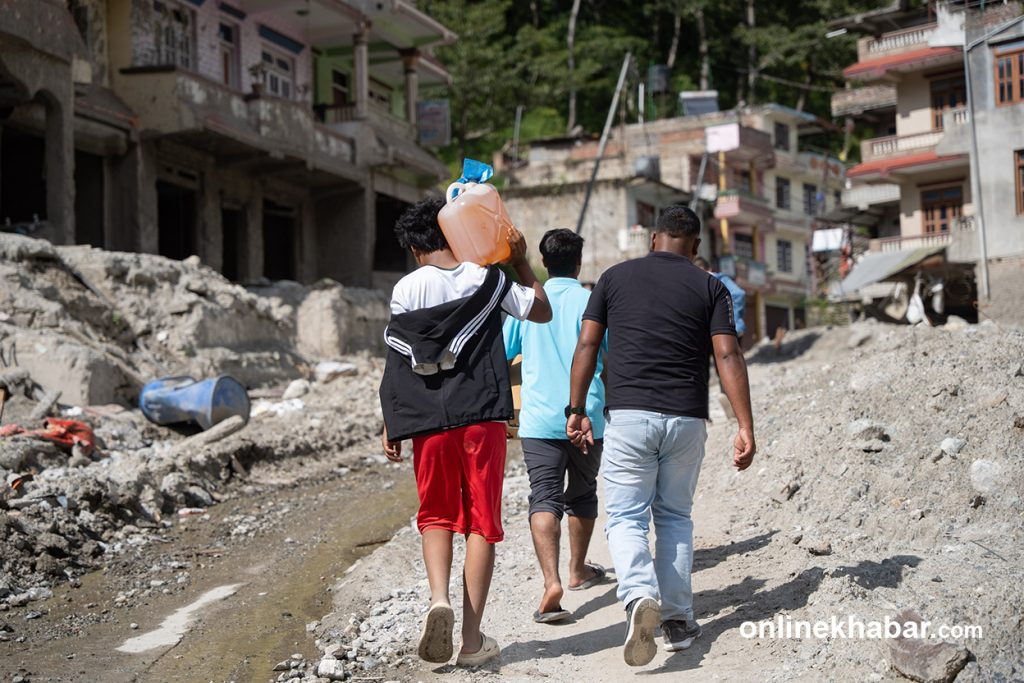
The displaced residents of Syabrubesi want the government to establish an integrated settlement for them.
“We want all the people from Syabrubesi to be provided with an integrated settlement in one place,” Pratima said.
They say living together is also important for preserving their religion, culture and traditions.
“We have an emotional and spiritual connection with the soil and land there. We want to be settled in a safe place higher up from the original settlement,” said Chhiring Tenzing Lama.
The floods also destroyed cultural heritage in the area, he said.
“Our monastery was swept away. There were inscriptions carved into stones. Things that represented the identity of the Tamang community have disappeared. They need to be restored,” he said.
Some households missing from official data
Some displaced residents at the holding centre have also complained that their households were left out of official data collection.
Karsang Tamang is among them. His house was also damaged, but he says his household was not included in the data.
“It appears that the data of around 30 to 40 households was missed. We have also lost relatives and suffered physical damage. The data should not leave anyone out,” he said.
Karsang works as a guide and was in Kerung, Tibet, on the 10th. Because he was delayed in returning, his name was left out of the household count.
He said he also lost around 100 to 150 fellow guides at the border.
“Guide friends from Rasuwa and Sindhupalchok are still out of contact,” he said. “I survived because I had already crossed the border.”