


Tetangche, September 23
The kitchen in Selkar Tamang’s home has gone quiet. Tamang lives with six other members of his family in Tetangche, a remote settlement in Ward 5 of Aamachhodingmo Rural Municipality in Rasuwa district.
Since the Bhotekoshi flood on August 26 cut off the road connection to the village, no food supplies have reached Tetangche. The rice, cooking oil and salt in Tamang’s home have run out.
“We have been surviving on nettles and potatoes,” he said.
His family is not alone.
Across the village, households are struggling to find food. Some families have 10 to 12 members, and even those who have money cannot buy what they need because there is no way to bring supplies into the settlement.
“It has become difficult to keep the stove burning,” he said.
After the flood, the government provided each household with a sack of rice as relief. But that supply has already been exhausted.
“What good can one sack of rice do to a family this big. The times are tough,” said Tamang.
Nepal’s last settlement before Tibet
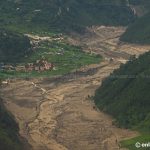
There is no settlement beyond Tetangche on the Nepali side. It is the country’s last settlement in that direction. Tibet lies beyond the village.
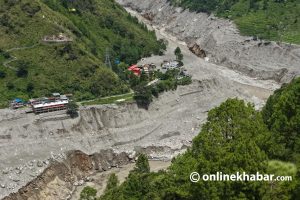
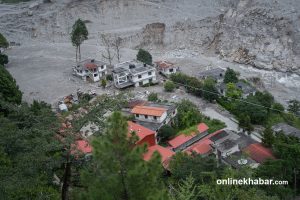
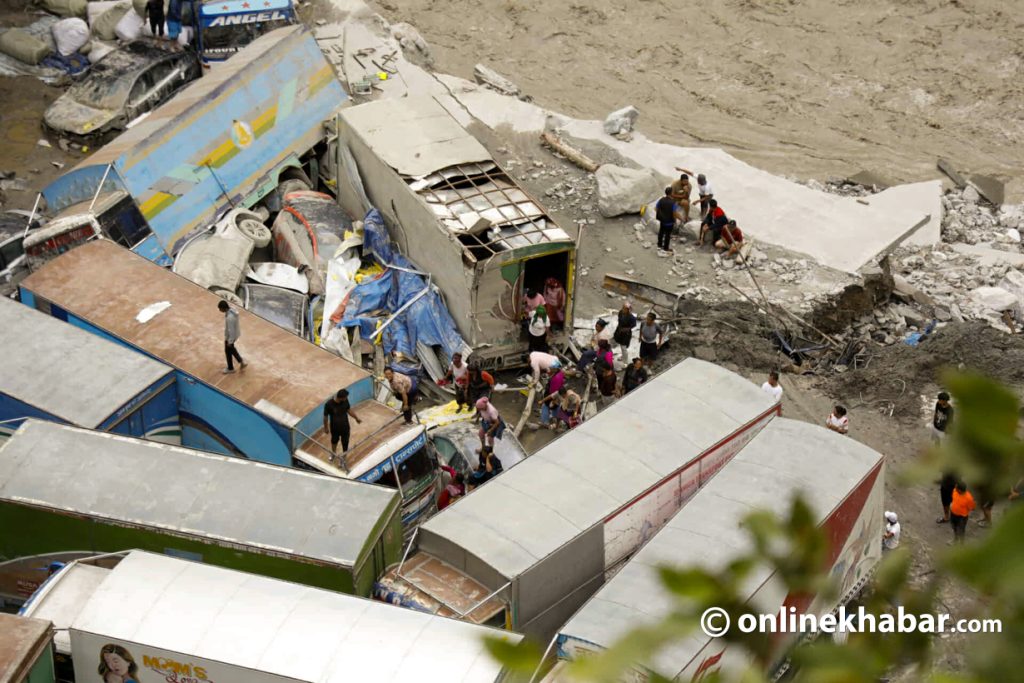
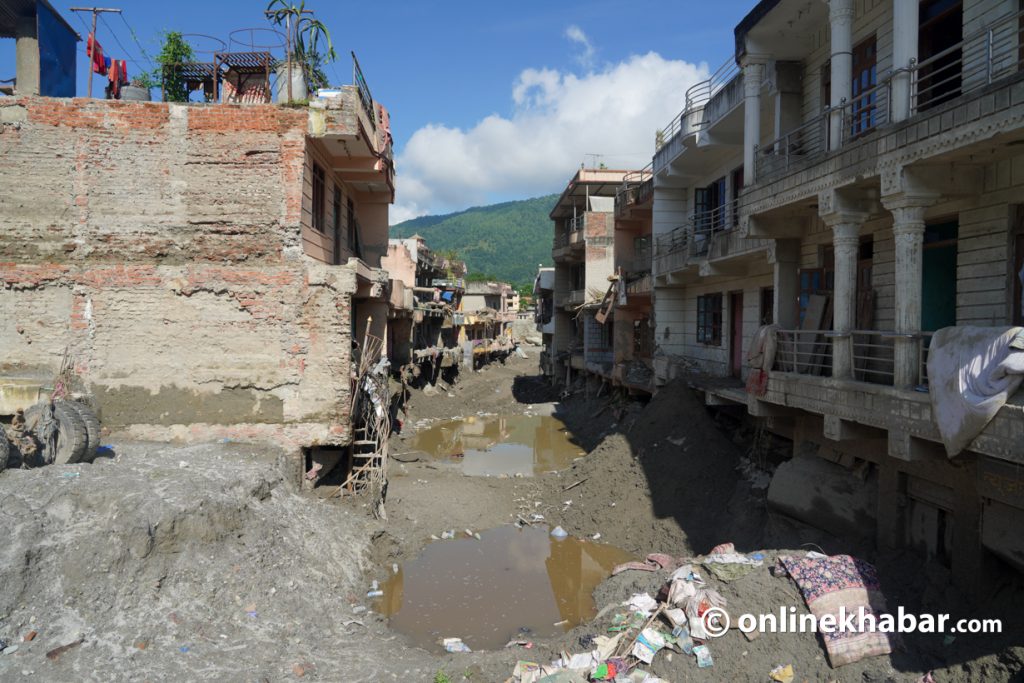
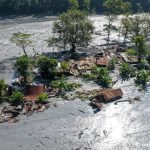
For years, food supplies reached Tetangche from Syafrubesi and Hakubesi. But the August 26 flood swept away Syafrubesi itself, severing one of the main routes through which supplies reached the remote settlement.
“There is no settlement, no road and no bridge. There is no way to bring food,” said local resident Mingmar Tamang. “The food shortage in Aamachhodingmo Rural Municipality is because the roads and bridges are gone.”
The crisis is not only about food.
Around 19 people from Tetangche who worked in areas including Timure were caught in the flood. Those who remain in the village are still dealing with uncertainty over their relatives. Even materials needed to carry out funeral rites have become difficult to obtain.
“The 49th-day funeral rite has to be performed, but there are no materials,” Mingmar said. “A small funeral rite for the fourth week is going on. We are struggling to figure out where to get the materials.”
A village that now depends on the market
Tetangche once produced grain. That is no longer the case.
Mingmar said agricultural production declined with the development of hydropower projects, leaving residents dependent on markets for their food.
“We used to grow grain before. That is no longer possible because of hydropower,” he said. “There is no grain. We all depend on the market for our food.”
Some residents from the village worked at the Timure border point, while others were employed by hydropower projects.
Some of those who were caught in the flood have still not made contact.
“We are suffering twice over,” Mingmar said. “On one side, our relatives have been caught in the flood. On the other, there is nothing here.”
Five wards cut off

The broken roads and bridges have affected five wards of Aamachhodingmo Rural Municipality. Buchung Tamang, chairman of the rural municipality, said the lack of road access has made it impossible to transport essential goods into the affected areas.
“There is no way to take supplies there because there are no roads,” he said. “Around 5,000 people from 1,701 households have been affected.”
There is food being produced in some parts of the municipality, but getting it to market has become another problem.
Cabbage farmers previously sold their produce and used the income to buy food. Now, with the roads blocked, they have lost access to the market.
“There is no market where we can sell the cabbage now,” chairman Tamang said. “Local production is not enough to feed people throughout the year. The federal government needs to give this priority.”
The municipality has provided one sack of rice and oil to each household, but Tamang said the relief would not last long.
Cabbages are rotting as farmers lose their market
The flood has created a strange contradiction in Aamachhodingmo.
Farmers have crops, but they cannot get them to the market. At the same time, villagers are running short of food.
Cabbage produced by farmers in the municipality is now at risk of going to waste because there is no market to sell it.
Last year, farmers in the municipality sold cabbage worth around Rs 30 million. This year, they had expected the trade to reach Rs 60 million.
“This was the time to take the cabbage to market, but the flood blocked the roads,” chairman Tamang said. “Since there is no way to take it to market, farmers will suffer.”
For many farmers, selling cabbage was not simply a way of earning money. It was how they bought food for their families.
But with the roads and bridges damaged, even that source of income has been cut off.
Food may have to come by helicopter
Dawa Gombo Tamang, chairman of Ward 5, said the lack of road access means food may now have to be transported by helicopter.
“Syafrubesi has not reopened. There is no other option but to bring food here by helicopter,” he said. “It would become easier if the roads and bridges were rebuilt quickly.”
The flood has affected 198 people from Aamachhodingmo Rural Municipality, according to rural municipality chairman Buchung Tamang.
They include residents who were in Timure, Syafru and other areas for work when the flood struck.
“The largest number are from Ward 1,” he said.
Children have classrooms, but no notebooks
The disruption has reached the village school as well.
At Shree Saraswati Basic School in Chilime, Ward 5, students are struggling to find even basic stationery because shops in the area have run out of supplies.
“Classes are continuing, but there are no notebooks and pens,” Mingmar said.
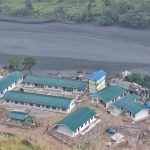
The school has 50 students up to Grade 8, according to teacher Pasang Tamang. It also has a hostel.
But the flood has prevented food supplies from reaching the hostel, while stationery has also become scarce.
“There is a hostel at the school,” she said. “Food has not arrived because of the flood. There is also a shortage of stationery.”
For the people of Tetangche, the flood has therefore become more than a disaster that destroyed roads and bridges.
It has cut off the routes through which food arrives, the markets where farmers sell their crops and the places where many villagers work.
For families such as Selkar Tamang’s, the consequences are being felt at the most basic level — at home, around a stove that is becoming increasingly difficult to light.
Local residents are calling for immediate relief and the rapid reconstruction of roads and bridges.