Kathmandu, September 24
Members of civil society and human rights activists have demanded that the government immediately make public a detailed action plan for rehabilitating flood victims, rebuilding damaged infrastructure, and reducing loss of life and property from future disasters.
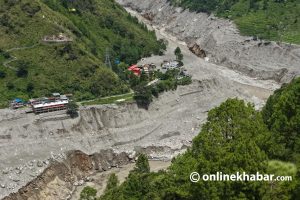
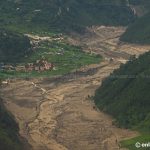
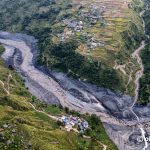
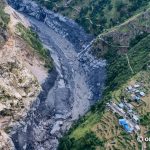
In a joint statement, they expressed sorrow over the damage caused in Rasuwa, Nuwakot, and Dhading by flooding that followed a glacial collapse in the Lirung area of the Langtang Himal on Bhadau 10, with the flood traveling through Tibet’s Kyirong area via the Lhende Khola.
The statement notes complaints of delays from affected communities during search, rescue, relief, temporary shelter, and rehabilitation efforts following the flood, and claims there was insufficient coordination among government mechanisms. It also urges the government to make the National Disaster Risk Reduction and Management Authority’s role more effective.
Citing the Authority, the statement says the flood affected 32,936 people, killed 1,451, left 5,745 people unaccounted for, and left 1,200 children having lost both parents.
Civil society members and human rights activists said that, given the rising risk in the Himalayan region due to climate change, early warning systems, information dissemination, and risk-reduction programs must be prioritised. The statement also notes an assessment by international organisations that 47 glacial lakes in the Himalayan region remain at risk of bursting.
They have called on the government to publish a comprehensive action plan, including an early warning system, for rehabilitating those affected by the flood, rebuilding physical infrastructure, and reducing loss of life and property from future natural disasters.
Call for PM to raise the disaster issue at the UN
The statement urges that, when Prime Minister Balendra Shah addresses the UN’s 81st General Assembly, he present to the international community the disasters Nepal has faced, along with efforts on search and rescue, relief, rehabilitation, and reconstruction.
It also notes that Nepal has claimed USD 20 million in compensation from the Fund for Responding to Loss and Damage for damage caused by the flood and climate change, and urges the government to push for a fair resolution of that claim.
The statement also calls for an appeal, through the General Assembly, for international grant support for victim rehabilitation, establishing information centers, building a cross-border information network, and rebuilding damaged physical infrastructure.
It states that Nepal’s climate-related compensation claim should be presented on the basis of the UN Framework Convention on Climate Change, and that the international community should be reminded of the outcomes of Nepal’s various national climate initiatives, including the Rio Earth Summit, the Kyoto Protocol, and the Paris Agreement.
The statement is signed by 17 people, including Abhishek Adhikari, Ayush Baral, Indu Tuladhar, Krishna Gautam, Dinesh Tripathi, Nitu Pokharel, Bhagawati Adhikari, Monika Niraula, Ramesh Adhikari, Riyav Bania, Savitri Thapa, Shiva Khakurel, Shyam Kumari Sah, Sushil B.K., Sushil Pyakurel, Som Niraula, and Shobhakar Budhathoki.