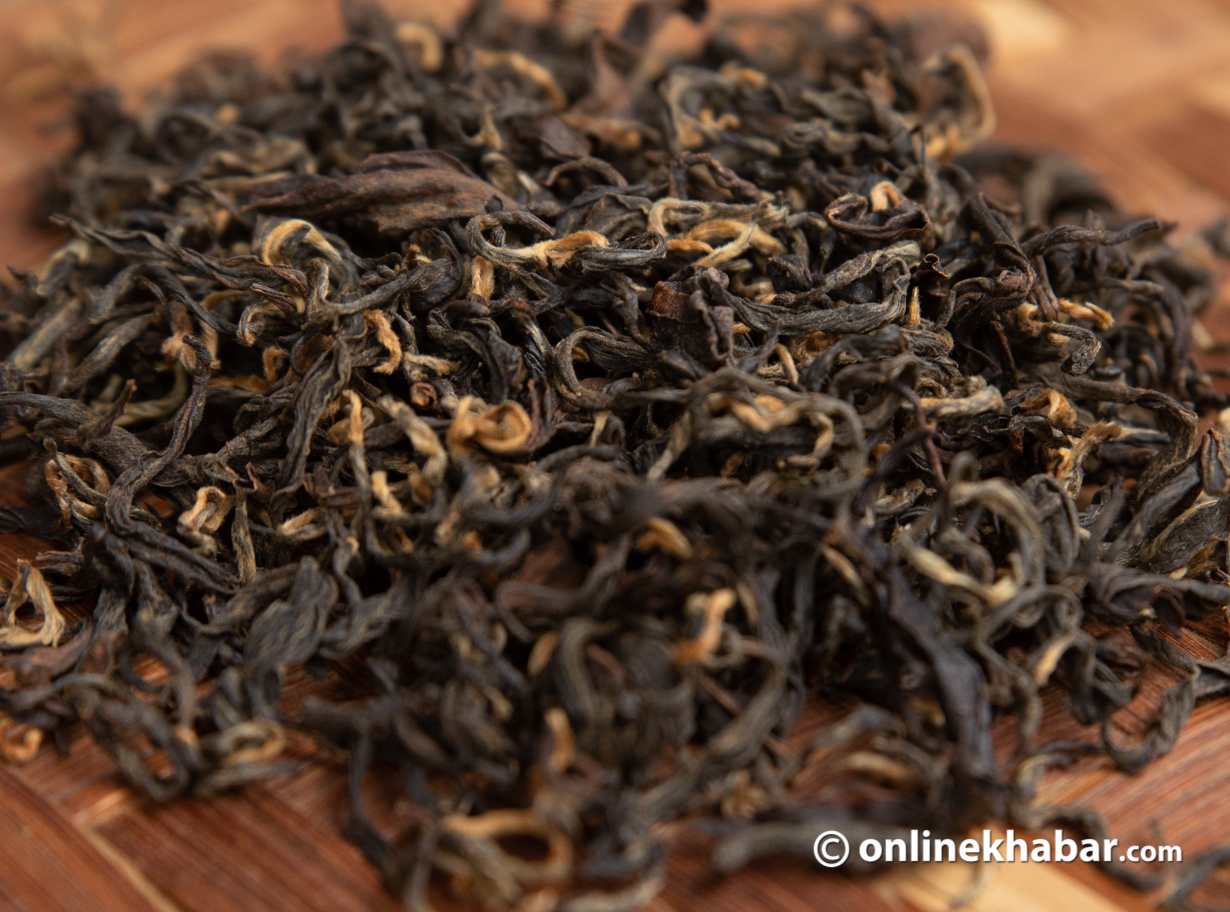

The barrier to Nepal’s tea exports to India that had persisted for the past three weeks has been temporarily lifted.
The Tea Board of India, operating under India’s Ministry of Commerce and Industry, has withdrawn the mandatory sampling (compulsory sampling) requirement it had imposed on tea imports, allowing Nepali tea exports to resume smoothly.
After the Tea Board of India issued a revised notice (Corrigendum-2) on Tuesday night, Nepali tea traders expressed relief. Following a joint meeting between officials of the Food Safety and Standards Authority of India (FSSAI), the Customs Department, and the Tea Board, Nepali tea exports to India, which had been halted, are set to resume as normal from Wednesday.
According to the revised standards issued by the Tea Board, separate testing rules will now apply for tea destined for India’s domestic market and for tea that is re-exported to third countries from India.
Until further formal clarification or instructions are issued by FSSAI, the Tea Board will not conduct any testing on tea intended for domestic consumption. However, customs offices or FSSAI may, individually, collect only random samples for inspection under their own risk management systems.
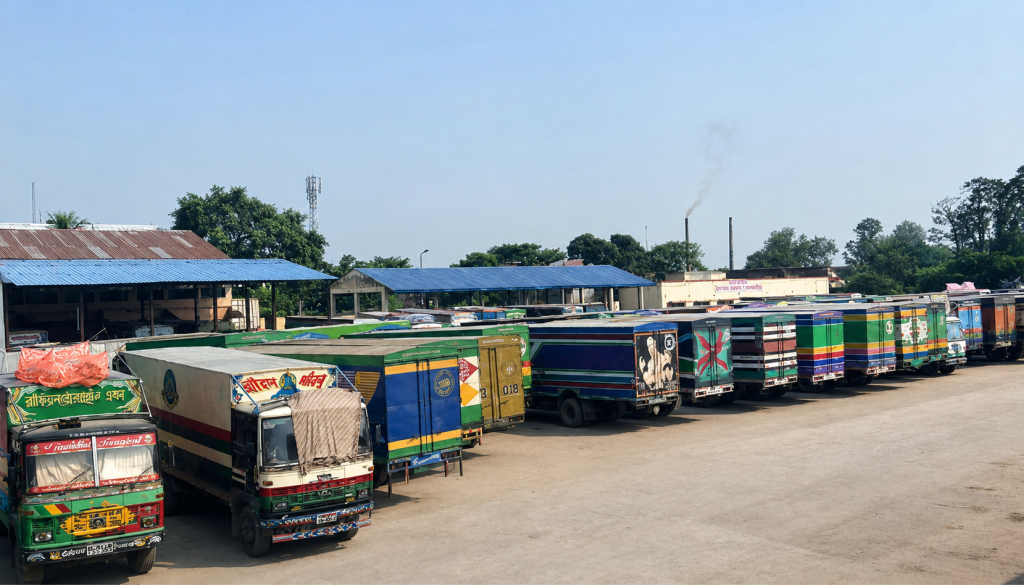
In practical terms, this means that trucks carrying tea from Nepal for India’s domestic market will no longer be stopped at border checkpoints for mandatory inspection.
However, stricter rules remain in place for Indian traders who purchase tea from Nepal and re-export it to third countries with attractive packaging and branding. Tea consignments imported into India for re-export will still be subject to mandatory quality testing under the Tea Board’s Standard Operating Procedure (SOP) of February 10, 2026.
Additionally, the Tea Board has also shortened the turnaround time for test results to facilitate trade. Previously, lab reports took at least 15 days; now, laboratories must upload test reports online within 5 days of receiving a sample.
Industry reaction
Shiva Kumar Gupta, Senior Vice President of the Nepal Tea Producers Association, confirmed that India has now fully withdrawn the mandatory sampling requirement, opening the path for exports.
“The compulsory testing system that the Tea Board had put in place has now been withdrawn,” Gupta says to Onlinekhabar. “With this rule removed, tea exports are now fully open for the time being.”
However, he noted that it remains unclear whether this is a permanent removal or a temporary measure.
“They may come up with a new system or procedure; the current relaxation could be preparation for that,” he says. “We don’t yet know what new rules may come in the future, but until new regulations arrive, the inspection barrier has been lifted.”
Nepal Tea Association President Kamal Mainali also said the new circular from India has eased the situation, calling it a temporary resolution.
“This Indian facilitation has brought relief to farmers, industrialists, and traders,” he added.
Background
India had introduced a new Standard Operating Procedure (SOP) effective from May 1, requiring mandatory sampling of each truck of imported tea for INR 11,120 per truck, with test results taking at least two weeks.
This brought Nepali tea exports to India to a complete halt. The Nepali Embassy had been in regular dialogue with India’s Ministry of Commerce and the Tea Board to seek the removal of the barrier. The relaxation came after nearly three weeks.
Trade significance
According to the Customs Department data, tea exports are significant to Nepal’s economy.
In the last fiscal year alone, tea worth approximately NPR 3.98 billion was exported to India. In the current fiscal year, exports of NPR 2.34 billion had already been recorded through the end of mid-April. Traders expressed optimism that exports would now proceed smoothly without further disruption.