
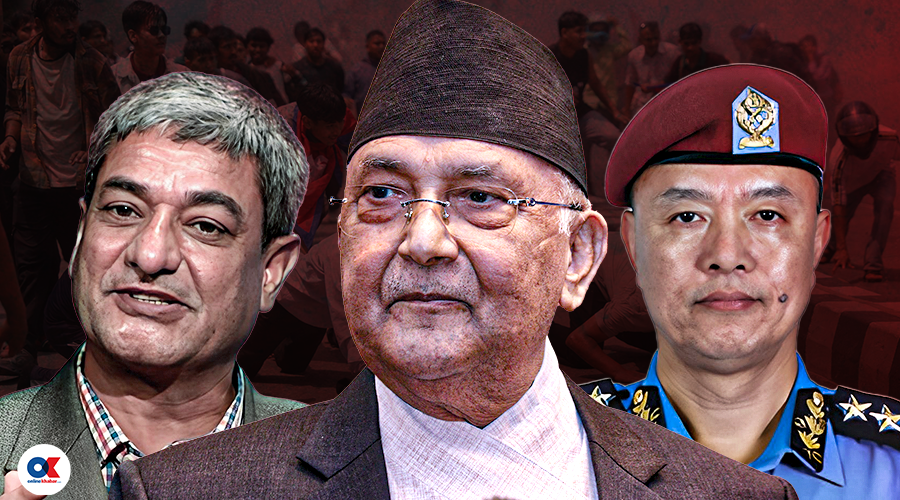
The report prepared by the probe commission on the Gen Z protest that took place on September 8 and 9 has been leaked. The probe commission was formed under the leadership of former justice Gauri Bahadur Karki.
In the report, it has been recommended to proceed with a criminal investigation against the then Prime Minister KP Sharma Oli, then Home Minister Ramesh Lekhak, and IGP Chandra Kuber Khapung.
Failure of the then PM
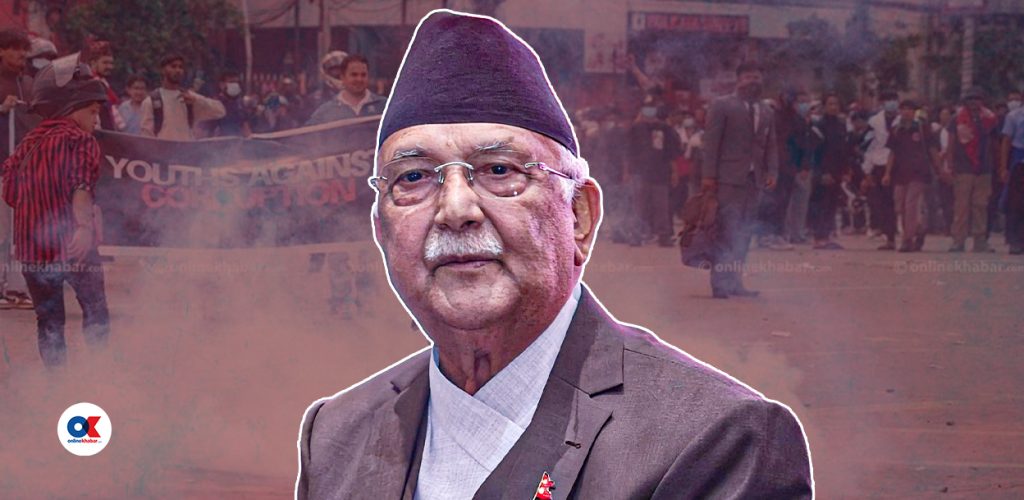
Regarding Oli’s role, the probe commission has stated, “In a parliamentary system, even while gunfire continued for nearly 4 hours outside the Parliament building premises, and even after some had died and hundreds had been injured, not making efforts to prevent further human loss in the capacity of an office-bearer who holds the responsibility and duty of being the guardian of all citizens of the state is a major weakness of the Prime Minister (guardian).”
During questioning, the report mentions that Oli gave irresponsible answers, and the commission has termed Oli irresponsible for not making any effort to prevent human loss.
Oli stated that on September 8, as provocation was spread in a planned manner, casualties, including loss of youths’ lives, occurred.
While giving his statement to the commission formed to investigate the repression in the Gen Z movement, former Prime Minister Oli accused that groups trying to fulfil their objectives by putting youths forward created provocation.
“In the evening after the incident of September 8, a government meeting was held and decisions were taken to form a judicial commission regarding impartial investigation of the incident, to ensure effective treatment of the injured as well as to provide relief to the families of the deceased, and to lift the ban imposed on social media as per the demands of the Gen Z generation,” Oli’s statement states. “On September 8, I resigned. If the movement happened because I was an obstacle, everything should have been fine after my resignation, but did it happen?”
Infilitrated protest: Former Home Minister Lekhak
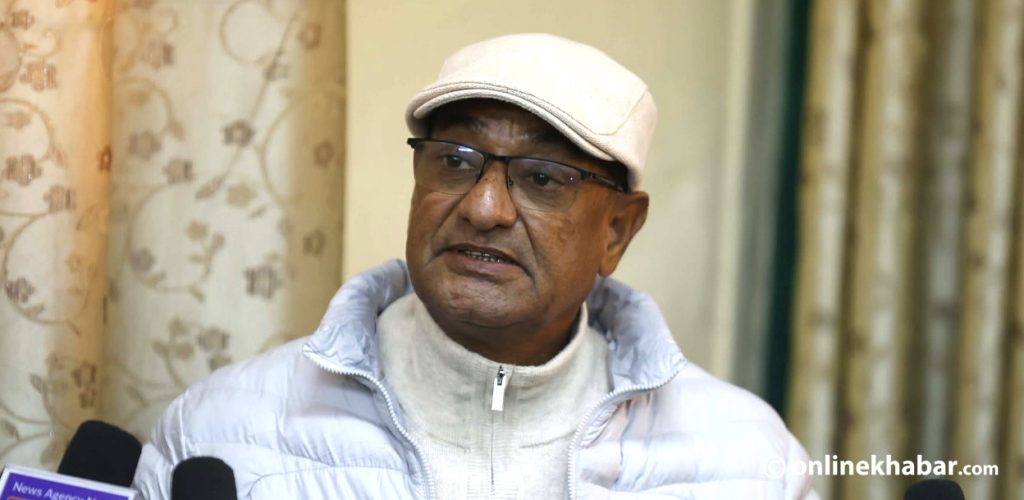
Former Home Minister Ramesh Lekhak said he had observed that the protests were infiltrated, a fact evident from the statements of the Gen Z leaders themselves.
During his testimony to the probe Commission, Lekhak argued that the attacks on the state’s historic and invaluable structures cannot be simply dismissed as the result of mere impulse.
“I have publicly stated that the demands raised by the Gen Z generation on September 8 were fundamentally legitimate, but I assess that the tragic incidents caused by infiltration into that sincere sentiment, as well as the attacks on the state’s historic and invaluable structures, cannot be confined to being merely impulsive,” Lekhak said during his testimony.
“I saw that the expressions of the Gen Z leaders, such as ‘Our movement has succeeded, but it is being hijacked and turned violent, friends return to your homes,’ confirmed the fact of infiltration into the protest,” he added further details in his statement.
He also clarified that while he did not give direct orders in the field, he had fulfilled his responsibility by providing policy guidance, coordination, and necessary facilitation from the political level.
The probe commission has recommended second-level action against others except the three office-bearers. It has also recommended action against Home Secretary Gokarna Mani Duwadi, Armed Police Force Inspector General Raju Aryal, National Investigation Department chief Hutaraj Thapa, and then Chief District Officer of Kathmandu Chhabi Rijal under Section 182.
With the conclusion that due to their negligence, loss of life occurred, the commission has said to investigate under criminal law applicable to that crime. If charges of negligence are attracted, there can be imprisonment up to three years and a fine of 30 thousand rupees.
The probe commission has recommended action against AIG Siddhi Bikram Shah, DIG Om Bahadur Rana, SSP Bishwo Adhikari, SSP Deep Shamsher Jabara, and SP Rishi Ram Kandel.
Shah was not the operation chief of Nepal Police on September 8, while Rana was the acting chief of the Valley Police Office. SSP Bishwo Adhikari was the chief of Kathmandu District Police Range. SSP Jabara was working at the Valley Police Office. Another SP, Rishiram Kandel, was leading the special task force of Nepal Police stationed at Singha Durbar.
The probe commission, in its report, has stated, “Due to the weaknesses shown by them in the discharge of duty and the role they played, it has become necessary to recommend action against them.”
TOB created violence
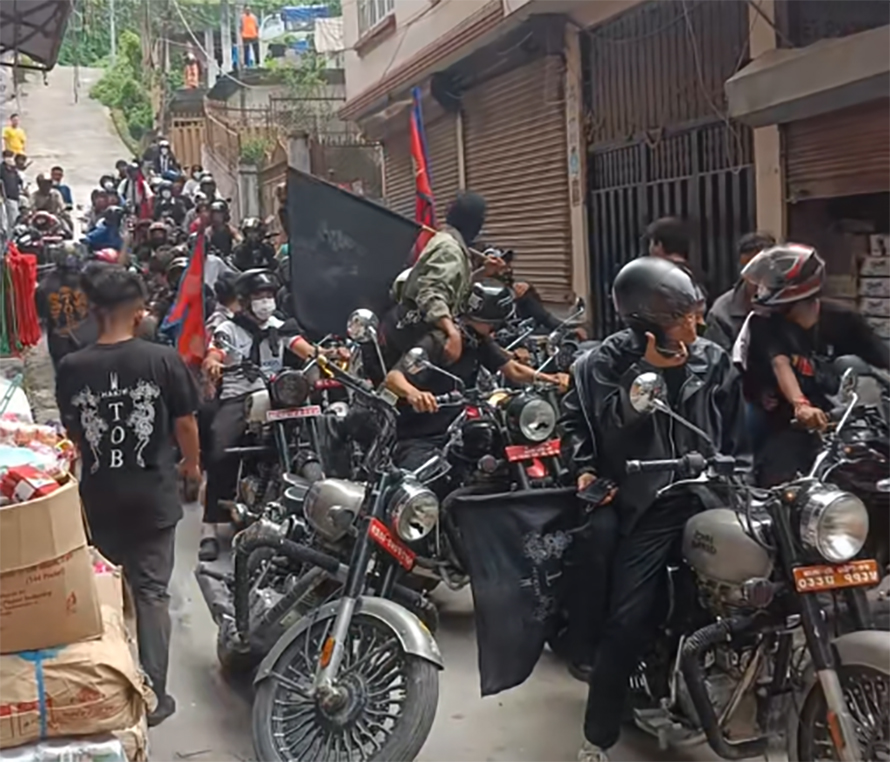
It has been revealed that the TOB group had a role in making the Gen Z protest violent.
“At around 12 noon on September 8, from various areas including Chabahil Om Hospital, Dhobikhola corridor, Gaushala, youths (some wearing black T-shirts with ‘TOB’ written) who came on about 100 motorcycles from Baneshwor and Bijulibazar areas made loud noise by revving motorcycles and acted to further provoke the crowd,” it is stated in the report.
After that, the crowd became more violent, pushing the police, attacking with water bottles, stones, rods, bricks, slingshots, and others. and tried to enter the Parliament building, the commission has said.
The commission has quoted Kathmandu District Police Range operation in-charge Sundar Tiwari and other police officials as saying that when the crowd could not be controlled even after persuading and explaining through miking, force was used.
The probe commission has pointed out errors that occurred outside Parliament on the first day during the Gen Z movement.
Stating that there were errors from the state in the incident that took place around the Parliament premises on September 8, the report has been submitted. The commission concludes that the use of serious weapons like guns and the firing of metal bullets by security agencies was a mistake on the government’s side.
It is mentioned in the report that security personnel fired without giving an effective warning that could be heard by everyone before using weapons.
The report has pointed out government weaknesses, as softer measures were not adopted while dispersing the protesters.
It is mentioned in the report that sufficient use was not made of water cannons, batons, barricades, aerial firing, dialogue and others. The commission has concluded that there was a violation of the state’s accountability towards human rights.
Why ban social media?
The social media ban was the triggering factor of the Gen Z protest.
Then, Communication Minister Prithvi Subba Gurung said that the decision to block social media was not due to any personal impulse. During his statement, Gurung said that the decision was taken as a duty to follow court orders, provisions of directives, and decisions of the Council of Ministers.
“In the capacity of a minister, I had consulted with the ministry secretary, joint secretaries, expert leadership of regulatory bodies, and security mechanisms within my contact, and ultimately the decision of the Council of Ministers was implemented,” Gurung said, “The decision to block social media was not due to any personal impulse, but was taken as a duty to follow court orders, provisions of directives, and decisions of the Council of Ministers.”
He has stated that at that time, platforms like Reddit and Discord were not separately identified as high risk and prioritised.
Verbal order to fire
In the Gen Z movement, then CDO of Kathmandu district administration, Chhabilal Rijal, has said that he gave a verbal order to fire rubber bullets targeted below the knee, but did not give an order to fire directly.
In his statement to the probe commission, Rijal mentioned that he did not give the order of final force, that is, to fire directly.
“I had given a verbal order to fire rubber bullets targeted below the knee, but I had not given the order of final force, that is, to fire directly,” then CDO Rijal has said, “But in that same tense situation, I had heard from the police radio set that first the Inspector General of Police and then the acting chief of the Kathmandu Valley Police Office gave the order ‘open fire as necessary to bring the situation under control.’”
Kathmandu Metropolitan City’s then mayor Balen Shah stated that the September 9 incident was triggered by what he described as the government’s excessive, “terrorist-style” use of force on September 8. He has stated that the then government and the parties participating in the government should take full responsibility for that incident.
In Balen’s statement, he mentioned that he played a role in calming the incident at the request of the President and the Army Chief.
“The incident of September 9 was tragic and may be the result of excessive force and terrorist-style action of the government on September 8. On September 9, the metropolis had sent fire engines on time, and the structures within the metropolis were controlled by the metropolis’s own fire engines,” reads Balen’s statement in the report. “At the request of the President and the Army Chief, I had a role in calming the movement. The then government carried out criminal and terrorist activities, and the then government and participating parties should take responsibility for all damages.”
Discord as decisive
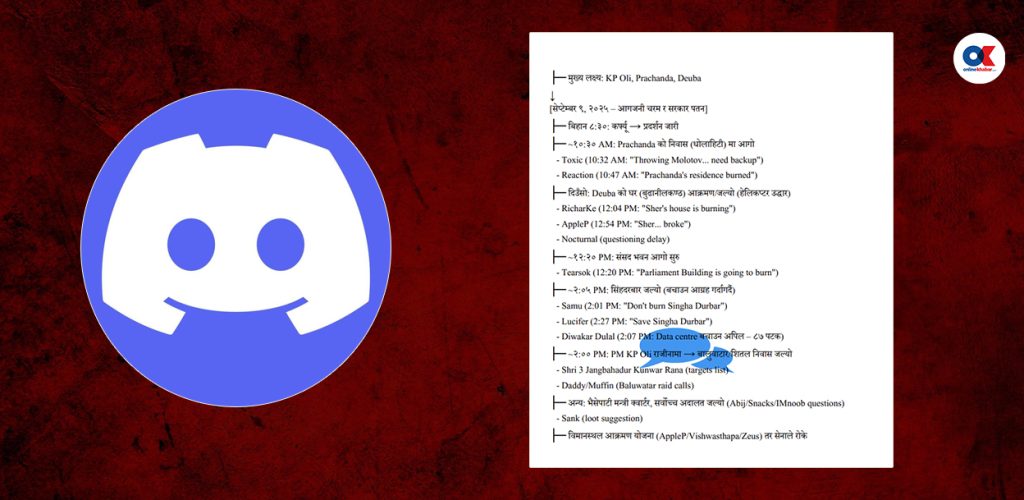
The probe commission has pointed out that the Discord platform was decisive in the preparation and operation of the Gen Z movement.
The commission has done a separate incident analysis under the title of risk of misinformation and infiltration. It is stated in the report that misinformation, such as rape in hostels and exaggerated death numbers, spread during the movement and it provoked the crowd.
The protesters themselves had also suspected that there could be infiltration of political party cadres and other interest groups.
During this movement, mainly Discord servers named Yuva Hub and Youth Against Corruption were used. The server named Yuva Hub has been active since September 7. From this server, channels were created for various purposes by naming different places.
Similarly, the admin of the Discord server named Youth Against Corruption was ‘Hami Nepal’.
The dialogues that took place in those servers have also been included by the probe commission.
Misled by social media influencers
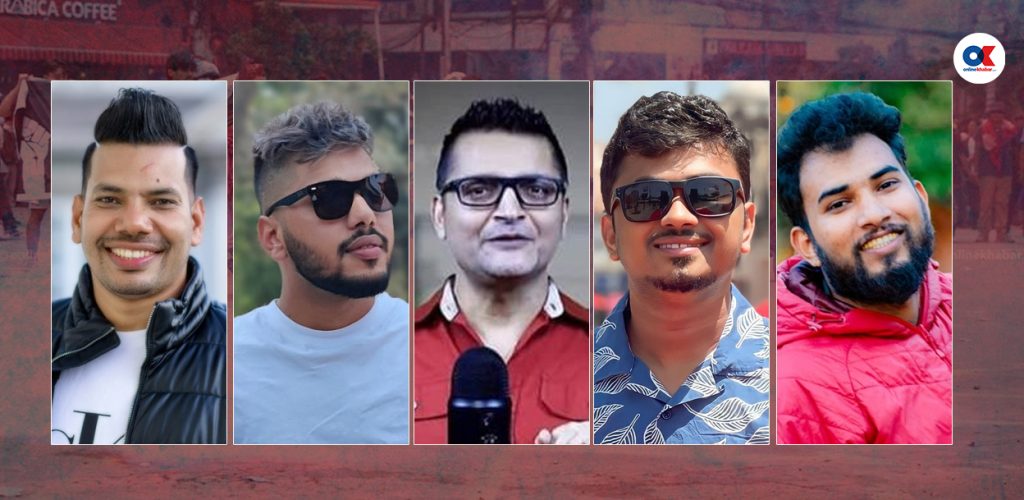
The probe commission has concluded that five social media influencers were also involved in spreading misleading information during the Gen Z movement.
According to the report, among the five involved in spreading misleading information are media influencers Tanka Dahal, Sujan Dhakal, Shiva Pariyar, Himesh Pant, and Bhagya Neupane.
“Misleading propaganda, such as spreading that skeletons of 35 bodies were found at Bhatbhateni in Chuchepati in the incident of September 8, was done. Similarly, propaganda was spread on September 9 that 32 missing protesters were found dead inside the Parliament building in Baneshwor. In spreading such propaganda, individuals like social media influencers Tanka Dahal, Sujan Dhakal, Shiva Pariyar, Himesh Pant, and Bhagya Neupane were found to be involved,” the report states.
The commission has mentioned that another air hostess spread misleading propaganda claiming that Prime Minister Oli fled to Dubai via Himalayan Airlines and that she herself had witnessed it.
“Himalayan Airlines had to issue a press statement denying this. Similarly, in another media, it was propagated that Nepali Congress General Secretary Gagan Thapa was being dragged and beaten by the crowd, which was false propaganda. The then Deputy Prime Minister and Finance Minister Bishnu Prasad Paudel was shown in a video as running into a river to escape from the crowd and being beaten by individuals,” the report states.
No involvement of RSP: Lamichanne
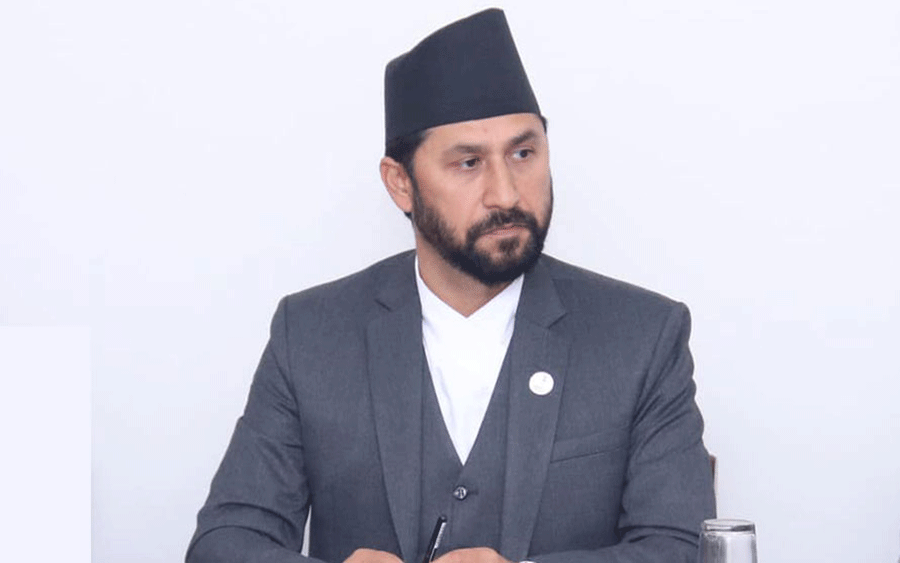
Rabi Lamichhane, while giving his statement to the probe commission, has stated that the Rastriya Swatantra Party was not involved in the incident of Bhadra 24.
Lamichhane’s statement has also been included in the report of the probe commission. While giving his statement to the commission, Lamichhane said that neither he nor his party was involved in the destructive incident of the following day. He had committed before the commission that action would be taken if anyone was found involved anywhere.
Lamichhane has claimed that on September 9, he did not escape from Nakhu prison, rather security officials and other staff of the prison administration requested him to leave the prison due to security reasons. Later, as the crowd approached Nakhu, he claims that at the request of security personnel, he persuaded the crowd.
“I refused to leave the prison without a court order. In a situation where the police were panicking, the crowd pushed me out,” he said in his statement. “After that, I climbed onto the balcony of a restaurant next to the prison and addressed the crowd, appealing for peace, restraint, and protection of public property.”
Stating that he was handed over to the crowd on the instructions of the prison administration itself, he has claimed that he was forcibly sent out despite not wanting to leave.
Blaming AI
Former Prime Minister Sher Bahadur Deuba has said that the videos circulated on social media about money found at his residence during the Gen Z movement must have been made by AI.
While giving his statement to the commission, Deuba claimed that there was a complete conspiracy against him.
Internal and external infiltration
Nepali Communist Party (NCP) coordinator Pushpa Kamal Dahal has said that there was a possibility of internal and external infiltration in the incident of September 9.
In the statement, he has said, “There appears to be a possibility of internal and external infiltration in the incident of September 9. The youths had already appealed to return home on September 8, saying that there had been infiltration in the movement. The events seen afterwards indicate that wrong elements used the emotions of the youths.”
Coordinator Dahal has said that while on September 8 it appeared as an expression of youth anger, on September 9 the nature of the movement changed and wrong elements used it.
Rewarding heroes
The commission has also recommended rewarding police officers who played an important role in protecting themselves and their weapons at that time.
Accordingly, the commission has recommended rewarding DSP Hari Bahadur Basnet of District Police Office Kaski, DSP Madhu Thapa of Kalimati Police Circle, DSP Sunil Shah of Maligaun Police Circle, DSP Chini Maya Tamang of National Police Training Academy, DSP Krishna Kumar Chand of Jana Sewa Police Circle, and DSP Navaraj Dhungana of Thimi Police Circle.
Similarly, it has also recommended rewarding two civilians who saved police personnel. They are Shiva Ram Banda of Hotel Swarnim and Guest House, Koteshwor, and watch shop operator Geeta Kumari Sah of Koteshwor.
It has been mentioned that when protesters were about to kill police personnel, they were rescued by letting them enter through the hotel terrace door, locking it, and feeding them.
Similarly, it has been recommended to reward Geeta Kumari for saving police constable Chij Kumar Kumal when a crowd had surrounded him and was about to kill him.
Similarly, it is mentioned in the report that the commission has told the Government of Nepal to enrol injured Gen Z protester Ekata Shah under a scholarship, and the admission process is currently underway.
Shah had been injured by a bullet in her left knee in front of the south gate of the Parliament building. It is stated that later she appeared for the MBBS entrance exam sitting on an ambulance stretcher and passed with 57.5 percent marks. The commission has suggested that she should be given a scholarship.