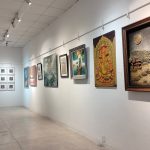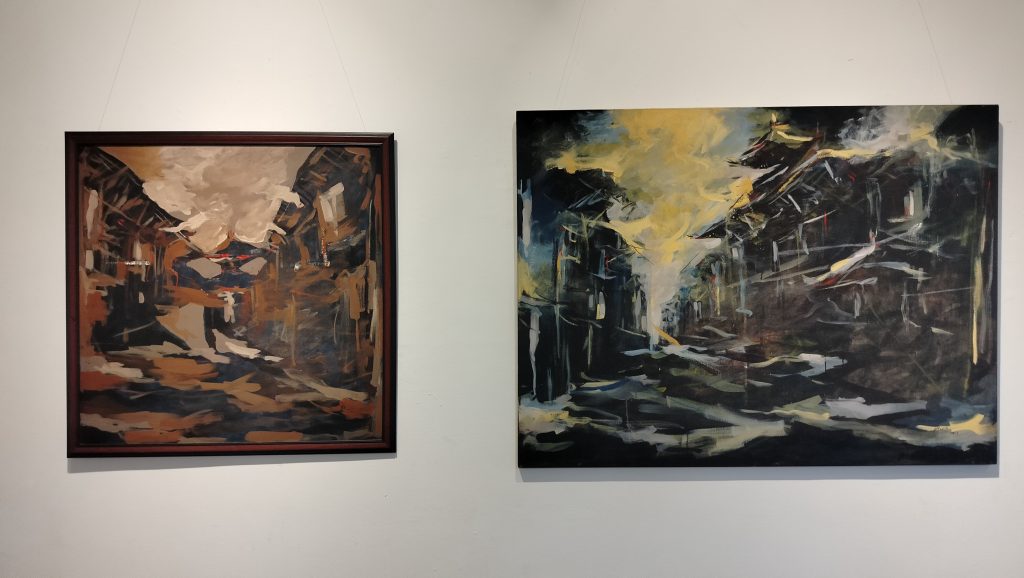
Inside the quiet walls of Gallery Mcube, Patan, colour begins to move like sound. Deep oranges, burning yellows, smoky blacks and earthy browns swirl across the canvases of veteran artist Pradip Kumar Bajracharya, creating scenes that feel less like static paintings and more like living memories. His solo exhibition, “Festive Spirit,” is not merely a visual presentation of Newa festivals; it is an emotional archive of Kathmandu Valley’s cultural pulse.
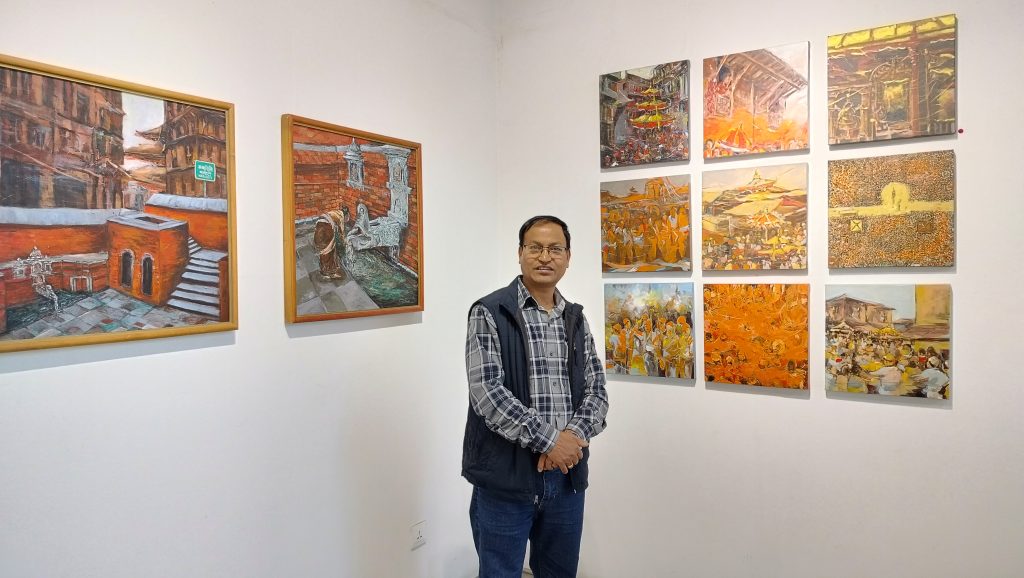
The exhibition unfolds like fragments of a procession remembered through sensation rather than detail. In one canvas, human figures dissolve into energetic brushstrokes, their forms barely distinguishable amid the glow of saffron and fire-like hues. In another, temple structures emerge from dark atmospheric layers, suggesting the sacred architecture of old Kathmandu streets during twilight. Bajracharya does not attempt photographic realism. Instead, he paints movement, memory and atmosphere.
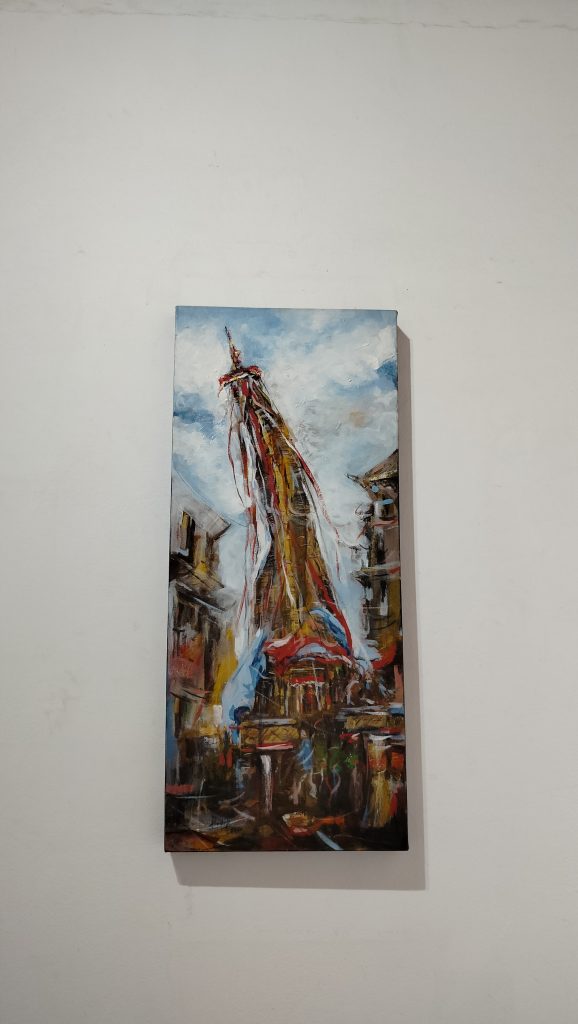
The artist’s works are deeply rooted in the spirit of Jatras, the grand festivals that define Newa cultural life. Chariots, temples, communal gatherings and ritual processions repeatedly appear throughout the exhibition, though often in abstracted forms.
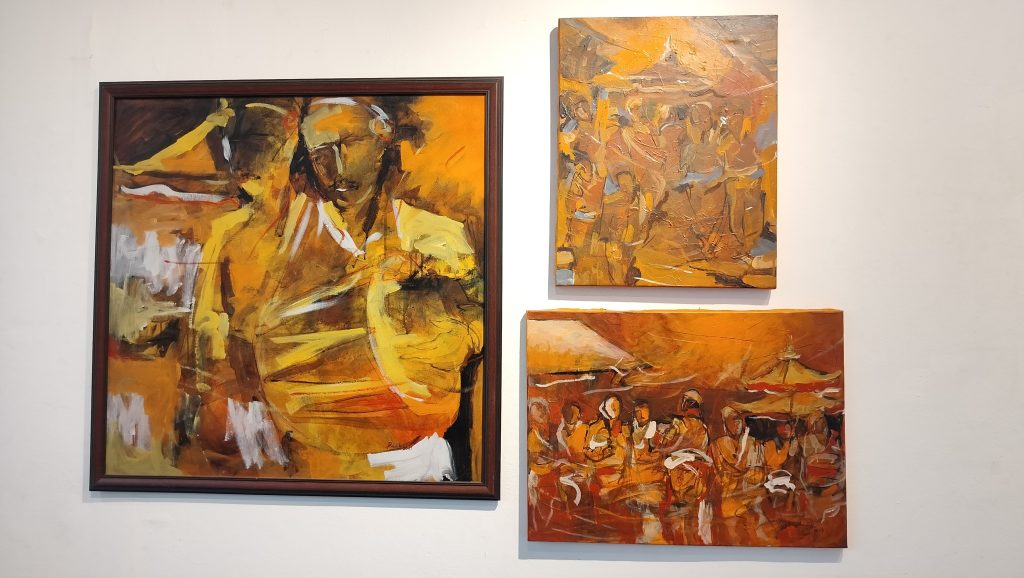
His paintings evoke the emotional intensity of these celebrations rather than documenting them literally. The blurred figures and layered textures mirror the sensory overload of festivals themselves — the smoke, chants, drums, lights and crowds merging into one collective experience.
What makes Bajracharya’s work compelling is its emotional sincerity. Having grown up witnessing these festivals, he approaches them not as distant cultural symbols but as lived experiences. His canvases reflect nostalgia, belonging and reverence for traditions that continue to shape Kathmandu Valley’s identity. Through expressive brushwork and bold colour contrasts, he captures the tension between preservation and transformation in a rapidly modernising society.
Several paintings in the exhibition particularly stand out for their treatment of space and memory. The darker-toned works portraying old alleyways and temple surroundings carry a haunting stillness. Black and blue shades dominate these compositions, interrupted by bursts of white and gold light, creating an almost dreamlike atmosphere. These works feel like recollections of ancient neighbourhoods fading under urban change. In contrast, the warmer compositions burst with communal energy, where crowds and rituals appear immersed in celebration.
Bajracharya’s strength lies in his ability to balance abstraction with recognisable cultural imagery. Even when forms are fragmented, viewers can still identify the spirit of the Valley, the silhouette of temples, the movement of processions and the intimacy of shared rituals. His paintings resist rigid boundaries between contemporary abstraction and traditional subject matter, allowing heritage to breathe within modern artistic language.
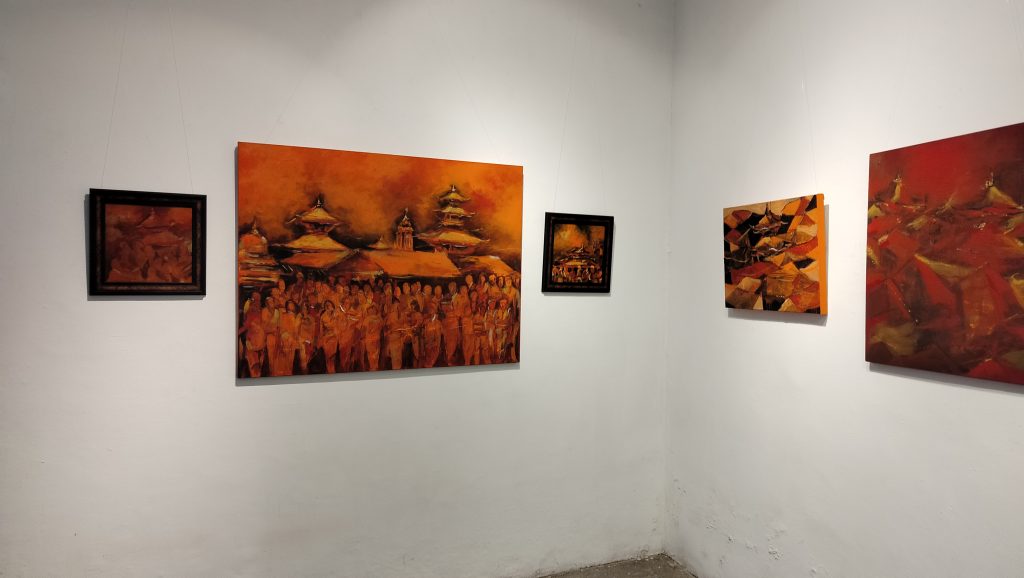
The exhibition also reflects Bajracharya’s long artistic journey. A graduate of the College of Fine Arts at Tribhuvan University, he has spent over two decades exploring Nepal’s cultural landscape through art. His earlier solo exhibitions, such as “Festive Images,” “Festive Moods”, and “Heritage Panorama”, reveal his continuing fascination with ritual life and collective memory. That continuity is visible in “Festive Spirit,” where the artist appears less interested in documentation and more invested in emotional resonance.
Beyond aesthetics, the exhibition carries a social dimension as well. A portion of the sales will be donated to the Disabled Service Association, adding a humanitarian layer to the exhibition’s cultural concerns.
At a time when rapid urbanisation and digital lifestyles continue to reshape cultural engagement, “Festive Spirit” becomes more than an art exhibition. It acts as a reminder of the rhythms that once defined everyday life in the Valley and still survive within its communities. Bajracharya’s paintings do not simply ask viewers to observe festivals; they invite them to feel the collective heartbeat behind them.
In these canvases, festivals are not events frozen in time. They are living energies — layered, chaotic, spiritual and deeply human.
The exhibition, which began on May 1, continues till May 17.