
Photos: Ghimire Yubaraj
Theatre teaches you to dare the impossible. Perhaps that is true of every passion. Something remains impossible only as long as we refuse to imagine it as possible.
We once believed it was possible to stage a live radio play underground, inside a copper mine with nearly 90 per cent humidity. We believed it was possible to present a radio play in a cinema, accompanied by a three-dimensional soundscape while the screen remained dark for sixty minutes. Both ideas proved difficult, yet achievable. But this year’s project overshadowed them all.
It began with a debt of four thousand euros. We believed it was possible to bring eight theatre artists from Nepal to Europe. My hopes rested entirely on a major grant programme from the Goethe-Institut. Then, exactly one month before the tour was due to begin, the rejection arrived. The venues in Germany, Denmark and Sweden had already been booked. Even the visas had been approved. Only the funding was missing.
During a crisis call with Yubaraj Ghimire, director of Shilpee Theatre, I laid out the reality: even with minimal expenses, the tour would become a financial disaster. Yuba saw things differently.
“We may only get an opportunity like this once in a lifetime,” he said. “We’ll find a way. And the plane tickets are already booked anyway.”
Imagine living in a country where you earn perhaps €110 a month. Would you spend your annual income on a round-trip flight? Would you travel to a country where everything costs five times more? As long as these eight artists earned nothing in Europe — through ticket sales, donations or grants — the system was exploiting them. That is the bitter truth behind the divide between the Global North and the Global South.
Yuba had made his decision. The Goethe-Institut had withdrawn, but the journey was not over. Smaller grants were already supporting us, and we would improvise the rest. Crowdfunding became our only option, and I resolved to do everything I possibly could. Why? Because I had fallen in love with this group of artists — with their courage and their mission to use theatre as a tool for social change.
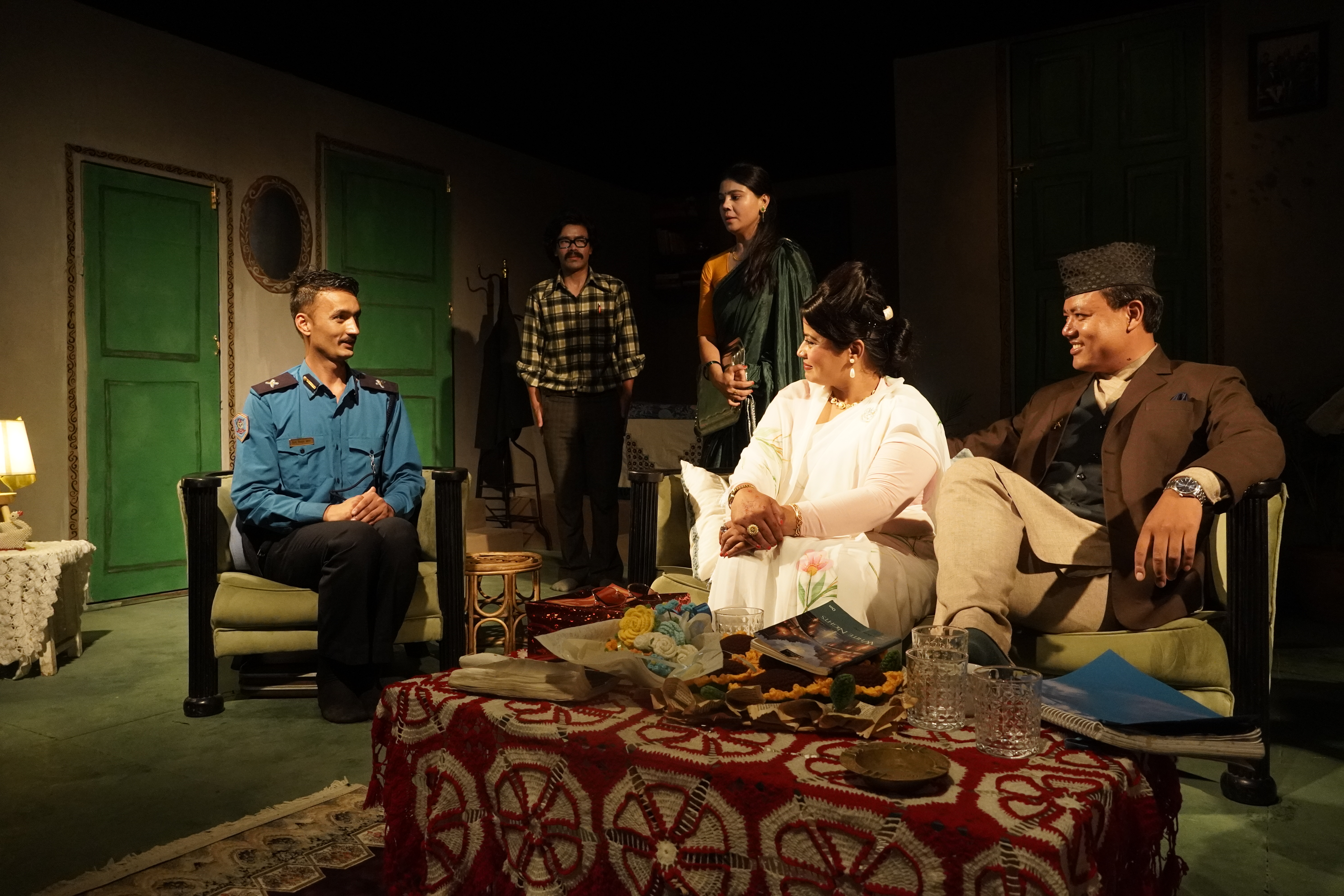
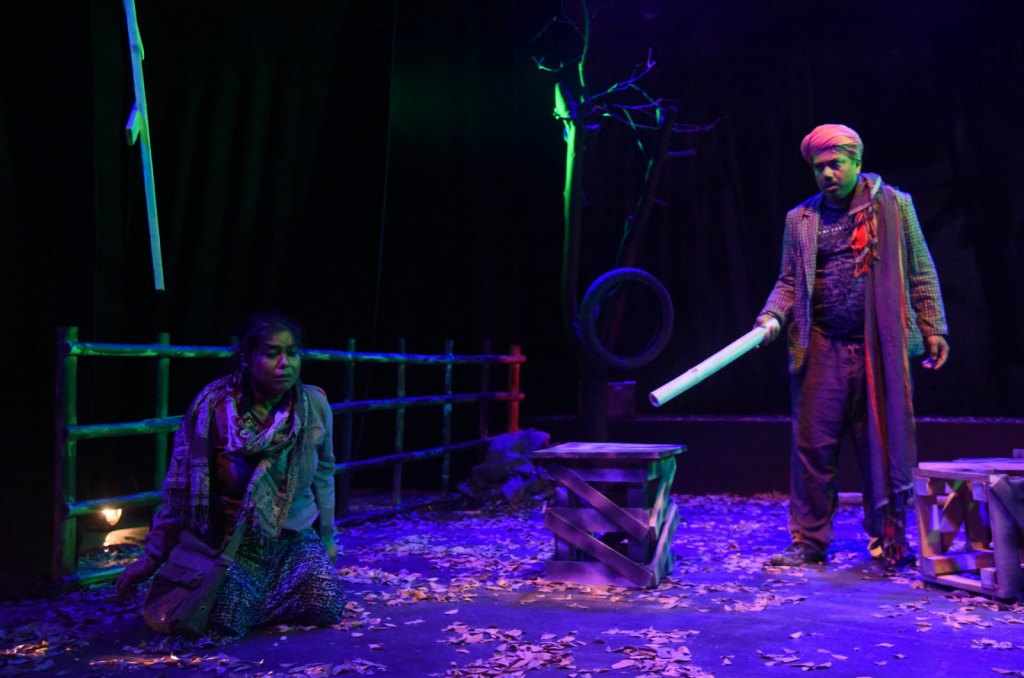
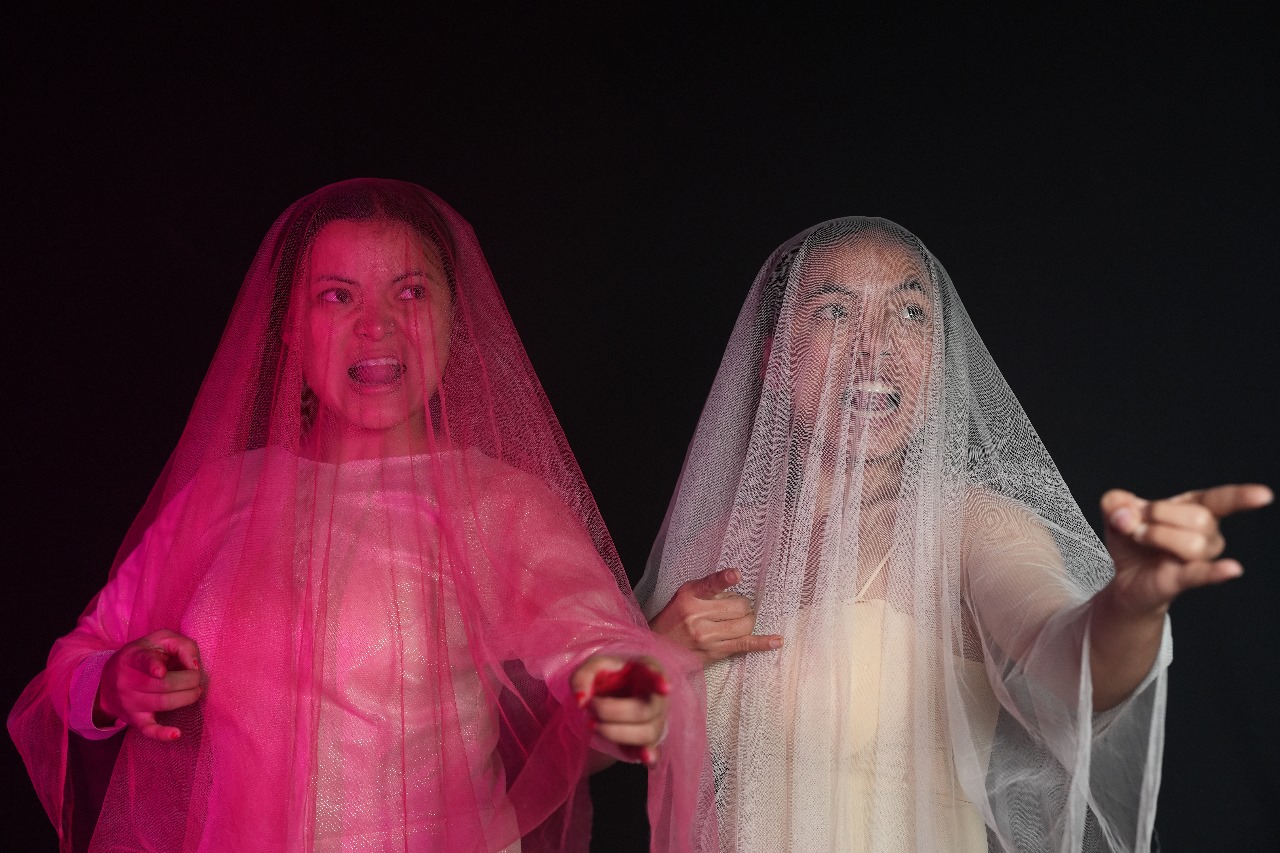
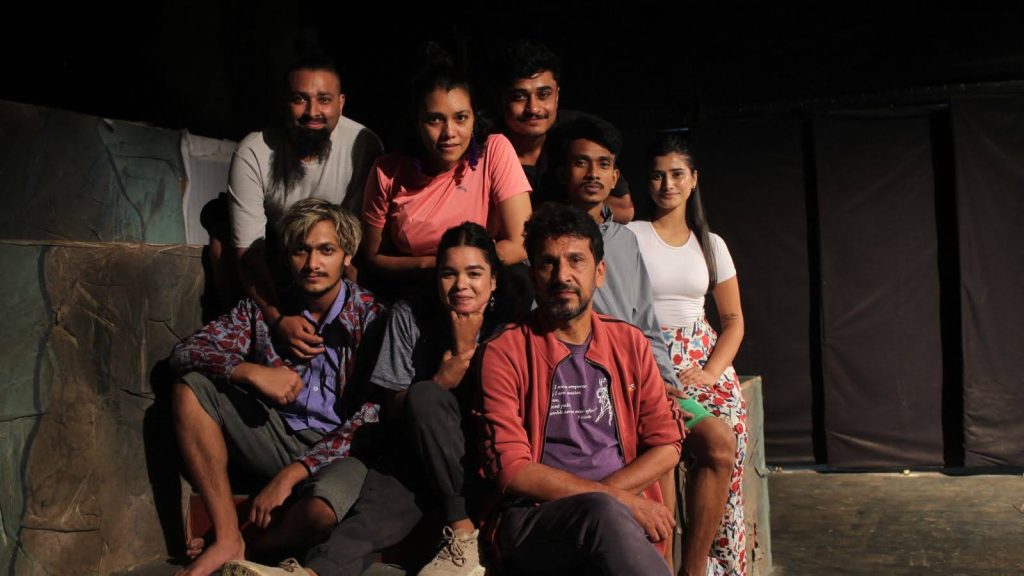
In Nepal, young women who cannot or will not prove their father’s identity are denied citizenship. It is almost unimaginable in Europe. Yuba wrote a play to highlight this injustice. The story was deeply personal to the group, especially because the main character also grew up without a father and spent years fighting for recognition in her own country.
Nepali musicians and bands had toured Europe before, but never a theatre ensemble of this scale. The tour’s title, “Beyond the Boundaries,” felt especially fitting. Gradually, I realised the project represented everything art can achieve: bringing together people from different cultures, experiences and realities. It became more than a theatrical tour; it became a way of surviving in a world fractured by war, inequality and crisis.
I unexpectedly found myself acting as a Nepali tour manager, coordinating with theatres and organisers across Freiburg, Cologne, Wiesbaden, Mainz, Frankfurt, Stockholm and Odense. Ironically, it was the independent theatre scene, the one with the least money, that opened its doors to us. Had the group travelled at another time of year, they might have performed at state theatres. But July meant summer break.
The arrangement was simple: every venue would cover local transport, accommodation, catering, publicity and technical logistics. As a result, we slept in guest rooms, borrowed homes, dormitories, shipping containers and even children’s bedrooms cleared out for our arrival. Yet this gave the artists something far more valuable than hotel comfort: genuine encounters with people and places.
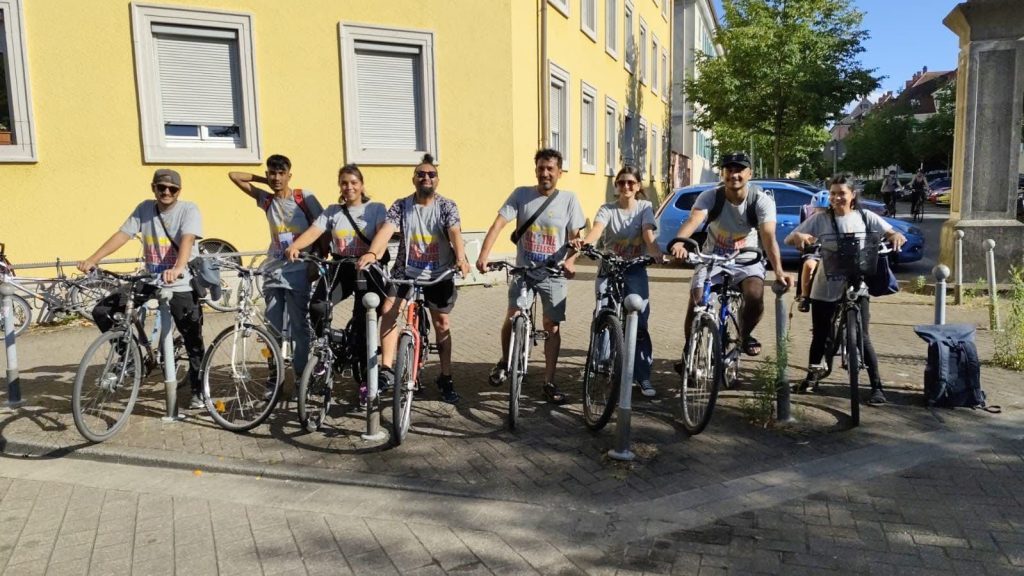
In Freiburg, Anita and Marcelo organised eight bicycles for the group. To save money, we cooked large portions of dal bhat — lentils, rice and curry. Someone always had a car ready to transport the heavy stage equipment across cities. We hauled two stage sets and personal luggage halfway across Europe.
The journeys themselves became chaotic adventures. Cars overflowed with bags. On ICE trains, we shoved luggage through the doors seconds before departure until the aisles were barely passable. Some members travelled lightly with backpacks, while others struggled with enormous suitcases.
“I think I made a mistake there,” Suhana laughed as we dragged her impossibly heavy trolley over a curb.
The challenges were not only physical and financial, but bureaucratic. A German visiting Nepal can obtain a visa on arrival at the airport for around 50 euros and travel freely for 90 days. A Nepali citizen travelling to Germany, however, must submit stacks of documents, invitations from every host, and pay almost double the fee.
At one point, an artist lost his passport during the tour. Fortunately, thanks to Ram and his connections at the Nepali embassy, the issue was resolved quickly. The consul general, who had attended the performance in Cologne, was so moved by the production that he personally paid for the replacement passport.
Before the tour began, I worried about one thing above all else: would audiences connect with a play performed in Nepali? The production drew heavily on the life of Siddhartha Gautama, but many European viewers lacked the cultural context. I wrote a short introduction and translated the entire script from English into German only a week before the performances began.
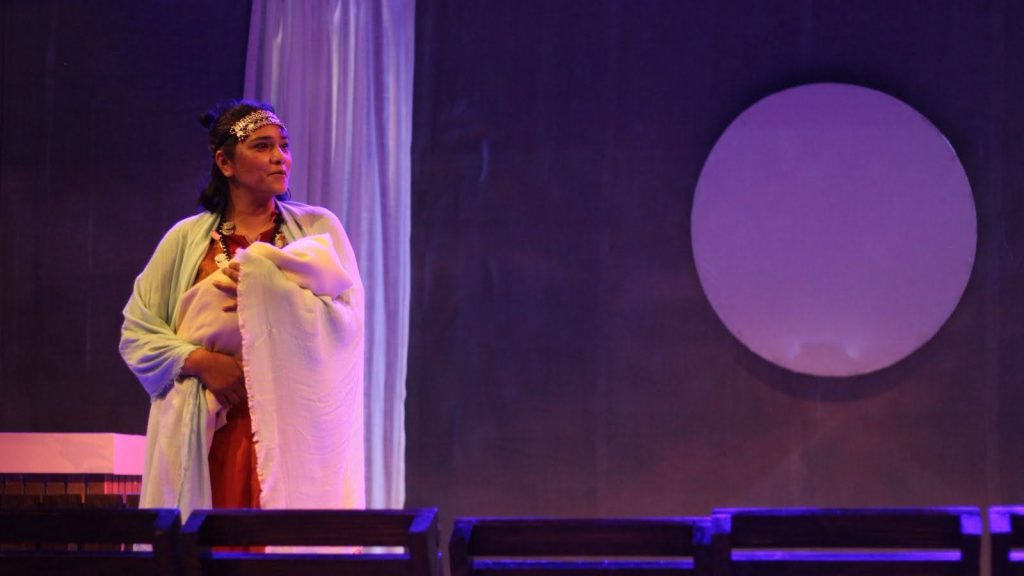
In Cologne, things became even more complicated. We had intended to project English and German subtitles simultaneously, but technically, only one language was possible. Twenty minutes before the performance, Yuba and Anup rushed towards me.
“Can you do the subtitles live?” they asked.
I did not understand a single word being spoken on stage. Yet somehow, relying on rhythm, memory and intuition, we managed. At times, it almost felt as though the actors were speaking German themselves.
Every venue introduced fresh technical problems. Projectors behaved differently in each theatre. Stage sizes varied wildly. Sometimes performances took place outdoors without proper lighting. In Odense, Rabin had access to more than thirty spotlights; in Stockholm, only five weak profile lights.
Once, an entire lighting rig collapsed in the middle of the set. Repairs had to be carried out several metres above the ground. One friend, drenched in sweat and terrified of heights, climbed up anyway because he refused to let the performance fail.
The tour was also exhausting. We were constantly sleep-deprived. On our rare days off, we filled the time with sightseeing rather than rest. Travelling, rehearsing, performing, dismantling sets and travelling again slowly wore us down. Yet emergencies create a strange kind of endurance. We survived because we relied on one another.
The support we received from strangers was extraordinary. Crowdfunding raised more than €6,000, enough to cover our costs and the original flight debt. Donations arrived in small amounts of five or ten euros, but sometimes in astonishing sums. One person donated more than €800.
My grandmother Ruth, who celebrated her ninetieth birthday during the tour, asked guests to donate to our campaign instead of bringing presents. Her birthday alone raised more than €1,500. In gratitude, Yuba wrote her a poem that moved many guests to tears.
Travelling together also revealed countless cultural differences and beautiful discoveries. Nepali people drink from bottles without touching their lips to the rim. Public affection is rare in Nepal. Kathmandu has no trains. Tap water is unsafe to drink.
Then there were the smaller details that stayed with me. Pabitra’s relentless search for strong black coffee wherever we travelled. Ensemble members are picking up feathers in parks to clean their ears. New words entering my vocabulary: “Junkiri” for fireflies, literally “moon insects” or “Santiiii,” a dramatic expression of peace and exhaustion after collapsing onto a chair.
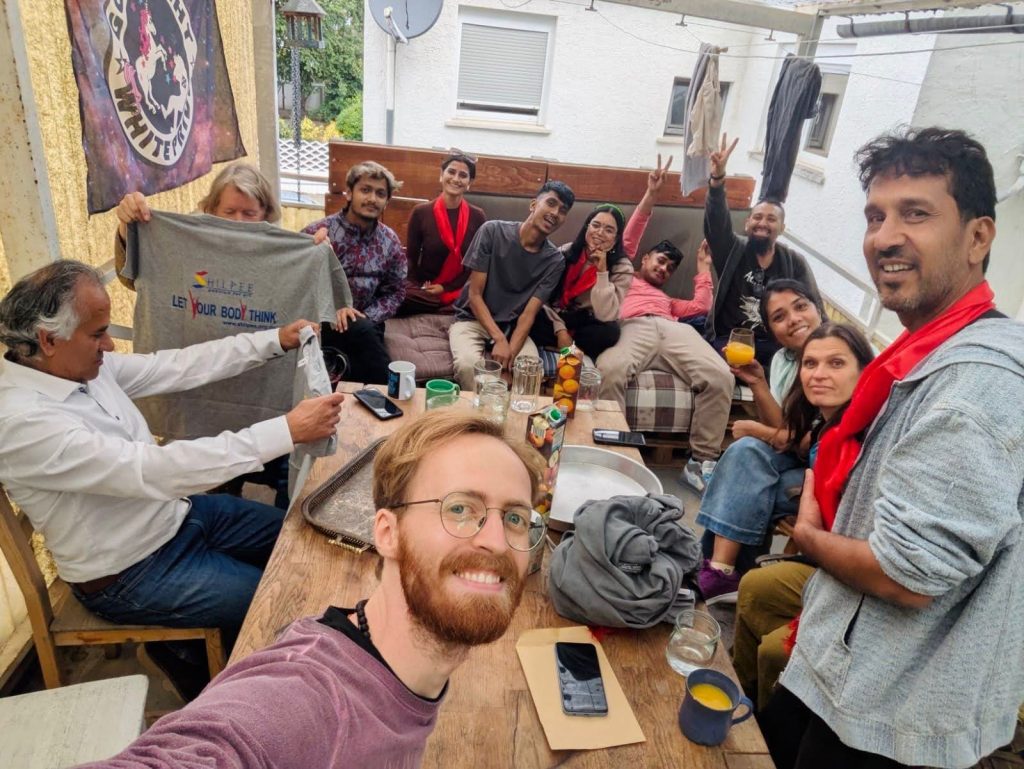
I learned the meaning of “Mitzu,” a word Sumit used for his closest friend Rabin: a friendship built on truth, loyalty and deep respect. I learned that calling someone “gai”, cow, in Nepal can be a profound compliment, symbolising kindness and warmth.
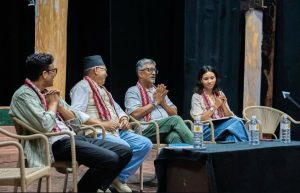
Gradually, the journey became less about theatre and more about human connection. Under Nordic skies, Sumit described growing up in a Nepali village without electricity, where the stars once illuminated the night before artificial light erased them. Pabitra spoke about her dream of building a theatre in her village dedicated to gender issues and social transformation.
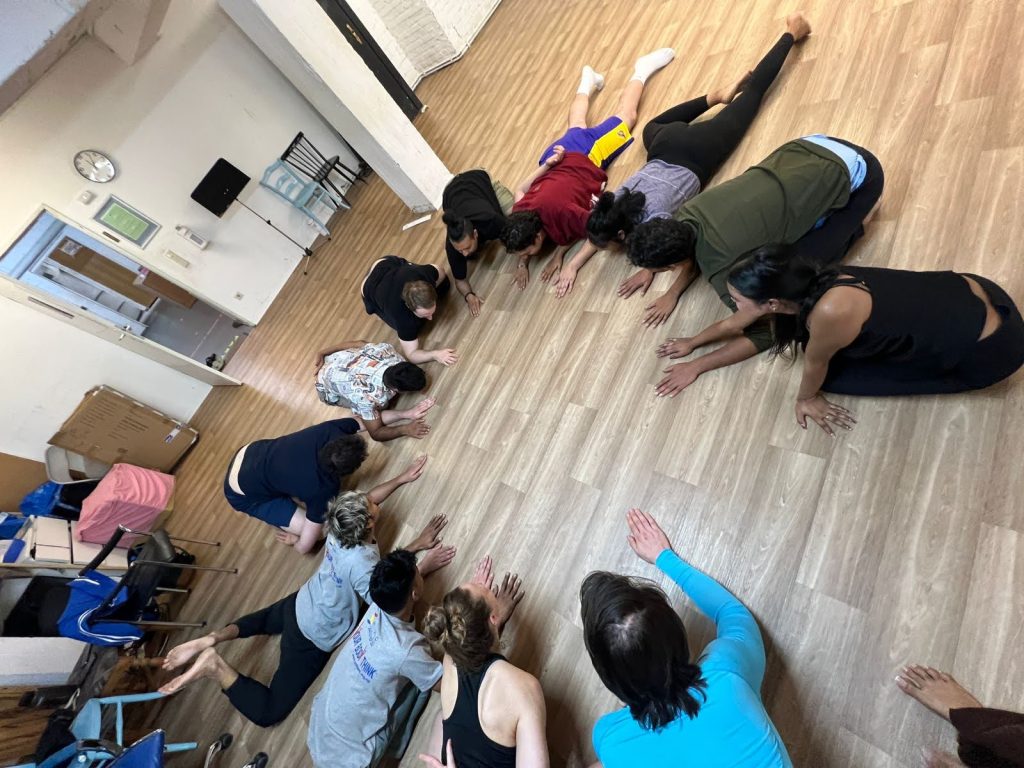
Through theatre exercises, I experienced what oppression physically feels like: being pinned to the ground, unable to move, while others held me down. Forum theatre, I realised, is not entertainment. It is political. It forces people to confront injustice through the body itself.
There was heartbreak, too. One member of the ensemble fell in love during the tour and later sat silently for days after the farewell. No one could ease that sorrow. It was simply part of the journey: laughter and tears existing side by side.
One evening in Stockholm, Pabitra asked me unexpectedly, “What do you do when you are sad?”
I answered honestly: “Art. Friends. Nature. Those are the things that save me.”
She nodded in understanding. At that moment, I realised we were creating memories that would sustain us through future winters.
Most importantly, the tour proved that the impossible sometimes becomes possible when enough people believe in it together. Beyond the financial success, we gave a platform to voices that rarely cross borders. The real miracle of the project lay in the countless individuals who helped us along the way.
After our final performance in Stockholm, Shiva drove us back through a glowing evening sky and quietly said:
“I think I finally understand what this is about. It takes a daring idea and the courage to pursue it. If your intentions are genuine, people gather around you naturally because they want to be part of something meaningful.”
I felt the same everywhere we travelled — in Freiburg, Cologne, Wiesbaden, Mainz, Frankfurt, Gothenburg, Stockholm and Odense. Everywhere, we met people eager to learn from one another through art.
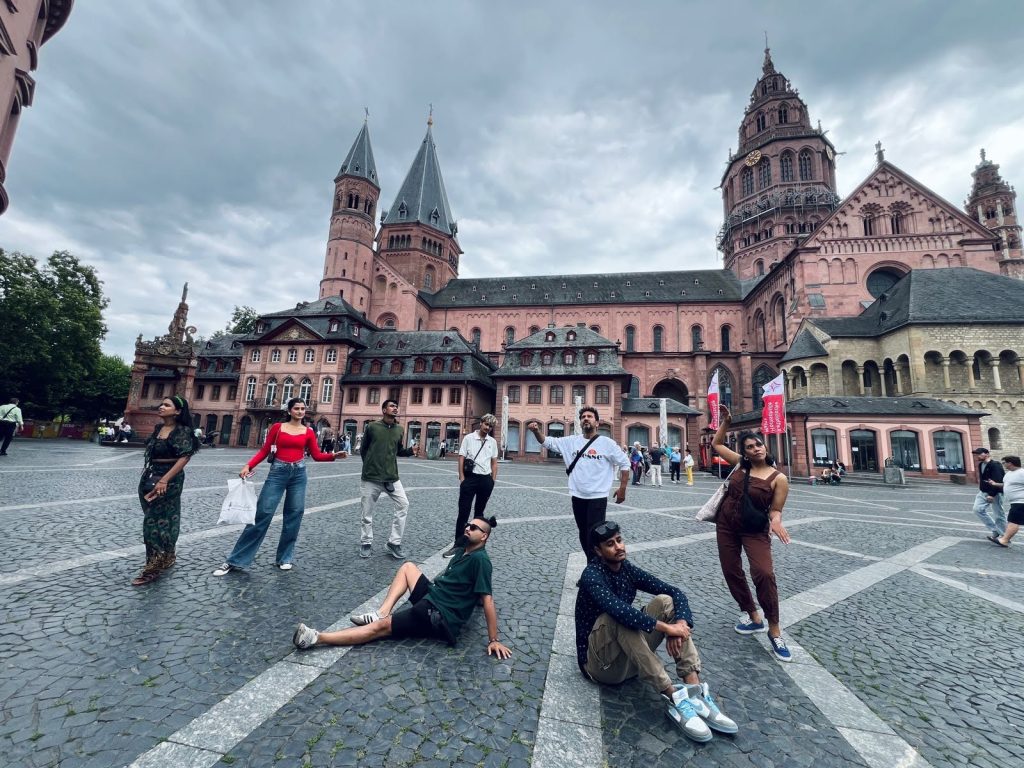
Our final goodbye came in Odense. Later, alone in a quiet park, I listened to the wind moving through the trees and reflected on everything we had experienced. This tour changed lives, including my own. Even now, as I write these words, I feel immense gratitude for everyone who made it possible.
Much love to you all.