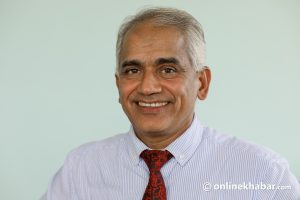

Senior cardiac surgeon Dr Bhagawan Koirala spent more than three decades treating children’s hearts. All these years, he has performed operations on thousands of young ones.
In most cases, those surgeries were successful, and children returned home with a new life. Parents’ faces would light up with joy, and the doctor’s heart would fill with satisfaction. Yet during his career, he also witnessed deeply painful moments, and children who had undergone complex heart surgery would die from an ordinary infection.
When some other problem arose, the family was forced to rush to another hospital. Children would lose their lives because timely treatment for stomach problems, urinary infections, neurological issues, or other seemingly ordinary ailments was simply not available.
The deaths of those young children were not solely the result of medical failure; they were also the result of systemic weakness. This grief planted a deep question in Dr Koirala’s mind: if all services had been available in one place, couldn’t these children have survived?
Over time, that question hardened into a resolve. After retiring from government service, Koirala set out on a new path: to build a place where children could receive complete healthcare under one roof. Whether the illness involved the heart, stomach, kidneys, nerves, cancer, or anything else, a dedicated team of pediatric specialists would work together, and no child would ever be left to die for lack of treatment.
His determination to end the situation where children lose their lives due to the financial constraint, lack of access to care and unavailability of specialist services
To give form to the dream that was set in the second half of Dr Koirala’s life, the Kathmandu Children’s Hospital, operating under the Kathmandu Institute of Child Health (KIOCH), has come into operation.
Run through a non-profit organisation on a “public service model,” the hospital brings a new concept of specialised pediatric healthcare in terms of structure, technology, and service.
Specialist services for just Rs 100
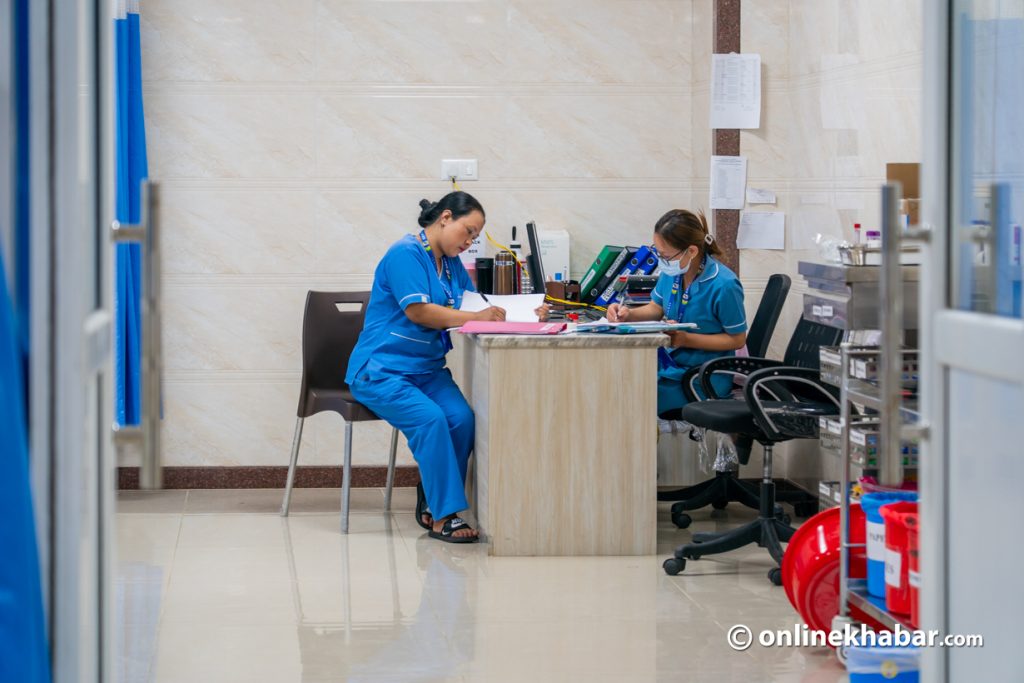
The main government-level children’s hospital in Nepal is Kanti Children’s Hospital. Beyond that, there are two or three private hospitals and some medical college departments.
However, not all types of specialised services are available. In developed countries, the concept of having separate hospitals for children and young people is well established. About 40 percent of Nepal’s total population, approximately 12 million people, are under the age of 18.
Before the age of five, 30 out of every 1,000 children die due to a lack of treatment. Most of these children could be saved with proper care.
With this gap in mind, Dr Koirala, who also serves as chairman of KIOCH, put forward a long-term plan to establish a central hospital in Kathmandu with the goal of providing complete children’s healthcare under one roof, along with satellite centres in all seven provinces. The newly operational Kathmandu Children’s Hospital is an important milestone in this plan.
A satellite centre in Damak Municipality of Koshi Province, in a building provided by the Nepal Red Cross Society, has already been running a 50-bed service for three years.
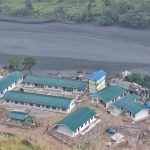
Though the formal inauguration of Kathmandu Children’s Hospital is still pending, basic services have been operating for nearly three months. In Budhanilkantha Municipality-7, outpatient (OPD), emergency, and surgical services are already running.
Currently, services have started from one building. Construction of two additional buildings is progressing rapidly.
The hospital’s structure is child-friendly. Facilities have been arranged for children to play and watch television for entertainment. Adequate seating is provided outside the departmental OPD rooms. The hospital also has a separate breastfeeding room where mothers can nurse their infants in privacy, with diaper-changing facilities as well.
The hospital’s fee structure is similar to that of government hospitals. Treatment is free for those who cannot afford to pay.
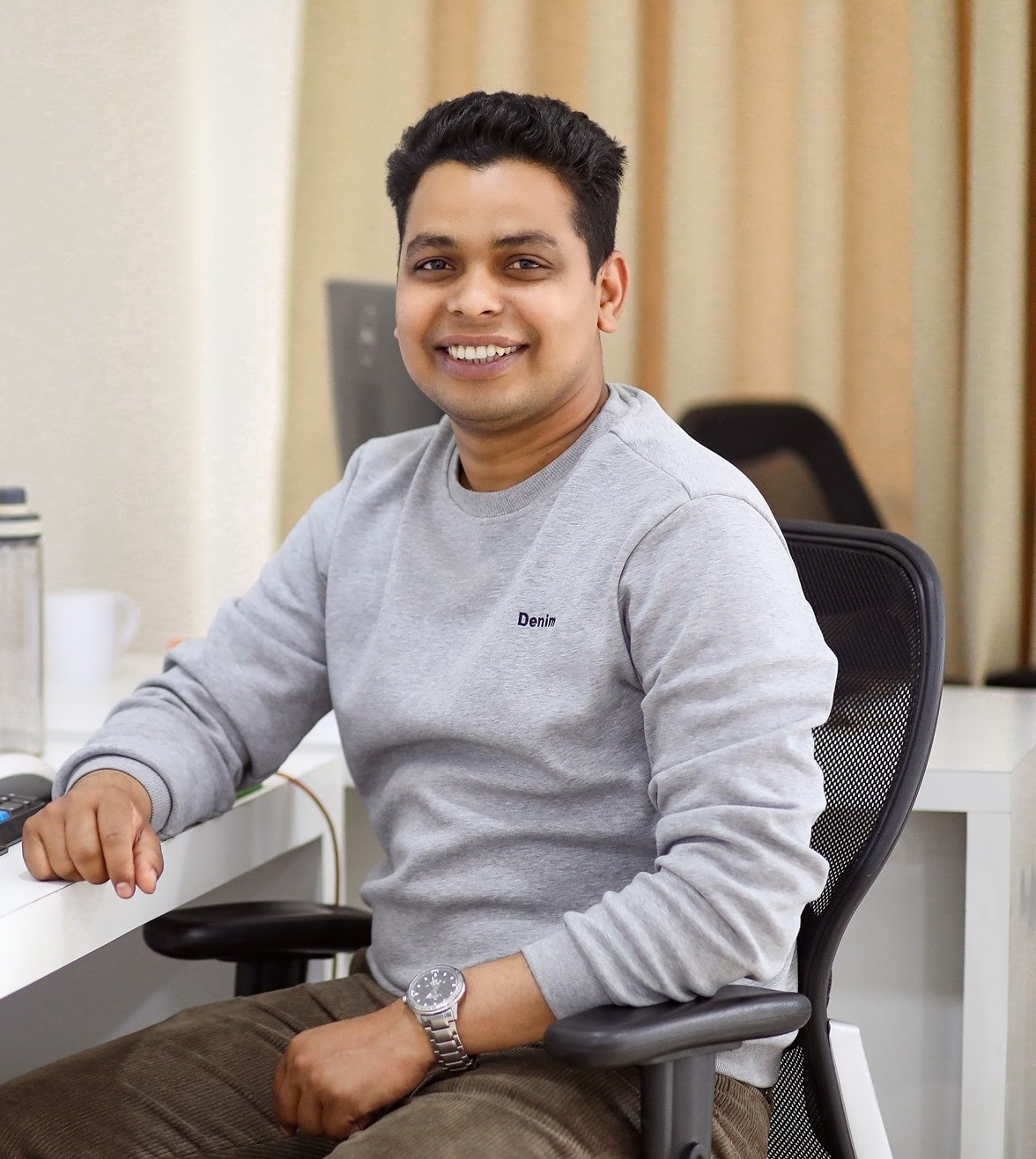
According to pediatric cardiologist Dr Saurav Shrestha, the OPD ticket fee has been set at just 100 rupees, the same as a government hospital. With that one ticket, patients can be seen by various specialists as needed. Whether the problem is cardiac, renal, or pulmonary, a new ticket does not need to be purchased.
OPD services are running on the third floor, with separate rooms for different departments. Services include nephrology, hemato-oncology, orthopaedics, dental, child psychiatry, cardiology, and cardiac surgery. A separate room has been arranged for routine childhood vaccinations.
The cardiology department is equipped with modern tools for echocardiography (echo), ECG, and video cardiac examinations. Various pediatric OPD departments are being progressively expanded.
“The goal is to provide all children’s specialist services available in Nepal from right here,” says Dr Shrestha. “No patient who comes here should have to leave without treatment.”
The structure
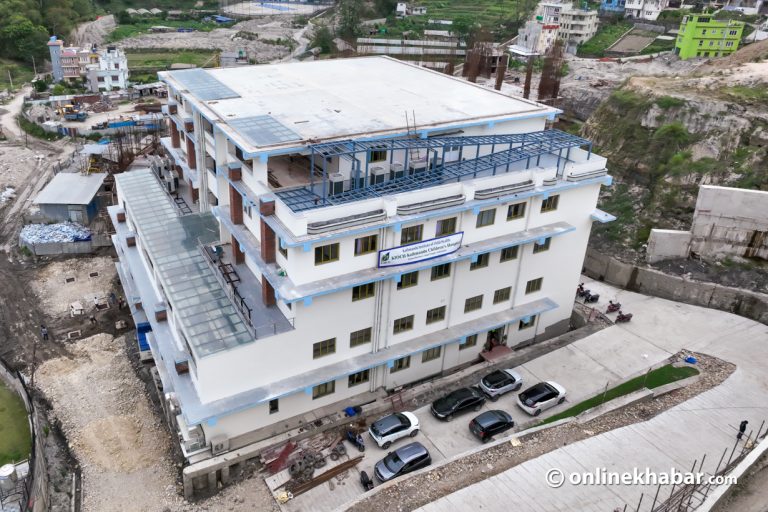
Outside the emergency room, there is a separate waiting area available for patients’ relatives. When a child arrives at the emergency room, they are registered, and treatment begins based on a modern triage system. Patients are directed to “red,” “yellow,” or “green” areas according to their condition.
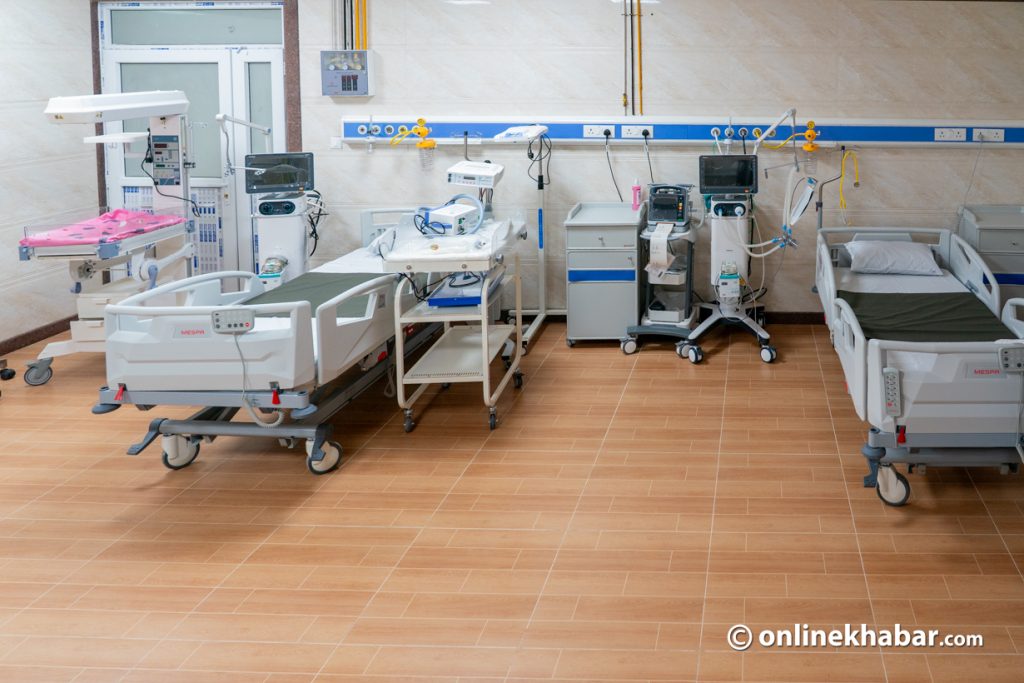
Some patients arrive in critical condition and require immediate CPR or other life-saving measures. For these cases, four beds with ventilators have been set aside.
Some patients may require emergency surgery. For this, there are two separate modular operating theatres inside the emergency room. On the fourth floor, there are four additional state-of-the-art operating theatres.
These operating theatres are equipped with HEPA filters, suction systems, and advanced infection control technology, and surgeries can be streamed live via video for teaching purposes. The emergency room has 20 beds across the red, yellow, and green areas. Notably, the hospital also offers three cabins within the emergency room for those who wish to pay a little extra.
On the fifth floor, there are NICU and PICU units for critically ill newborns and children. The current plan calls for 25 beds in the PICU, with strict infection control protocols. Infected patients will be kept separately from others, and each patient on a ventilator will be monitored by a dedicated nurse, according to Dr Shrestha.
On the sixth floor, there are 35 general beds. Currently, there are three cabin options: single, double, and suite. The seventh floor houses the conference hall and administrative offices.
Despite the modern structure, the hospital has adopted a policy of keeping service fees in line with government hospitals; OPD ticket 100 rupees, emergency ticket 500 rupees, and a general bed charge of 300 rupees per day. An emergency cabin costs 1,000 rupees. NICU charges are set at 3,000 rupees per day, and ventilator care at 6,000 rupees per day.
“If someone cannot pay at all, all services will be free,” says Dr Shrestha. “No one who comes to this hospital will be denied treatment for lack of money. Whether you are in a general bed or a cabin, the quality of care is the same.”
The hospital currently has around 150 health workers, including approximately 30 pediatric specialist doctors, all working full-time.
Mission born from personal experience
Dr Koirala’s campaign to build children’s hospitals in all seven provinces was shaped by personal experience and professional journey.
He says his dream of working in child health dates back to 1993, and that more than half of all his cardiac surgeries throughout his career have been performed on children. He had the opportunity to perform children’s heart surgeries in the United States, and later did a one-year fellowship at one of the top three children’s cardiac hospitals in the world, in Toronto. Since then, he has remained deeply interested in child health.
While studying and working in America, Dr Koirala closely observed the structure and service systems of children’s hospitals in developed countries. They have separate hospitals for children, with various pediatric specialists working within one institution. He saw firsthand how this system dramatically improved the quality of care.
After returning to Nepal, he performed heart surgeries on thousands of children. Many of them are now healthy, studying, working, and contributing to society.
“When you cure a disease that struck a child at a young age, it isn’t just one life that is saved,” says Dr Koirala to Onlinekhabar. “That child goes on to contribute to society for 70 or 80 more years.”
Treatment given to children, according to him, is an investment in society’s future.
On why a separate hospital for children was necessary, he explains: “Treatment for children cannot be done the same way it is done for adults. A doctor who treats adults may be able to handle some technical aspects. But for the comprehensive care of children, a dedicated team is essential.”
An estimated 500,000 to 700,000 children are born in Nepal every year. Of these, approximately 3 percent are born with some congenital conditions, including heart disease, organ malformations, and neurological problems.
Beyond that, complex health problems such as lung diseases, asthma, cancer, neurodevelopmental disorders, and autism are also increasing among children.
“In past decades, communicable diseases were the leading cause of child mortality,” says Dr Koirala. “But the situation has changed. Non-communicable diseases and complex conditions are also on the rise.”
This is why he believes the current challenges cannot be addressed by focusing only on primary care and prevention as before.
Commitment to affordable service
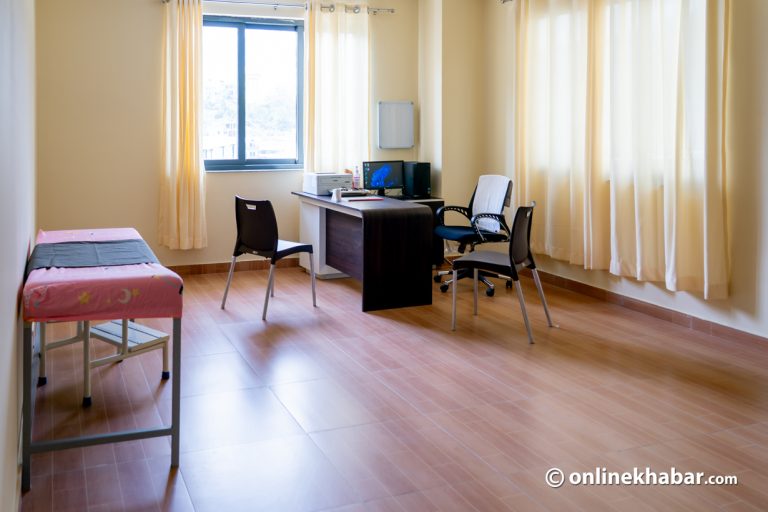
The children’s hospital is operated through a non-profit organisation. Its primary purpose is not commercial profit, but public service.
The hospital’s governing board is voluntary; members receive no salary. Only the employed staff and doctors receive pay according to their service.
Beyond that, the hospital has committed that economically vulnerable children will not be denied the care they need.
“Our policy is not to turn away children for lack of money,” Dr Koirala states clearly. “The institution promises that poor patients should not have to pay out of pocket, and no one should be sent home without treatment.”
Beyond Kathmandu
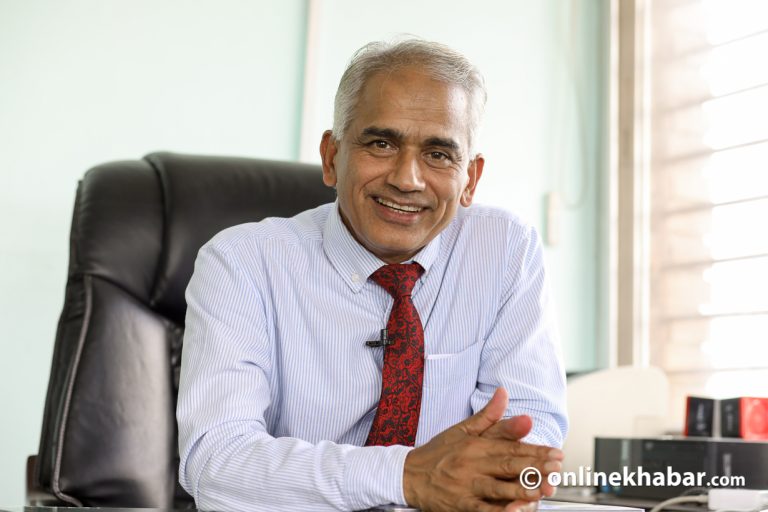
KIOCH does not plan to remain focused only on Kathmandu. With the long-term goal of extending children’s healthcare access across the country, the organisation has developed a phased expansion strategy.
“At first glance, it might have seemed more attractive to start from outside Kathmandu,” says Dr Koirala, “but to lay the foundation of this program and expand the skilled workforce, Kathmandu was the most suitable starting point.”
After the foundation is established in Kathmandu, the next phase will involve building a children’s hospital in Karnali Province, Dr Koirala says.
The construction of the building for the Kathmandu children’s project alone is estimated to have cost approximately Rs 1.19 billion. Including equipment, infrastructure, and management, the total project cost is estimated to reach around 2 billion rupees. A large portion of this has been raised from within Nepal itself, through social donations, donor organisations, and support from various sectors. About 15 percent remains to be raised.
According to Dr Koirala, the children’s hospital will not become anyone’s private property. He is confident that over time, the hospital will become an important asset within Nepal’s public health system.
“This institution was not built to compete with anyone,” he says. “Its only purpose is to support government hospitals and raise the standard of children’s healthcare.”
Dr Koirala’s commitment is that the Kathmandu Children’s Hospital will be seen as an example of what pediatric healthcare in Nepal should look like.