

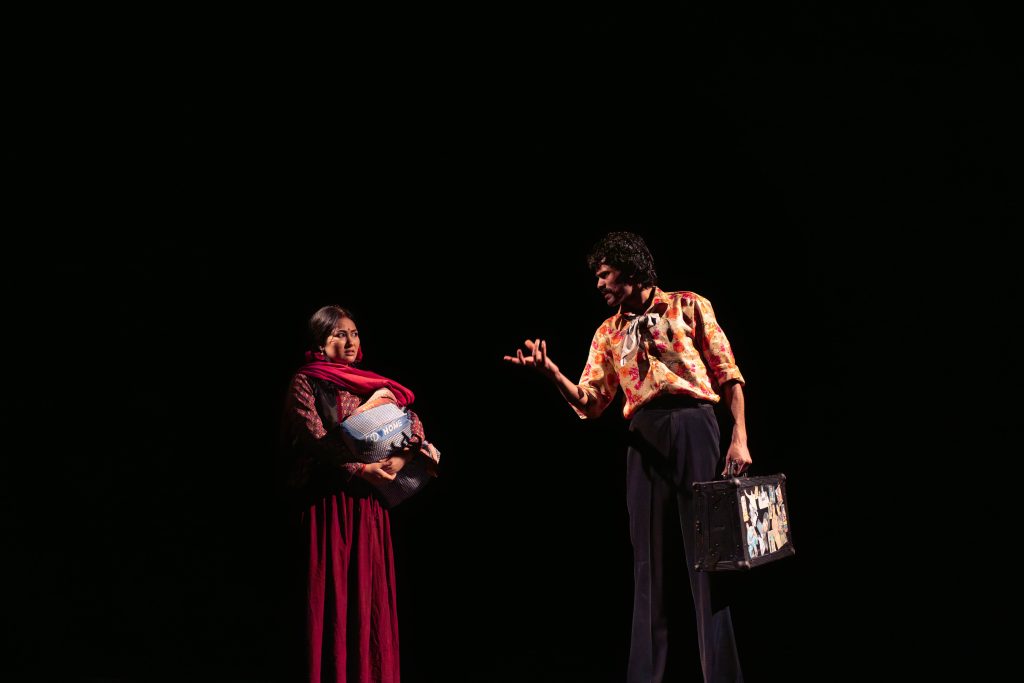
The sound of a folk melody fills the theatre. Somewhere in the landscape of Sudurpaschim, a young girl calls out to her cattle as the first scene unfolds. There is something immediately familiar yet distant about the setting, a glimpse into a way of life, a culture and a region that rarely finds such space on the Kathmandu stage.
The girl is Gauri, played by Sushmita Kunwar, and her appearance marks the beginning of Shree Bijoo Bhoot, currently being staged at Mandala Theatre.
Written by Diwas Nath and directed by Akash Nepali, the play revolves around the socio-political dynamics of Sudurpaschim. It tells the story of a daughter who is on the way to Bombay, India, in search of her father, who left for work there but has not returned home for the past two decades.
The play draws on a reality that remains familiar to many families in Sudurpaschim. Many people from the region have travelled to India in search of employment, and some, like Gauri’s father, have remained away from home for years without returning.
Because of this, people from Sudurpaschim can closely relate to the play and its story.
The conversations among the characters, about their families, jobs, businesses and everyday challenges, also offer an insight into the daily lives and social realities of people in Sudurpaschim.
The conversations between Gauri and her mother (played by Barsha Bhandara) reveal the difficulties of being a single mother. The conversation also shows how women who raise their children alone are often subjected to unfair judgment and social scrutiny.
In one scene, a woman visits Gauri’s mother to ask whether Gauri would marry her brother, who is a government officer. Gauri’s mother then suddenly begins pressuring her daughter to get married. The scene reflects the reality of young women being pressured to marry once they enter their twenties. Rather than focusing on empowering their daughters, many families across Nepal continue to mount pressure on women to marry at a young age, and Sudurpaschim is no exception.
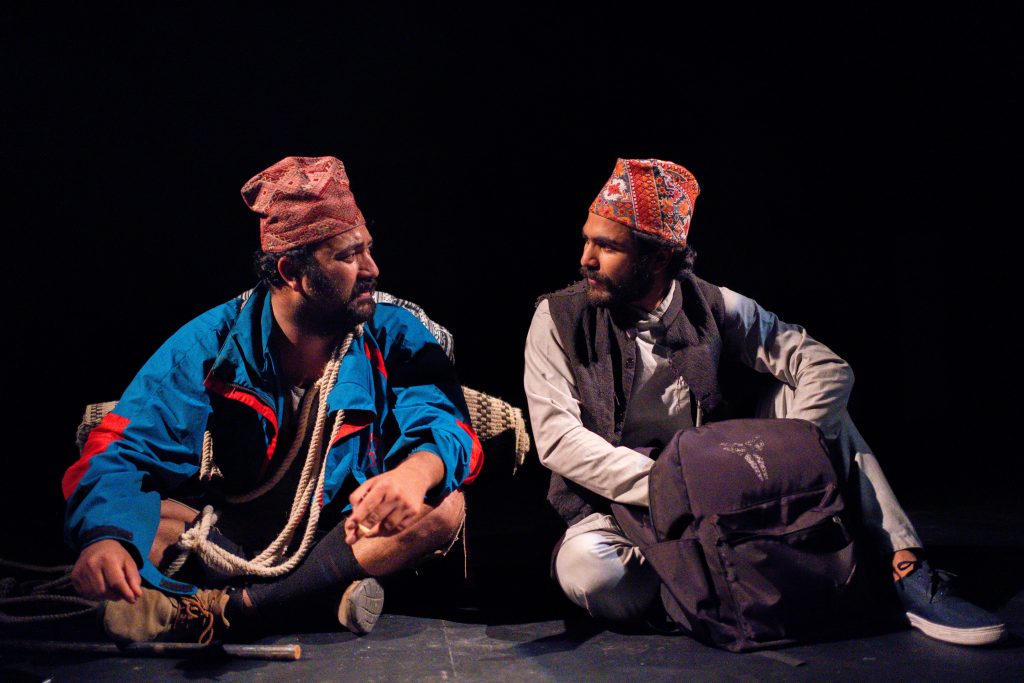
Art is a powerful medium through which we can learn about diverse cultures, and Shree Bijoo Bhoot is a fine example of this. The play not only tells a specific story but also gives audiences an opportunity to learn about the language, dance, music and food of Sudurpaschim.
The technical aspects of the production, particularly the acting and music, are remarkable. The makers have made a thoughtful choice by bringing both actors and musicians from Sudurpaschim into the production. This gives the actors a natural familiarity with the dialect used in the region, allowing the dialogue to feel effortless and authentic.
Singer Harina Nath, who is making her theatre debut, has done an outstanding job. Her voice adds another layer of authenticity to the play. When she sings, particularly when she reaches the high notes, her performance can send shivers down the spine.
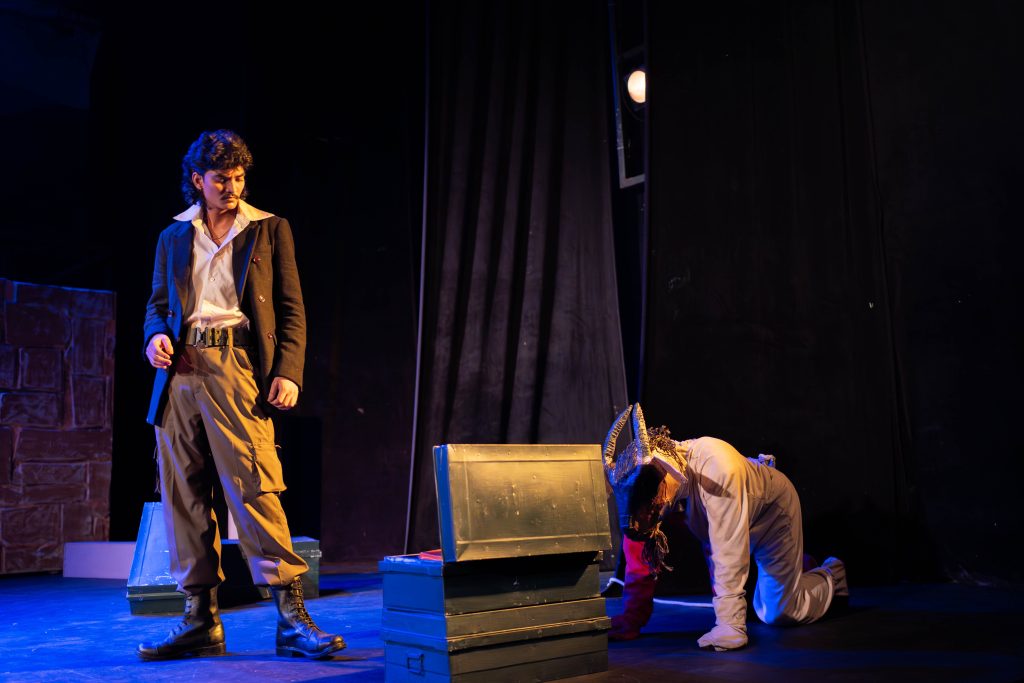
Shree Bijoo Bhoot is actually the name of a deity. In Ningla village of Dadeldhura, there is a belief that nothing bad can happen in a place where Shree Bijoo Bhoot (Da) is present. Interestingly, a goat appears as a character in the play. The goat can be understood as someone sent by Shree Bijoo Bhoot or as a character in whom the deity dwells.
According to the belief that nothing bad can happen in the presence of Shree Bijoo Bhoot, the goat brings back two characters who have looted the other characters in the play. Before carrying out the robbery, the two characters make the others consume food that causes them to lose consciousness. The goat later finds the two robbers, ties them up with ropes and brings them back.
While the play revolves around serious issues, it also has a strong comedic side. The character of Hari, played by Aaditya Mishra, is particularly entertaining. Hari works in Bombay and has returned to the village, and his actions and interactions frequently make the audience laugh.
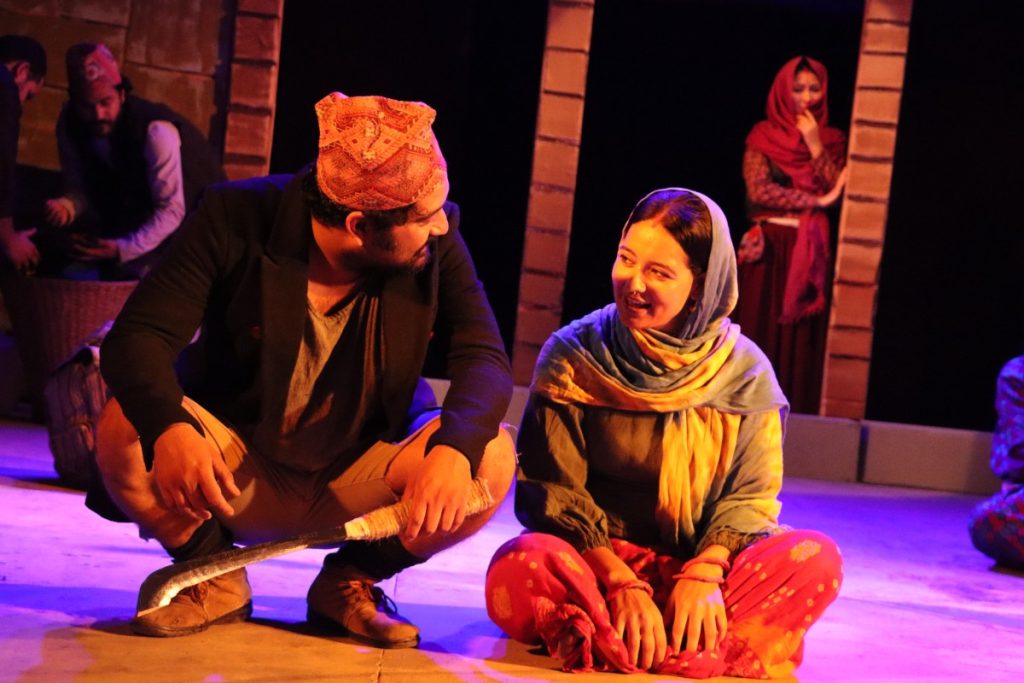
Shree Bijoo Bhoot is a play that can be appreciated by audiences regardless of where they come from. People from Sudurpaschim can relate closely to its story and perhaps experience a sense of home away from home. For audiences from outside the region, meanwhile, the play offers an opportunity to learn about a culture they may not be familiar with.
However, the use of the Sudurpaschim dialect in some parts of the play may make it difficult for audiences unfamiliar with the language to understand certain conversations.
Finally, the title of the play could perhaps have been more closely connected to its broader narrative, as the connection between the title and the central context of the play does not always feel immediately apparent.
More than a story, Shree Bijoo Bhoot offers a glimpse into the culture, struggles and lived realities of Sudurpaschim.
Shree Bijoo Bhoot will run daily (except Mondays) through October 11 at 5:30 pm at Mandala Theatre in Kathmandu. An additional show will run on Saturdays at 1:30 pm.
Photos: KL Mukesh and Pratik Raj Khadka