Surkhet, September 30
An expert team is set to visit Salyan to study the rapid spread of scrub typhus in the district. Initially confined to Darma Rural Municipality, the infection has now spread to seven local units.
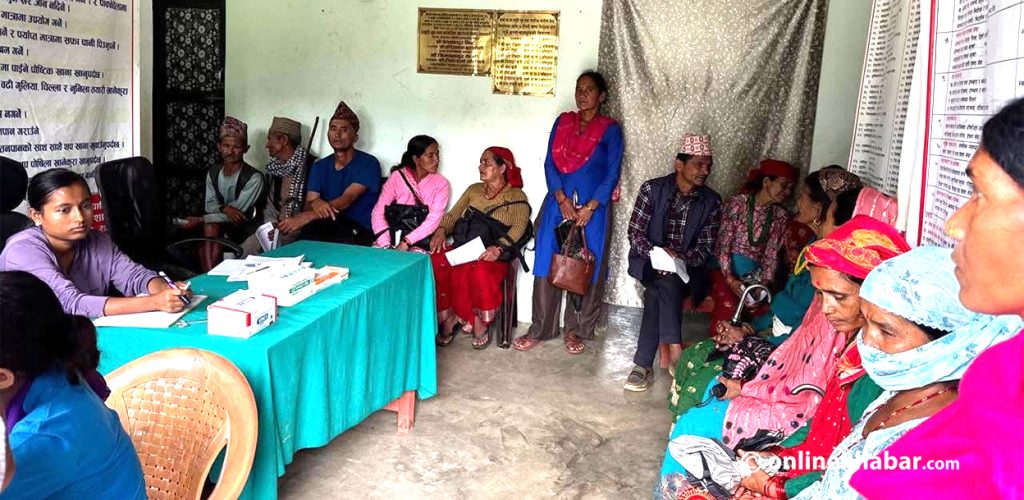
More than 2,400 people were tested during health camps organised by the District Health Office, with 472 testing positive for scrub typhus. As the infection has begun spreading as an outbreak in the district, a team including additional experts is preparing to visit Salyan, according to Chief District Officer Bandana Kumari KC.
Eight people have died from the infection in Darma Rural Municipality alone. The deceased include one woman, one child and six men. Health workers said most of those who died were elderly people or had underlying chronic illnesses.
KC said a research team from the Epidemiology and Disease Control Division in Teku is preparing to visit Salyan after the infection spread to several parts of the district.
“A team is being mobilised to conduct further study and analysis of the infection situation in different parts of the district, high-risk areas and the reasons behind the spread of the disease,” she said.
Infection spreads as fever cases rise
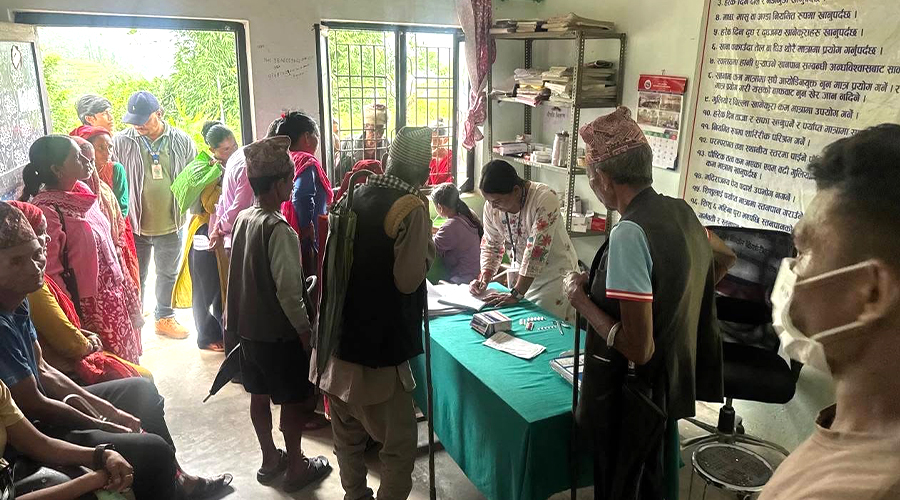
The infection has now spread to seven local units in Salyan: Darma, Kapurkot, Kumakh, Chhatreshwori, Kalimati, Bagchaur and Bangad Kupinde. As the number of patients with fever increased in these areas, health camps were organised at various locations, and rapid diagnostic kits were used to test for scrub typhus.
According to the District Health Office, Salyan, 116 people in Darma, 65 in Kumakh, 175 in Bagchaur, eight in Chhatreshwori, two in Kalimati, 53 in Kapurkot and seven in Bangad Kupinde have tested positive.
Similarly, 46 of the 785 people tested at Salyan District Hospital were found to have the infection.
Health workers urge caution as rural residents remain at risk
Health workers have been urging people to protect themselves from tick bites while working with grass, firewood and in agricultural activities by wearing full-body clothing, gloves and footwear that covers the legs up to the knees. They have also urged residents to keep bushes and vegetation around their homes cleared.
However, health workers say it is difficult for rural residents to take adequate precautions because their daily agricultural and livestock-related activities require frequent contact with forests, bushes and grass.
According to Pratibha BK, acting chief of the Health Service Office, Salyan, the infection is spreading because people fail to take necessary precautions while working in grassy and bushy areas. She said most patients recover with regular medication once the disease is diagnosed, but problems arise when people take medicines randomly without being diagnosed.
Risk of death when infection goes undiagnosed
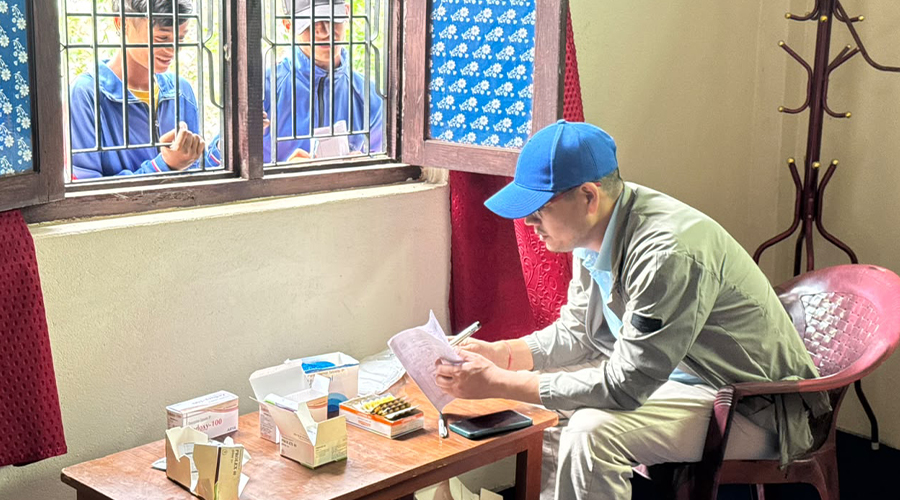
According to Yagya Bahadur Basnet, chief of the health section of Darma Rural Municipality, deaths from the infection have stopped recently after health camps accelerated testing and treatment. However, due to a lack of health awareness, some patients with fever continue to take medicines purchased from medical shops without getting tested at health facilities.
“No one has died recently after attending the camps, being diagnosed with the disease using test kits and taking medication,” Basnet said. “Patients with mild symptoms are being treated within the local unit, while only those with complications are referred elsewhere.”
He said that as the infection has not yet been brought under complete control, health workers are visiting fever-affected settlements to test and treat suspected patients and raise health awareness.
Rural livelihoods increase exposure
According to Dr Jagat Kiran Oli of Salyan District Hospital, controlling the infection has become challenging because the daily lives of rural residents bring them into frequent contact with the mites that transmit scrub typhus.
“Rural residents depend on agriculture and livestock farming. Their daily activities involve grass and firewood,” Oli said. “As they need to go near forests two or three times a day, they sometimes fail to take precautions while working in haste.”
He said the risk of infection increases through tick bites while working in forests and bushy areas. Therefore, he said, people should keep bushes around their homes clear and wear full-body clothing, gloves and shoes while collecting grass and firewood.