
The task force formed by the government, led by Prime Minister Balendra Shah (Balen), to prepare a discussion paper on constitutional amendment is currently holding consultations with various stakeholders. The task force, established by a Cabinet meeting held on March 30, has been engaging with representatives of various political parties, constitutional experts, civil society leaders, and Gen Z leaders.
Meanwhile, the task force, convened by Asim Shah, the Prime Minister’s political advisor, has faced considerable criticism. Critics argue that such a serious matter as a constitutional amendment was addressed hastily, even within the second Cabinet meeting, and that the Prime Minister had not consulted other parties represented in parliament before forming the task force. In fact, parliament had not even been called into session when the decision was made. The decision to form the amendment task force and to call the budget session was announced simultaneously, which drew widespread objection.
Nonetheless, the task force has continued its discussions with party representatives, constitutional experts, and other relevant stakeholders. As these consultations proceed, there is growing public interest in what specific issues are being prioritised.
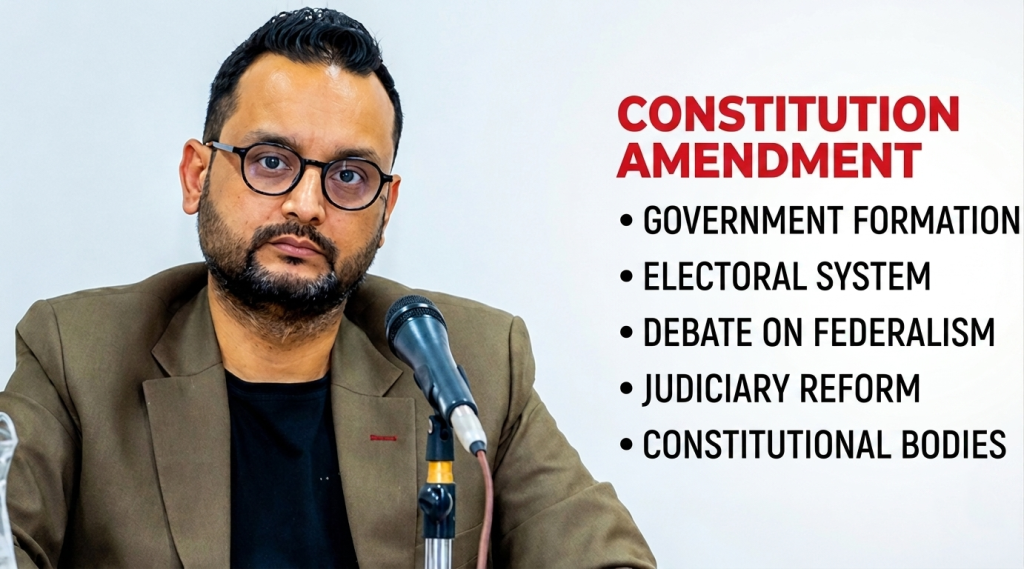
According to sources, the task force has given priority to five main areas: the form of governance, the electoral system, federalism, the judiciary, and constitutional bodies. Additional miscellaneous items are also included. In total, 46 points are covered under these headings.
Form of governance
The government has made changes to the form of governance a top discussion priority.
The key questions being explored include: Is the current system adequate, or is a fully parliamentary or a modified parliamentary system needed?
Within that, should there be a directly elected executive President or Prime Minister? Should cabinet ministers be technocrats/experts rather than sitting members of parliament?
Issues surrounding the formation of the cabinet and ministerial accountability are also under discussion.
Electoral System

The electoral system has also been placed high on the agenda amid ongoing national debate. The government’s proposal raises questions about whether Nepal needs a directly elected, fully proportional, or mixed electoral system, and how to make it more democratic and inclusive.
The proposal also covers NOTA (None of the Above) and the right to recall elected representatives, as well as voting rights for Nepali citizens abroad. Reforms to the legislatures at the federal, provincial, and local levels, including the role of the National Assembly Chairperson and Vice-Chairperson, are also on the table.
Even the question of how to regulate the culture of electoral alliances (coalition formation) has been proposed for discussion.
Federalism
Federalism, which was the most contentious issue during the drafting of the Constitution, has resurfaced in the current amendment discussions. The government has prioritised how to make administrative and fiscal federalism more effective across federal, provincial, and local levels.
On the provincial front, the task force has sought expert opinions on the number of provinces and potential structural changes, including whether provinces should have directly elected Chief Ministers.
Other questions include: How many ministers and elected representatives should there be? How can provincial ministries and structures be made more efficient? What should happen regarding the role of the Provincial Governor, including who performs those duties in the Governor’s absence, and what happens if legislation is not certified?
For local government, three points are under consideration: whether the current party-based system should continue, or whether a non-partisan, individual competition-based system would be better; how to make local governments more accountable; and how to reform judicial committees at the local level.
Judicial reform
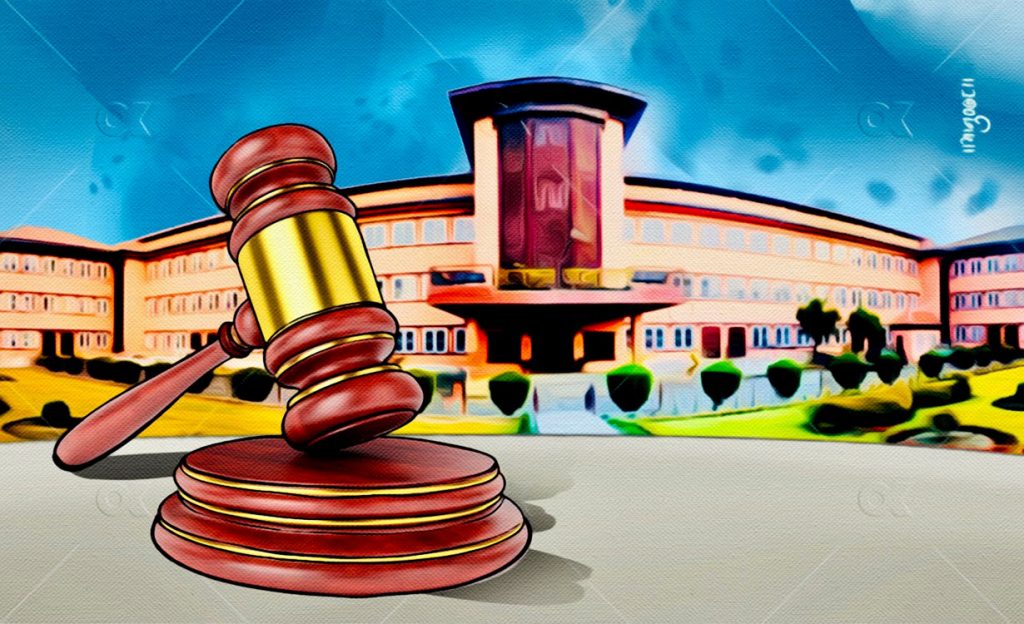
The task force has also brought judicial reform into the amendment discussion. The government has prioritised identifying what constitutional changes are needed to build an independent, impartial, and competent judiciary.
Key questions include: What should be done regarding the appointment, qualifications, tenure, age limits, moral character, conduct, and discipline of the Chief Justice, Supreme Court judges, High Court judges, and District Court judges? How should the corruption, irregularities, and influence of middlemen in the judiciary, as identified by various court-commissioned reports, be addressed?
Other issues include ending political interference in the judiciary, reappointment of judges at all levels, structural reform of the Judicial Council, and whether the Law Minister, a legal expert appointed on the Prime Minister’s recommendation, and a Nepal Bar Association representative should remain members of the Judicial Council.
The task force has also asked for input on whether the Chief Justice should remain a member of the Constitutional Council, competitive methods for appointing judges, and how to balance career development for Nepal Judicial Service officers with appointments from the legal profession.
Additionally, the necessity of a Constitutional Bench and the possibility of granting additional powers to High Courts to reduce the case burden on the Supreme Court are also under consideration.
Constitutional bodies
The task force has raised questions about necessary changes to constitutional bodies, including their number, the number of office-bearers, methods for improving the appointment process, and how to balance the autonomy and accountability of these bodies. The necessity and rationale for the Provincial Public Service Commission are also being examined.
On this topic, the task force has sought opinions on the appropriateness of impeachment and parliamentary hearings, implementation of recommendations and reports, and the relevance of the Provincial Public Service Commission.
Other issues
Beyond these five core areas, the task force is also seeking input on: making parliamentary sessions automatic (without requiring a formal call), non-resident Nepali citizenship and rights, eligibility criteria and age limits for elected representatives, term limits for elected officials, progressive implementation of directive principles (Article 54), reform of federal legislative procedure (Article 111, Sub-section 5), provisions on pardons and commutation of sentences, legislation certification procedures, enforcement of fundamental rights, and whether the Attorney General should be removed or granted prosecution authority.
Experts are also encouraged to raise issues they consider important beyond those proposed by the government, and the task force has made provisions for submitting written suggestions as well.