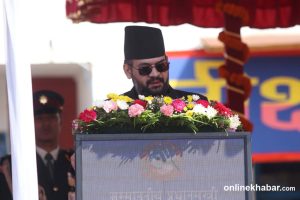

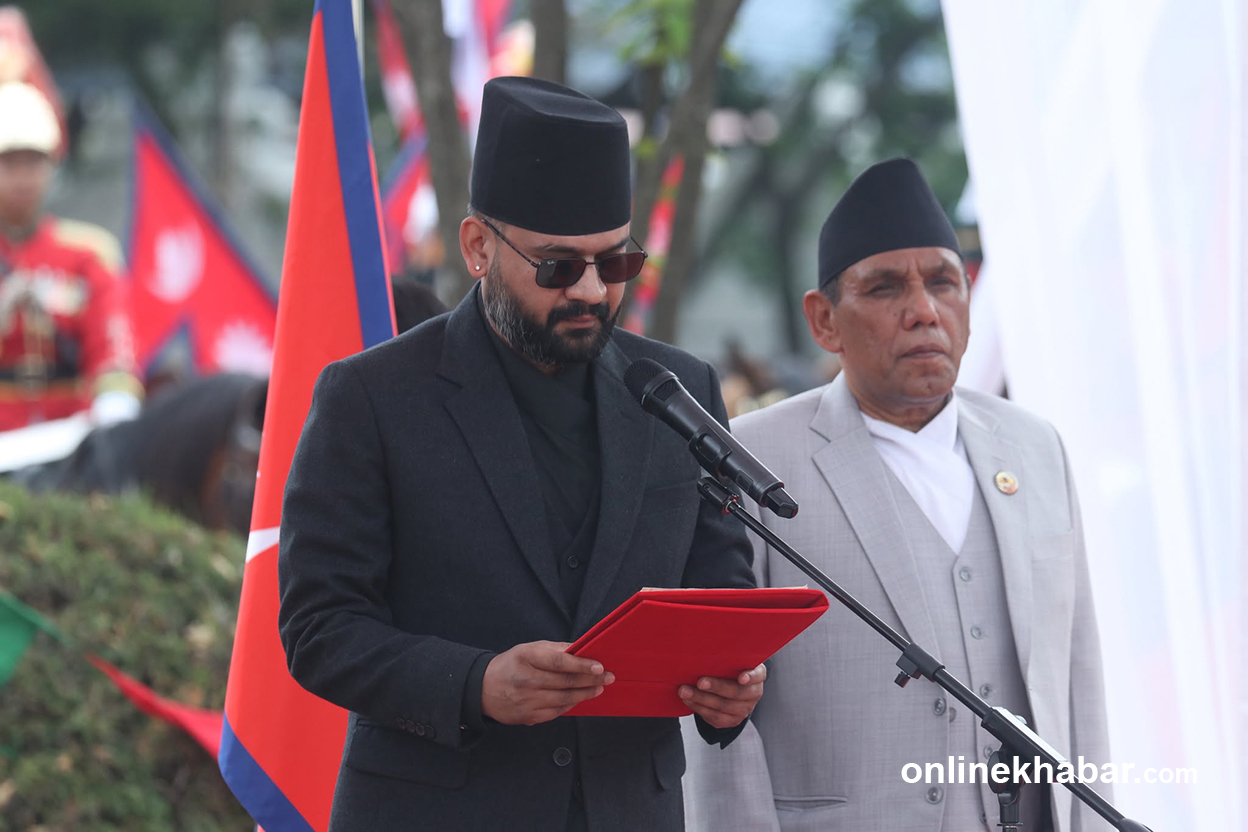
Senior leader of the Rastriya Swatantra Party, Balendra Shah, popularly known as Balen, has become the 43rd prime minister of Nepal. He was sworn in as the prime minister of the country today (March 27) at exactly 12:34 pm. With this, Balen has become one of the youngest prime ministers in Nepal’s political history. President Ram Chandra Paudel administered the oath of office and secrecy.
Balen’s oath-taking ceremony was unique compared to previous ceremonies. It featured 108 young Vedic students reciting the Swastivachan, 107 Buddhist lamas and gurus chanting Mangala prayers, and seven Brahmins blowing conch shells.
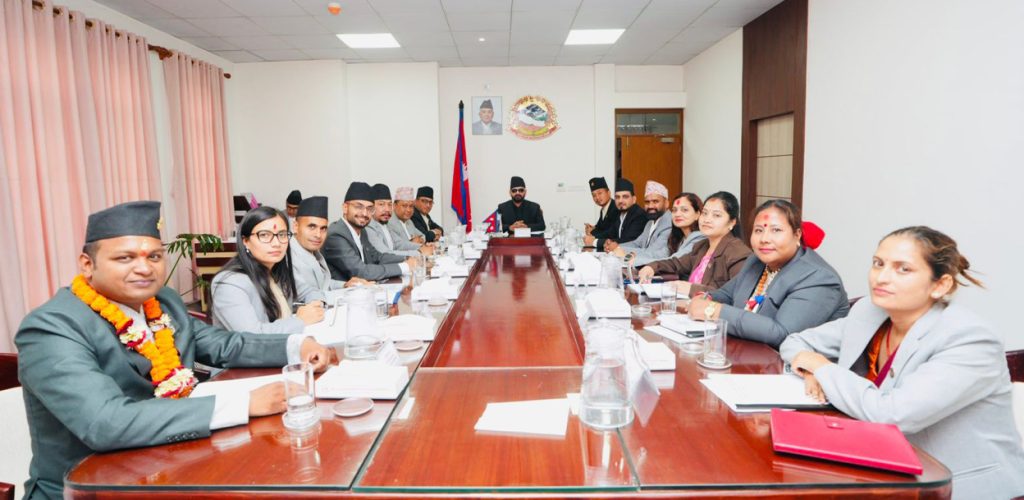
Prime minister Balen has also formed a 15-member Council of Ministers, all of whom have been sworn in. Balen himself will also oversee the Ministry of Defence and the Ministry of Industry. Swarnim Wagle has been assigned to the Finance Ministry. Sobita Gautam has been appointed Minister of Law, while Shishir Khanal has been appointed Minister of Foreign Affairs.
Sudhan Gurung has been entrusted with the Ministry of Home Affairs, and Biraj Bhakta Shrestha has been given responsibility for the Energy, Water Resource and Irrigation Ministry.
Pratibha Rawal has been assigned to the Ministry of Federal Affairs and General Administration, and Land Management, Cooperatives and Poverty Alleviation. Bikram Timilsina has been appointed Minister of Communications and Information Technology, and Deepak Sah has been given the responsibility of Minister of Labour and Employment. Sunil Lamsal has been assigned to the Minister for Physical Infrastructure and Transport and Urban Development.
Sasmit Pokharel has been appointed Minister of Education, Science and Technology and Youth and Sports, Khadga (Ganesh) Poudel as Minister of Culture, Tourism and Civil Aviation, Sita Badi as Minister for Women, Children, and Social Affairs, and Nisha Mehta as Minister of Health and Population and Water Supply.
Pokharel has also been appointed as the spokesperson of the government.
Balen is the first person born after the establishment of the multi-party system in the country to become prime minister. Until now, the country had been led by individuals born during the Rana regime. Seven out of the 15 ministers are under the age of 40, which indicates that the country, long dominated by older leadership, has finally seen the rise of younger leaders.
Balen himself is 36 years old. Other ministers below the age of 40 are Sudhan Gurung (38), Sasmit Pokharel (29), Nisha Mehta (38), Pratibha Rawal (32), Sobita Gautam (30), Gita Chaudhary (32) and Sita Badi (30).
Similarly, at its very first meeting, the Balen-led cabinet decided to approve 100 action plans for governance reform. Along with this, today’s meeting made a total of four decisions, according to Education Minister and government spokesperson Sasmit Pokharel. Firstly, to pay tribute to the martyrs; secondly, to designate the Education Minister as the government spokesperson; thirdly, to approve 100 action plans for governance reform; and lastly, to immediately implement the report of the Gen Z protest investigation commission.

After the Gen Z protests on September 8 and 9, Gen Z leaders had proposed Balen, then mayor of Kathmandu Metropolitan City, as the prime minister of an interim government. He declined the offer at the time.
In the House of Representatives elections held on March 5, Balen went on to contest against CPN-UML Chairman and former prime minister KP Sharma Oli from Jhapa-5, securing 68,348 votes against Oli’s 18,734.
With his electoral victory and subsequent appointment, structural engineer and rapper-turned-politician Balen has now assumed the country’s highest executive office through the democratic process.