
Prior to 2017, Nepal already had several music festivals that not only provided platforms for national artists but also invited international artists to perform. However, none of these festivals took place in public spaces, collaborated closely with local communities, or were dedicated to promoting folk and cultural artists, artists who hold the potential to represent Nepal on the global music stage.
Recognising the absence of such a festival, musician and music educator Riju Tuladhar envisioned an event that would bring local communities and artists together in public spaces for a common purpose: to perform folk and cultural music representing different parts of Nepal and the world. After the idea took shape, he shared it with other like-minded individuals, who agreed to support the initiative. Later in 2017, they collectively founded Echoes in the Valley, a festival of folk music, intending to bring together a wide range of folk, traditional, and indigenous sounds from Nepal and beyond.
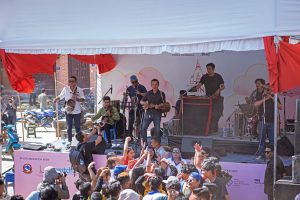
Throwback to the first EITV

This year, Echoes in the Valley (EITV), scheduled for January 23 -24 in Khokana, Lalitpur, marks its 10th edition.
As the dates for the 10th edition approach, Tuladhar and his team have been working relentlessly over the past few days, managing the venue, logistics, promotional materials, artist coordination, and other arrangements.
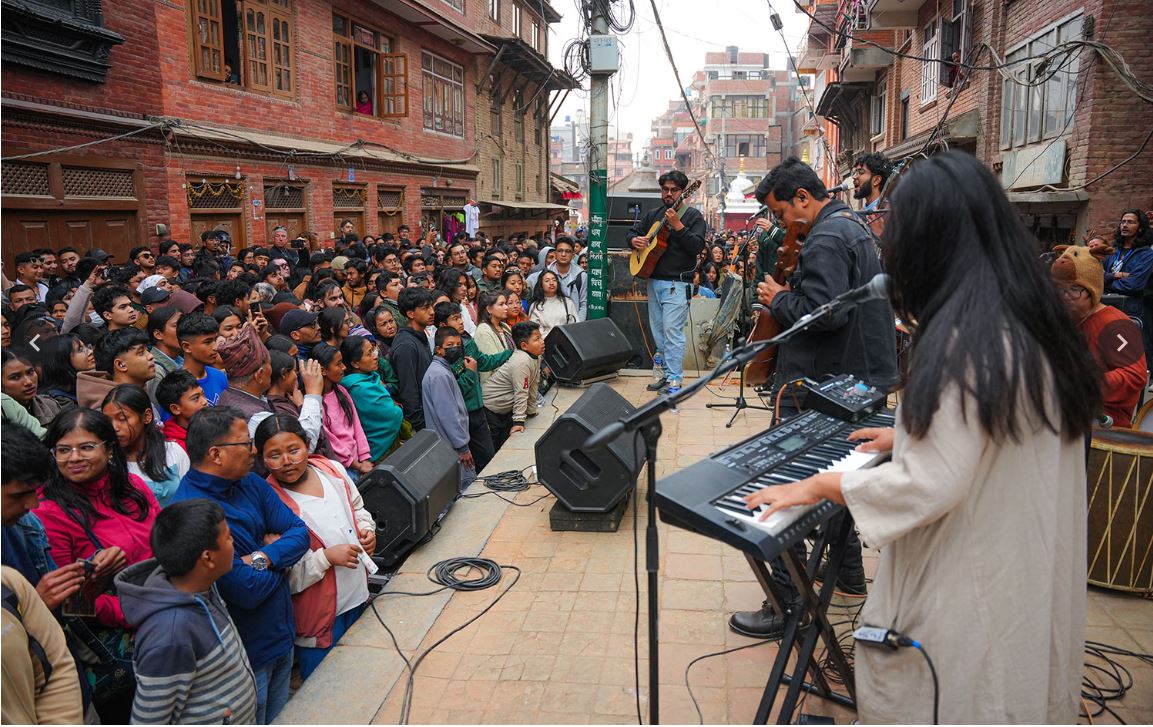
While preparing for the milestone edition, Tuladhar recalls the festival’s first edition, which was held in Ason and nearby areas. The inaugural edition primarily focused on delivering strong performances and reviving the tradition of dabali, a traditional open-air public stage.
“The first edition went better than our expectations,” recalls Tuladhar, co-founder and director of the EITV.
Talking about the first edition, Tuladhar recalls the hardship of managing the space for the festival. He says the festival team held 44 different meetings to manage the venue.
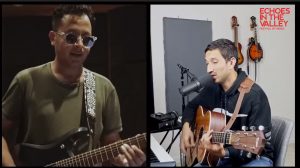
For the inaugural festival, the EITV team successfully brought together artists from Finland, Sweden, and France.
Keeping the echo alive
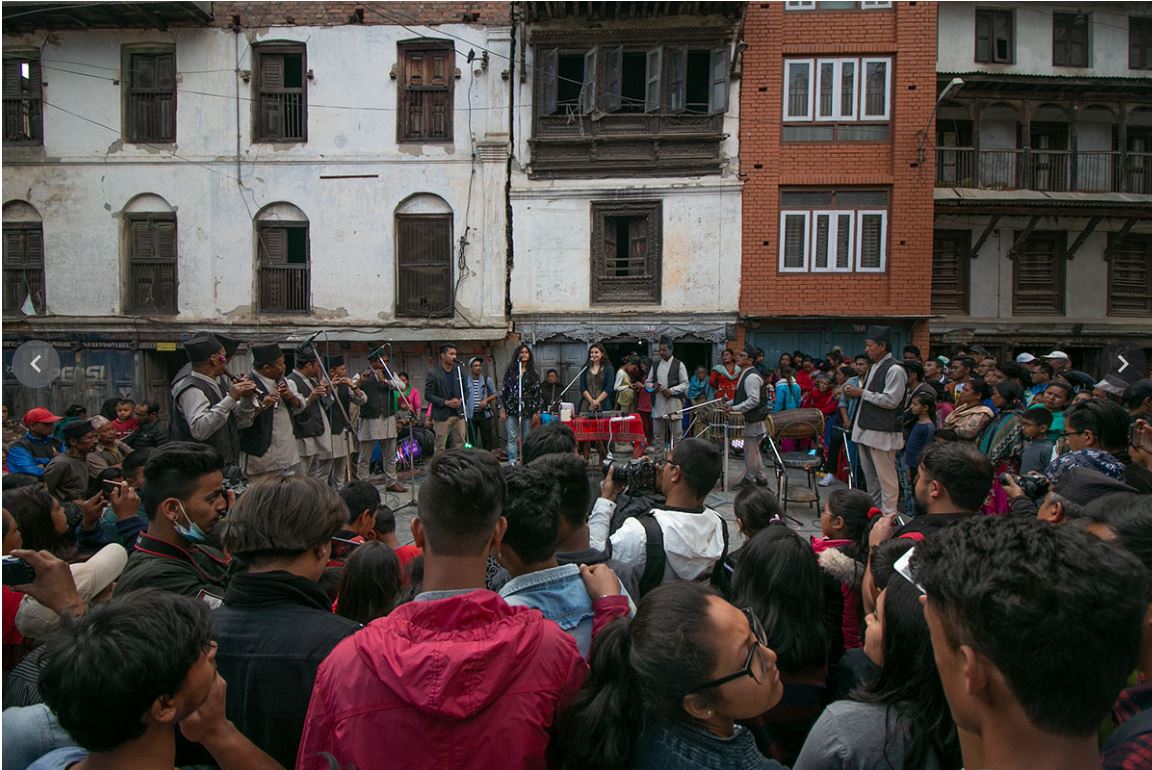
Over the years, the festival has undergone numerous changes, including those in terms of artists, sound, audiences, spaces, and challenges.
Recently, as global politics has changed drastically, the issue of getting funding from international organisations has added additional challenges to the organisers of the festival. Similarly, finding local artists has remained another challenge for the festival.
“In Nepal, most bands do not sustain for the long run; the band which formed last year do not exist currently. Such situations create challenges in finding the artist for the festival,” says Rajan Shrestha, who oversees the Learning and Education Initiatives of the festival.
Over the years, the festival has undergone many changes in terms of artists, sounds, audiences, spaces, and challenges. Recently, with global politics shifting drastically, securing funding from international organisations has become an additional challenge for the festival organisers. Similarly, finding local artists has also proven difficult.
“In Nepal, most bands do not sustain in the long run. Many bands formed last year no longer exist today. Such situations create challenges in finding appropriate artists for the festival,” says Rajan Shrestha, a member of the organising team.
To overcome this challenge, the EITV team has also begun reaching out to universities and music institutes. Although most local artists participate through an open call announced by EITV, the festival team believes it is equally important to proactively seek out artists on their own.
The other challenge, according to Tuladhar, that the festival often faces, is to convince people about the genuineness of the festival.
“Since the festival has always been a free event, we have often been questioned about our intentions behind organising it,” says Tuladhar. “People ask, ‘Why would someone organise an event of this scale for free? ‘ and they sometimes doubt our genuineness.”
More than a festival
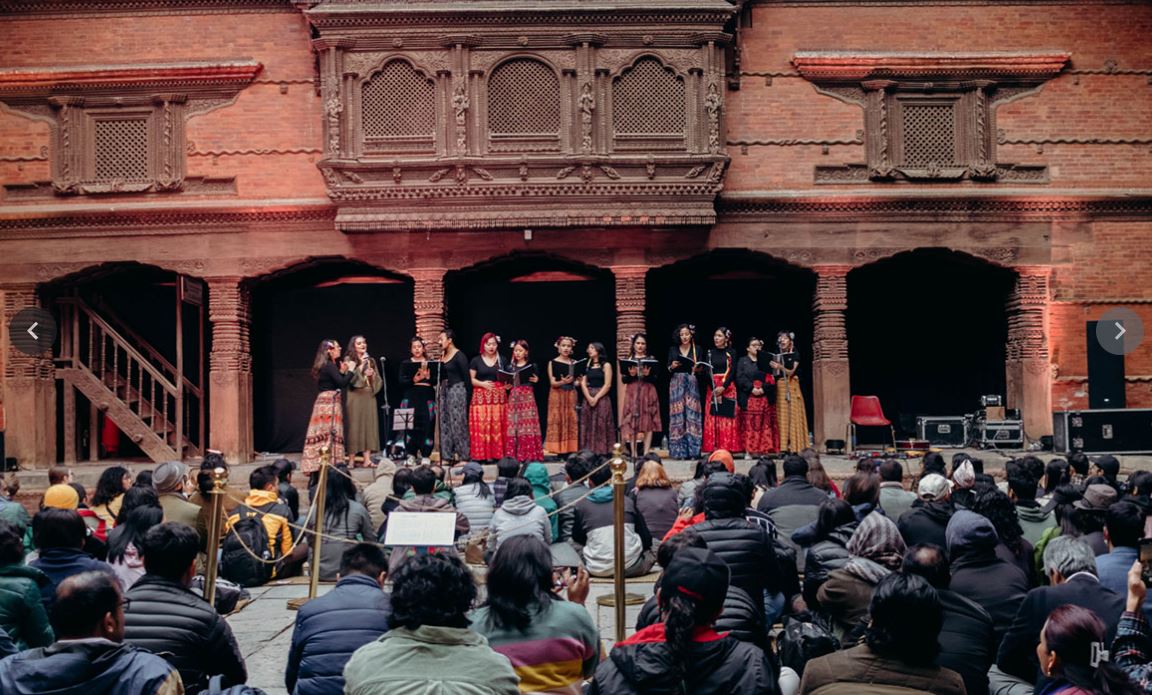
While music festivals come and go each year, their impact on the community often remains a matter of concern. The EITV team believes that merely organising a festival does not meaningfully contribute to the music scene. With this understanding, EITV has, over the years, developed several initiatives aimed at contributing to the overall growth of Nepal’s music landscape.
These initiatives include Confluence, a platform where musicians, teachers, students, music enthusiasts, and supporters gather to share and exchange stories, experiences, ideas, and inspirations around music-related projects; AmplifiHer, a free music production course for women and non-binary individuals; Kaleidoscope, a three-week residency programme focused on cross-cultural collaboration and creative exchange; and the Nepal Music Archive, an initiative dedicated to digitising materials related to Nepali music.
“With such initiatives, EITV is not merely allowing artists to perform and entertain audiences, but is also enhancing music literacy in the country,” says Shrestha.
Tuladhar, who has travelled to numerous international music festivals across different parts of the world, says that the representation of Nepali music remains very limited. In this context, he believes that festivals like EITV can help support Nepali artists in reaching international music platforms and festivals.
EITV is the only music festival in Nepal that has taken place across various corners of the Kathmandu Valley. From Dagu Baha in Kathmandu to Madhyapur Thimi in Bhaktapur, EITV has resonated with echoes of folk music. However, the festival has yet to travel beyond the Valley.
“We would love to take EITV outside the Kathmandu Valley, but due to financial constraints and a lack of the resources required to organise such a festival beyond the Valley, we have not been able to do so,” says Tuladhar.
Due to the lack of music festivals outside the Kathmandu Valley, the EITV team has not been able to engage in collaborative work beyond the Valley.
Previously, EITV was held in March, but this year the organisers have changed the schedule due to the upcoming House of Representatives elections, slated for March 5. This shift in timing is one of the major factors that sets this edition apart from previous ones. Additionally, residents of Khokana will manage the stalls at the venue, further enhancing community engagement. Popular artist Arko Mukherjee & Friends feat. Gaboo from India will be headlining the final day of the edition.
“This year’s EITV will be even more raw,” says Tuladhar.