
Following an intensely complex political period, Nepal this year appointed its first woman prime minister, a historic milestone. While the appointment of Sushila Karki as the country’s first female prime minister has drawn global attention, another appointment within Nepal has received far less discussion despite its significance. Durbar High School, also known as Bhanu Secondary School, the first school in Nepal, has appointed its first female principal, 172 years after its establishment.
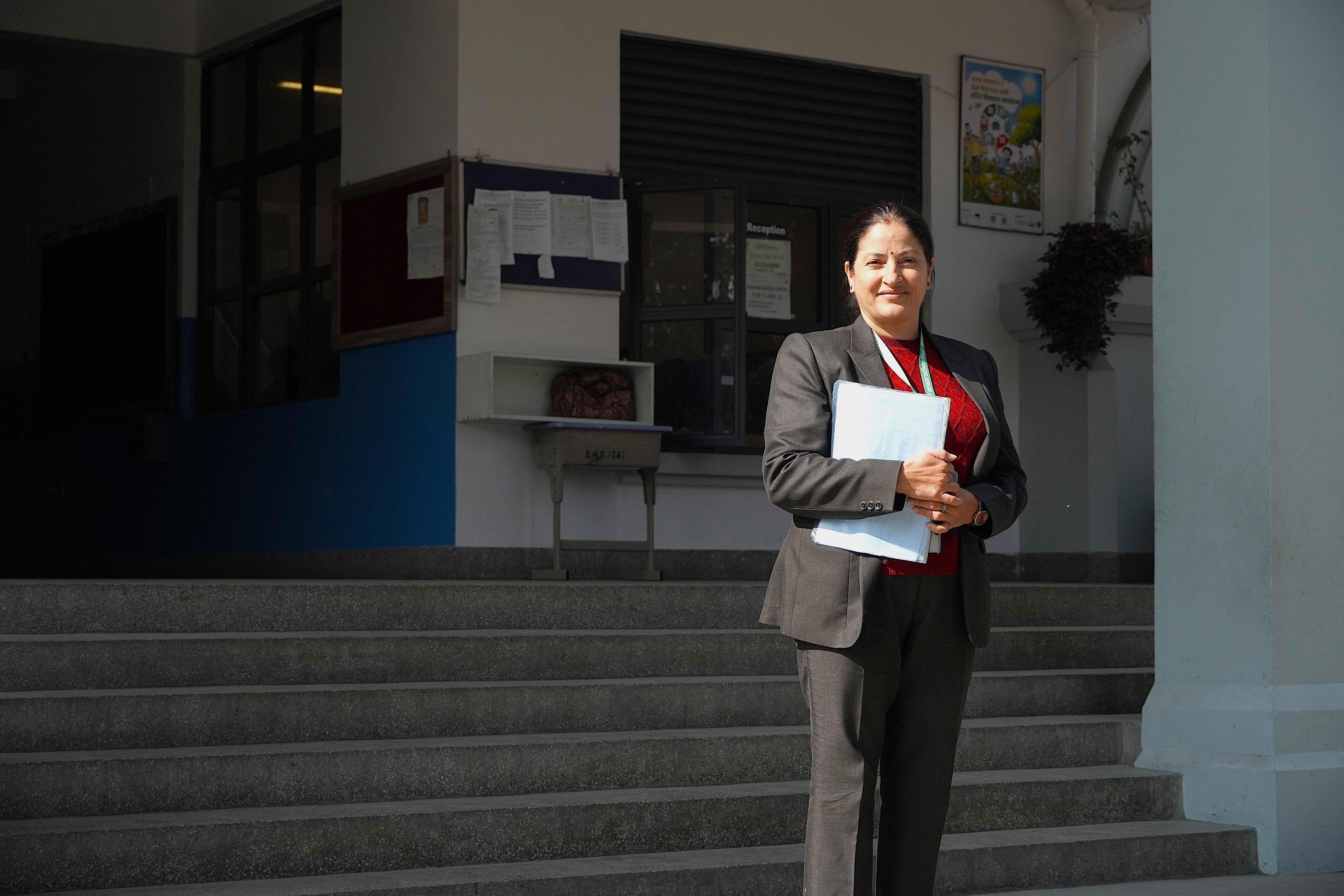
On November 20, Sharda Kumari Paudel was appointed principal of Durbar High School. Previously, she had been serving as the school’s acting principal.
Breaking historical barriers
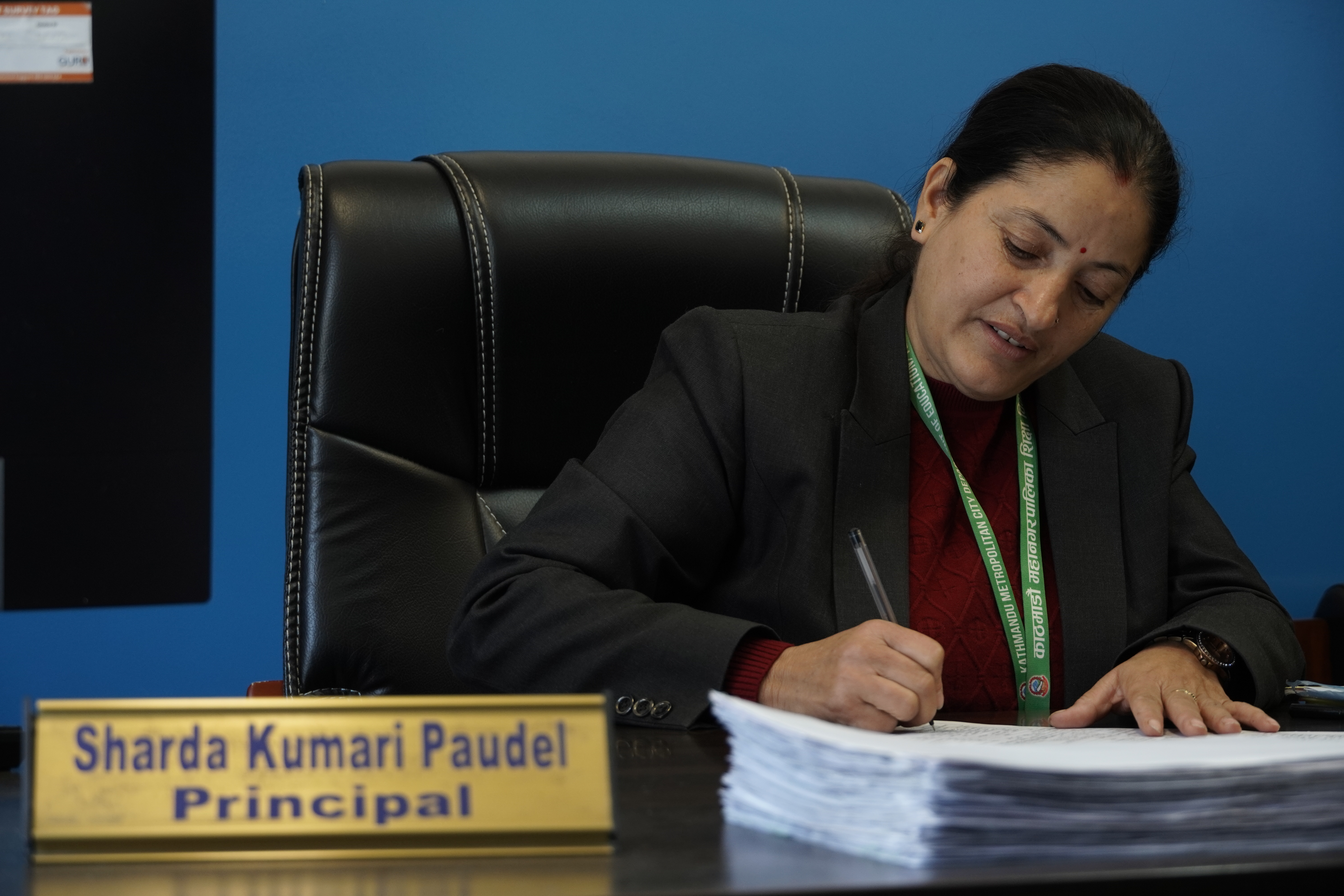
Being promoted from acting principal to principal, Paudel says she now feels more confident, responsible, and challenged.
She was appointed through an open competition among three contenders, in which she was the only female candidate.
Established in 1854, Durbar High School took a long time to appoint a female principal. In this context, Paudel notes that in the past, women rarely entered the teaching profession, and those who did were mostly limited to teaching at the primary level.
“Women in the past were confined to family life due to societal structures, which limited the time they could devote to their professional development,” says Paudel. “As a result, it took a long time for women in almost every sector to reach higher positions, and Durbar High School is no exception.”
However, Paudel considers herself fortunate, as it was her father who inspired her to become a teacher and pursue a career in the profession.
“My father always motivated me to serve society, and as a result, I chose to become a teacher,” she says.
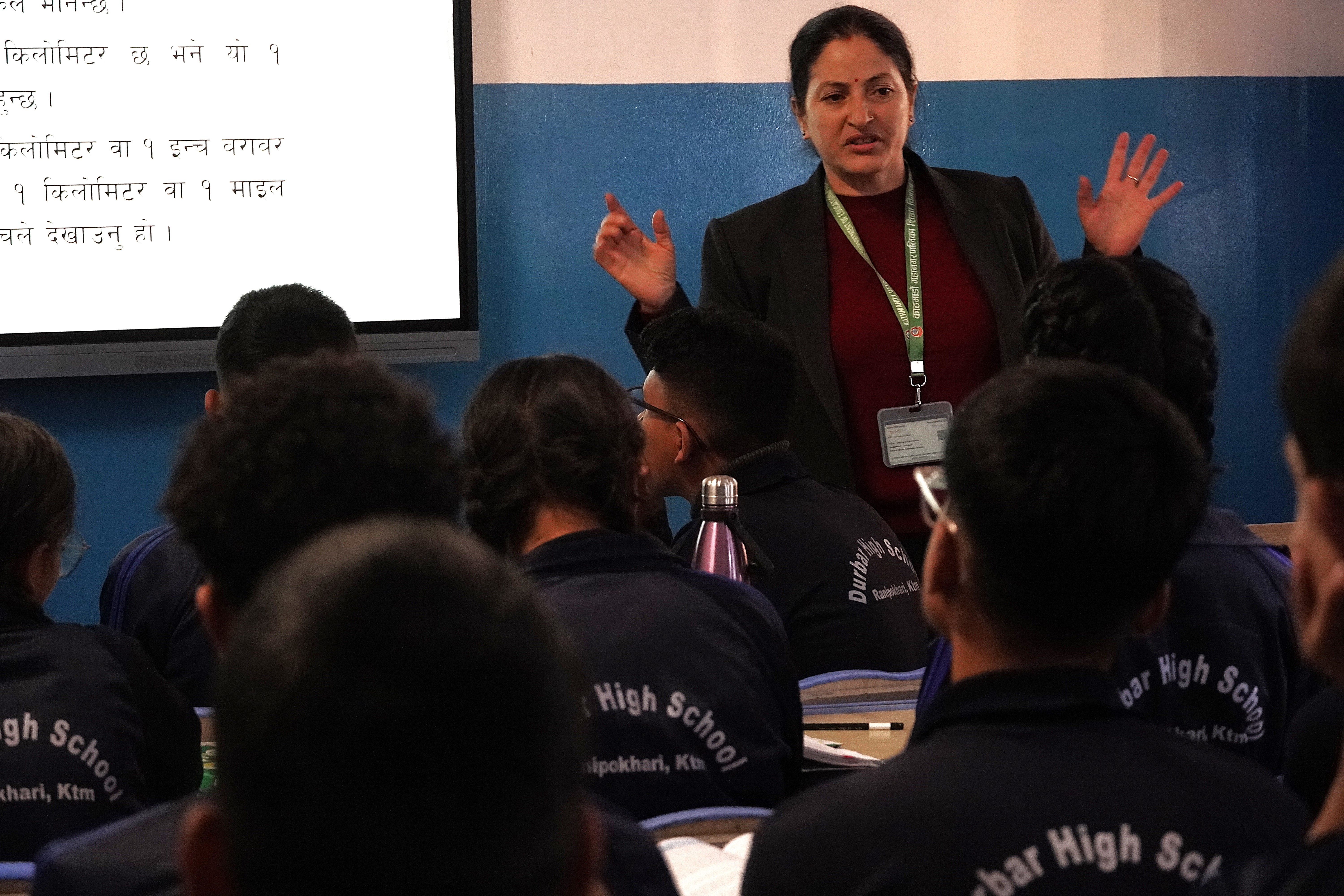
Born in Syangja in western Nepal, Paudel joined the teaching profession in 2004. Her first posting was at Mahendra Rastriya Secondary School in Baluwatar, where she taught health education for 10 years. In 2014, she joined Durbar High School as a permanent secondary-level teacher, teaching economics.
In 2019, she was appointed assistant principal of the school. At that time, Durbar High School had only 71 students. In 2020, at the height of the COVID-19 pandemic, she was appointed principal with limited responsibilities. Under her leadership, the school began conducting virtual classes. Despite the challenges, the school also focused on strengthening extracurricular activities. It organised a national essay competition on the impact of COVID-19 and established a robotics lab.
Public school revival
Durbar High School became the first government school in Nepal to introduce robotics classes. Students from the robotics program went on to win several competitions and participate in international events outside Nepal. Meanwhile, the school, severely damaged by the devastating 2015 earthquake, completed its renovation. In collaboration with Kathmandu Metropolitan City, smart boards were also installed in classrooms. After physical classes resumed, the number of students increased to 350.
As the quality of education improved, Durbar High School began attracting public attention. Even parents who had been sending their children to private schools started enrolling them at Durbar High School, one of the rarest shifts seen in Nepal’s education sector.
Similarly, under Paudel’s leadership, the school’s canteen and security systems improved. Currently, the school has 1,095 students. Managing such a large number of students has become one of Paudel’s major challenges as principal.
The challenge is compounded by the fact that Sanskrit Secondary School, which has around 900 students, is also operating within the Durbar High School building.
“As two different institutions run in the same building, conflicts sometimes arise among students and teachers, and in such cases I have to be especially sensitive,” says Paudel.
Due to overcrowding, the school is compelled to run tiffin breaks multiple times, which often causes disturbances. Efforts are underway to address this challenge, she adds.
Classrooms of tomorrow
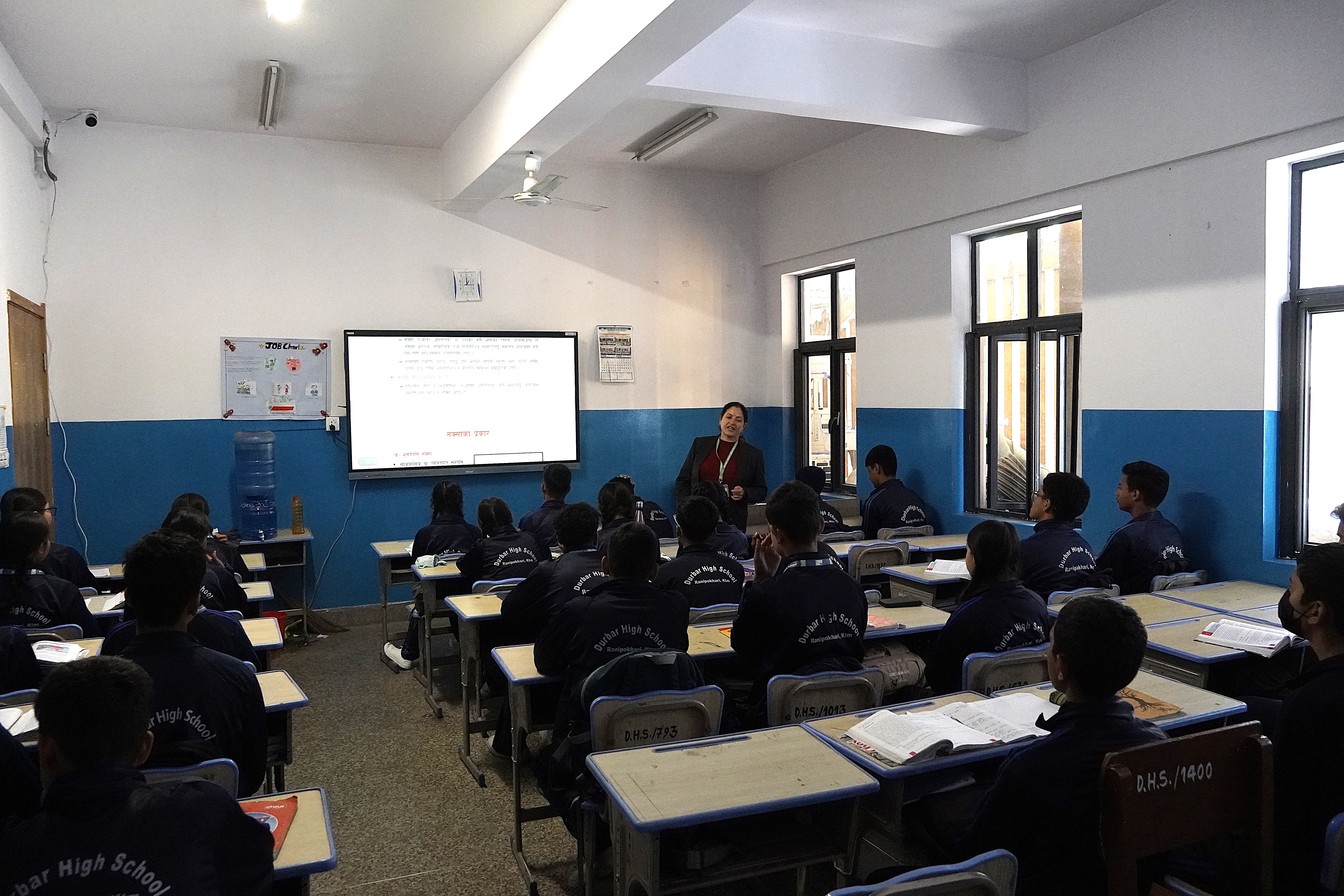
While the number of students continues to grow each year, the school’s resources remain limited. However, with support from guardians, the school has managed to recruit additional staff.
To prevent a shortage of teachers, the school has recently introduced the concept of a “Teachers Bank.” The Teachers Bank serves as a backup pool of teachers. For instance, if a teacher is unable to attend classes for a week or longer, the school can reach out to teachers listed in the Teachers Bank. The school has also publicly advertised this initiative and invited interested individuals to join. As a result, Paudel has received many inquiries and has been personally handling the process.
Paudel’s tenure as principal will be four years. Speaking to Onlinekhabar, she shared the plans she hopes to accomplish during her term.
Her priority is to strengthen the school’s technological capacity so that students become more technologically skilled. Second, she plans to introduce more optional subjects. She also aims to prioritise sports. Lastly, she intends to improve students’ public speaking skills and further enhance the quality of the robotics program.
“My goal is to make Durbar High School a place where students are confident, skilled, and ready to compete anywhere, not just in exams, but in life,” says Paudel.