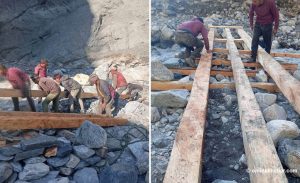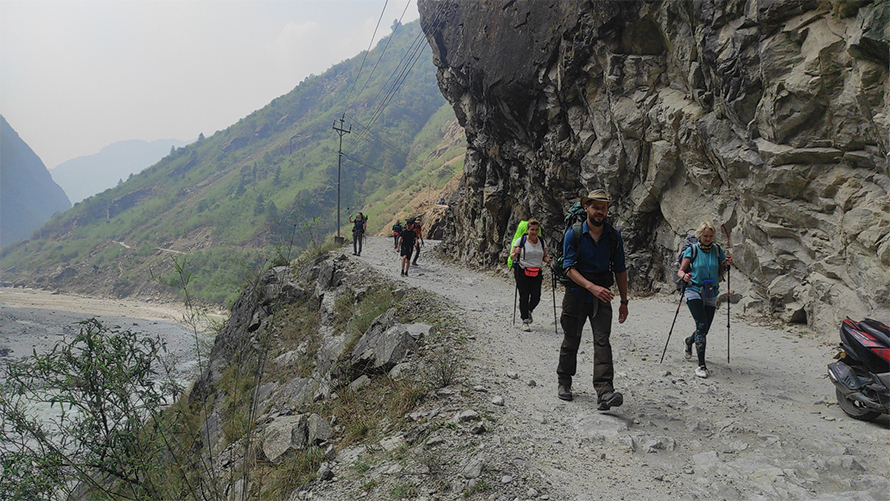
Each time disaster strikes Nepal, the tourism sector follows a familiar pattern: assess damage, reassure visitors, reopen destinations, and launch campaigns to restore confidence. Nepal has become remarkably effective at recovery. The more important question, however, is whether recovery will continue to rely primarily on reassurance and promotion, or whether future reopening decisions will be grounded in verified evidence, transparency, and preparedness.
Even though Nepal has become highly skilled at recovery, the institutionalisation of preparedness remains far less developed. After every major disruption, the national conversation understandably shifts towards rebuilding, reopening, and restoring visitor confidence. This instinct has helped many destinations, businesses, and communities recover from difficult periods. However, reopening infrastructure is not the same as reducing future risk, and restoring visitor numbers is not the same as strengthening resilience.
Recovery rebuilds economic activity, whereas resilience reduces vulnerability. This distinction matters because rebuilding exposure without addressing underlying risks simply recreates the conditions for future disruption. While reopening a destination may restore confidence in the short term, communities can face similar crises again unless the hazards they are exposed to are properly understood and managed. Nepal’s tourism sector has repeatedly demonstrated its capacity to recover and bounce back. The challenge now is to ensure that every recovery process leaves the country safer, more prepared, and more resilient than before.
The Lesson of the 2015 Earthquake

The 2015 earthquake demonstrated both the vulnerability and the regenerative capacity of Nepal’s tourism economy. The official post-disaster assessment estimated combined tourism damage and losses at approximately Rs 81.2 billion and warned of significant impacts on arrivals, employment, and foreign-exchange earnings. International arrivals fell from 790,118 in 2014 to 538,970 in 2015, representing a decline of roughly 32 percent. Yet the sector recovered rapidly, with arrivals increasing to 753,002 in 2016, reaching 940,218 in 2017, and approaching 1.2 million by 2019.
These figures demonstrate an important reality: tourism can recover. What they do not automatically demonstrate, however, is that Nepal became more resilient. This distinction is often overlooked when recovery itself becomes the primary measure of success. While the earthquake proved the strength, determination, and adaptability of Nepal’s tourism sector, it did not demonstrate that permanent mechanisms had been established to verify destination readiness, communicate risk consistently, or ensure that future reopening decisions were guided by evidence rather than urgency.
Recovery statistics should therefore be interpreted as evidence of economic resilience rather than proof that underlying institutional vulnerabilities have been resolved. The lesson from 2015 is not simply that Nepal recovered, but that recovery alone should not be mistaken for preparedness.
Tourism resilience is livelihood resilience
Tourism is far more than a collection of hotels and airlines. Nepal recorded more than one million international arrivals in 2023, while the sector comprised 1,416 registered tourist-standard and star hotels, 4,845 travel agencies, 3,191 trekking agencies, and more than 26,000 registered trekking guides. Tourism foreign-exchange earnings reached US$548.2 million in the same year.
Behind these figures are guides, porters, transport operators, restaurants, homestays, artisans, farmers, mountain communities, and countless small enterprises whose livelihoods depend on visitor spending. Tourism therefore functions as a nationwide livelihood system, meaning that when destinations are disrupted, the economic and social consequences extend far beyond the immediate disaster zone.
For this reason, tourism resilience is not solely about protecting visitor flows. It is also about protecting jobs, incomes, local businesses, and community wellbeing. When recovery efforts focus primarily on promotion without sufficient attention to preparedness, the livelihoods that depend on tourism remain exposed to recurring disruption.
Climate crisis, tourism resilience and climate justice
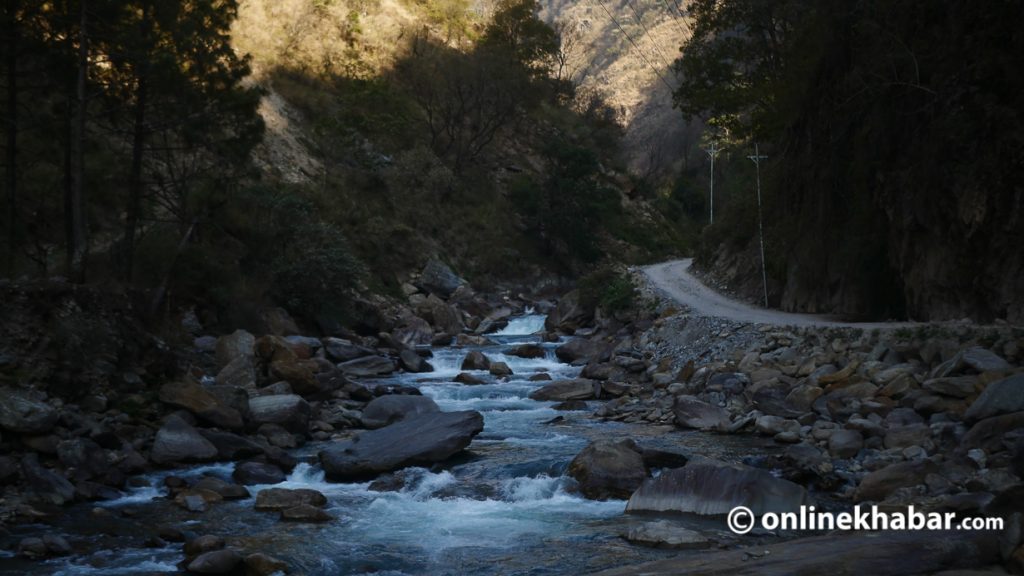
Climate change makes tourism resilience an increasingly urgent national priority. Although Nepal contributes only around 0.1 percent of global greenhouse-gas emissions, it faces a disproportionate share of climate-related impacts. Climate impacts could leave Nepal’s economy at least 7 percent smaller by 2050, while annual climate-related damage to transport infrastructure alone could reach US$250 million. At the same time, the Himalayan environment on which much of Nepal’s tourism depends is changing rapidly. An ICIMOD assessment published in 2026 reported a 12 percent decline in glacier area across the Hindu Kush Himalayan region between 1990 and 2020.
For Nepal’s tourism economy, these trends translate directly into greater destination vulnerability. Climate-related hazards increasingly affect trails, bridges, roads, settlements, water systems, cultural landscapes, and local economies, while also influencing visitor safety and destination management. As a result, resilience can no longer be treated as a post-disaster concern; it must become an integral part of tourism planning and destination governance.
This is also a climate justice issue. Nepal has done little to create the problem, yet bears a substantial share of its consequences. That reality strengthens the case for increased international support for adaptation, resilient infrastructure, technical assistance, and loss-and-damage mechanisms, while also reinforcing Nepal’s responsibility to manage risk more systematically and to ensure that resilience investments are guided by evidence and long-term preparedness rather than reactive recovery alone.
The missing institutional link
Nepal is not starting from zero. The country already possesses disaster-management institutions, emergency frameworks, risk-information systems, and tourism authorities. The Disaster Risk Reduction and Management Act, the National Disaster Response Framework, BIPAD, the Department of Hydrology and Meteorology, and the Nepal Tourism Board all play important roles within their respective mandates.
The challenge is therefore not the absence of institutions but the missing operational bridge between disaster information and destination management. A flood warning is not automatically a traveller advisory, a reopened highway does not confirm that connected trails, accommodation facilities, and communication systems are fully functional, and a structurally intact hotel does not establish that the broader community is prepared to receive visitors.
Likewise, a promotional campaign is not a substitute for a verified destination assessment. Visitors deserve transparency rather than assumptions, and confidence should be supported by evidence rather than urgency. The objective should not be to promote recovery as quickly as possible, but to ensure that reopening decisions are informed by credible information and demonstrable readiness.
A tourism resilience system as the solution
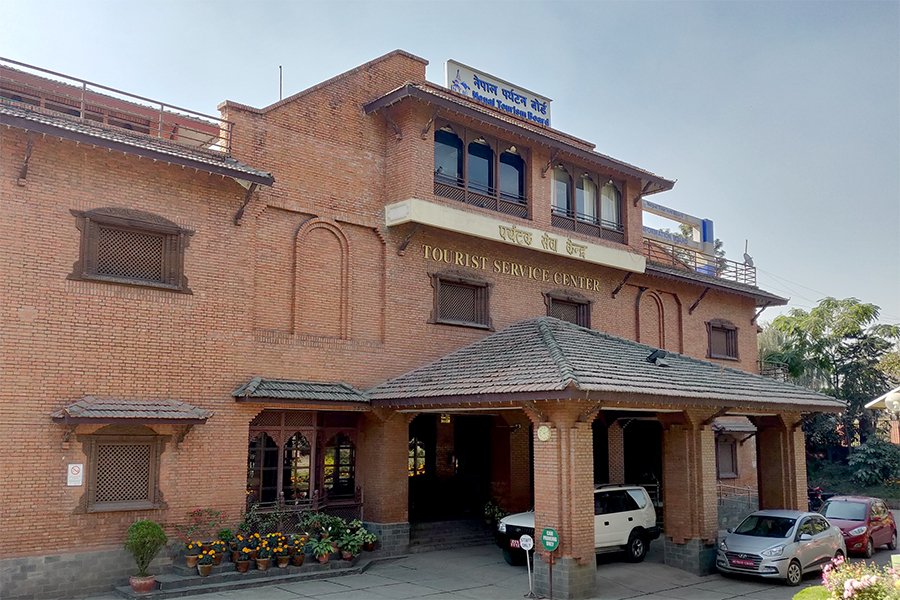
The answer is not another ministry, another agency, or another layer of bureaucracy. What Nepal requires is a Tourism Resilience System that connects the institutions already responsible for disaster management, infrastructure, tourism, and local governance. Its objective is simple: to place evidence before confidence and preparedness before promotion.
To achieve this, the system should focus on four core functions: assessing risk before disasters occur through continuous monitoring, hazard assessment, and preparedness planning; coordinating information during crises so that government agencies, tourism authorities, and local communities operate from a shared understanding of conditions on the ground; verifying reopening decisions through documented destination assessments that examine access, essential services, emergency capacity, and community readiness; and communicating transparently so that travellers receive accurate, timely, and evidence-based information about both affected and unaffected destinations.
Leadership and coordination should build upon existing institutional responsibilities rather than creating new structures. The priority is to ensure that disaster-management institutions, tourism authorities, and local governments are connected through a shared operational framework that supports informed and verifiable reopening decisions.
Prootion to preparedness
Financing should prioritise hazard mapping, early-warning systems, resilient infrastructure, destination assessment capability, interoperable information systems, and local preparedness. Nepal should also make strategic use of emerging climate-finance and loss-and-damage mechanisms to support investment-ready resilience programmes rather than relying primarily on post-disaster appeals.
Tourism confidence cannot be manufactured through promotional campaigns alone. It must be earned through verified safety, transparent information, and genuine preparedness. Nepal has already demonstrated that it can recover from disasters. The next challenge is ensuring that recovery becomes a pathway to greater resilience rather than a cycle of repeated vulnerability.The true measure of tourism resilience should not be how quickly Nepal asks visitors to return, but how confidently it can demonstrate, through evidence, that destinations, businesses, and communities are genuinely ready to receive them.