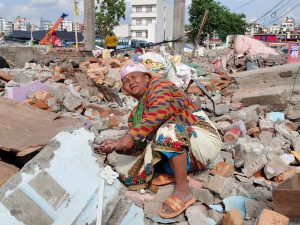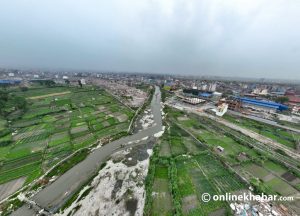

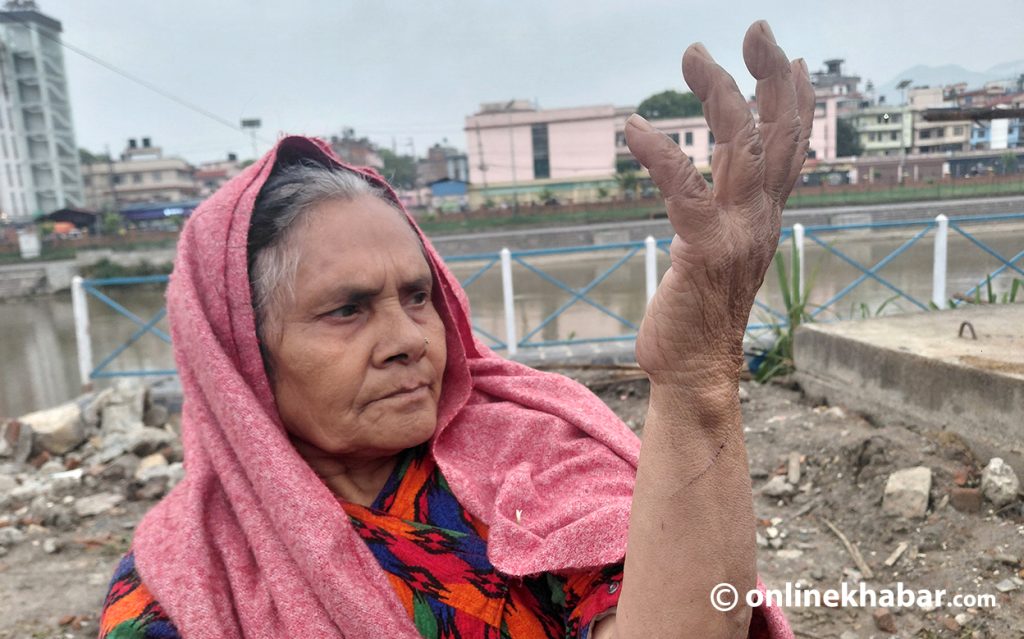
On Wednesday, the sky over the squatter settlement of Thapatali was overcast. Government workers were busy clearing the rubble of demolished structures. A drizzle had begun to fall. Mirroring that overcast sky was the face of 70-year-old Mina Kumari Basnet, writhing in distress. Her eyes followed the government-sent workers clearing the settlement’s ruins.
Mina Kumari had one wish, that her citizenship certificate, buried when the bulldozer levelled the settlement, would be found. She knows it well: in this country, you cannot survive without one.
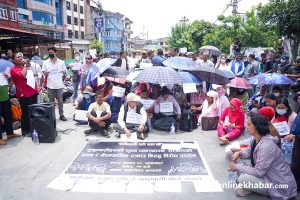
The government is conducting screenings to relocate landless squatters living along the riverbank to safer locations, keeping them in holding centres during the process. But for Mina Kumari, the centre doors remain shut because her citizenship is buried in the rubble of the demolished settlement. She does not even have a copy.
That Saturday morning was a nightmare for Mina Kumari. Having heard rumours that the settlement would only be demolished on Sunday, she never imagined it would happen so soon. She was confident she had at least one more day to pack her few belongings. But the bulldozer arrived earlier than she expected, rumbling into the squatter settlement. She is hard of hearing, and the government’s one-sided loudspeaker announcements had not reached her at all.
She pleaded with the security personnel to wait a little while, saying she was alone and too ill to move her things herself. But the uniformed officers showed neither the patience nor the compassion to hear her out.
According to Mina Kumari, a female security officer grabbed her hair and hands and dragged her outside. “She must have been born of a mother like mine, yet when she dragged me, she showed not even a shred of mercy,” she says.
By Wednesday afternoon, she would approach anyone who came to the Thapatali squatter settlement, show them her scraped hands, and try to unburden her wounded heart.
“They tore me up like this. They wouldn’t even let me go inside to get my things. Wretched people…” she kept saying to everyone.
Indeed, her hands, scratched raw during the scuffle on the day the bulldozer came through (Saturday), had still not fully healed by Wednesday.
“The clothes I was wearing got torn. The one pair of shoes I had, I don’t even know where they disappeared,” she laments. While the uniformed officers held her back at the edge, the bulldozer smashed into the hut she had painstakingly built. She watched her shelter collapse before her very eyes.
Inside the demolished home, her clothes, bedding, and medicines were buried. Even the items recovered later were filthy, soaked through with foul-smelling water.
“Everything reeked. They say it’s all useless now, throw it away,” she says, sitting with empty hands and a broken heart. “The worst of it, my citizenship is buried here too.”
Twenty years of settlement, gone in an instant
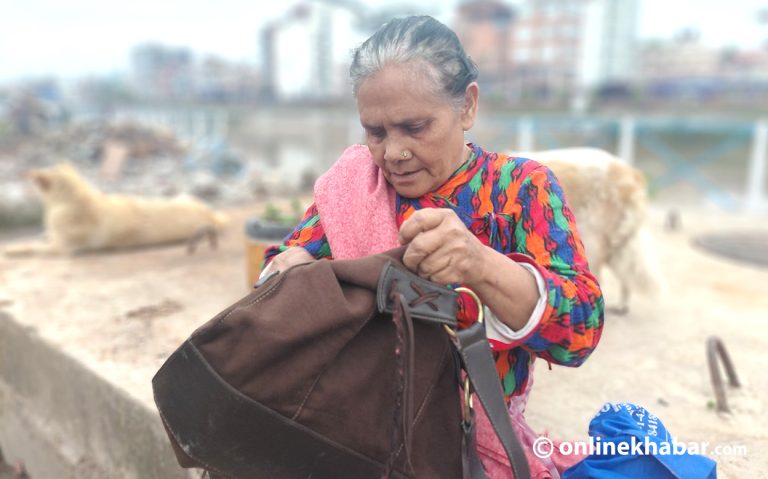
Mina Kumari’s life started in Bhojpur and has now come to a halt in a squatter settlement in Kathmandu. She feels she is not alone, many poor workers in the city face the same struggle, even though their hard work helps make this “concrete jungle” livable.
For Mina Kumari, ten years of memories and a home were reduced to dust by a government whim. She dug up her past sitting beside that same rubble.
In her own words, Mina Kumari spent her youth weaving cloth by hand in factories in Dharan, Jhapa, and Itahari. Circumstances eventually brought her to Kathmandu. When factory work began to wear down her hands and feet, she started looking for alternatives.
Having never had the chance to get an education, Mina Kumari had few easy options. Labouring work, carrying gravel, and cleaning houses became her means of survival. This income was just enough to cover rent and keep herself and her mother, Dhan Kumari, alive.
It began with a small room in Sitapaila. Her mother died in Kathmandu, the greatest blow of her life. By then, she had moved from Sitapaila to Pulchok. In that small Pulchok room, after losing her mother, she arranged the funeral rites, cremation, and mourning rituals entirely on her own. There was no one to stand by her side.
A year after that bereavement, with the help of a friend, she found her way to the Thapatali squatter settlement. The foul-smelling riverbank that no one else wanted became her “home.”
But now, at 70, she has neither a roof over her head nor an official document to prove her existence. When her home was destroyed, her citizenship went with it.
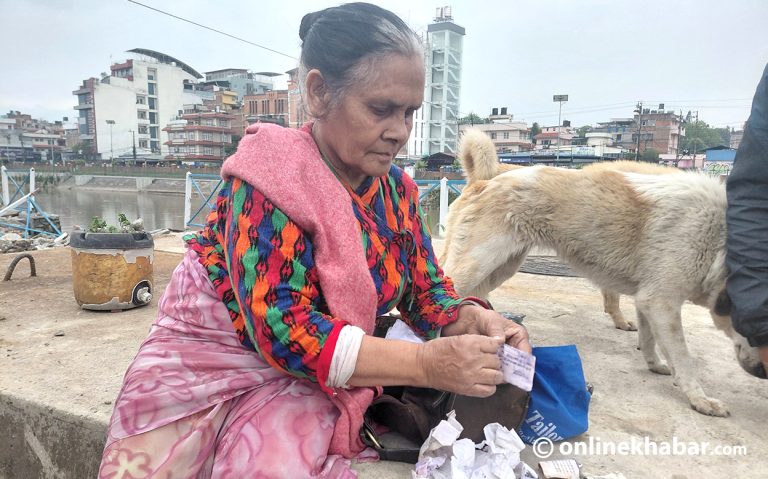
A soggy, torn piece of paper found a few days after the demolition was something the government refused to accept.
“If I had a home and property of my own, who would live in this filth?” she says, with a tear in her eyes.
She has no idea what process to follow to recover her citizenship. Travelling back to her birthplace of Bhojpur is now beyond her means. Even if she did go, there would likely be no one left who knows her. She believes none of her generation remains there. Navigating the complex bureaucracy alone seems impossible for someone so helpless. With her citizenship lost in the rubble of the demolished squatter settlement, she lives in fear of becoming a “non-citizen” in her own country.
The humiliation
When the bulldozer started on Saturday, a panicked Mina Kumari tried to bundle up her few possessions. But the uniformed officers would not let her do even that; they grabbed her and hauled her outside. As they did, she heard someone say: Will you be buried under the bulldozer, or will you get out?
That voice has shaken her to the core. It has cut deep into her sense of dignity.
“Don’t I value my own life? Am I an animal?” she asks.
On one side, the fury of watching her settlement be demolished; on the other, the humiliating treatment. In an outraged tone, she told the security personnel, “Aren’t you ashamed to make such an accusation against an old woman?”
Even now, recalling the exchange she had with officers who were holding her by the hair in that dishevelled state, Min Kumari sounds overwhelmed.
Yet this despair is not new. Even as her mother lay dying, she was anxious about her daughter’s loneliness. She would voice her worry, even in her final breaths, about how her daughter would live the rest of her life. That weighed deeply on Mina Kumari.
“I have no intention of living anymore, mother. Who am I even living for?” she recalls saying to her mother in response to that worry.
Today, that same answer keeps returning to Minakumari’s mind. What her mother feared has been exactly what she has lived through in the years since. “When the government sent the bulldozer, I wish it had just thrown me into the Bagmati right then,” she told me.
“Even a fallen stone finds a resting place”
For now, she is sheltering at the home of an old friend, just to give her ageing body a place to rest. But her mind keeps asking: how many days can she stay as a guest in the home of this friend, the wife of a retired soldier? Her own heart tells her this refuge is temporary, and so she keeps searching for her lost citizenship.
There is reason to search. After the government demolished the shack and began screenings, citizenship was demanded. With none to show, government workers issued an order: find it and bring it, by whatever means.
So she persists, hoping to find even a soggy scrap. On Wednesday, she was spotted searching despite the rain. She had been at it since Tuesday. A few other wet documents turned up, and she showed a bundle of paper scraps she had carefully set aside.