Venezuela’s long-running confrontation with the United States has once again drawn global attention, with President Nicolás Maduro emerging at the centre of sharply conflicting narratives of sovereignty, intervention, and power.
Maduro’s political identity has been shaped by resistance to US influence in Latin America. Born in Caracas in 1962, he rose from a working-class background, becoming politically active through labour unions while working as a metro driver. His alignment with late Venezuelan leader Hugo Chávez in the 1990s firmly placed him within the anti-imperialist and socialist political current known as the Bolivarian Revolution.
As foreign minister under Chávez, Maduro became a vocal critic of US foreign policy, defending Venezuela’s control over strategic resources such as oil and expanding ties with Cuba, Russia, and China. After Chávez’s death in 2013, Maduro assumed the presidency, inheriting both the revolutionary legacy and an increasingly hostile relationship with Washington.
The United States has since imposed sweeping economic sanctions on Venezuela, targeting its oil trade, financial sector, and international transactions. While Washington has described these measures as necessary to restore democracy, the Maduro government has repeatedly labelled them an “economic war,” blaming US pressure for the country’s deep economic crisis.
Tensions escalated further in 2019 when the US and several Western countries recognised opposition leader Juan Guaidó as interim president, a move Caracas denounced as an attempted coup. Since then, allegations of plots to overthrow Maduro, foreign interference, and attempts to control Venezuelan assets abroad have persisted.
In a dramatic development, the United States is claimed to have launched a military operation in Venezuela, detaining President Maduro and transferring him to New York. US President Donald Trump was quoted as saying that the US would oversee Venezuela’s governance until a “safe and responsible” transfer of power takes place. Images allegedly showing Maduro in US custody were shared on social media platforms.
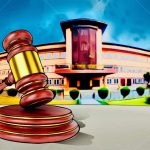
According to several reports, US authorities plan to prosecute Maduro in a federal court in New York on charges including narcotics trafficking and conspiracy, allegations Venezuela has long rejected as politically motivated.
The reported military action has drawn condemnation from Russia, China, and Colombia, all of which warned that unilateral military intervention violates the United Nations Charter. Meanwhile, Venezuelan officials have demanded proof of Maduro’s condition and accused foreign forces of carrying out the largest attack the country has ever faced.
As of now, independent verification of the claims remains unclear. For supporters, Maduro represents resistance against foreign domination; for critics, he embodies authoritarian rule and economic mismanagement. What is undeniable is that Venezuela has once again become a focal point of a broader geopolitical struggle, with implications far beyond its borders.