
Amid dramatic claims surrounding the capture of Venezuelan President Nicolás Maduro by U.S. forces, uncertainty continues to grip Venezuela. While Washington has made bold statements about its role in the country’s future, power dynamics on the ground appear far more complex, with the Chavista apparatus still firmly in control.
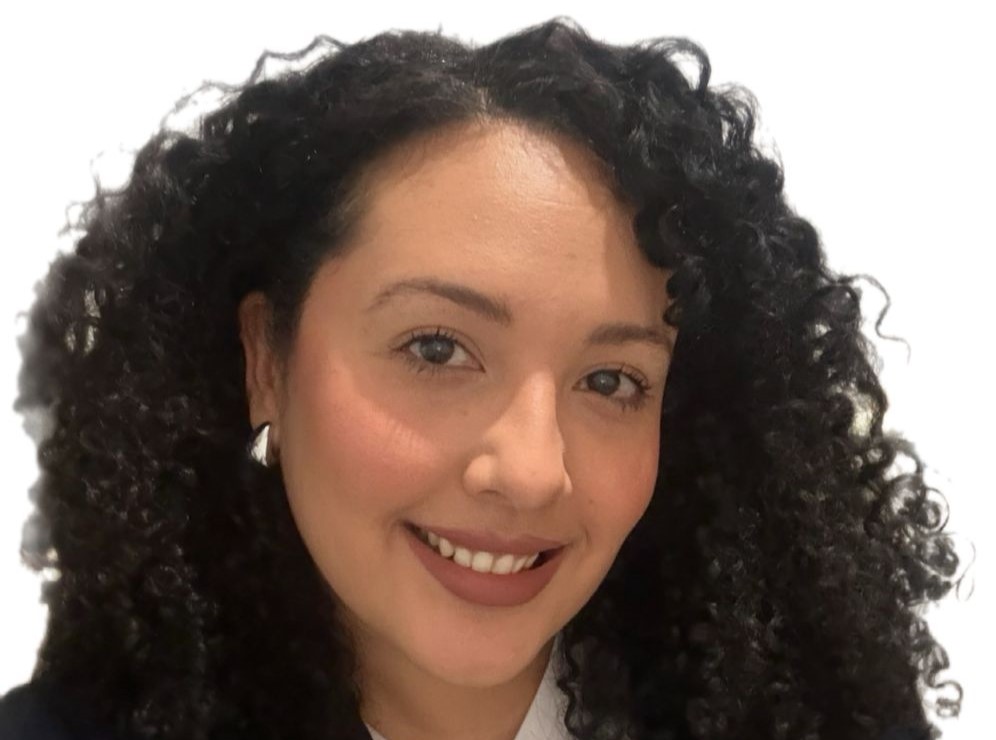
To understand what is unfolding beyond official statements and breaking news headlines, Onlinekhabar spoke with Ana María Rodríguez Brazón, a senior Venezuelan journalist who has long covered conflict, politics, and religion in Latin America. Currently a correspondent for Colombia’s leading daily El Tiempo, Rodríguez Brazón offers a ground-level view of how ordinary Venezuelans are responding to the crisis and the political scenarios that may emerge in the days ahead.
In this interview, she explains the current status of Venezuela.
What can you tell us about the current situation on the ground in Caracas and other major Venezuelan cities following the U.S. strike?
The streets have remained virtually deserted due to fears that the repressive apparatus will imprison or kill citizens. People have formed long queues at supermarkets and pharmacies to buy essential products.
How has the Venezuelan government apparatus responded after President Maduro’s capture, and how are the country’s military forces and security agencies reacting to the resulting leadership vacuum?
Police forces, commanded by Interior Minister Diosdado Cabello, remain deployed across the streets, monitoring citizens to prevent protests against the regime.
The Supreme Court has named Vice President Delcy Rodríguez as interim president. However, U.S. President Donald Trump has declared that the United States will “run” Venezuela. Who appears to be in control at this moment?
At this moment, without a doubt, Chavismo continues to control the country. It is unclear what President Trump’s statement is based on or what its actual implications are.
Reports indicate that President Nicolás Maduro and his wife have landed in New York and may be taken to a U.S. detention centre. How serious are the drug and weapons charges the US is planning to file against Maduro?
Nicolás Maduro faces charges of terrorism and drug trafficking, in addition to being considered a dictator. Since 2020, the United States has offered a $50 million reward for his capture. It should also be noted that Maduro is under investigation by the International Criminal Court for alleged crimes against humanity committed in Venezuela.
International media suggest mixed reactions among the Venezuelan population. How are Venezuelan citizens reacting to the news of his capture?
Citizens are happy about Maduro’s capture, but they cannot celebrate. It is important to remember that Chavismo still controls power and the repressive apparatus. More than 900 political prisoners remain detained, many of them tortured and held incommunicado. Several are imprisoned in El Helicoide, which is often compared to Sednaya prison in Syria. Under these conditions, no one is going to take to the streets to celebrate.
How are ordinary Venezuelans interpreting the U.S. intervention? Do they view it as an occupation, a liberation, or something else?
They do not see it as an intervention, but rather as a successful yet incomplete operation, because Chavismo remains in power. What Venezuelans want is for opposition leader Edmundo González to take office as president-elect, having won more than seven million votes. González is currently in exile due to persecution by the regime.

In your opinion, what key events or provocations might have triggered this U.S. military action?
There are several reasons. The United States had offered a reward for Maduro’s capture. It also participated in several dialogue processes between Chavismo and the opposition, which Maduro repeatedly failed to honour. Additionally, during President Trump’s first administration, the White House had already attempted to overthrow Maduro.
Some Venezuelans believe that President Trump’s actions are not about restoring democracy but about exploiting Venezuela’s oil resources. What political or economic motivations might lie behind such a large-scale U.S. operation?
Obviously, the United States has oil interests. In fact, it contributed significantly to the consolidation of Venezuela’s oil industry after the first well was drilled in 1920. However, to claim that oil is the sole objective is to ignore the fact that Cuba has taken Venezuelan oil for years without payment. Several Caribbean nations also benefited from Venezuelan oil for a long time without oversight. Russia, China, and Iran have similarly taken advantage of Venezuela’s resources and strategic geographic location. Therefore, this narrative is largely a Chavista argument against the United States.
Which international reactions have stood out most to you, and how might they shape the next phase of developments in Venezuela?
So far, the reactions have mainly come from the regime’s traditional allies and accomplices, Nicaragua and Cuba.
What has been the immediate humanitarian impact of these events, particularly regarding food supply, healthcare, and infrastructure?
There has been no immediate humanitarian impact. The country has not come to a halt. People are lining up at supermarkets mainly as a preventive measure to stock up on supplies.
From your perspective, what are the possible scenarios for Venezuela’s political future in the coming weeks and in the longer term?
It is still too early to conclude. Many scenarios are possible. For now, it appears that the United States is proposing that Delcy Rodríguez maintain order while preparations are made for an orderly transition to democracy. Maduro stole the July 28, 2024, elections, which is widely acknowledged. A peaceful transition is the best possible outcome for the country.