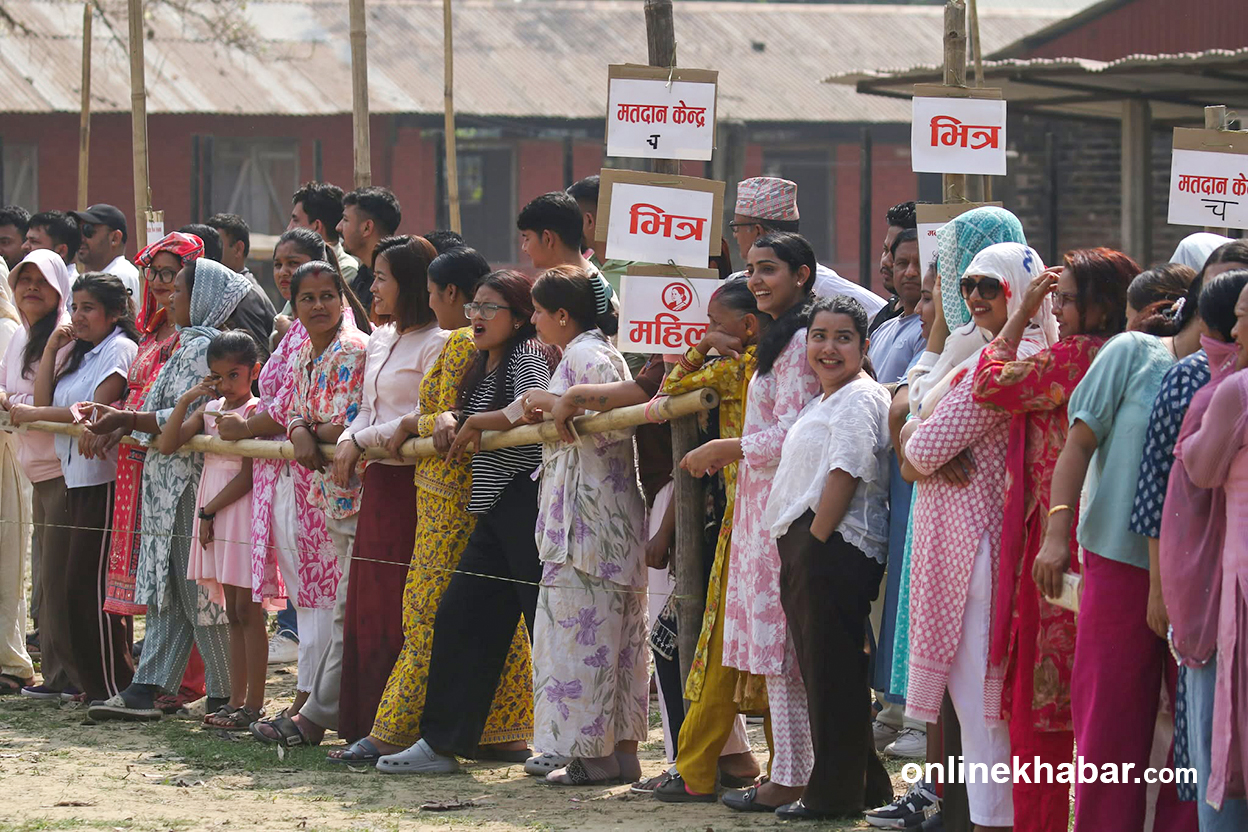

In the House of Representatives Elections held on March 5, the votes received by candidates under the first-past-the-post (FPTP) system and by parties under the proportional representation (PR) system are not the same.
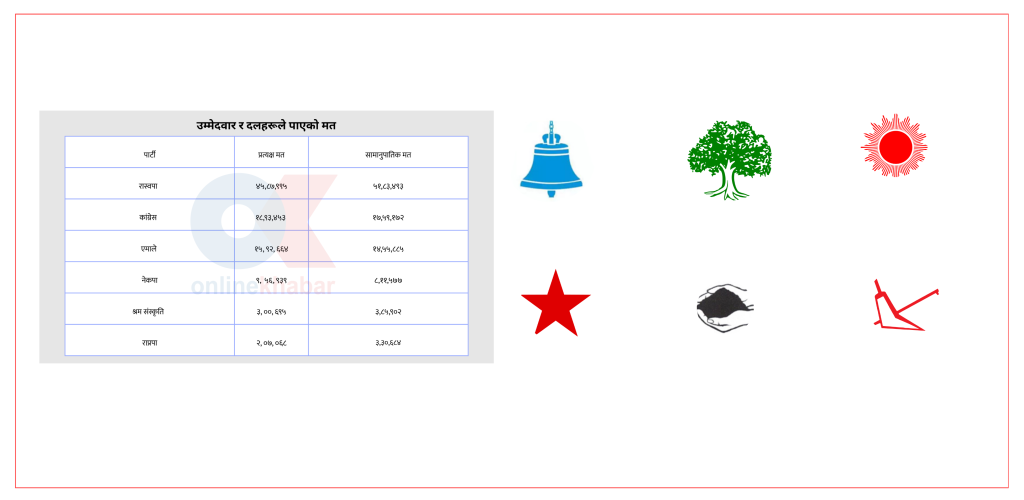
For the Rastriya Swatantra Party (RSP), Shram Sanskriti Party, and Rastriya Prajatantra Party (RPP), the parties received more votes in the proportional representation system than their candidates received under the direct election system. However, for the Nepali Congress, CPN-UML, and the Nepali Communist Party, the votes received under proportional representation are lower than those their candidates received in direct elections.
RSP, which managed to win 125 constituencies, had fielded candidates in 163 constituencies nationwide. In the direct elections, its candidates received 4,587,995 votes, while the party secured 5,183,493 votes under proportional representation.
Similarly, the RPP and Shram Sanskriti Party also received more votes in proportional representation than their candidates did in direct elections. The Shram Sanskriti Party fielded candidates in 109 constituencies, and the combined votes received by all its candidates reached 3,00,695, while the party received 3,85,902 votes in proportional representation.
RPP fielded candidates in 163 constituencies and won one seat. Altogether, its candidates received 207,068 votes, whereas the party received 330,684 votes in proportional representation.
Congress, UML, and CPN receive fewer PR votes than FPTP votes
The Nepali Congress, which won 18 seats under direct elections, had fielded candidates in all 165 constituencies. The total votes received by its candidates were 1,893,453.
However, the party received fewer votes in proportional representation—1,759,172 votes.
Party president Gagan Thapa, who contested from Sarlahi-4, received 22,831 votes, while the Nepali Congress received only 18,081 proportional votes in that constituency.
Similarly, KP Sharma Oli, chairman of the CPN-UML, received 18,734 votes in Jhapa-5, whereas the UML obtained 17,623 proportional votes there.
UML had candidates in 164 constituencies and won nine seats. Altogether, its candidates received 1,592,664 votes in direct elections, while the party secured 1,455,885 proportional votes nationwide.
The CPN also fielded candidates in 164 constituencies. Their candidates received 9,56,939 votes under direct elections, while the party received 8,11,577 votes in proportional representation.
NCP coordinator Pushpa Kamal Dahal contested from Rukum East and won with 10,240 votes, but his party received only 9,443 proportional votes in that constituency. The CPN won eight seats in direct elections.
Koshi Province: RSP leads other lags behind
Looking at both direct and proportional votes in Koshi Province, the RSP stands far ahead, while all other parties lag.
Direct / Proportional votes
- RSP: 796,027 / 853,183
- Shram Sanskriti Party: 260,255 / 292,049
- Nepali Congress: 360,809 / 290,562
- UML: 321,717 / 288,186
- NCP: 120,759 / 97,679
- RPP: 42,339 / 62,899
Out of 28 constituencies in Koshi Province, RSP candidates won 17.
Mixed results in Madhesh Province
In Madhesh Province, RSP won 30 out of 32 constituencies.
The candidacy of Kishori Sah from Dhanusha-1 was annulled by the Election Commission of Nepal because his name appeared on a bank blacklist. The matter is currently in court.
In Rautahat-2, Firdosh Alam of the Nepali Congress won, while RSP secured the remaining constituencies.
Direct / Proportional votes
- RSP: 1,065,978 / 1,300,468
- Nepali Congress: 237,788 / 287,323
- UML: 222,713 / 187,901
- NCP: 152,497 / 107,612
- RPP: 15,622 / 35,462
- Shram Sanskriti Party: 4,016 / 9,854
Bagmati, Gandaki, and Lumbini: varying patterns by party
In Bagmati Province, RSP fielded candidates in all 33 constituencies and won 31 seats.
Direct / Proportional votes
- RSP: 960,311 / 1,119,270
- Nepali Congress: 367,491 / 321,106
- UML: 288,863 / 261,897
- NCP: 232,793 / 188,182
- RPP: 49,840 / 76,521
- Shram Sanskriti Party: 19,700 / 31,493
In Gandaki Province, RSP won 15 of 18 constituencies.
Direct / Proportional votes
- RSP: 479,875 / 525,635
- Nepali Congress: 227,024 / 207,387
- UML: 164,123 / 152,587
- CPN: 59,708 / 57,876
- RPP: 12,724 / 23,556
- Shram Sanskriti Party: 7,559 / 18,995
In Lumbini Province, RSP, RPP, and the Shram Sanskriti Party received more votes under proportional representation than in direct elections.
Karnali: Congress leads
In Karnali Province, the Nepali Congress received the highest votes. Its candidates secured 147,825 direct votes, while the party received 141,233 proportional votes.
RSP ranked second in proportional votes in Karnali with 133,749 votes.
Sudurpashchim: RSP again leads
In Sudurpashchim Province, RSP received the highest popular vote and won 10 of 16 seats.
Direct / Proportional votes
- RSP: 278,220 / 317,836
- Nepali Congress: 196,112 / 182,842
- UML: 159,596 / 147,909
- CPN: 105,056 / 97,885
- RPP: 22,282 / 36,263
- Shram Sanskriti Party: 1,849 / 5,305
Congress ranks second in proportional votes in this province.