Kathmandu, November 6
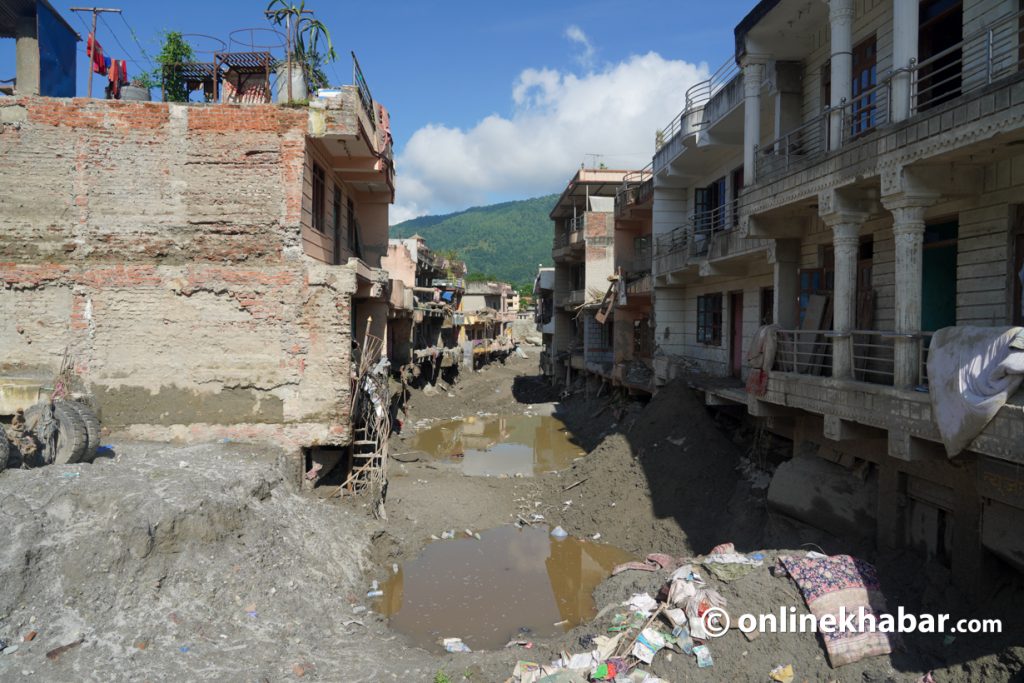
The government has begun the process of raising the $4-5 billion needed for reconstruction and rehabilitation after the Bhotekoshi-Trishuli disaster. Finance Minister Swarnim Wagle shared this information.
Speaking at a meeting of the Parliamentary Special Committee on the Impact of Climate Change in the Himalayas, Climate Justice and the Bhotekoshi-Trishuli Disaster at Singha Durbar on Friday, Wagle said the government is in talks with India, China, the World Bank and the Asian Development Bank (ADB). The aim is to mobilise the required resources over the next three to five years.
The government expects to raise about 80 percent of the total amount from these four sources. Wagle said it plans to raise the remaining 20 percent from other development partners and donor agencies.
According to him, discussions are under way with India on a special financial package for reconstruction and development projects. He expects some agreements to be reached during the Prime Minister’s upcoming visit to India.
Wagle said talks with China cover post-disaster reconstruction, modern infrastructure and the development of alternative trade points. They include infrastructure linking the Rasuwa, Tatopani and Korala border points, such as railways, tunnels, viaducts and modern customs facilities.
He said Nepal wants to upgrade its old roads connecting to China with modern technology, rather than limiting them to routine maintenance.
Wagle said intensive discussions are also taking place with the World Bank and ADB on managing the financial resources needed for reconstruction. He noted that a Nepali finance minister has met the World Bank president directly for the first time in 39 years, and said the meeting has laid a new foundation for high-level cooperation.
He said he has assurance that financial commitments of up to about $1 billion can be obtained, as needed, through various World Bank bodies and concessional financing mechanisms. Similar support is expected from the ADB, he said.
Wagle said that with grant assistance declining globally, even concessional loans must be used prudently. Nepal once relied on grants to carry out development work, he said, but such aid is now shrinking.
$20 million grant from Loss and Damage Fund
Wagle said the government has prioritised climate diplomacy to establish, at international forums, the loss and damage Nepal is suffering due to climate change.
According to him, he and Forests and Environment Minister Geeta Chaudhary jointly wrote to the Loss and Damage Fund five days after the disaster, seeking financial support.
Wagle said that after Nepal’s request, the fund held an emergency meeting and decided to give Nepal a $20 million grant for the first time.
He called this a significant achievement of Nepal’s climate diplomacy, noting that Nepal is about to receive the first grant the fund has provided since its establishment. The amount is far smaller than the overall reconstruction need, he said, but it will help establish Nepal’s claim on climate justice internationally.
Wagle said the government is also focusing on preparedness and risk reduction, ending the tendency to look for resources only after a disaster strikes.
In this context, he said, Nepal has become the first country in South Asia to join a catastrophe insurance system. He explained that the system allows a small premium to bring a large payout if a major earthquake or other catastrophic disaster occurs. He believes it will help raise resources quickly for disaster management in the future.
Because the risk of a major earthquake remains in Nepal, Wagle said, preparedness, institutional strengthening of the National Disaster Risk Reduction and Management Authority, and greater public awareness are necessary.
He said the government will also take initiatives to mobilise resources in Nepal’s interest from international financial mechanisms such as the Adaptation Fund and the Green Climate Fund.
Reallocation from current budget, additional resources next year
Wagle said that in the current fiscal year, reconstruction work will proceed by reallocating money from the existing budget rather than adding new sources.
In the next fiscal year’s budget, he said, additional resources for reconstruction could be included and the overall budget size increased.
Citing the 2015 earthquake, he recalled that Nepal’s budget in the year of the quake was Rs 518 billion and was raised to Rs 619 billion the following year. He said similar financial arrangements can be made for reconstruction after the Bhotekoshi-Trishuli disaster, as needed.
Wagle acknowledged that, while the government’s efforts to build Bailey bridges and restore electricity and telephone services within a short time were positive, services have not reached all affected areas equally.
He said reconstruction and rehabilitation will proceed as a medium- and long-term plan over the next three to five years. Local governments will be treated as the first accountable bodies, with effective coordination among provincial governments, line ministries and security agencies.
Pledging that reconstruction will not suffer for lack of resources, Wagle said the available funds must be used fairly and effectively.
He asked the special committee to prioritise the problems and needs of citizens in the affected areas as reconstruction moves ahead. Based on the experience of this disaster, he said, the committee should prepare clear procedures, an action plan and policy recommendations that can be applied when similar disasters strike in the future.