Major Nepali and English broadsheet dailies published in Kathmandu on Wednesday have given priority to a host of issues from political, sociocultural and economic spheres.
The foreign ministry’s statement to distance itself from NCP Chairman Dahal’s criticism of the US and its allies for their involvement in Venezuela has received considerable attention along with the news of the Cabinet deciding to extend the terms of the two transitional justice bodies by one year. The deteriorating health condition of medical education reforms activist Dr Govinda KC has also received attention.
Here is a summary of important, ignored and interesting stories from the front pages of national broadsheets:
Ministry distances itself from Dahal’s criticism of US and its allies
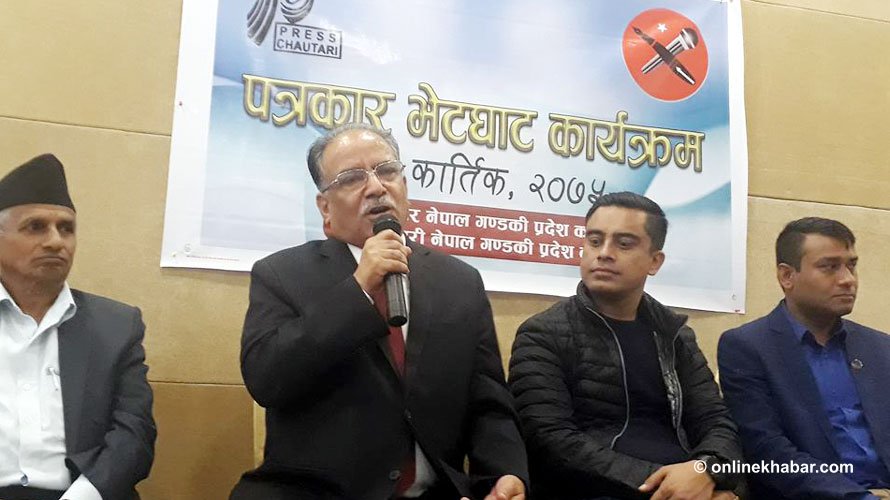
The Himalayan Times, The Kathmandu Post, Annapurna Post and Nepal Samacharpatra carry reports that say that the Ministry of Foreign Affairs has distanced itself from the statement made by the ruling party’s co-chairman Pushpa Kamal Dahal on US involvement in Venezuela. The Ministry of Foreign Affairs said in a statement that the government of Nepal has been closely following the recent political developments in Venezuela and the people of the Latin American nation have the ultimate authority to take a decision on the country’s political and constitutional course.
Following the statement by Nepal Communist Party’s Pushpa Kamal Dahal last week, foreign policy experts said the government had come under pressure to clarify its position on the ongoing political turmoil in Venezuela and come up with a “moderate and soft” response.
The US Embassy in Kathmandu had asked the foreign ministry for clarification on whether Dahal’s statement reflected the official position of the government. It is unclear if the ministry sent a separate response to the US embassy.
Important
Transitional justice bodies to get extension
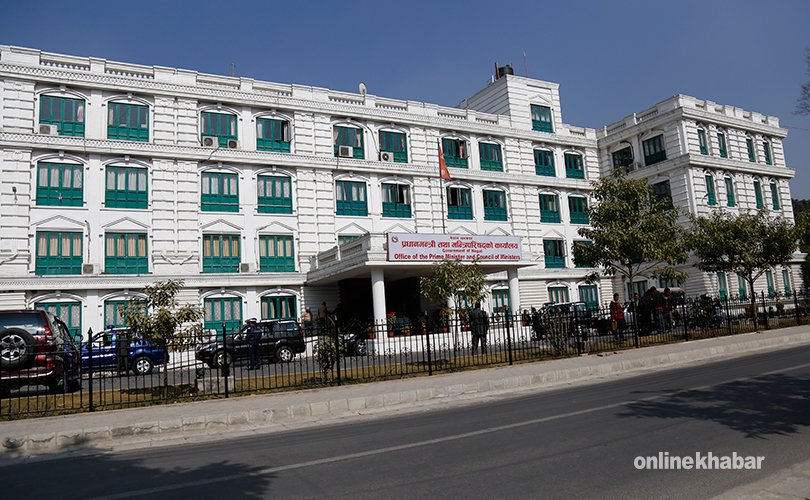
The Himalayan Times, Annapurna Post, Republica, and The Kathmandu Post report that the Cabinet on Monday night decided to extend the terms of the two transitional justice bodies by at least one year. The bill has proposed extensions for the Truth and Reconciliation Commission and Commission of Investigation on Enforced Disappeared Persons for a year.
This move largely addresses concerns of the conflict victims who have long been demanding a revamping of the two commissions, saying that they failed to deliver in the last four years. Of late, conflict victims had been calling for “restructuring” the two commissions, seeking their larger role in the process, and demanding a new mechanism to steer the transitional justice process forward.
Amid this, the international community last week urged the government to clarify to the public its plans to take the transitional justice process forward in 2019 and called for ensuring broader participation of conflict victims, civil society and the stakeholders.
Dr KC’s health getting worse
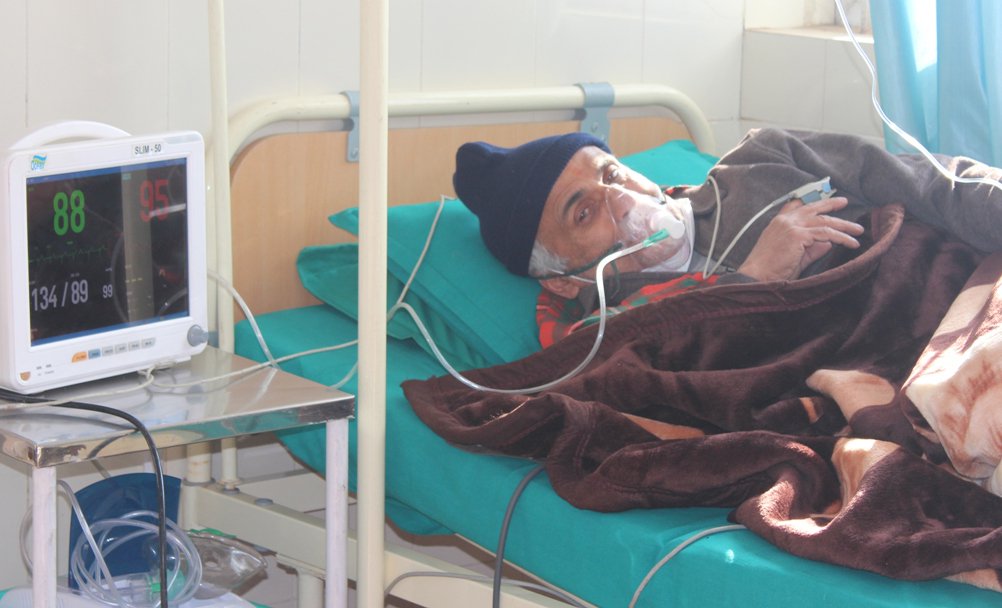
Republica reports that doctors have said that Dr Govinda KC’s condition has become critical and he needs intensive care treatment. However, KC has refused to be admitted to the ICU. Dr KC, who has been on strike for 22 days, is suffering from severe chest pain, sleep disturbance, difficulty in breathing, muscle cramps and weakness. His pulse rate has with frequent irregular and missed heartbeats though his blood pressure is stable. Oxygen saturation levels in his blood is low and he is being given supplemental oxygen, according to a bulletin issued by the Teaching Hospital.
Ignored
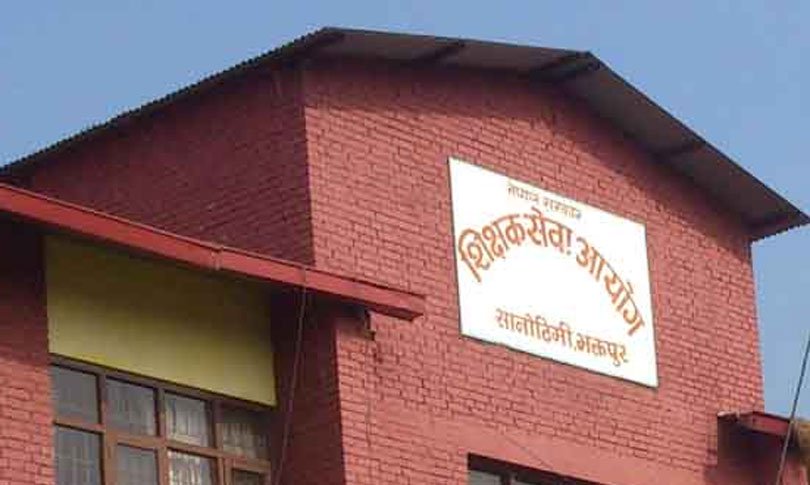
Exploitation of teachers goes unchecked at private schools
Republica reports that private schools in Kathmandu have been paying meager salaries to their teachers although they charge their student’s exorbitant fees. The investigation report shows that most of the teachers are receiving only one-third of what their counterparts in public schools make and they are compelled to work eight hours a day, six days a week.
The existing rules require both government and private schools to pay a monthly salary of Rs 20,674 to a primary school teacher, Rs 29, 764 to a lower secondary teacher and Rs 38,636 to a secondary-level teacher. Most of the underpaid staffs are well aware of the exploitation but they are reluctant to take on the school administration out of fear of being sacked.
TIA radio operator booked for amassing 140 million
Gorkhapatra and The Himalayan Times report that the CIAA has filed a charge-sheet in the Special Court against Shyam Krishna Chwamu Shrestha, a suspended radio operator of Customs Office at Tribhuvan International Airport, for allegedly accumulating assets worth Rs 140 million from illegitimate sources.
He was suspended on January 11, 2017, in connection with a case of smuggling 33 kg gold and his involvement in assisting smugglers to cross the Customs Office with the contraband. CIAA spokesperson Rameshwor Dangal said the anti-graft body launched a thorough investigation into a complaint, leading to the filing of the charge. The undeclared gold was seized by the Central Investigation Bureau of Nepal Police from Pinglasthan on 5 January 2017.
The CIAA has sought confiscation of Rs 140 million, a fine of an equivalent amount and jail sentence according to the gravity of offense as provisioned in Section 20 of the act.
Interesting
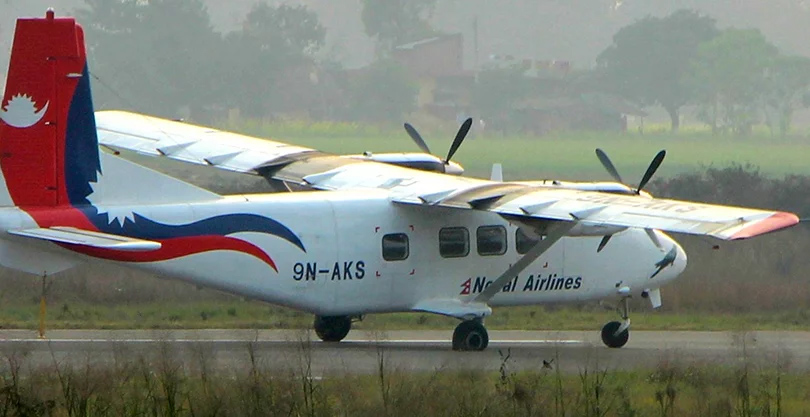
10 NAC aircraft grounded
Kantipur reports that 10 of the 14 NAC aircraft were grounded at the Tribhuvan International Airport on Tuesday. NAC has nine small aircraft for domestic flights and five jets for international flights. NAC staff say that this is the first that that 10 of its aircraft was grounded at the airport. NAC which normally has 22 domestic flights only had one on Tuesday. NAC officials say that seven of its 14 aircraft need maintenance.
Foreign employment to be included in the social security scheme
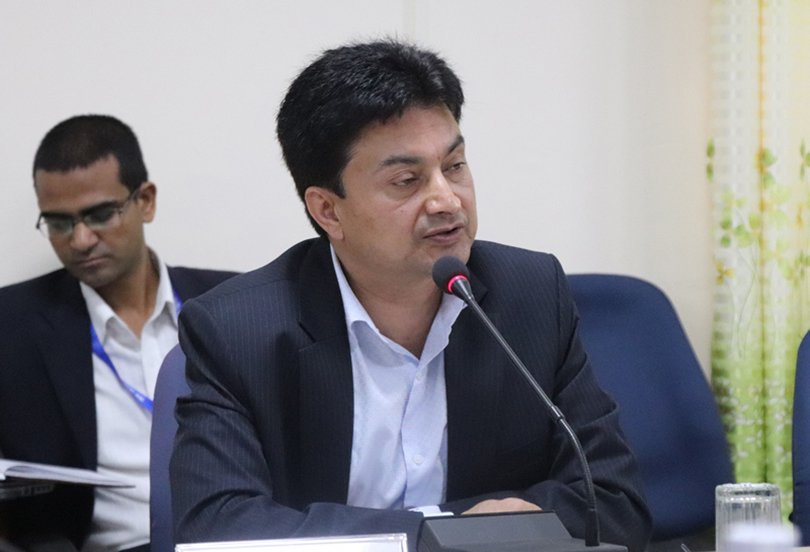
Arthik Abhiyan reports that the government has planned to include Nepalis who go abroad for work in its social security scheme. This was suggested in a reported submitted by the task force formed under the coordination of Labour Ministry Secretary Mahesh Dahal. According to the report, labourers working in countries that have signed labour agreements with Nepal will be included in the scheme. The report also states that the foreign Nepali workers will have to contribute to the provident fund for at least three years. Those who don’t contribute to the provident fund will not be included in the scheme. The employees will have to contribute at least Rs 24,000 to the scheme.