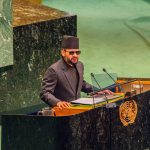

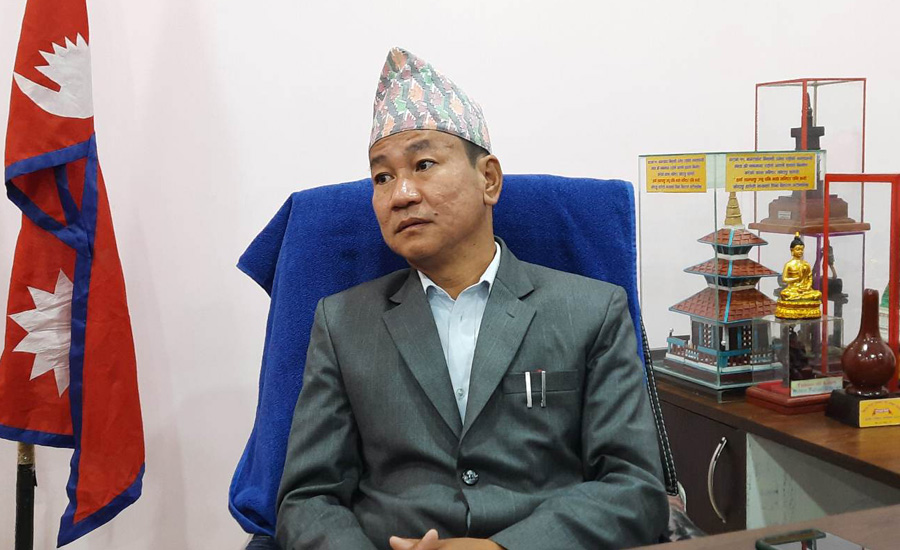
Harka Raj Rai, aka Harka Sampang, born in 1983 in Khartamchha, Khotang, was once a hero in Dharan Sub-Metropolitan City. Sampang was elected mayor in 2022 as an independent candidate. He campaigned to fight corruption, advocated compulsory labour, and vowed to tackle the city’s long-running drinking water supply problem swiftly. He was identified as a tough, nonpartisan activist. Four years on, as founder and chairperson of the Shram Sanskriti Party and a parliamentarian, questions have been raised about whether his style has been successful or divisive under the guise of ethnic pride and anti-establishment politics.
Public records, audit findings, and court records give us a picture of a consistent pattern of procedural lapses, unaccounted-for public spending, and fundraising that are close to the law. According to critics, these practices, along with provocative ethnic language by party officials, have worsened rifts in an already tense metropolis due to water shortages, ethnic sensitivities, and religious difficulties. Proponents respond that the Shramdaan (voluntary labour) campaigns in Sampang are indicative of true people-led development. More careful investigation of the evidence is required, however.
From activist to mayor: A journey marked by controversy
Sampang moved to Dharan in 1998 after completing his School Leaving Certificate. He earned a bachelor’s degree in English and political science from Mahendra Multiple Campus and worked as a tutor. He later sought employment in Iraq and Afghanistan.
During the Maoist insurgency, Sampang faced accusations of posing as a Maoist cadre in 2005 to extort donations in Dharan while riding a motorcycle. He denies any role in the insurgency, characterising himself as a victim who was assaulted by Young Communist League cadres after the 2006 peace agreement and eventually reconciled with them. The extortion allegations were not proven in court, but they popped up after his political ascension.
Sampang first rose to fame with demonstrations against so-called corruption in the Dharan drinking-water development and the Madan Bhandari Highway widening. In 2020, he was arrested and fined after vandalising a water source as part of his campaign against the Asian Development Bank-backed plan. These measures were heard by citizens who were fed up with promises that had not been met over the years by established parties. In 2022, he was elected mayor outright, beating the representatives of major parties.
Irregularities in municipal projects and public funds
Once in office, Sampang championed “Shramdaan” for parks, water schemes and infrastructure. Yet official audits tell a different story. The Auditor General’s report flagged Rs 11 million 9 thousand spent on Shram Sanskriti Park projects in an opaque manner, with no discussion in executive meetings and the amount declared undeclared. Sampang had presented the parks as built solely through voluntary labour.
Similar patterns emerged in water projects. Donations for the Kokah stream initiative reportedly reached tens of millions of rupees, with one public statement citing Rs 70.4 million collected and Rs 6.65 million spent. Expenditure details released by Sampang’s group showed no formal audit or procurement process: funds went toward snacks, wages for supposed volunteers, pipes and surveys. Executive members noted that proposals to route money through municipal accounts were overruled. The Public Procurement Act requires competitive bidding and oversight; neither was followed. No comprehensive post-completion audit or donor reconciliation has been published.
In June 2025, a fresh controversy erupted when Sampang allegedly sought retroactive municipal payments for a gabion wall at Multilingual School in Ward 16, completed through his labour campaign. A consumer committee from another ward was formed to process bills after the fact. Deputy Mayor Aindra Bikram Begha called the move illegal and a breach of financial protocol. Tensions escalated to near-physical confrontation in the municipal office, with supporters reportedly carrying khukuris. The episode highlighted what critics term “one-man rule”.
Sampang also launched commercial ventures under the “Maya Dharane” brand—turmeric powder and soap—aimed at local employment. According to municipal records, Rs 2 million was set aside under the cottage-industry scheme and Rs 1.645 million was spent on the turmeric factory without due process. The mayor has no unilateral right to establish and fund private-style industries utilising public funds; these proposals require executive approval, procurement procedures, and must not be entwined with private or party interests. There has been no evidence of competitive bids for these transactions or council approvals.
Donation drives: Appeals without accountability
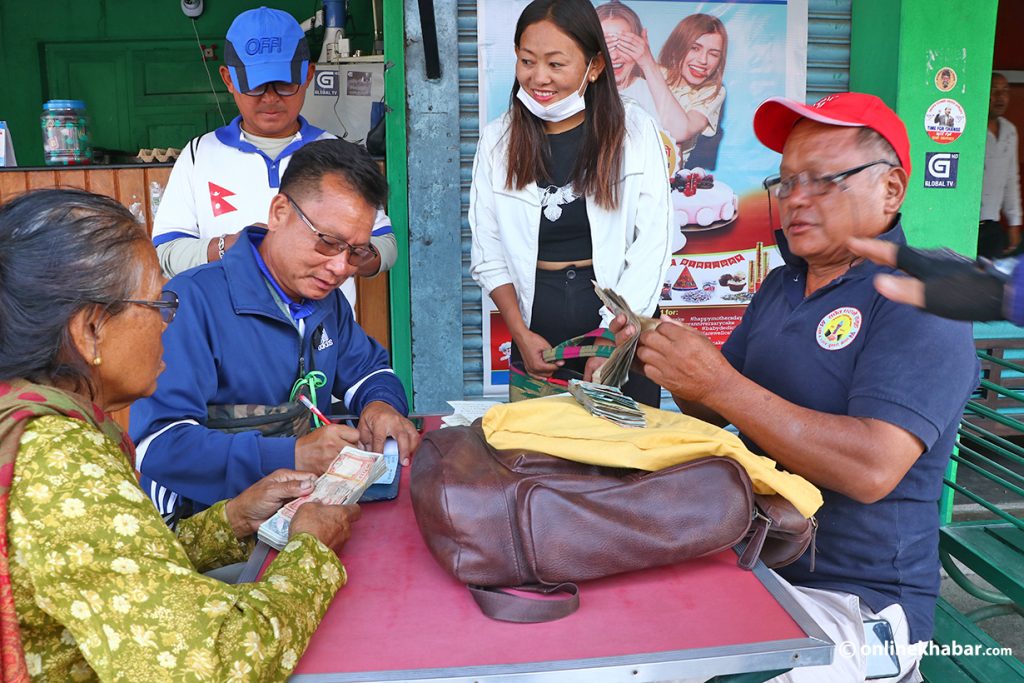
Sampang has repeatedly called for public contributions, Rs 10 or more, for projects ranging from Dharan water schemes to a suspension bridge in the distant Darchula district. Funds for the Sumnima-Paruhang ethnic statue, a symbol of Kirat Rai identity, were directed to a personal bank account through the Sumnima-Paruhang Foundation. Estimates of collections run into tens of millions, including from Nepali communities abroad. No audited statements reconciling inflows, expenditures or project completion have been made public. The Local Government Operation Act and Donation Act 2030 mandate approvals, receipts and disclosure for such collections by public officials. Chief District Officer Ramchandra Tiwari confirmed no formal approval was sought.
Sampang’s team provided some financial details regarding water projects in response to criticism, but they were not independently verified and did not match previous public assertions. Payments and donations must adhere to foreign monetary rules and anti-money-laundering laws, according to experts; bypassing municipal routes raises questions about accountability.
Christianity, Conversion and Communal Tension
A closer look at Sampang’s religious policies shows further tensions in social harmony. An old video in which Sampang appears to support conversion sparked claims that he fosters Christianity. In 2023, Hindus protested the construction of an illegal church in Dharan, calling for relocation. Instead of implementing local laws, Sampang referred the case to court, which some see as covertly favouring Christians. Critics attribute this to a broader strategy of sowing discord between the Hindu majority and Christian converts in eastern Nepal, where population changes have caused tensions.
Sampang has not disclosed his faith, and his party’s manifesto prioritises labour culture. However, his reluctance to address the church problem, along with the video, has raised concerns about skewed tolerance in favour of a specific religious community. Religious freedom is guaranteed in Nepal’s constitution, and forcible conversion is prohibited; any mayoral prejudice would undermine secular democracy.
Party rhetoric and ethnic fractures
Sampang’s Shram Sanskriti Party, launched after his mayoral term, lists Aryan (Aaren) Rai as general secretary. Rai, formerly associated with the Mongol National Organisation, has faced documented accusations of communal rhetoric, including labelling Chhetri and Brahmin communities as “foreigners” and threatening their expulsion. Such statements, captured in viral clips, align with a pattern of ethnic mobilisation that critics say Sampang’s platform amplifies under the guise of Rai and Kirat pride—evident in the push for the Sumnima-Paruhang statue on contested land. Nepal’s cow, constitutionally protected as the national animal and central to Hindu identity, has not been directly targeted in verified party statements, but the broader ethnic framing risks alienating communities that view such symbols as unifying.
After Sampang was rejected for the post of Prime Minister of Nepal following the Gen Z protests, he also attacked government policies, foreign interference (including alleged ties with India in ministerial offers he allegedly turned down) and the major parties, casting them as elitist or anti-Rai. While healthy criticism is an important part of democracy, the mix of ethnic appeals and unsubstantiated anti-government allegations has, observers say, played into violence in Dharan and elsewhere.
Why scrutiny and boycott matter
Nepal’s local governance laws exist to prevent exactly the opacity and unilateralism now under scrutiny. The Auditor General’s findings, court rulings against Sampang’s appointments and procedural violations, and the absence of audited donation accounts form a consistent pattern. Public office demands accountability; repeated failure to provide it invites legitimate calls for investigation by the Commission for the Investigation of Abuse of Authority and the Election Commission.
Voters and civil society must weigh whether Shram Sanskriti Party’s “Harkaism”—compulsory labour and self-reliance—translates into transparent, inclusive development or personalised rule that deepens ethnic and religious divides. The people of Dharan should be given complete financial disclosure of all the projects being funded using their donations and taxes, and this is in line with the promise of clean governance given by Sampang. Devoid of it, the rhetoric of revolution is in danger of concealing the irregularities it previously denounced.
Political boycott is not censorship; it is a civic duty. In-depth research by autonomous agencies is not persecution but the rule of law. It is only at this point that Nepal will be able to distinguish between genuine reformers and those who exploit the trust of the people to divide them and amass unexplainable amounts of power. The documentation, based on audits, court records and official statements, leaves little room for doubt.