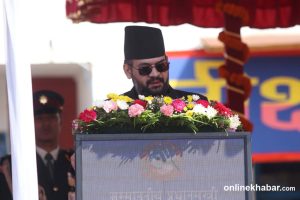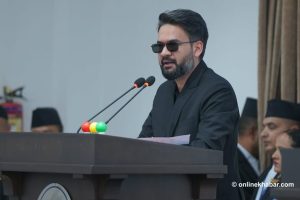


Balendra Shah (Balen) was an underdog in the 2021 Kathmandu mayoral race. Today, he stands as one of Nepal’s youngest mayors and a potential prime ministerial contender.
“This is our Kathmandu,” he wrote on Facebook back then, announcing his decision to compete for the post of Mayor as an independent candidate. “We will make it by ourselves. #BalenForMayor #AbaYuvaKoPalo [It’s now turn for youths],”
From ignored to influential
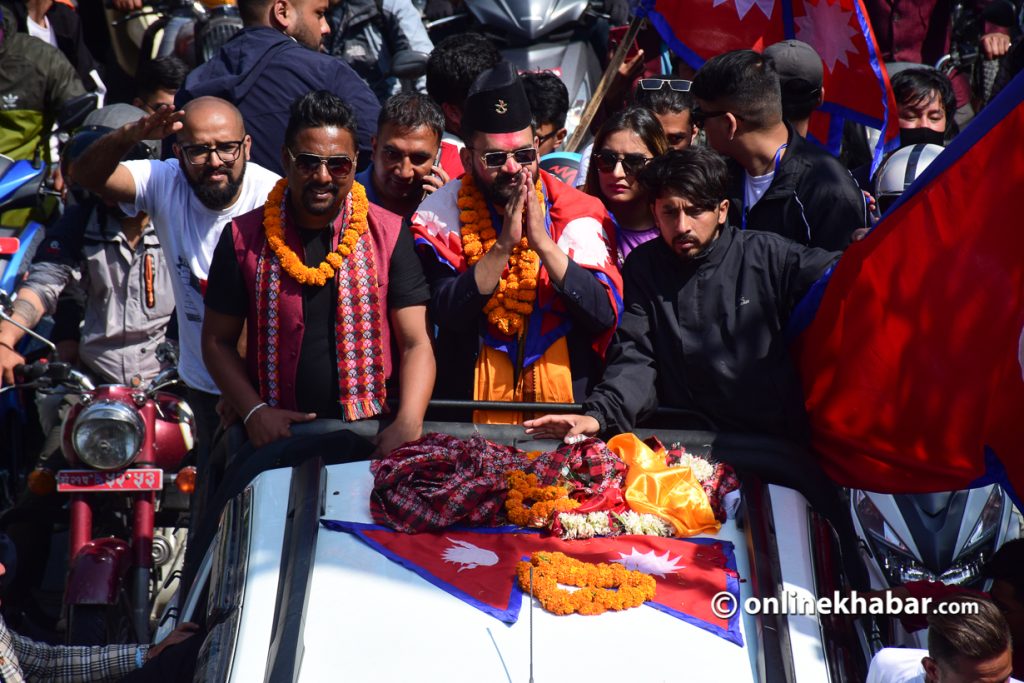
The media, the public, and politicians showed little interest in him. Leaders from major political parties even refused to discuss his candidacy, claiming that it held no significance. Gradually, as he moved through the city on his campaign trail, dressed entirely in black, dark glasses on, the national flag draped over one shoulder, his following expanded; from a handful of curious onlookers to hundreds, from hundreds to thousands, and, before long, from thousands to hundreds of thousands. In the end, the popular rapper and the underdog candidate Balen emerged victorious and became mayor, making him one of the youngest mayors in Nepal at the age of thirty-two.
He won the election with 61,767 votes, while his closest rivals, Srijana Singh of the Nepali Congress and Keshav Sthapit of the CPN-UML, garnered 38,341 and 38,117 votes, respectively.
His effective use of social media and frequent appearances in media interviews helped him gain visibility. At the same time, the weak candidates from major political parties further propelled public support toward Balen.
Prior to the election, he was easily accessible to the media for interviews. During this period, his attitude in media interviews also played a crucial role in convincing people to support him, as he focused on his strengths, expertise, and vision rather than criticising other candidates. His confidence, too, was striking. At one point, he publicly predicted that he would secure exactly 90,835 votes, a figure that ultimately went unrealised, but revealed the scale of his self-belief.
“I was also not even aware of him [Balen] when he filed his candidacy for the post of mayor,” says Political Analyst Indra Adhikari. “At the time, the public was frustrated with traditional political parties, which had repeatedly failed to meet public expectations. In this context, Balen emerged as an alternative.”
His victory even influenced the Parliamentary Elections of November 2022, inspiring new parties/ faces to contest the elections and challenge established political parties. The Rastriya Swatantra Party, the newly formed political party at the time, ended up being the fourth-largest party in parliament. The New York Times has mentioned the trend as “Balen Effect,” quoting political analysts.
Distance draws criticism
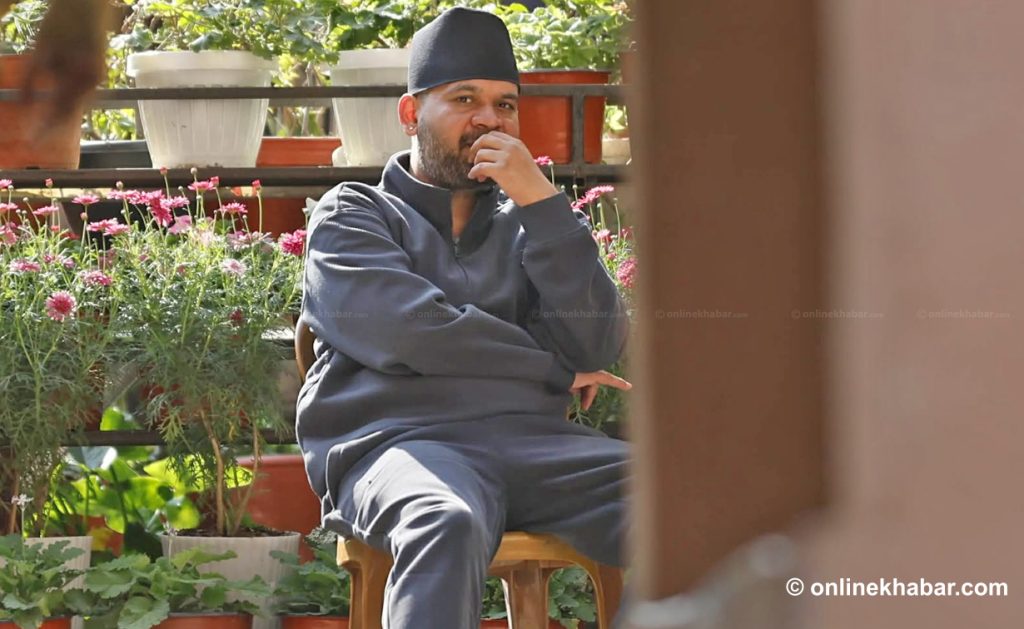
After taking the position of mayor, Balen’s relationship with the public and the press shifted noticeably. The position demands a degree of visibility and exchange, regular conversations with citizens, and a willingness to explain decisions, but he has largely kept his distance. His socialising skills have always been questioned. In the four years since taking the position, he has not given a single interview to a national media outlet, not even a brief sound bite, choosing instead to communicate almost entirely through social media, where his posts often receive thousands of likes, shares, and comments within minutes. That choice has drawn criticism.
Sociologist Dipesh Ghimire, an Assistant Professor at the Central Department of Sociology, Tribhuvan University, says this disengagement raises serious concerns about democratic accountability.
“Not engaging with the media may be defensible, but failing to engage with the public is more problematic. Nepal’s Constitution and the Local Government Operation Act envision local leaders as politically accountable and transparent to citizens,” he says. “The Act mandates that local governments conduct public hearings every four months, carry out social audits, and ensure regular live interactions by elected representatives. However, Balen has not consistently fulfilled these obligations, raising questions about his adherence to the spirit of the Constitution.”
According to Ghimire, Balen’s distance from the public remains one of his weakest points.
Sasmit Pokharel, leader of the Rastriya Swatantra Party and a close aide of Balen, defended the mayor’s approach. He explained that previously, the mayor held centralised authority and was expected to oversee every type of work, from appointing school principals to selecting members of management committees. Everyone wanted to meet the mayor regardless of the issue.
“Since the mayor had just five years and a lot of work to accomplish, to make things more effective, he adopted a decentralised approach,” Pokharel says. “Under this system, people would meet the authorities of the relevant department rather than the mayor directly. For instance, if someone had an issue related to education, they would meet the officials from the education department. This approach has empowered every department.”
He added that this did not mean Balen avoided interaction entirely.
“He met every individual whenever it was necessary,” Pokharel, highlighting that decentralisation was intended to make city governance more efficient.
That distance, however, has not diminished his popularity. Ghimire argues that this paradox must be understood within Nepal’s political culture.
“In Nepal’s political context, leaders have long been known for making grand promises and outlining ambitious plans, only to fail in execution, repeatedly disappointing the public,” he says. “Balen, by contrast, has distinguished himself through relative restraint in speech. Because he speaks less, public expectations of him have remained lower.”
Ghimire adds that limited interaction can sometimes shield leaders from scrutiny.
“In such circumstances, rather than questioning the leader, people often engage by offering opinions about his actions. The more a leader interacts publicly, the more scrutiny and questions they tend to face,” he says.
Balen has been frequently criticised for his social media posts, some of which contain foul language and appear to encourage violence. During the campaign, he promised to resolve Kathmandu’s waste-management crisis; the problem persists, and so does the criticism. Questions have also been raised about his ability to effectively deploy the city’s budget. And yet, despite these shortcomings, or perhaps alongside them, his political momentum has only intensified.
“Despite widespread criticism of Balen’s performance, many people continue to support him because, during his tenure, he has shown that he acts on his convictions and does not yield to pressure or external influence,” Adhikari says. “He has not displayed traits associated with corruption or greed, which is why many still place their trust in him.”
This is not to say that his tenure has been without accomplishment, but the contrast between expectation and execution remains stark. During his tenure, KMC demolished illegally built structures, including buildings constructed without permits. Following the anti-encroachment drive, KMC worked on widening footpaths, making it easier for pedestrians to walk. However, this initiative also received criticism; critics argued that the metropolitan city acted without providing viable alternatives. As one of his own songs says, “Garib Ko Chameli Boldiney Koe Chaina” (there is no one to speak for the poor), the footpath widening drive disproportionately affected street vendors, most of whom come from economically weak backgrounds, highlighting a contradiction between Balen’s artistic voice and the social consequences of his governance.
KMC’s decisions and actions were communicated through official notices and social media platforms, and meetings were live-streamed to the public, a gesture towards transparency. Regulations on hoarding boards and street advertisements were enforced effectively. Murals reflecting culture and tradition were painted in different parts of the city. Another significant initiative has been KMC’s strict monitoring of whether Kathmandu-based schools have provided scholarships to eligible students, as a result of which a large number of students have received the scholarship.
Similarly, the concept of Book-Free Friday was introduced in Kathmandu’s schools, where students engage in creative activities on Fridays instead of routine textbook learning. This initiative was one of the commitments frequently highlighted during his election campaign.
Balen eyes premiership
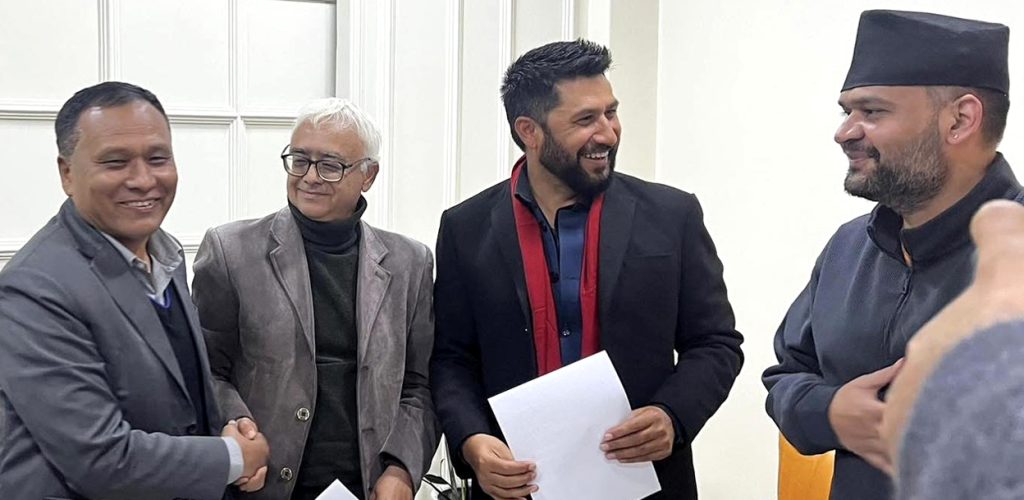
More recently, Balen’s influence has expanded further with his alignment with the Rastriya Swatantra Party, which has begun positioning him as a future prime ministerial figure. According to the agreement, Rabi Lamichhane is set to remain the party’s central chairperson, while Balendra Shah, following the next House of Representatives election, would assume the role of parliamentary party leader and emerge as its candidate for prime minister.
After the Gen Z protests of September 8 and 9, Gen Z leaders even proposed Balen as the prime minister of an interim government. He declined the offer, possibly because he had a larger plan in mind, to seek the prime ministership for a full five-year term through the democratic process rather than serve for just seven months.
But Ghimire warns that the very traits that have sustained Balen’s popularity at the local level could become liabilities at the national stage.
“Balen is widely viewed as a potential prime minister. However, if he were to assume that role while maintaining the same detached approach, he would likely encounter serious challenges early in his tenure,” Ghimire says. “A head of government must regularly address and engage with the public. Without such interaction, sustaining leadership over the long term would be difficult.”
Adhikari echoes Ghimire in arguing that Balen would need to change his approach if he were to become prime minister; otherwise, he would likely face a swift decline soon after assuming office.