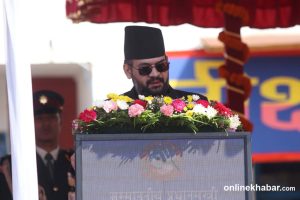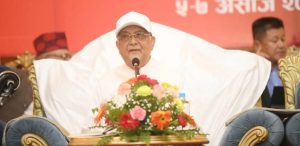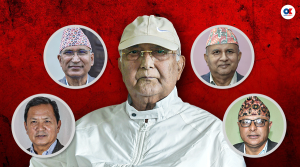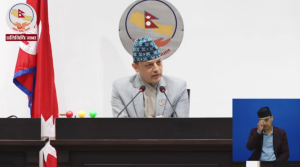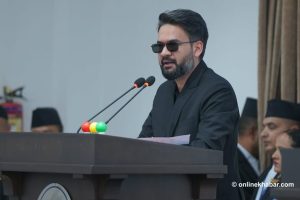

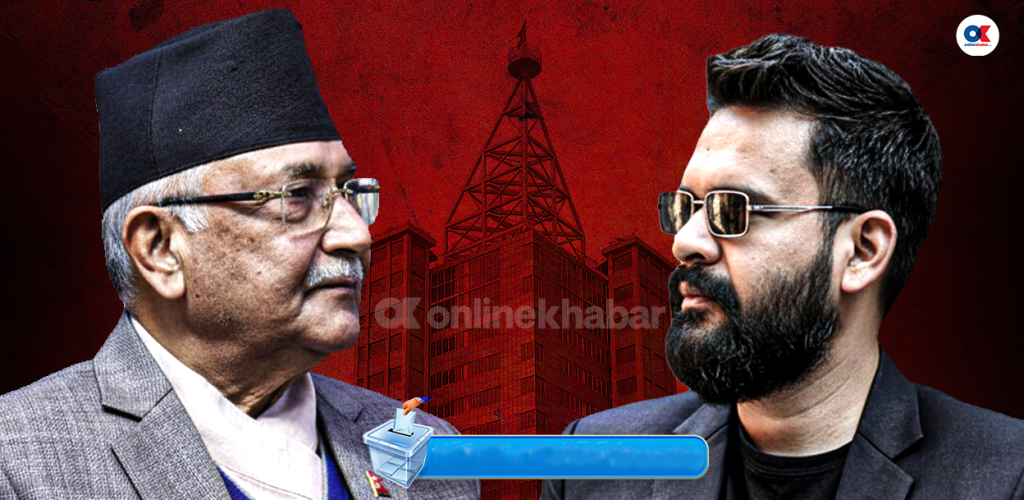
Jhapa: As Nepal approaches its parliamentary elections on March 5, the political atmosphere across the country has grown increasingly charged. Specifically in Jhapa-5, the contest appears particularly intense because it features K.P. Sharma Oli, chairman of the Communist Party of Nepal (Unified Marxist–Leninist), against Balendra Shah, widely known as Balen, a senior leader of the Rastriya Swatantra Party (RSP). Both men are viewed as potential prime ministerial contenders if their parties secure enough seats in Parliament.
Jhapa-5 has long been considered Oli’s political stronghold. With the exception of the elections held around the 2006 people’s movement, he has consistently won here. Yet this year, the mood appears different.
From tea shops and neighbourhood gatherings to street vendors and rickshaw drivers, conversations suggest that Oli’s victory is no longer viewed as inevitable.
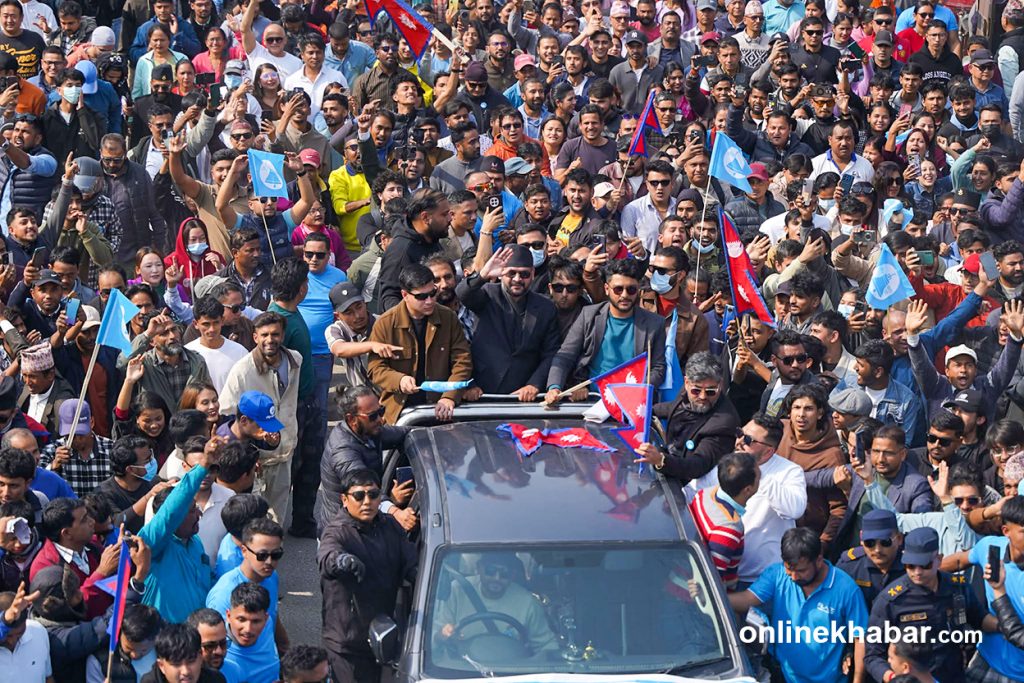
When Balen arrived in Damak on January 20 to file his candidacy, an unusually large crowd gathered at the town square, a scene not witnessed for other challengers in previous elections. Since that day, his presence in the constituency has been difficult to ignore.
Who ultimately prevails will be determined only after ballots are counted. But Balen’s growing visibility has become a central feature of the campaign.
A long-time UML party activist in Jhapa-5, speaking on condition of anonymity, said he had decided to vote for Balen in the direct race.
“We supported K.P. Oli for many years, but now we have little hope left,” he says. “With someone new, at least there is a possibility of change.”
The activist, who lives in an informal settlement, said Oli had repeatedly promised land ownership certificates to residents but failed to deliver.
“We stood by him continuously. But this time we will not accept what we see as false assurances.”
Such defections are unusual in a constituency widely regarded as a UML bastion. The activist added that while he would vote for Balen in the first-past-the-post race, he would still support UML under the proportional representation system.
Another local party worker from the Nepali Congress, also speaking anonymously, described Balen’s influence as “genuinely strong.” He said he planned to vote for his party under proportional representation but would support the Rastriya Swatantra Party in the direct contest.
“From what we see on the ground, either Balen or the Rastriya Swatantra Party could come out on top,” he says, adding that the Congress candidate appeared comparatively weak.
“This constituency has trusted Oli many times, but people feel the expected results did not follow.”
Local grievances extend beyond partisan politics.
Landowners affected by the proposed East–West railway project say their property has been frozen for years without compensation. Some residents blame Oli for failing to resolve the issue during his tenure.
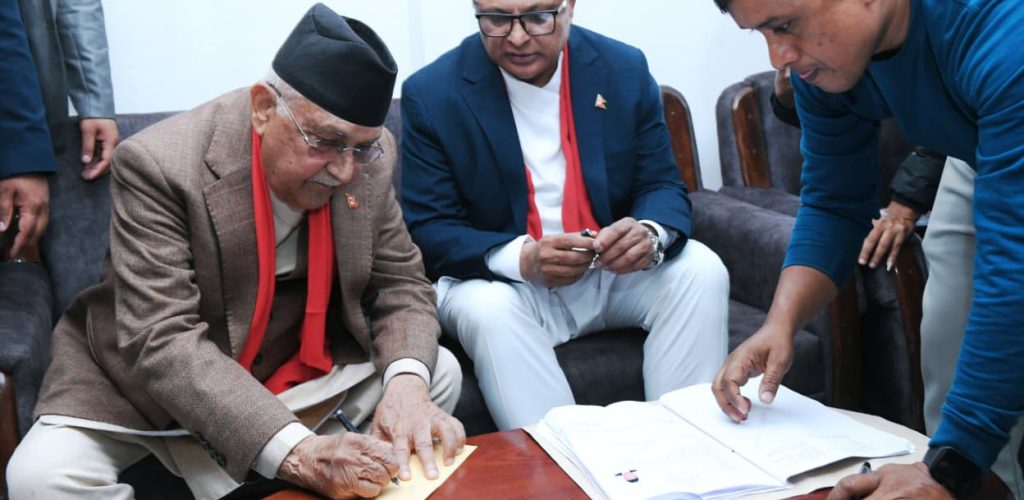
The extent to which K.P. Sharma Oli has been going door to door seeking votes during this campaign suggests that the situation in Jhapa-5 is different from previous elections. The kinds of questions he has faced from voters while canvassing further indicate that he may encounter significant challenges in securing victory this time.
“Although he has not appeared equally active in the nationwide campaign, Oli’s heightened focus on Jhapa-5 signals that he is facing a tougher contest here compared with past years,” says Sagar Siwakoti, a political analyst based in Jhapa.
Balen’s influence in Jhapa-5 has grown so markedly that his door-to-door events now draw unusually large crowds, at times making it difficult to carry out the campaign effectively.
Development has not been absent from Jhapa-5, said Madan Rajbanshi, Editor in Chief of the local media Gauriganj Darpan. But he noted that many projects have been concentrated in Damak, leaving areas such as Gauradaha and Gauriganj feeling neglected.
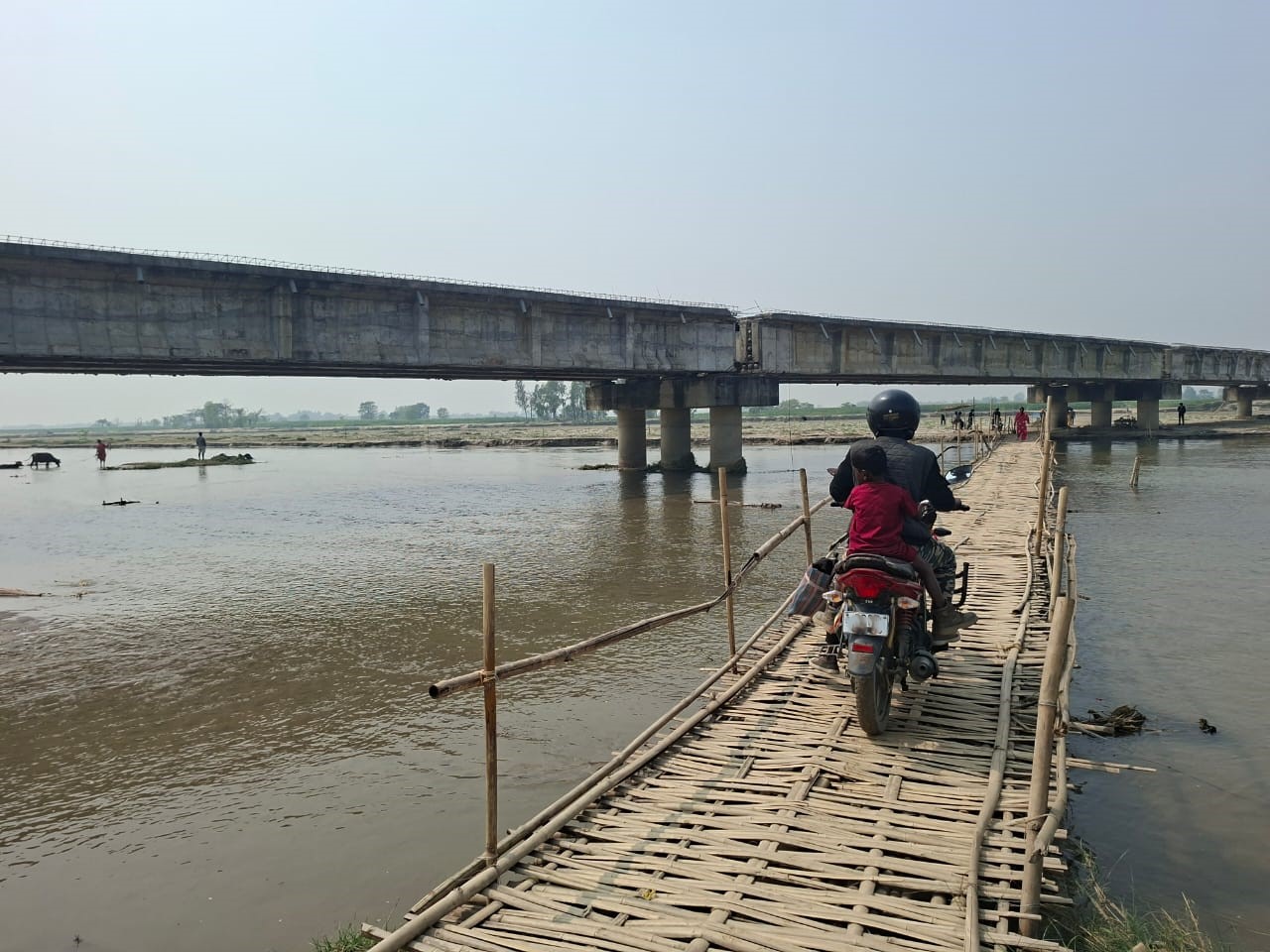
A bridge over the Kankai River along the Hulaki Highway has remained incomplete for 14 years. Another bridge over the Ratuwa River was finished only this year, after 17 years of delays and sustained public pressure.
In the 2017 election campaign, Oli pledged to modernise the customs office in Gauriganj, but little progress has been made since.
In parts of Gauradaha, unresolved land-mapping issues dating back decades have prevented property owners from securing bank loans or conducting formal transactions. Oli has repeatedly promised a solution, but the matter remains unsettled.
“These are the reasons many voters in Gauradaha-4 and parts of Ward 5 may not support Oli this time,” Rajbanshi said.
Santosh Dulal, a Jhapa-5 resident who is currently working closely with Balen, said public frustration with established leaders has deepened.
“People are disillusioned with traditional politicians,” he says. “They feel their basic needs have not been addressed.”
Balen’s tenure as mayor of Kathmandu has enhanced his appeal beyond the capital, Dulal adds. “People here see him as someone who can turn anger into hope.”
According to Dulal, Balen’s campaign promises in Jhapa-5 include expanding the capacity of the Damak Hospital to 300 beds, incorporating Indigenous languages into local curricula and expediting stalled infrastructure projects.
Leaders of the UML reject the notion that Oli is facing a serious challenge.
Devendra Dahal, who heads the UML’s election mobilisation committee in Jhapa-5, said the party remains confident of victory.
“There is no real challenge to K.P. Sharma Oli,” Dahal says. “Some are spreading false narratives, but we have addressed them effectively. We are fully confident he will win comfortably.”
Dahal also disputed claims that development had been concentrated solely in Damak.
“Infrastructure, including roads and drinking water, has reached even remote parts of Jhapa-5,” he says. He argued that critics blame Oli for unfinished projects while ignoring completed ones.
Political analyst Siwakoti said Shah’s growing influence in Jhapa-5 could extend beyond the constituency.
“The momentum he has built here may benefit Rastriya Swatantra Party candidates in other constituencies of Jhapa as well,” Siwakoti says. “There is a strong possibility the party could emerge as either the first or second force in the district.”
In the 2022 parliamentary election, Oli won Jhapa-5 with 52,319 votes, defeating his nearest rival by more than 28,000 votes. But local observers, journalists and analysts say this year’s race may be less predictable.
Alongside Balen and Oli, Mandhara Chimariya of the Nepali Congress, Ranjit Tamang of the Nepali Communist Party, and Laxmi Prasad Sangroula of the Rastriya Prajatantra Party are also contesting from Jhapa-5.
Whether Jhapa-5 remains a reliable stronghold or becomes a symbol of shifting political currents will soon be decided at the ballot box.