Kathmandu, November 26
The government of Nepal and the United Nations Development Programme (UNDP) have launched a $49.94 million project to reduce the risk of glacial lake outburst floods (GLOFs) and protect the lives and livelihoods of Himalayan communities.
The project, titled GLOF Sanjibani, is expected to directly benefit more than 385,000 people living in areas vulnerable to glacial lake outburst floods, 55 per cent of whom are expected to be women. Around two million people living in downstream river basins within the project’s impact areas are also expected to benefit indirectly.
The project was formally launched at an inception workshop in Kathmandu on Tuesday, attended by government officials, representatives of the Green Climate Fund (GCF), UNDP, provincial and local governments, technical experts and development partners.
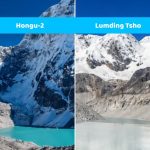
Under the project, water levels will be lowered in four high-risk glacial lakes — Dona (Thulagi) in Manang, Lower Barun in Sankhuwasabha, and Lumding Tsho and Hongu-2 in Solukhumbu.
The water levels of Dona, Lower Barun and Lumding Tsho will be lowered by three metres each, while the level of Hongu-2 will be reduced by one metre.
In addition to lowering lake levels, the project aims to strengthen climate risk information and planning systems, expand hydrological and meteorological monitoring, and establish or improve early warning systems. It will also support nature-based solutions and protective infrastructure to reduce flood risks in downstream river basins.
$36.16 million grant from Green Climate Fund
According to Dr Rajan Bhattarai, deputy executive director and spokesperson of the Centre for Hydrology and Water Resources Research, the Green Climate Fund will provide a grant of $36.16 million towards the project’s total cost of $49.94 million.
The government of Nepal will contribute $11.32 million, UNDP $2.14 million and private-sector partners $320,000 in co-financing.
The project will run from 2026 to 2033 and will be implemented through the Centre for Hydrology and Water Resources Research. The same funding will also support the expansion of early warning systems in vulnerable areas of the Marsyangdi, Arun, Dudhkoshi and Lower Barun river basins.
Nabin Raj Singh, secretary at the Water and Energy Commission Secretariat under the Ministry of Energy, Water Resources and Irrigation, said the project would adopt an integrated and collaborative approach to ensure effective implementation.
He said the government aims to develop the Centre for Hydrology and Water Resources Research into a centre of excellence and strengthen collaboration with hydropower developers, the private sector and other stakeholders.
UNDP said the project would shift the focus from the traditional approach of responding after disasters occur towards reducing risks in advance, as rising temperatures in the Himalayas accelerate glacier melting and the expansion of glacial lakes.
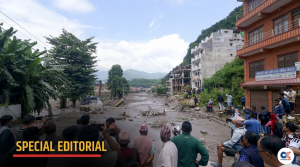
Kyoko Yokosuka, UNDP resident representative in Nepal, said floods in the Rasuwa-Bhotekoshi and Gandaki river basins two months ago had demonstrated how quickly climate-related hazards could turn into human and economic disasters.
She said the project would focus on anticipating and reducing risks and protecting development investments, rather than relying primarily on post-disaster response.
Deepak KC, UNDP’s lead technical expert and coordinator for the project, said the total area covered by Nepal’s glacial lakes increased by 25 per cent between 1987 and 2017. The expansion indicates growing climate change impacts in the Himalayan region and an increased risk of glacial lake-related disasters.
He said the project was named Sanjibani because lowering water levels in the four lakes was expected to help protect the lives of millions of people.
Amrit Lamsal, joint secretary at the Ministry of Finance and Nepal’s National Designated Authority to the Green Climate Fund, said Nepal contributes less than 0.1 per cent of global greenhouse gas emissions but faces severe consequences of climate change.
He said the project would link risk reduction efforts with national development priorities and accountability frameworks.
Sanjeev Baral, executive director of the Centre for Hydrology and Water Resources Research, said rapid changes in the Himalayan region made it essential to take the risk of glacial lake outburst floods seriously. Even minor damage to a glacial lake’s natural dam could cause significant economic losses, he said.
Baral added that lake-lowering activities would be carried out in compliance with environmental and social safeguards.
Dr Dharmaraj Upreti, chief executive of the National Disaster Risk Reduction and Management Authority, said strengthening early warning systems meant ensuring that science-based information reached communities sufficiently ahead of potential disasters.
He said coordinated efforts by the government, development partners, the private sector and local communities could turn disaster risks into opportunities to build resilience.
Indra Prasad Sapkota, secretary at the Ministry of Forests under the Koshi provincial government, stressed the need for active participation by provincial and local governments. He said the province was ready to work with the federal government on disaster risk reduction, particularly in the Koshi river basin, which is among the project’s priority areas.
Dhan Bahadur Gurung, chairperson of Naso Rural Municipality in Manang, one of the project’s target local governments, said he expected the initiative to support safer settlements and improved livelihoods through evidence-based land-use planning, detailed research and community participation.
The project will be implemented by the Centre for Hydrology and Water Resources Research in coordination with the Department of Chure and Watershed Conservation, the Department of National Parks and Wildlife Conservation, and the National Disaster Risk Reduction and Management Authority.
The Ministry of Finance, Nepal Tourism Board and Independent Power Producers’ Association, Nepal, will also be key partners.