Mustang, November 26
The Annapurna Conservation Area Project (ACAP) has started studying high-altitude grazing grounds and collecting grass samples in Mustang to protect snow leopards and their primary prey, blue sheep, amid declining grass availability and quality due to climate change.
The study aims to assess the condition of grazing areas, grass diversity, biomass and nutritional value to identify measures to improve food availability for blue sheep and support snow leopard conservation.
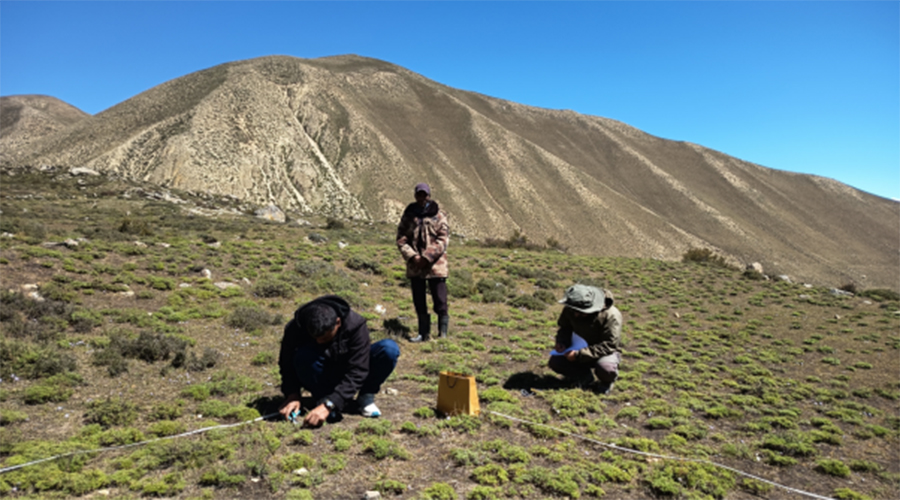
According to Sanjog Thakali, senior natural resource conservation assistant at ACAP, separate surveys are being conducted by its Jomsom and Lo Manthang offices.
In Lower Mustang, grass samples are being collected from 24 plots and 48 subplots in Baragung Muktikshetra and Gharpajhong Rural Municipalities. In Upper Mustang, samples are being collected from 150 plots across three areas in Lo Manthang and Lo-Ghekar Damodarkunda rural municipalities.
The collected samples will be sent to laboratories to assess their nutritional content and quality. Researchers will also measure the weight of fresh and dry grass.
ACAP Lo Manthang Chief Umesh Poudel said declining grass quality had forced blue sheep to move closer to settlements in search of food, increasing the risk of livestock being attacked by snow leopards.
Drying water sources, shrinking grazing areas, and the spread of invasive grass species have further threatened blue sheep habitats. Officials expect that improving grass quality and managing grazing grounds sustainably will help conserve blue sheep and maintain the ecological balance between snow leopards and their prey.