Kathmandu, January 11
The unity between the Rastriya Swatantra Party (RSP) and the Ujyaalo Nepal Party has collapsed. It failed to last even 12 days.
The agreement, forged in the name of creating an alternative political force, ultimately collapsed due to disputes over positions, roles, and leadership. While the parties publicly cited ideological differences and procedural problems, personal ambitions and questions of individual political survival were deeply embedded in the deal from the outset. The understanding was largely personality-driven, with ambiguity over power-sharing and an early clash over leadership dominance.
The two parties had signed a seven-point agreement, drawing inspiration from the Gen Z movement of September 8 and 9, anti-corruption awareness, good governance, and the slogan of meritocracy. The agreement pledged to build a new political force through the collaboration of all “civilised and change-oriented forces.”
However, while the agreement appeared idealistic on paper, its implementation proved deeply contradictory. Despite commitments to democratic practice, inclusiveness, and a merit-based system, the leadership structure was already effectively “fixed,” triggering disputes from the very beginning.
Causes of disputes
Several provisions of the seven-point agreement themselves became sources of controversy. Most notably, the fourth point stated that RSP chair Rabi Lamichhane would continue as party chair even after unification, with Kulman Ghising, DP Aryal, and Swarnim Wagle serving as vice-chairs.
This provision reduced Ujyaalo Nepal to a group being absorbed rather than an equal partner. The lack of clear power-sharing in leadership roles immediately fuelled dissatisfaction within Ujyaalo Nepal. While it was initially said that all three vice-chairs would hold equal status, RSP leaders claim that after the agreement, Ghising demanded the position of senior vice-chair, something RSP was unwilling to accept.
According to Ujyaalo Nepal leaders, apart from vice-chair positions, no other key posts were offered to them. Ujyaalo Nepal had demanded at least one general secretary position in addition to a vice-chair. However, since there was already an understanding to allocate the general secretary post to the Balen group, Lamichhane’s faction refused to accept that demand.
Although it was agreed that Ujyaalo Nepal would get 21 members in the central committee, this was later reduced to just 12, further deepening dissatisfaction on Ghising’s side. Ujyaalo Nepal had initially formed a 51-member central committee, later expanding it to 94. Ghising argued that securing 21 central committee members was necessary to keep his group unified, but the demand was not met.
Disputes also arose over the selection of proportional representation (PR) candidates. Ujyaalo Nepal initially demanded 18 PR slots, but only 14 names were eventually included. Even the PR list itself triggered controversy, with leaders including Mahendra Lawati raising objections from the outset.
The fifth point of the agreement promised responsibility based on merit, inclusiveness, and public image. However, Ujyaalo Nepal activists argued that this principle was not reflected even in the PR candidate selection process. They complained that they were treated merely as supporters of RSP rather than equal partners. This resentment intensified, leading to the collapse of the unity within 12 days.
Following the understanding that he would become a vice-chair after unification, Kulman Ghising faced a moral dilemma over continuing in his ministerial post and eventually resigned. He held multiple rounds of talks with Lamichhane regarding party integration. However, according to a Ujyaalo Nepal leader, Ghising decided to part ways after realising that he would not be accorded a dignified and meaningful role.
Both RSP and Ujyaalo Nepal leaders had long criticised older parties for power-hunger, factionalism, and internal power struggles. Ironically, they ended up displaying the same behaviour and style they had condemned, ultimately leading to the breakdown of their unity.
On one side stood Rabi Lamichhane’s strong public image and established party structure; on the other, Kulman Ghising’s popularity and activist-based organisation. They aimed to combine these strengths into a formidable political force. However, another key figure, Balendra Shah, was already involved. Shah had merged his group into RSP days earlier, and there was even an understanding within RSP to project him as a future prime ministerial candidate. With prior agreements already in place between Lamichhane and Shah, Ghising reportedly felt his role would be marginal.
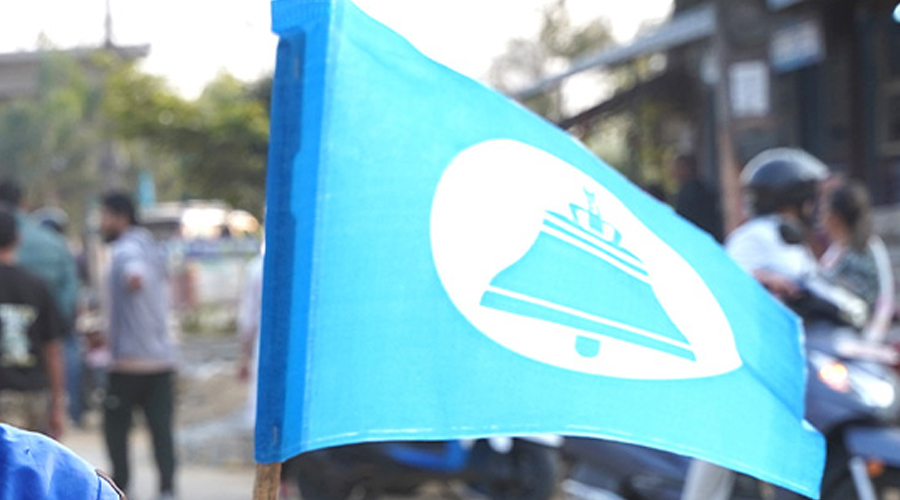
The agreement also stipulated that the party name, flag, and election symbol would all remain those of RSP, offering no guarantee that Ujyaalo Nepal’s identity would be preserved. This sent a message of merger rather than genuine unity. Ghising’s side had proposed changing the party name, but this was unacceptable to Lamichhane.
Differences over party operations, public messaging, and organisational expansion surfaced soon after unification. Ujyaalo Nepal leaders complained of a limited role in decision-making, an order-driven leadership style rather than consultative discussions, and an unclear political future.
Ultimately, Kulman Ghising has decided to take Ujyaalo Nepal forward independently once again and is set to assume the role of party chair himself.
The very first point of the agreement had committed to honouring the sacrifices of those killed and injured in the Gen Z movement and addressing its demands. Yet the unity between these two parties appeared centred more on individuals and positions than on those ideals.
The episode once again highlights the complexity of building a new political force in Nepal. It shows that unity cannot be sustained through slogans alone, without clear structures, democratic decision-making, and a balanced distribution of power.
The collapse of the RSP–Ujyaalo Nepal unity raises a fundamental question: are the so-called new political forces truly carrying new political values, or merely repackaging old styles in a new form?