
Nepal’s year-end retrospective presents a paradox: the nation achieved substantial poverty reduction while simultaneously experiencing the most significant institutional rupture in a decade. Rather than representing contradiction, this duality reveals a middle-income transition economy where technical macroeconomic competence has outpaced institutional capacity to distribute opportunity equitably. The September 2025 political crisis catalyzed institutional self-correction. As Nepal enters 2026, the nation possesses the economic foundation, democratic resilience, and generational motivation necessary for structural transformation, provided March elections establish political legitimacy sufficient to implement reform.
Poverty reduction at scale
2025’s most consequential but least publicized accomplishment was Nepal’s substantial progress in poverty reduction. According to the Nepal Living Standards Survey IV (NLSS-IV) 2022-23, poverty measured at the national poverty line stands at 20.27% of the population, down from 25.16% in 2010-11 (National Statistics Office, 2024). When measured against the inflation-adjusted 2010-11 poverty threshold (NRs. 42,845 or US$298 in 2023 prices), Nepal has reduced poverty to 3.57%- demonstrating near-eradication under the previous standard. The Multidimensional Poverty Index, measuring deprivations across health, education, and living standards, declined from 30.1% in 2014 to 20.1% by 2022.
This progress reflects three decades of sustained investment in health systems, educational infrastructure, and social protection mechanisms. Extreme poverty (US$2.15 per day) has been nearly eliminated at 0.4% of the population (World Bank, 2024). More than 13.5 million Nepalis remain living under US$6.85 per day, but this represents substantial improvement from historical baselines. Rural-urban disparities remain significant. Rural poverty stands at 24.66% compared to 18.34% in urban areas (National Statistics Office, 2024). Provincial variations are substantial, with Sudarpaschim at 34.16% and Karnali at 26.69%, while Gandaki (11.88%) and Bagmati (12.59%) have substantially lower incidence.
The poverty progress carries particular significance for understanding the September 2025 political crisis. Rising development expectations- a direct consequence of improved literacy, health outcomes, and social visibility- created intolerance for governance failures that previous generations accepted as inevitable. The crisis was not proof of development failure; it was proof that development had proceeded sufficiently to generate legitimate expectations for institutional accountability.
Macroeconomic stability: Foundation for growth
Beneath poverty reduction figures lies macroeconomic stability positioning Nepal for sustained expansion. GDP growth reached 4.6% in FY25, up from 3.7% in FY24 (World Bank, 2025). Inflation control proved exemplary, with headline inflation declining to 4.1% in FY25 from 5.4% in FY24, falling below the Nepal Rastra Bank’s 5% ceiling. Consumer price inflation had declined to 1.87% by mid-September 2025.
The external sector exhibited particular resilience. Foreign exchange reserves reached record-high levels, while the current account surplus widened to 6.7% of GDP in FY25 from 3.9% in FY24, supported by remittances. Remittance inflows surged to Rs553.31 billion (US$3.85 billion) in the first quarter of FY25/26, a 35.4% year-on-year increase (Nepal Rastra Bank, 2025). Monthly remittance flows exceeded Rs200 billion (US$1.39 billion) for the first time in Nepal’s history.
Fiscal performance strengthened correspondingly, with the fiscal deficit narrowing to 2% of GDP in FY25, a nine-year low, supported by stronger revenue mobilization reaching 20% of GDP. The government formulated a record Rs1.96 trillion (US$13.63 billion) budget for FY25/26, with explicit prioritization of infrastructure development, productive sector investment, and social inclusion.
Democratic resilience: Institutional self-correction
The September 2025 events demonstrated Nepal’s democratic institutions’ capacity for self-correction under pressure. On September 4, the government suspended 26 social media platforms, widely perceived as censorship. This mobilized approximately 200,000 young Nepalis- predominantly secondary and tertiary students- who gathered in Kathmandu and major provincial cities demanding accountability and institutional reform.
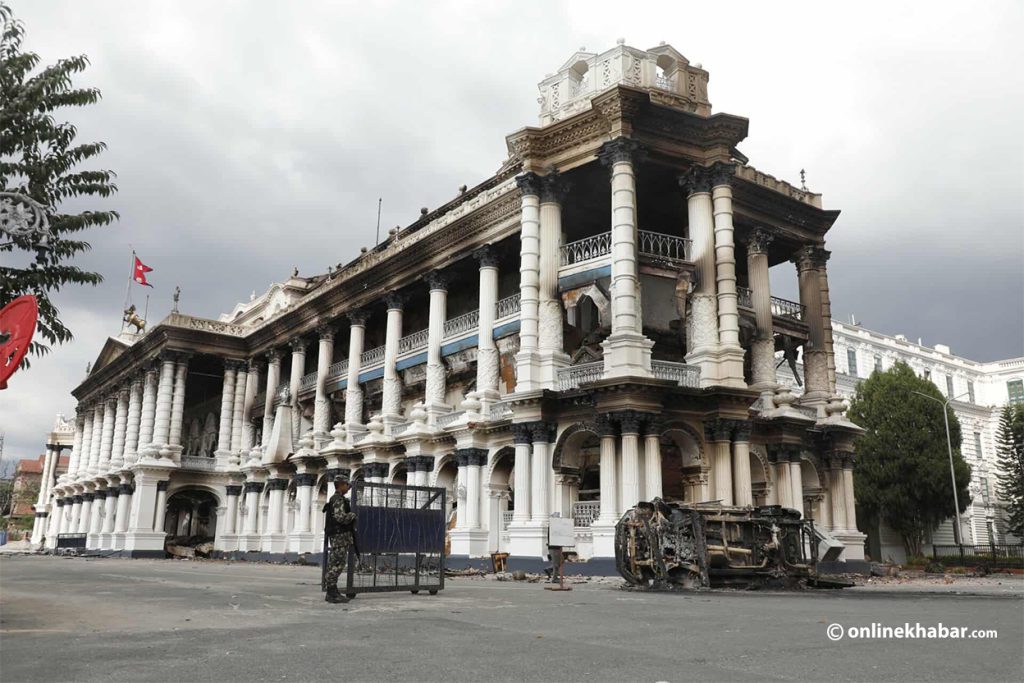
Their grievances centered on structural realities: youth unemployment at 20.82%, widespread corruption in governance, and absence of dignified employment opportunities within national borders. Police deployed tear gas, water cannons, and eventually live ammunition. Parliamentary buildings were stormed and damaged, with government administrative headquarters (Singha Durbar) sustaining significant structural damage.
How Nepal responded differently.
When protesters demanded change, Nepal’s political system made a choice that many developing countries don’t make: instead of using military force or emergency rule, it removed the government. Prime Minister KP Sharma Oli resigned on September 9 (Al Jazeera, 2025). The President dissolved Parliament on September 12, and appointed an interim government to organize democratic elections for March 2026. By September 9, casualty figures ranged from 51 to 74 deaths- variation reflecting categorization differences- with over 1,000 injuries reported.
Who led the transition and why it mattered.
The government appointed Sushila Karki as interim Prime Minister- a retired Chief Justice and Nepal’s first female head of government. This choice was significant because Karki is a respected legal expert, not a politician. By selecting her, the system signaled that institutional credibility mattered more than partisan politics. The interim cabinet also included Gen Z activists and technical experts, showing the government was genuinely listening to those who had protested.
Why this response shows democratic health.
Nepal’s September crisis demonstrated the essential mechanics of democratic accountability: institutional failure triggers public mobilization, which forces governmental change through legitimate institutional channels, culminating in democratic renewal via scheduled elections. In many other countries at similar moments, military takeover, extended political chaos, or authoritarian rule occurs instead. Nepal chose the democratic path. The fact that Nepal’s institutions chose democratic transition- even during a violent crisis- shows that democratic values run deeper than the crisis itself.
The employment crisis: Structural vulnerability and solutions
Nepal’s employment structure represents the nation’s central vulnerability and genuine origin of political instability. Youth unemployment- defined as labor force participants aged 15-24 seeking but unable to secure employment- reached 20.82%, more than double the overall unemployment rate of 10.71%. More critically, 84.6% of Nepal’s total employment occurs in the informal sector, meaning workers lack formal contracts, social protection, pension coverage, or dispute resolution mechanisms.
The employment crisis manifests visibly in outmigration. In the first quarter of FY25/26 alone, 200,716 Nepalis departed with formal work permits- an 18% year-on-year increase representing approximately 2,230 daily departures. Over 3.5 million Nepalis now reside abroad for work purposes, with substantial concentrations in Malaysia (approximately 300,000) and Gulf Cooperation Council states (approximately 1.3 million). Student outmigration accelerated simultaneously, with 119,409 Nepali students pursuing education abroad in 2024.
The sectoral composition of Nepal’s economy explains the employment crisis. Agriculture, which employs 11.7 million people, grows at merely 2.9% annually- insufficient to generate income commensurate with education levels or absorb expanding labor supply. Manufacturing contributes only 5% of GDP, declining from 9% two decades prior. The services sector, expanding at 6.3% annually, generates employment predominantly in low-productivity informal activities rather than skilled formal services.
This sectoral misalignment between population growth, human capital accumulation, and formal employment generation created the underlying structural condition that exploded into a visible political crisis in September. Young Nepalis had invested years in education based on development promises of economic opportunity, only to discover formal employment remained scarce regardless of qualification level.
However, the employment crisis clarifies required policy solutions. Labor market failures of this magnitude typically reflect policy-induced obstacles: infrastructure inadequacy limiting manufacturing capacity, regulatory burden discouraging formal firm registration, inadequate skills alignment with labor market demand, and capital constraints preventing agricultural mechanization. Each barrier has documented evidence-based remedies.
Sectoral performance and economic diversification
Tourism recovery proceeded more rapidly than many analysts anticipated given September’s turmoil. Nepal welcomed 815,000 international tourists in 2025, with arrivals through October reaching 943,716- approximately 98% of 2019 pre-pandemic levels. Recovery to 98% of pre-pandemic levels meant hundreds of thousands of livelihoods stabilized despite institutional turbulence. Critically, tourism recovery at this pace despite September’s crisis indicates that demand for Nepal’s experience is structurally rooted in geography, culture, and heritage rather than cyclically dependent on temporary conditions.
International trade performance demonstrated more dramatic transformation. Export values surged 88.6% in the first two months of FY25/26 compared to the equivalent prior-year period. Soybean oil exports reached 43.2% of the export basket, reflecting agricultural value-chain development; manufactured goods contributed substantially; and electricity exports achieved Rs8.64 billion (US$60.07 million)- the first meaningful revenue from Nepal’s hydropower capacity. High-value domestic production accounted for 35.68% of total exports, suggesting a growing proportion of value addition within Nepal rather than mere re-exporting activity. Domestic agricultural and industrial production grew at 6.62%, indicating genuine underlying economic activity.
Governance deficits and reform opportunities
Nepal’s placement on the Financial Action Task Force (FATF) grey list in 2025 for inadequate anti-money laundering and counter-terrorism financing frameworks represented necessary international accountability. The grey-list designation identified specific technical deficiencies in financial sector oversight, banking regulation, and criminal prosecution capacity. Rather than representing shameful failure, the designation clarified the precise institutional reforms required to address systemic vulnerability.
The Special Court’s filing of 55 corruption cases involving high-level officials- including five former ministers and ten former secretaries- indicated institutional capacity to investigate and prosecute high-level corruption. However, weak institutional independence, inconsistent enforcement, and political interference in judicial processes created the accountability deficit.
Yet 2025 also demonstrated that public expectations for governance accountability had risen substantially. The Gen Z mobilization reflected intolerance for governance failures that previous generations accepted as inevitable. This cultural shift in accountability expectations represents a genuine institutional advantage: future governments operating under heightened public scrutiny will face stronger incentives for transparent governance.
LDC graduation: Transition with opportunity
Nepal is scheduled to graduate from Least Developed Country (LDC) status in November 2026- a milestone carrying both real adjustment costs and genuine economic implications. Nepal will become the first country to graduate from LDC status without meeting the income criterion of US$1,306 per capita Gross National Income. Nepal’s per capita GNI reached approximately US$1,300 in 2024 assessments.
LDC graduation confers tangible adjustment costs. Nepal will lose preferential market access through duty-free, quota-free arrangements. Concessional financing terms will shift toward commercial rates. The International Trade Centre estimated export losses of US$59 million (4.3% of projected 2026 exports) upon graduation, with a declining trajectory toward US$40 million by 2030 as the economy adapts.
The private sector’s concerns about graduation timing reflect legitimate transition management questions. The Federation of Nepalese Chambers of Commerce and Industry formally requested government negotiation of a three-year extension, citing weak private investment capacity, manufacturing sector underdevelopment, and concerns that graduation coinciding with election-year political transition creates double adjustment pressure.
However, LDC graduation simultaneously opens strategic possibilities. Graduation signals to international investors that Nepal has achieved sufficient institutional and human development maturity to warrant graduation from aid-dependent classification, creating opportunity to integrate Nepal into more competitive regional value chains.
Hydropower: The transformation engine
Perhaps Nepal’s most concrete opportunity for sustainable economic transformation lies in hydropower development. Nepal possesses approximately 43,000 megawatts of technically feasible hydropower potential- one of the world’s highest endowments- yet had only 3,421.956 megawatts installed capacity as of March 2025. This represents one of the world’s most underutilized renewable energy resources and a genuine comparative advantage.
Nepal targets 942 megawatts of additional capacity from major project completions during 2026-2027. The 140-megawatt Tanahu hydropower project is expected to achieve commercial operation by May 2026 (Kathmandu Post, 2024). Dudhkoski (670 MW), Lower Seti, and Budhigandaki projects follow in sequence.
If completion accelerates, electricity production could become a major foreign exchange earner by 2027-2028. Regional demand from India is substantial and documented- India’s electricity deficit and dependence on hydropower imports create structural demand for Nepal’s supply. Price escalation mechanisms in power trade agreements can deliver appreciating revenue streams. This could eventually rival remittances as Nepal’s largest external income source while creating manufacturing opportunities around equipment supply and maintenance service provision.
Structural reform imperatives for 2026-2027
Manufacturing and job creation demand deliberate industrial policy.
Special Economic Zones require strengthening through reliable electricity supply, simplified customs procedures, access to finance, and tax incentives for labor-intensive manufacturing. The planned Integrated Project Bank system aims to rationalize infrastructure development, preventing duplication and improving allocation efficiency.
Labor market and skills alignment requires prioritization of TVET expansion. The QualiTY project targets 48,000 youth- with 60% from disadvantaged backgrounds and 50% women- with accreditation across 250 TVET schools nationwide. This represents deliberate effort to align skills development with documented labor market demand in construction, manufacturing, and services sectors.
Agricultural transformation is essential for the 11.7 million people employed in the sector. Mechanization through equipment leasing programs, improved irrigation through completion of major irrigation projects, seed quality improvements, and value-chain development represent complementary interventions with substantial productivity potential.
Digital governance requires accelerated implementation of digital systems across revenue administration, procurement, licensing, and public services. The Nagarik App (Citizen App) initiative aims to deliver all government services through digital platforms by 2026.
March 5, 2026 Elections: Democratic proving ground
Nepal will hold general elections on March 5, 2026, electing 275 members to the House of Representatives through a mixed first-past-the-post and proportional representation system. As of December 29, 2025, all major political parties had submitted candidate lists.
Successful elections would constitute significant democratic achievement. If elections proceed without substantial disruption and produce a government with sufficient legitimacy to implement necessary structural reforms, Nepal will demonstrate that its institutions can absorb institutional shock and reconstitute themselves through democratic means.
The economic forecasts for 2026-2027 expectations are contingent on successful election outcomes. The Asian Development Bank’s earlier projection of 5.1% growth for FY2026 assumed political continuity; the World Bank’s October revision downward to 2.1% explicitly acknowledged September’s impact on investor sentiment. The World Bank’s FY2027 rebound forecast to 4.7% growth assumes successful political transition and resumed private investment.
Regional context and strategic positioning
Nepal’s geographic position between India and China creates both vulnerability and opportunity. India remains Nepal’s largest trade partner, accounting for approximately two-thirds of bilateral trade. Hydropower cooperation offers substantial bilateral opportunities if developed transparently through negotiated power purchase agreements. Manufacturing integration into Indian supply chains represents a secondary opportunity as Nepal develops Special Economic Zones.
China’s Belt and Road Initiative presence has expanded substantially within Nepal. Recent Chinese diplomatic engagement reflects strategic interest in maintaining influence in this geopolitically sensitive nation. Nepal’s optimal strategic approach involves balanced engagement with both neighbors, leveraging hydropower cooperation with India, pursuing transparent infrastructure financing from multiple sources, and maintaining the principled non-alignment framework that has historically served Nepal’s strategic interests.
Conclusion: 2025’s inflection point, 2026’s opportunity window
Nepal’s 2025 experience defies simple categorization as either triumph or crisis. The nation achieved substantial poverty reduction- 20.27% of the population living below the national poverty line in 2022-23, down from 25.16% in 2010-11- while simultaneously experiencing governance failures producing public demand for institutional change. The political crisis represented institutional self-correction rather than democratic failure.
As Nepal enters 2026, the nation possesses a credible foundation for sustained inclusive growth. Macroeconomic stability provides a platform for growth. Democratic resilience suggests institutions can absorb political transition. Development achievements demonstrate institutional capacity for inclusive outcomes. Sectoral diversification- hydropower, agriculture, manufacturing, tourism- offers concrete opportunity pathways. Generational mobilization has raised accountability expectations, creating incentives for transparent governance.
The March 5 elections constitute the critical juncture. Success in holding credible elections and producing a government with mandate to implement structural reforms would enable Nepal to translate macroeconomic stability into employment generation, institutional legitimacy into reform implementation, and human capital investment into productivity growth.
The obstacles are real: political uncertainty, global economic volatility, infrastructure implementation constraints, private investment hesitation during election periods. But the combination of technical capacity, financial resources, democratic legitimacy (if elections succeed), and generational commitment to transformation creates a genuinely credible foundation for 2026-2027 inclusive growth.
2026 will test whether Nepal can convert achievements into transformation- whether poverty reduction and macroeconomic stability become foundations for employment generation and opportunity creation. For a nation that has demonstrated resilience across technical competence, democratic processes, and human capital development, that represents both the defining challenge and the genuine possibility ahead.