A BBC investigation has revealed that Nepal’s former police chief, Chandra Kuber Khapung, ordered the use of lethal weapons against thousands of unarmed young protesters during the September 8 Gen Z protest.
Among the 19 people killed in the capital, Kathmandu, on September 8 last year was a teenager in a school uniform who was shot in the back of the head while walking away from the crowd. Dozens of others were injured in the incident.
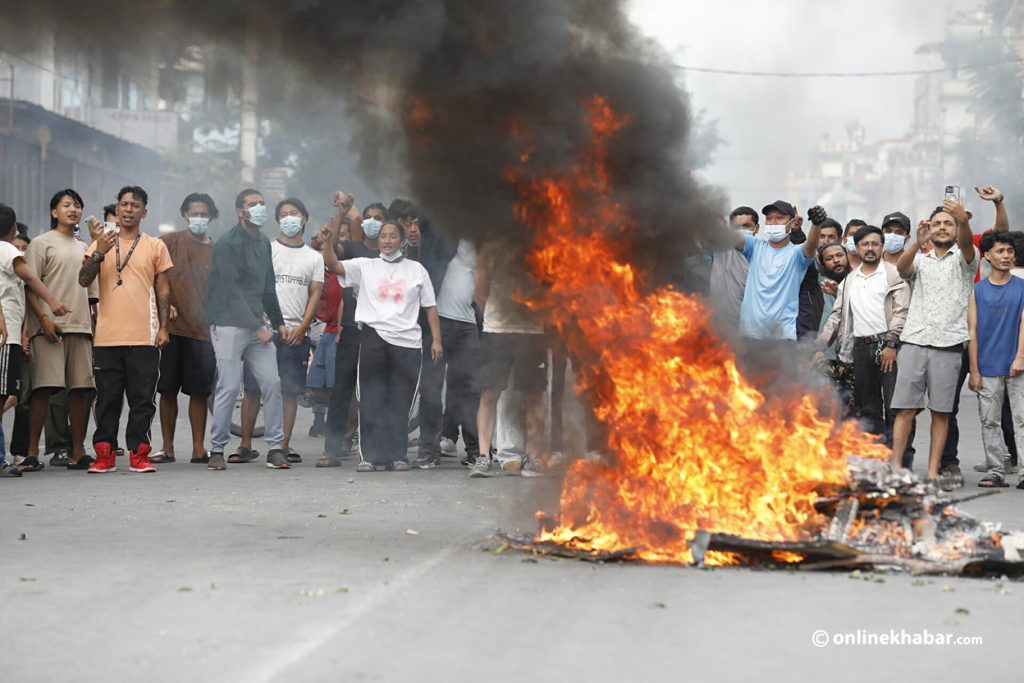
The Gen Z protest, which erupted after weeks of simmering anger over political corruption, escalated into a broader movement that led to the resignation of Nepal’s Prime Minister and the collapse of the government the following day.
A team from the BBC World Service discovered an internal police document detailing the events of September 8. It revealed that a person using the call sign “Peter 1” ordered officers to “use necessary force” 10 minutes after a curfew was imposed and after field officers repeatedly requested permission to use lethal weapons.
According to a source who spoke to BBC Eye Investigations, “Peter 1” was the call sign used by former Inspector General Khapung. While Khapung has not denied issuing the order, Nepal Police stated that the directive was given only after approval from the government security committee and after all other forms of force permitted under Nepali law had been exhausted.
Khapung, who retired in November, did not respond to requests for comment, the BBC reported.
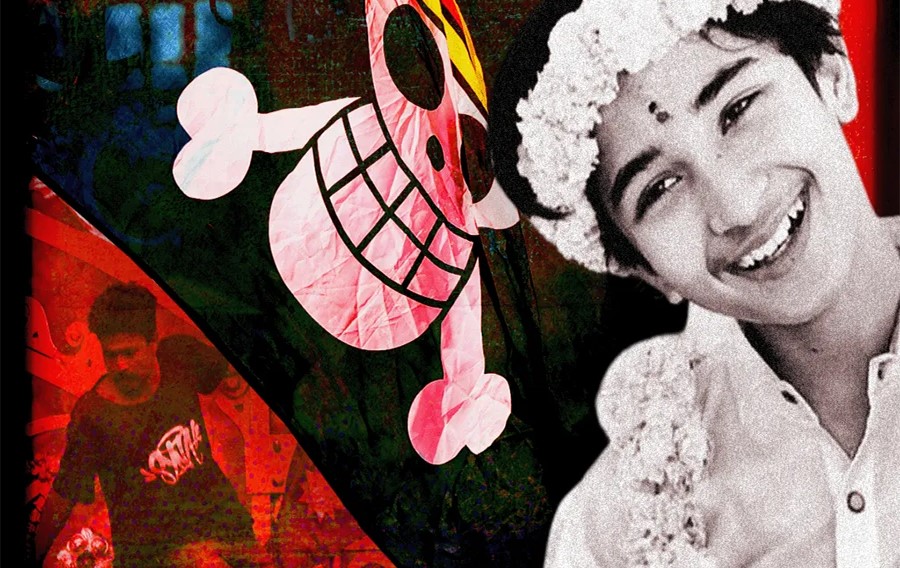
Video evidence reviewed by the BBC shows that the youngest victim, 17-year-old Shreeyam Chaulagain, was unarmed and attempting to leave the scene peacefully before he was killed.
A public inquiry into the events of September 8 is currently underway, with its report still pending. So far, no one has been held accountable and \a general election is scheduled for March 5.
Shreeyam’s Story
Shreeyam Chaulagain’s mother did not want him to attend the protest.
“I told him not to take part. Anything can happen in a movement,” she told the BBC. But Shreeyam was deeply interested in politics. He reassured his mother that protesters would be young and in school uniform, and therefore would not be targeted.
September 8 timeline
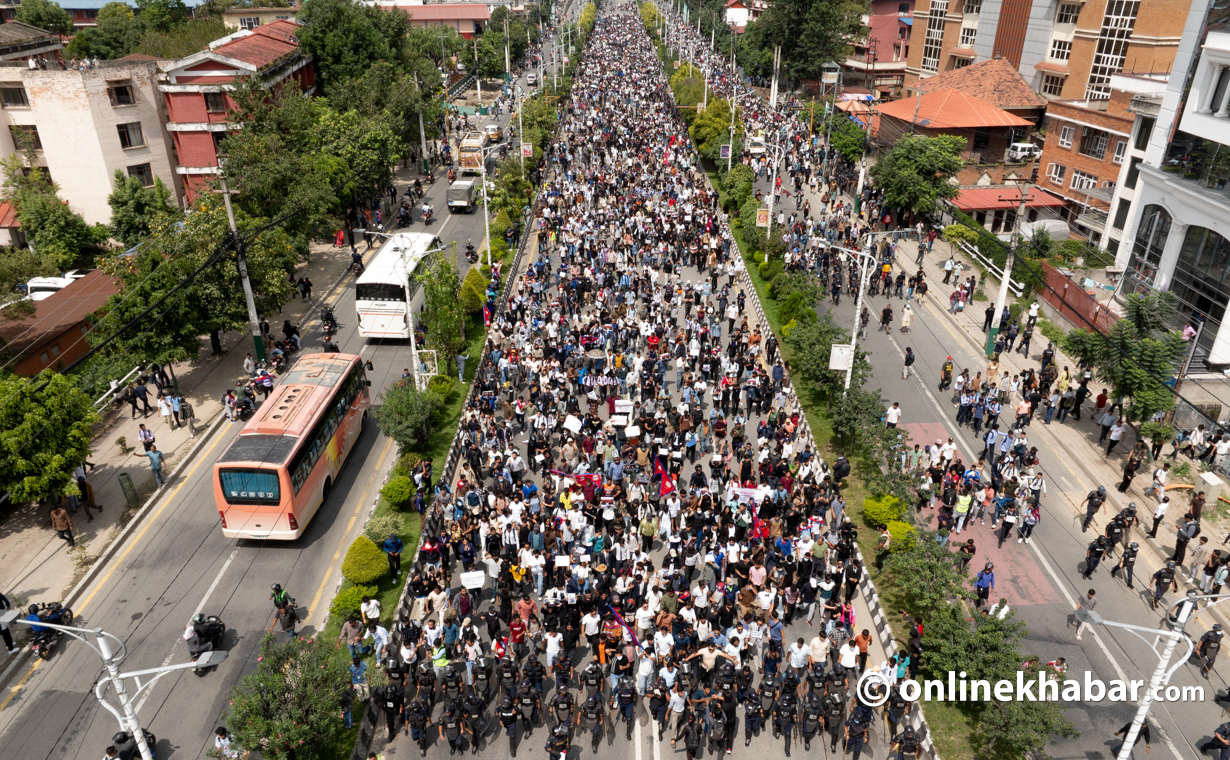
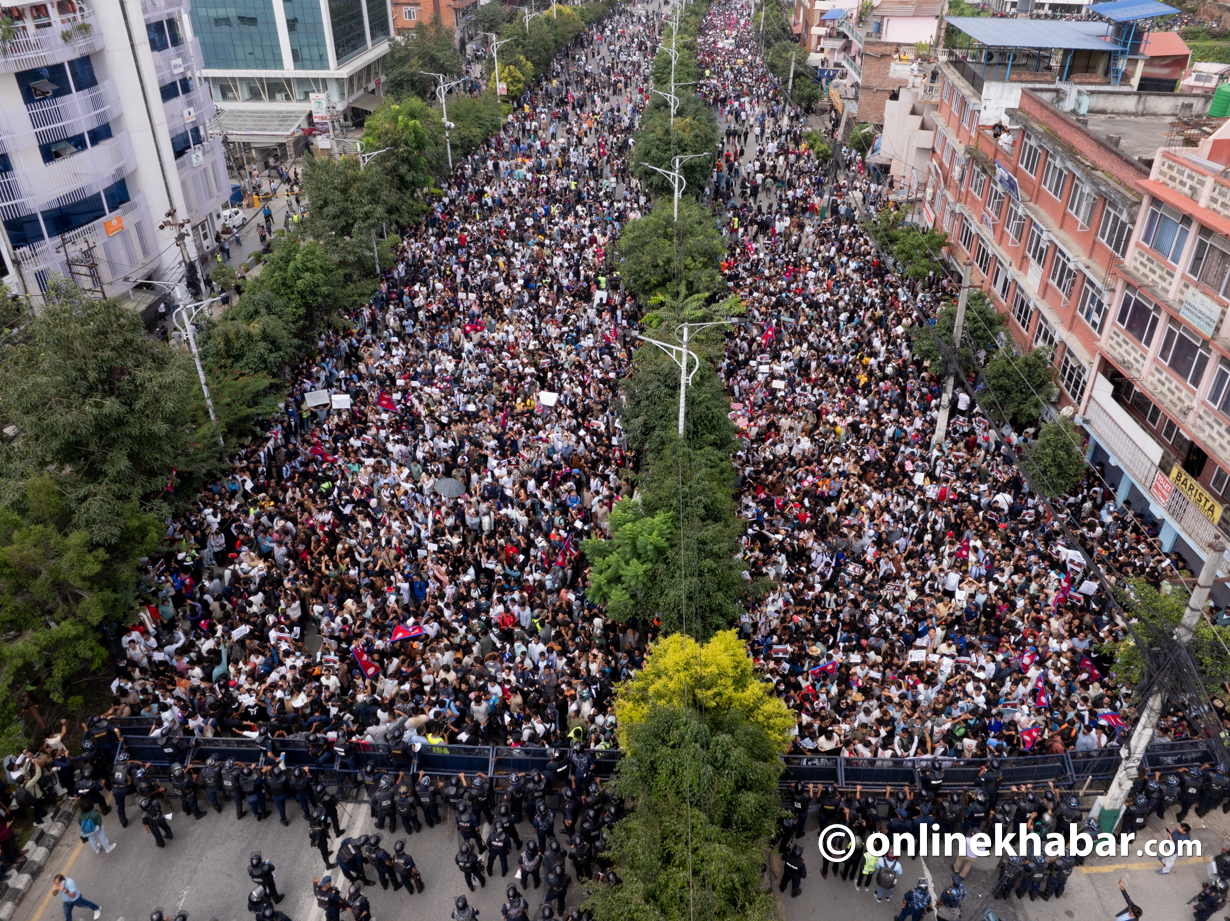
09:00: Young people began gathering at Maitighar Mandala, Kathmandu’s main protest site, a few hundred meters from Parliament, where barricades had been set up. According to Basant Basnet, Editor-in-Chief of Onlinekhabar, security officials “failed to anticipate the size of the crowd.” About 30,000 people, ten times the police estimate, attended.
11:47: A group of protesters found a way past the barricades. Caught off guard, police abandoned their positions. The crowd advanced to Parliament’s gate.
12:15: Some protesters broke a wall inside the parliamentary compound. Police responded with tear gas and batons. Even after organisers on Discord urged retreat, the crowd did not disperse. Video footage shows Shreeyam standing outside the gate wearing a green school jumper and carrying a backpack, holding a “Youth Against Corruption” banner.
Inside a command center about 3 km away, officials from Nepal Police, the Army, Armed Police Force, and intelligence agencies gathered under the leadership of Chief District Officer Chhabi Lal Rijal.
Officers reportedly lacked stable internet to access live CCTV feeds around Parliament. According to police present, no single individual or unit had a complete overview of the situation.
12:30: The Chief District Officer imposed an immediate curfew and declared the protest unlawful. Police ordered people to return home via loudspeakers. Some protesters surrounded police units and threw bricks and stones.
Footage shows a fire breaking out at Parliament’s gatehouse. After batons, water cannons, and rubber bullets failed to disperse the crowd, officers requested permission to use live ammunition.
12:40: According to a leaked police log, the call sign “Peter 1” (then IGP Khapung) ordered: “The curfew has already been imposed. No further permission is needed. Use necessary force.” (Khapung has denied responsibility before the Supreme Court, and CDO Rijal has also denied authorising live fire.)
13:15: The first fatal shooting. Thirty-four-year-old Binod Maharjan was seen being carried away with a head injury and later died in hospital.
14:09: Shreeyam, the youngest victim, was seen walking peacefully away from the front line, clapping calmly with his school bag on his back. He was shot in the back of the head and collapsed.
14:21: Video evidence shows police firing seven rounds from inside the parliamentary compound. Twenty-four-year-old Yogendra Neupane was shot and later died.
Aftermath and consequences

Angered by the killings, Nepalis of all ages took to the streets the next day. The movement turned violent. Police stations were set on fire, officials were attacked, and three police officers were killed. Government buildings were torched. In total, 77 people died in the unrest.
September 9 (14:30): Prime Minister KP Sharma Oli resigned, and the government collapsed. By nightfall, buildings in Kathmandu were burning, and reports emerged of 50 additional deaths.
21:00: The army took control.
Then-Home Minister Ramesh Lekhak, former Prime Minister Oli, Khapung, and Rijal have all denied responsibility. Nepal Police stated that they were dealing with multiple simultaneous crises in a highly complex situation.
Meanwhile, the families of the victims, including Shreeyam’s mother, are still waiting for justice.
“I still feel like he hasn’t gone, like he will return soon,” she says. “I feel like he is still in his school uniform. He will come back, swinging his school bag.”
Report by Subina Shrestha and Deepak Kharel, BBC Eye Investigations, published on the BBC