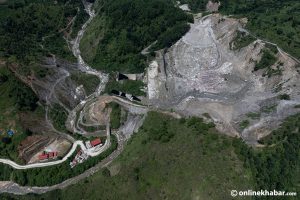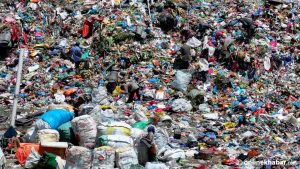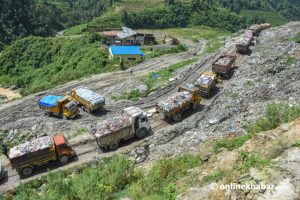


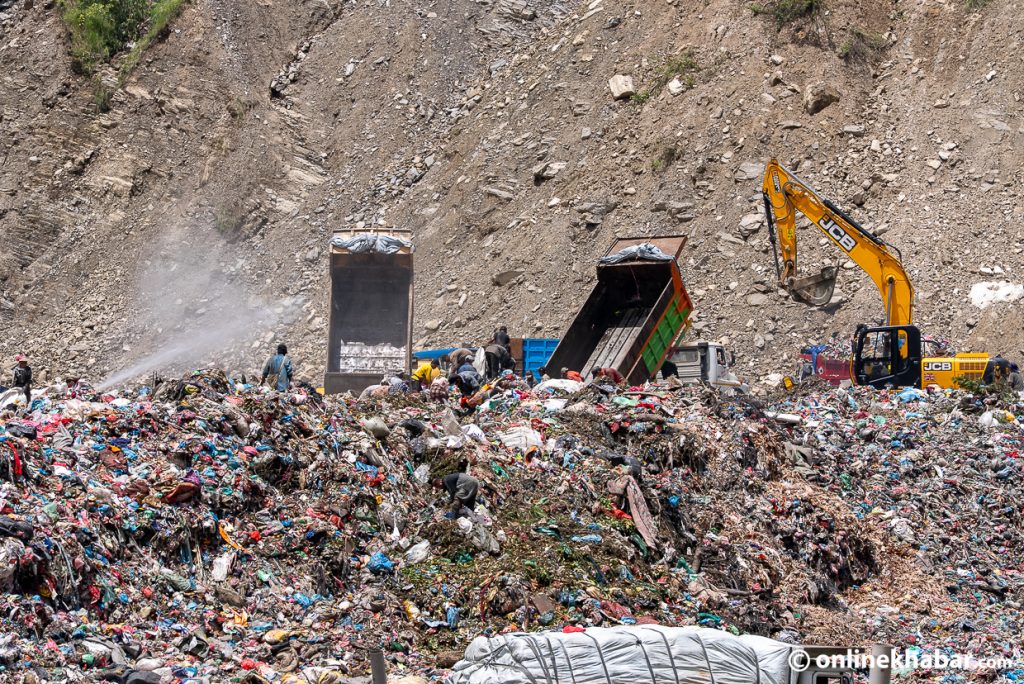
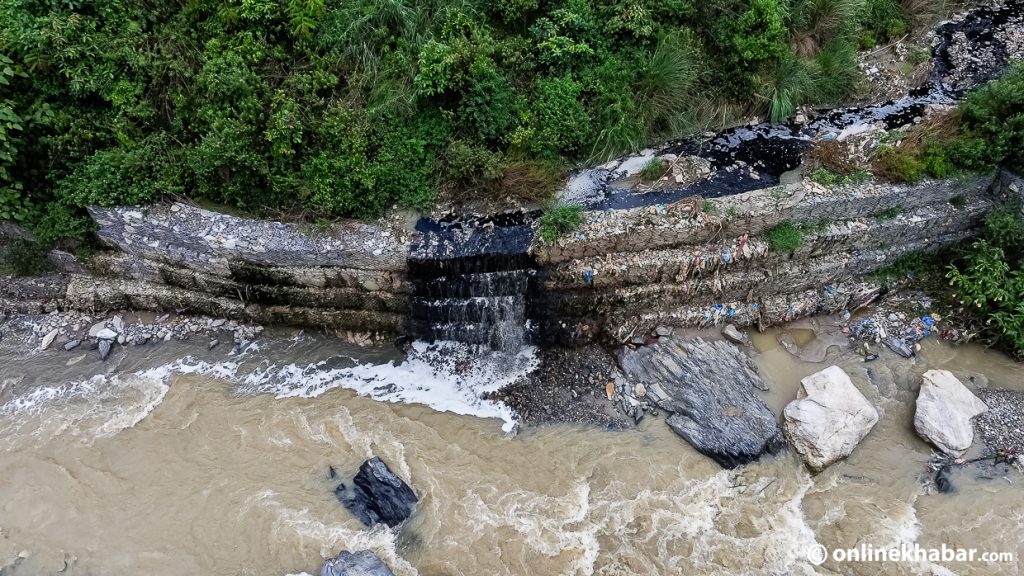
Leachate is flowing from towering piles of waste at Bancharedanda. The dam built to collect it has filled up, and contaminated liquid has begun flowing into the Kalpu River.
When the wind blows, the smell of rotting waste reaches nearby homes. Crows and kites circle above the landfill and sometimes drop pieces of dead animals outside people’s homes.
For residents living around Sisdol and Bancharedanda, this has become part of everyday life.
“We are living a hellish life alongside the stench,” said 76-year-old Dhurva Prasad Upreti, describing the problems caused by the waste.
Located on the border of Dhunibeshi Municipality in Dhading and Kakani Rural Municipality in Nuwakot, the site began receiving Kathmandu Valley’s waste four years ago. The first cell was completed and waste disposal began on May 24, 2022.
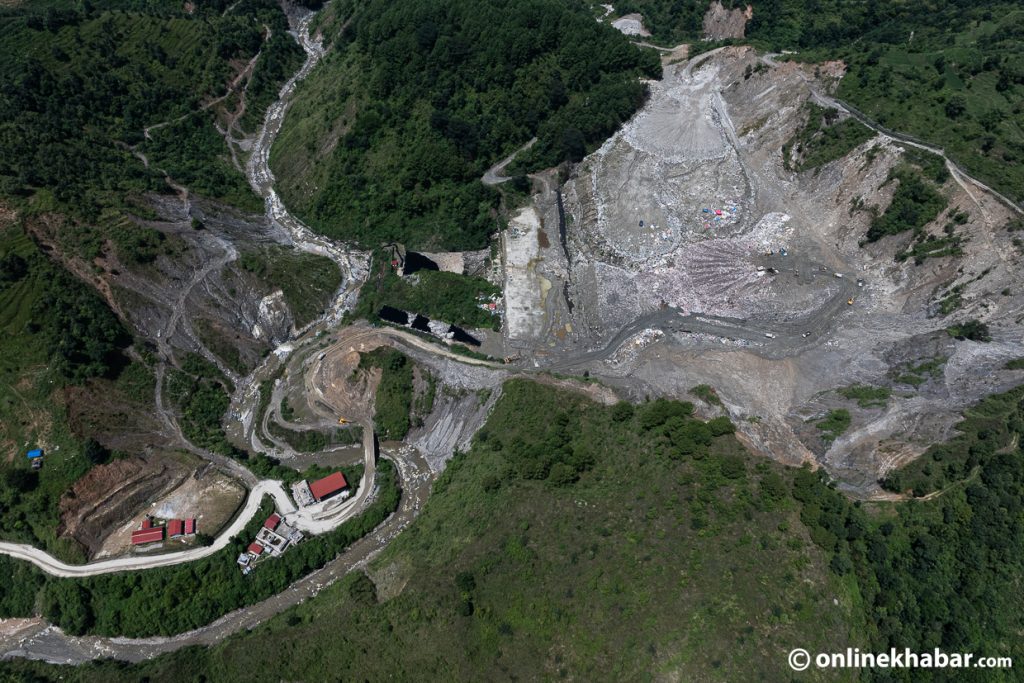
The facility was built as a sanitary landfill, with plans to manage waste scientifically and keep people and waste separated. It was designed to last for 20 years.
But only four years after operations began, the landfill is already filled with massive piles of waste.
Waste from 21 local governments in and around the Kathmandu Valley is being taken to Bancharedanda. Instead of functioning as a properly managed sanitary landfill, it is increasingly resembling the dumping ground it was supposed to replace: Sisdol.
So how did a landfill designed to operate for two decades become overwhelmed in just four years?
An Onlinekhabar investigation based on a field visit to Bancharedanda found that a combination of poor waste segregation, inadequate infrastructure, irregular management and the failure of local governments to take responsibility for their waste has pushed the site towards crisis.
A Rs 1 billion landfill overwhelmed in four years
The sanitary landfill was constructed by the then Ministry of Urban Development at a cost of more than Rs 1 billion and handed over to Kathmandu Metropolitan City.
The federal government was responsible for constructing the facility, while the metropolitan city was expected to manage waste disposal at the site.
But according to officials at the federal government, the metropolitan city failed to follow the scientific waste management system for which the landfill was designed.
Madhav Katuwal, an engineer at the Department of Urban Development and Building Construction, said Kathmandu Metropolitan City was responsible for the landfill turning into a dumping site.
The facility was designed to receive only non-biodegradable waste after waste was separated at source. Even among non-biodegradable waste, only materials that could not be reused or recycled were supposed to reach Bancharedanda.
Instead, waste has largely been collected and transported in mixed form.
“The difference between a dumping site and a landfill was not understood,” Katuwal said. “Waste was collected and brought here in the same condition in which it was collected. Because it was dumped in an unmanaged way, a mountain of waste developed.”
When the Ministry of Urban Development handed over the landfill, it estimated that the facility could operate for 20 years. The government now says that if waste continues to be disposed of in the same manner, Bancharedanda may not last more than another four years.
Some recyclable materials are collected by scrap workers, but a large amount of biodegradable waste continues to arrive at the landfill.
“The infrastructure for biodegradable waste was not built,” Katuwal said. “The problem arose because all kinds of waste were brought together.”
And it is not just Kathmandu’s waste.
Waste from 21 local governments is being transported to Bancharedanda, with waste reportedly coming from as far as Panchkhal in Kavre.
“If local governments do not take responsibility for managing their own waste, there will be a disaster in four years,” Katuwal said.
About 1,400 tonnes of waste arrive every day
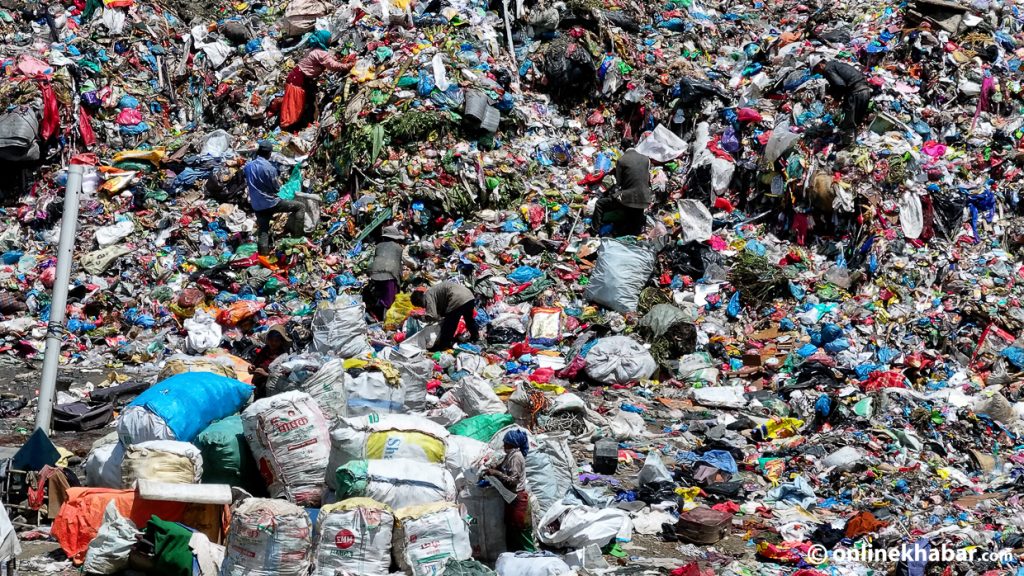
The scale of the problem can be seen in the amount of waste arriving at the site.
According to Kathmandu Metropolitan City, around 200 tipper trucks transport an average of about 1,400 tonnes of waste to Bancharedanda every day.
The original plan was very different.
After separating biodegradable and non-biodegradable waste, only around 15 to 20 percent of the total waste was expected to require disposal at the landfill. But workers at Bancharedanda say more than 60 percent of the waste arriving at the site is still mixed waste.
“Organic waste is arriving without being separated,” said a worker at the landfill. “Because there is so much waste, leachate cannot be properly managed.”
The excess organic waste is particularly problematic because it produces large quantities of leachate as it decomposes. The leachate was supposed to be collected in a dam, treated and then managed in a way that would allow it to be safely discharged.
Instead, the dam has filled up, and leachate has reached the Kalpu River.
“The dam has not been fully completed,” the worker said. “The dumping site was created before the construction was completed.”
He said the situation could be improved if the leachate were properly treated before being released.
Capping is also irregular
Proper landfill management requires waste to be covered regularly with soil. This process is known as capping. Workers at Bancharedanda say capping has not been carried out consistently.
“After waste is dumped, it should be covered with soil,” one worker said. “Sometimes capping is done and sometimes it is not. During the monsoon, it becomes difficult to cover the waste because of the rain.”
Without regular capping, flies and insects spread more easily. Authorities spray chemicals to control insects, but residents say the measures have not been effective.
Man Bahadur Tamang, ward chair of Dhunibeshi Municipality-1, said the situation has become particularly difficult during the monsoon.
“Capping has been inadequate during the rainy season. Because the waste is not being properly capped and the leachate is not being cleaned, the smell has spread throughout the villages,” he said.
Who is responsible?
Government agencies and local governments have largely been blaming one another for the failure to manage the landfill.
Kathmandu Metropolitan City, however, has acknowledged that it has struggled with waste segregation.
Sarita Rai, head of the metropolitan city’s Environment Management Department, said the biggest problem begins at the household level, where biodegradable and non-biodegradable waste is often not separated.
But the metropolitan city also says it does not have enough land to manage separated waste.
“If we separate the waste, where are we supposed to take it?” Rai said. “That is why the metropolitan city has been forced to dispose of waste in the same condition in which it is collected.”
Kathmandu Metropolitan City spends around Rs 650 million every year on waste management. Yet it has still not been able to establish an effective system for separating and processing biodegradable and non-biodegradable waste.
Living in hell
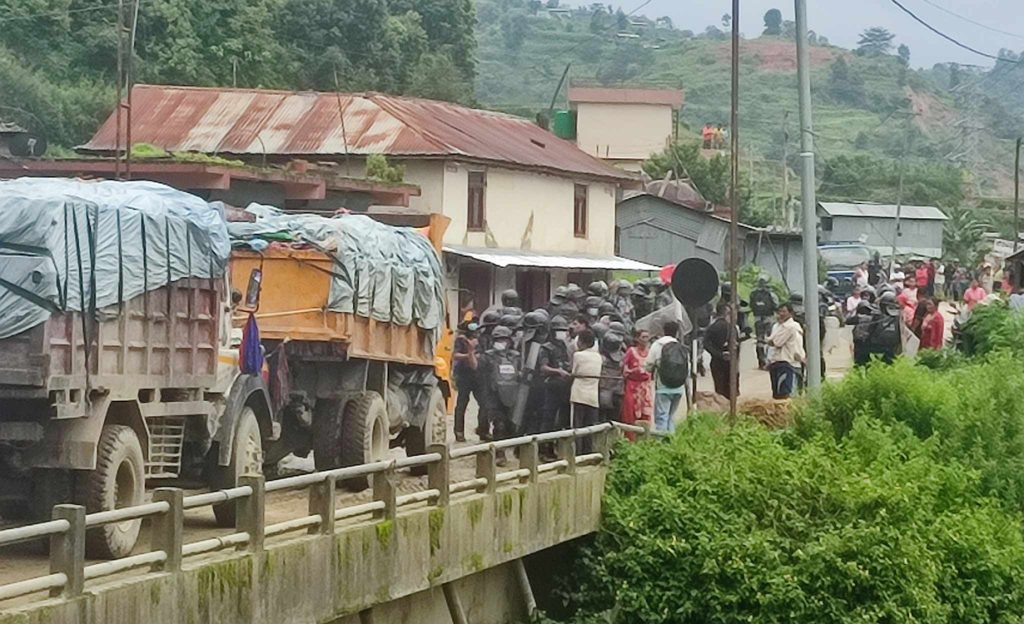
The landfill is located close to human settlements. In Dhunibeshi Municipality, wards 1, 3 and 4 are affected by the waste disposal site. Ward 1 is considered the worst affected.
According to ward chair Tamang, the ward has a population of around 4,500 and all residents are affected.
“One hundred percent of the people in Ward 1 are affected,” he said.
In neighboring Kakani Rural Municipality, wards 1, 2 and 3 are also affected.
Padam Balami, ward chair of Kakani-1, said around 1,100 affected households have health insurance.
“Even though waste was moved from Sisdol to Bancharedanda, the problems remain the same,” he said.
Kakani-2 has around 1,200 households, of which about 600 are considered highly affected, according to ward chair Krishna Ghimire.
“The situation is terrible. Citizens are suffering because the waste problem has not been solved,” he said.
In Ward 3, around 300 of the 900 households are considered highly affected, according to ward chair Ghananath Bajgain.
“This is the ward closest to Bancharedanda. The situation is difficult,” he said.
Residents report serious health problems
Residents say the waste has affected their health as well as their environment.
They report cases of cancer, heart and kidney disease, along with diarrhoea, typhoid, respiratory illnesses and skin diseases.
Senior cardiologist Dr Rajendra Koju said exposure to waste can cause biological and chemical contamination and affect the lungs and skin.
If the waste is highly contaminated, he said, it can also cause serious diseases, including cancer.
Local resident Badribahadur Ojha can list the names of people in the community who have died from cancer or are undergoing treatment.
“Everyone here seems to have become a cancer patient. Some have died at a very young age,” he said, pointing to lumps on his own body. “I also have these lumps. They itch and I have to keep taking medicine.”
Ojha said both his parents died of cancer.
“My father and mother died of cancer. My elder uncle and other relatives also died from cancer. Many people in the village have cancer,” he said.
Residents say the government has provided health insurance, but they have struggled to receive meaningful medical services.
“They have given us insurance, but when we go to hospitals, we are made to wait and sent from one place to another. We cannot even get medicines at the health post,” Ojha said.
Although health posts exist in the affected settlements, residents say there is a shortage of specialist doctors, laboratory facilities, medicines and regular health checkups.
“The government gave us disease, but not treatment,” Ojha said, his eyes filling with tears.
Residents describe the situation as “one sick person in every household.”
The government had once promised “one job per household” as part of its agreement with communities affected by the landfill. Residents now say they are facing the opposite reality.
“Earlier, we did not have to go to hospitals,” said Kamala Ojha. “Now, since the waste arrived, we have to keep visiting hospitals. Most households have cancer patients.”
Dead animals reach people’s homes
The landfill has also attracted large numbers of crows, kites, vultures and stray dogs.
Residents say bones, pieces of meat and parts of dead animals sometimes reach their rooftops and yards.
“Crows and kites drop the legs and pieces of meat from dead animals into our yards,” Badribahadur Ojha said. “This has spread disease throughout the village.”
Nepal’s Constitution guarantees citizens the right to live in a clean and healthy environment.
It also states that victims of environmental pollution and degradation have the right to compensation according to law.
Residents of Bancharedanda, however, say those constitutional guarantees have done little to improve their lives.
Farming has also suffered
The damage is not limited to human health. Agriculture, which has long been a major source of income for local families, is also suffering.
Standing near the Kalpu River, Dhurva Prasad Upreti recalled a time when the river was clean enough for people to swim and catch fish.
“We used to swim here. We could catch enough fish to take home in a bag in a day. There were large pools in the river,” he said.
“Now there is not even a place to take a dip. We used to drink directly from the Kalpu River. Now you cannot even step into it. The leachate has turned the Kalpu into a black river.”
Residents say the river’s pollution has also deprived them of access to clean water. The problem has been visible for nearly two decades.
“Waste and people cannot live in the same place,” Upreti said. “Either the waste must stop coming, or we must be relocated.”
Farm production has also declined.
“If leachate gets into the fields, rice does not develop grains. Only straw remains,” said local resident Khem Bahadur Thapa. “The fields, crops, animals and human health have all been affected.”
Before waste disposal began, families could largely support themselves through agriculture.
Residents say rice, wheat, maize, sugarcane, oranges, guavas, pomelos, peaches and pears were once produced in abundance.
“Earlier, even ordinary wheat cultivation produced 26–27 muri (1,600 kgs approx.),” said local resident Dipak Karki. “Now wheat does not grow. Even when we plant rice, the grains do not develop.”
With agricultural production falling, residents say they have become increasingly dependent on buying food from the market.
Livestock farming is also in crisis
Livestock, another important source of income, has also been affected.
Badribahadur Ojha said families once kept cows, buffaloes and goats and sold milk, yoghurt and ghee.
“Now livestock farming is not possible. If you keep goats, they become sick. Dogs attack them or they die. This is a problem in every household,” he said adding fruit production has also suffered because of insects and pollution.
The waste has even affected the social fabric of the communities.
Residents say dust, foul smells and pollution have made outsiders reluctant to visit the area. Some say this has made marriage relationships more difficult.
They claim families from outside are reluctant to marry their children into the affected communities.
“We married our daughter to someone in Kathmandu. She comes here, and the grandchildren come. But the son-in-law does not want to come,” one resident said.
Residents also say people have started moving away from the area because of the pollution.
Balen Shah’s unfulfilled promises
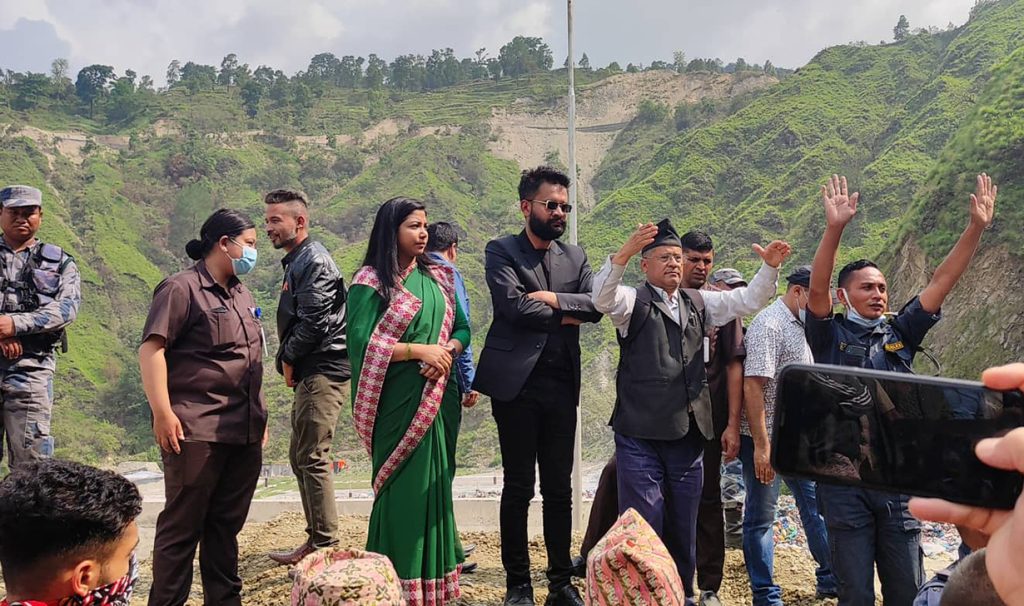
The problems at Bancharedanda have persisted despite repeated promises from federal and local governments.
After winning the 2022 local election as an independent candidate for mayor of Kathmandu, Balen Shah visited Sisdol and Bancharedanda.
He told local residents that he had come to solve the waste problem and promised not to accept ceremonial garlands until the issue was resolved.
Shah also visited the area with then-deputy mayor Sunita Dangol shortly after taking office and asked residents to cooperate with his efforts.
He argued that he had been mayor for only a few days and should not be held responsible for problems that had developed over decades.
“I have not been mayor for 17 years. It has only been four days. Can 17 years of problems be imposed on me?” he told residents. “You have to let me work here. If you let me work, the work can be done.”
Soon after, Kathmandu Metropolitan City announced a new waste segregation system.
Biodegradable and non-biodegradable waste were to be collected separately, with fines of Rs 500 for failing to separate them.
Under the plan, biodegradable waste would be collected on Sundays and Wednesdays and non-biodegradable waste on Mondays and Fridays.
The system was supposed to come into effect from July 17, 2022, but it was never fully implemented.
Before becoming mayor, Shah had frequently spoken about waste management and argued that waste could be turned into wealth.
He said Kathmandu produced around 600 metric tonnes of waste every day, with approximately 75 percent being organic.
If properly segregated, he argued, the waste could generate income and even electricity.
“From Kathmandu’s waste alone, 5 MW of electricity can be generated,” he had said, arguing that such infrastructure could be built within two years.
But the plans did not materialise during his tenure as mayor.
Plans that never took off
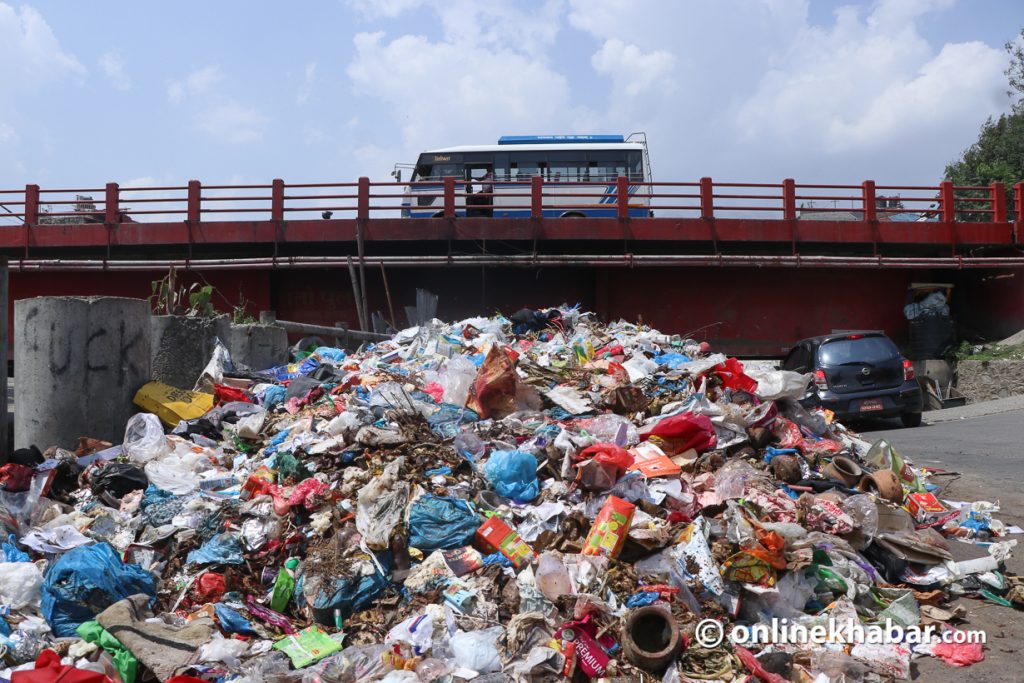
Shah’s then infrastructure adviser and waste management coordinator Sunil Lamsal also visited Sisdol and Bancharedanda.
In early 2023, Lamsal acknowledged to Onlinekhabar that the metropolitan city had not been able to fully implement its plan to collect biodegradable and non-biodegradable waste separately because it had not made sufficient preparations.
He said the city was preparing a waste segregation system and would implement it soon.
“If we continue dumping waste at the current rate, the site will fill up sooner than expected,” Lamsal said at the time. “We will not dump waste here in this way for a long time. Only waste that cannot be used after segregation should come here.”
The metropolitan city had plans to produce gas and compost from biodegradable waste, recycle reusable non-biodegradable materials and destroy other waste through incineration.
It had also planned processing centres for biodegradable waste and larger facilities for producing compost.
Those plans, however, were not implemented as announced.
Almost five years after Shah began taking an active role in waste management, he is now prime minister, having held the post for more than four and a half months.
Lamsal, who previously led the metropolitan city’s waste management efforts as Shah’s infrastructure adviser, is now the infrastructure development minister and has also been in office for more than four and a half months.
But for the communities around Bancharedanda, little has changed.
How the crisis began
The roots of the current crisis go back nearly two decades. In 2005, residents agreed to allow waste to be dumped at Sisdol after authorities promised one job per household, road upgrades and a hospital.
The agreement was for waste to be dumped at Sisdol for two years, after which Bancharedanda was supposed to become a scientifically managed landfill.
Japan’s international cooperation agency JICA had initially prepared to construct a landfill at Bancharedanda, around 2–3 km from Sisdol. But after disputes, JICA withdrew from the project. Construction was delayed, and waste continued to be dumped at Sisdol. What was supposed to last two years continued for 17 years.
In November 2018, the government again assigned the Ministry of Urban Development responsibility for developing infrastructure at Bancharedanda.
The government acquired 1,792 ropanis of land for the landfill, and construction of the sanitary landfill officially began in April 2019.
The project reached its final stages four years later. But waste began arriving even before construction was fully completed, triggering protests from local residents.
Following an 18-point agreement, residents eventually allowed waste disposal to continue.
They were promised that Bancharedanda would be different from Sisdol: waste would be properly managed, people and waste would be separated, and leachate would be treated before being released into the river.
Four years later, residents say those promises have not been kept.
“We had been saying from the beginning that the problems seen in Sisdol should not be repeated,” said ward chair Tamang. “We were told that waste would be properly managed, people and waste would be separated, and leachate would be treated before being released into the river.”
“But now the situation has become even worse than Sisdol.”