

For many domestic workers in Nepal, the home where they work is also the place where they are most vulnerable. Behind closed doors, they may face sexual harassment and abuse with little chance of being heard, let alone receiving justice. Unlike workers in offices, factories or other public workplaces, domestic workers operate in private households, where there are few witnesses, little oversight and limited avenues for reporting abuse.
Their silence is often mistaken for an absence of harassment. In reality, it can be a means of survival.
Domestic work includes household tasks such as cleaning, cooking and caring for family members. Despite being essential to the functioning of many households, it remains largely part of Nepal’s informal economy. Employment arrangements are often based on verbal agreements rather than written contracts, leaving workers without reliable access to social security, legal protection or other basic labour rights.
This informality is particularly concerning because the majority of domestic workers are women and girls. Estimates suggest that Nepal has more than 200,000 domestic workers, around 80–82 per cent of whom are female. More than 55.6 per cent reportedly come from ethnic and indigenous communities.
Domestic work has deep historical roots in Nepal. Systems such as Das and Dasi, Dhai and Kamlari reflect a long history of household labour shaped by social and economic inequality. While domestic workers are now commonly found in urban households, forms of bonded and exploitative labour, including Kamlari, Kamaiya and Haliya, have also been part of rural life.
These historical and social inequalities continue to influence who performs domestic work and the conditions under which they work.
Abuse behind closed doors
Sexual harassment in domestic workplaces is difficult to prevent and even harder to report. Because the workplace is a private home, domestic workers are largely outside the reach of routine labour inspections and public oversight. The employer’s household, rather than a regulated workplace, becomes the setting in which abuse can take place without witnesses or accountability.
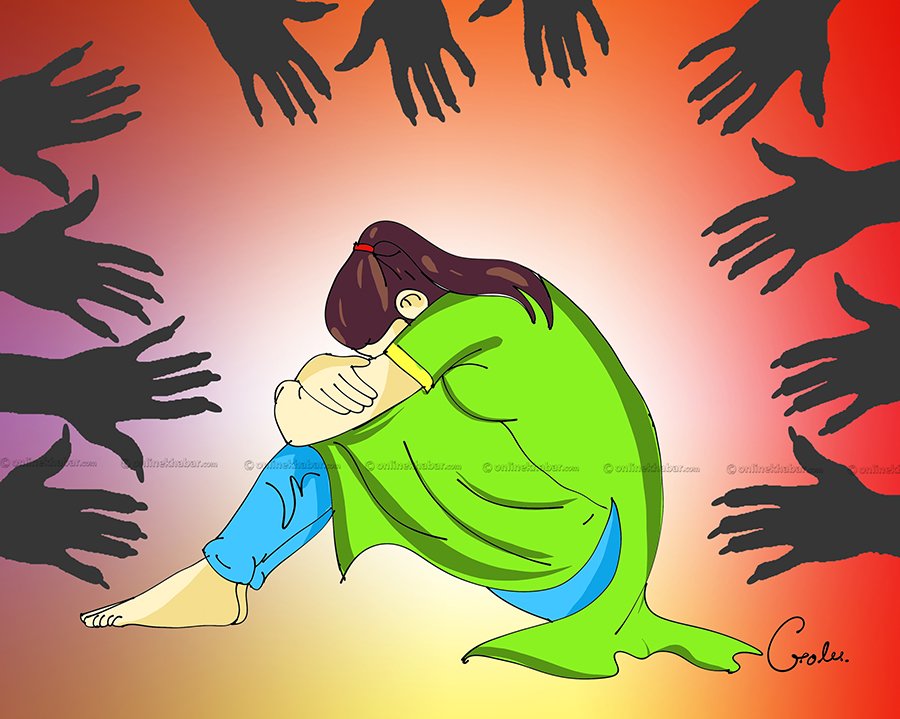
Harassment can take many forms. It may begin with unwanted sexual comments, lewd gestures, staring or inappropriate messages. It can also involve stalking, unwanted touching, forced hugging and, in the most serious cases, attempted or actual rape. Perpetrators may include employers, their family members, relatives, neighbours or visitors.
For women and girls who are already disadvantaged by poverty, caste, age or migration status, these risks are compounded. Their vulnerability is not simply the result of individual incidents but of overlapping social and economic inequalities.
The available figures offer only a partial picture. A situational analysis in Nepal found that 4.3 per cent of female domestic workers reported experiencing sexual harassment, while 14 per cent of child domestic workers had experienced sexual abuse. These figures should not be taken as a complete account of the problem. Fear of disclosure, pressure from employers and the absence of safe reporting mechanisms mean that many incidents may never be recorded.
Harassment is also not limited to physical encounters. Workers may receive sexually suggestive SMS or WhatsApp messages, face persistent unwanted attention or be subjected to offensive gestures and comments. Yet documenting such experiences can be difficult. Domestic workplaces rarely have independent monitoring systems, and incidents may leave no witnesses or records.
The consequences can be devastating. In one reported case in Bajhang, a 12-year-old Dalit girl, whose grandmother worked as a domestic worker, was raped and murdered by her employer in a temple. Domestic workers who migrate for employment also face risks of sexual harassment and abuse, often while separated from their families and familiar support networks.
These cases are reminders that abuse in domestic settings is not merely a private matter. It is a labour rights and public protection issue.
Why workers remain silent
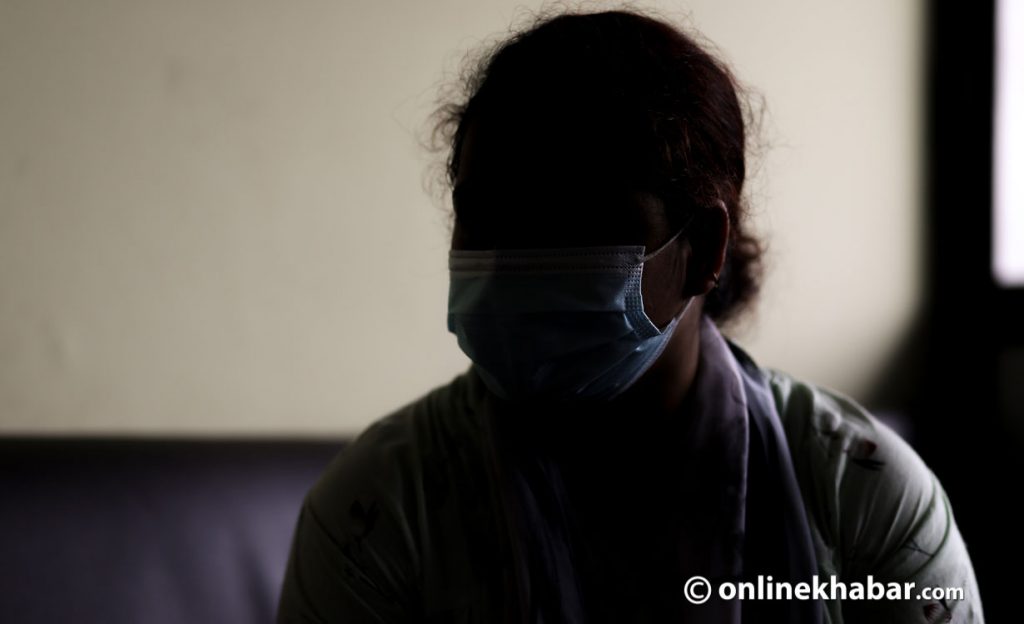
The decision not to report sexual harassment is rarely a simple one. For many domestic workers, speaking out can mean losing their income, accommodation and even the food they depend on. When an employer controls not only a worker’s wages but also their living conditions, the balance of power is heavily unequal.
Silence, in such circumstances, becomes a survival strategy.
The first barrier is the invisibility of the workplace. Private households are shielded from public scrutiny, making it difficult for outsiders to know what happens inside them. Without witnesses, monitoring or independent accountability, employers and other household members may be able to exploit workers with little fear of consequences.
Economic dependence creates another powerful barrier. Many domestic workers rely on their employers for wages, food and accommodation. Reporting harassment could cost them all three. For workers who have few alternative employment opportunities, the prospect of losing their livelihood can be more immediate and frightening than the possibility of seeking justice.
Legal uncertainty further reinforces this silence. Although Nepal has laws addressing workplace harassment and labour rights, domestic workers remain inadequately covered by the country’s protective framework. Where legal provisions do exist, workers may have little knowledge of them or no practical way to access them.
Social stigma also plays a significant role. Survivors may fear being blamed, shamed or rejected by their families and communities. These risks can be especially severe for young women, Dalit workers and those who have migrated from rural areas. Some may believe that their accounts will not be taken seriously, particularly when the accused person is an employer or a socially influential member of the community.
A reported case from Kathmandu illustrates how institutional responses can deepen this fear. On 18 July 2010, a 16-year-old domestic worker was reportedly raped and abused by her employers. The perpetrators allegedly took her outside the house naked, accusing her of theft. Rather than receiving immediate protection, she was reportedly detained twice for 24 hours at the Bauddha police station without adequate medical treatment.
Such experiences can discourage not only the survivors involved but also others who might consider reporting abuse. When institutions fail to protect victims, the message is clear: speaking out may bring further harm instead of justice.
A legal framework that leaves workers behind
Nepal’s legal framework offers some protection against abuse, but significant gaps remain.
The Sexual Harassment at Workplace (Elimination) Act, 2014, does not adequately address the particular circumstances of domestic workers. The Social Security Act, 2017, also leaves many workers in the informal sector without meaningful access to social protection. In addition, domestic workplaces are largely excluded from conventional labour inspection mechanisms.
There are, however, some legal provisions that may offer protection. Section 2(a) of the Domestic Violence (Offence and Punishment) Act, 2009, addresses dependent domestic help and provides a basis for action against abuse within households. The Labour Act, 2017, also contains provisions relevant to domestic labour. The Children’s Act and child labour legislation provide protections for children, including restrictions on hazardous work.
At the international level, the International Labour Organization’s Domestic Workers Convention, 2011 (No. 189), establishes standards for decent work and social protection for domestic workers. Nepal’s ratification and implementation of the convention would be an important step towards recognising domestic work as work deserving the same dignity and protection as other forms of employment.
Trade unions and organisations such as the Human Workers Trade Union of Nepal (HUN) also play an important role in advocating for domestic workers’ rights. But the existence of laws and advocacy groups does not automatically guarantee protection. Workers need accessible reporting channels, effective enforcement and institutions they can trust.
The central problem is not simply that domestic workers lack legal recognition. It is that the protections available to them are often difficult to exercise in practice.
From recognition to protection
Addressing sexual harassment in domestic work requires more than awareness campaigns. It demands changes in the legal system, employment practices and the way society understands domestic labour.
First, domestic workers must be explicitly included in workplace sexual harassment legislation. Amending the Sexual Harassment at Workplace (Elimination) Act, 2014, to recognise domestic workplaces would help close a significant protection gap. Written employment contracts should also become standard practice, clearly setting out wages, working hours, duties and workers’ rights.
Second, Nepal should move towards ratifying and implementing ILO Convention No. 189. Doing so would strengthen the recognition of domestic work as legitimate employment and establish clearer standards for decent working conditions.
Third, domestic workers need access to social protection, including health coverage, maternity benefits and other forms of security through mechanisms such as the Social Security Fund. Financial and social protection can reduce workers’ dependence on individual employers and make it easier for them to leave abusive situations.
Finally, reporting mechanisms must be accessible and safe. Domestic workers should be able to report harassment without fear of losing their jobs, accommodation or personal safety. Authorities must respond sensitively to complaints, protect survivors from retaliation and ensure that allegations are investigated fairly.
Domestic work takes place inside private homes, but the rights of those who perform it should never remain a private concern. The walls of a household must not become a shield against accountability.
The silence of domestic workers is not evidence that harassment does not happen. It reflects the unequal conditions that make reporting dangerous and justice difficult to obtain. Until Nepal recognises domestic workers as workers entitled to dignity, safety and legal protection, thousands will continue to face the choice between speaking out and securing their livelihoods. That is a choice no worker should have to make.