Kathmandu, November 26
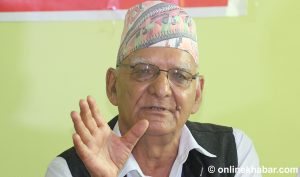
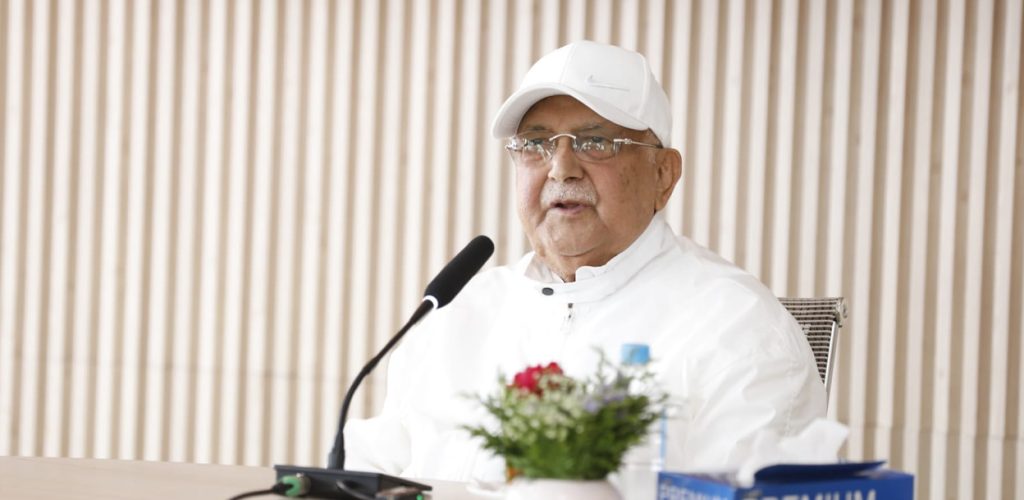
CPN-UML chair KP Sharma Oli has accused Prime Minister Balen Shah of failing to raise Nepal’s border disputes with India during his recent visit, claiming that Shah had previously displayed the Greater Nepal map in his metropolitan office merely for political spectacle.
Speaking to editors in Kathmandu on Thursday, Oli criticised Shah for not consulting former prime ministers, former foreign ministers, political parties and other stakeholders before the visit. He said the prime minister’s brief, 25-hour trip also left little room for substantive discussions on issues concerning Nepal’s national interests.
“ When a prime minister goes abroad, the entire nation should go with him. But this visit turned out to be like a private trip,” Oli said, adding that the visit had yielded no significant achievements and that the outcomes were merely continuations of matters already agreed upon in the past.
Oli also cautioned against placing too much confidence in India’s promises of economic and development assistance, citing previous commitments made in Janakpur and for post-earthquake reconstruction that, according to him, were never fulfilled.
He strongly criticised the government over its position on the Eminent Persons Group (EPG) report, accusing it of improperly backing away from an agreed position. Oli said the EPG had been formed through mutual understanding between the two governments to address various bilateral issues, including border concerns, and objected to attempts to dismiss the report as irrelevant.
Oli also claimed that he had been removed from power in September last year by unruly groups rather than through constitutional means. He further claimed that he had prevented the signing of the State Partnership Program (SPP) agreement with the United States when a draft had been prepared and was ready for signing, although he did not explain how the draft had been prepared or how he had stopped it.
During the informal interaction with editors, Oli said his remarks were rarely kept confidential and that he was often portrayed negatively as a result.
Responding to repeated questions about the relevance of his leadership, Oli challenged critics to point out specific policy mistakes rather than simply demanding that he step aside.
“If there were any wrong policies of mine, write them down and tell me. Don’t just keep saying ‘step down, step down’,” he said. Referring to leaders such as Donald Trump and Narendra Modi, he argued that age alone was not a reason to question his leadership, saying he had not suddenly grown old.
Oli also criticised what he described as the government’s harsh treatment of the press and the lack of resistance from media outlets. Recalling how the press had stood up against the Panchayat system and the royal regime, he claimed that there was little protest now, even when police entered media offices. He stressed the need to protect press freedom and freedom of expression for democracy.
He also expressed dissatisfaction with the judiciary and constitutional bodies, hinting at government influence over judicial proceedings. Oli said the responsibility for upholding the dignity of the judiciary should not rest solely on those seeking justice but also on those in power.
UML leaders Pradeep Gyawali, Surya Thapa, Niru Pal and Niraj Acharya attended the interaction. Although the party’s publicity department had announced that Vice-chair Bishnu Paudel and General Secretary Shankar Pokhrel would also attend, both were absent.
Oli claimed that some disorder had emerged within the party but had been brought back under control following a recent meeting.
The UML has argued that a movement is necessary to restore democracy, although it has not clarified whether it considers democracy to be currently absent. Oli also maintained that local and provincial elections should not be held simultaneously, arguing that they must take place within their respective constitutional timelines rather than being adjusted to suit any political party or government.