Kathmandu, June 28
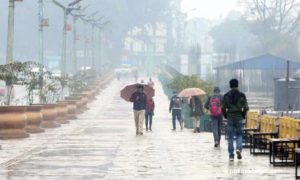
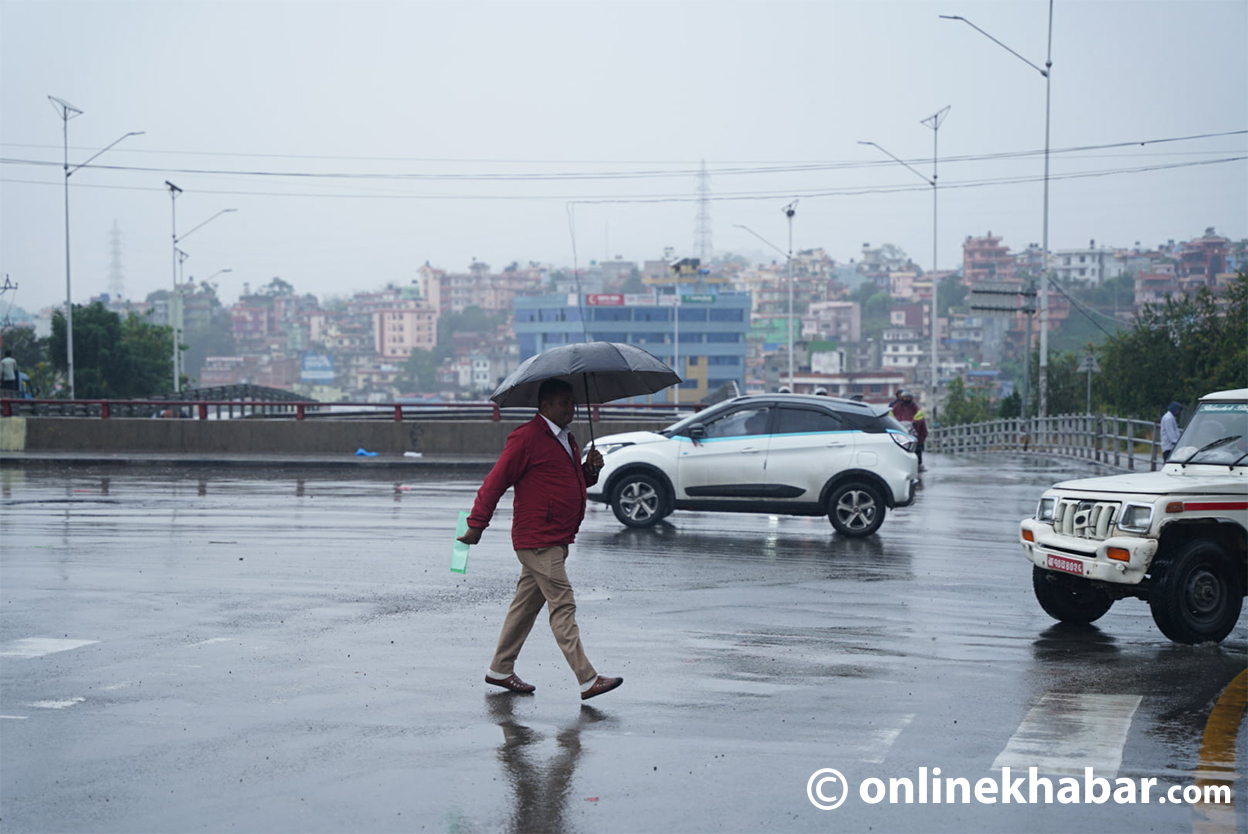
As the monsoon gradually becomes active, meteorologists say most parts of the country will see rainfall this week, and temperatures should ease somewhat. In some areas, they say, there could be enough rain to begin transplanting rice.
According to meteorologist Rojan Lamichhane of the Department of Hydrology and Meteorology, residents of the Terai areas of Sudurpashchim and Lumbini provinces, which have been enduring heat waves through Friday and Saturday, will also find relief with the incoming rain.
“In the Terai lowlands of Lumbini Province, there is a possibility of moderate rainfall in a few places on Tuesday and in many places from Wednesday to Thursday,” Lamichhane said. “In Sudurpashchim Province, light rain is expected in a few places between Sunday and Tuesday, with moderate rainfall in some areas from Wednesday to Thursday.”
He added that one or two spots in the Terai areas of Sudurpashchim could also see heavy rain from Wednesday to Thursday.
Moderate rainfall is also forecast through Thursday for the hilly areas of Lumbini, Karnali, and Sudurpashchim provinces, with the possibility of heavy rain in isolated spots.
Meteorologists say eastern Nepal is likely to receive more rainfall than the west this week. In the Terai of Koshi Province, rain is expected in many areas from Wednesday to Thursday.
In Madhesh, Bagmati, and Gandaki provinces, some areas will see rain through Tuesday, with moderate rainfall becoming widespread from Wednesday to Thursday. One or two locations in the Terai of Koshi, Madhesh, and Bagmati may also see heavy to very heavy rain from Sunday through Thursday.
Meteorologist Ujjwal Upadhyay noted that from Tuesday onward, good rainfall is expected in the belt between the Mechi River in the east and the Narayani River in the west, with Wednesday likely to bring significant rain to the Kathmandu Valley and beyond.
“These areas can be prepared for rice transplanting,” he said.
Meteorologist Dharmaraj Upreti likewise said the weakened monsoon has been gradually building up over recent days, and is expected to strengthen further and reach western Nepal between June 28 and July 1. He added that between June 30 and July 2, further intensification could bring moderate to heavy rainfall in some areas, creating conditions suitable for paddy planting.
This year’s monsoon entered Koshi Province six days later than average, arriving on June 19. It spread to the eastern parts of Lumbini Province by June 22. However, the monsoon has remained weak, preventing steady rainfall and leaving much of the country hot and dry.
The highest temperature recorded on Saturday was 40.1 degree Celcius, measured at Baijapur in Banke district at 3:20 PM.
For those waiting for both relief from the heat and enough rain for farming, this week’s rainfall should bring some respite, though the overall forecast for this monsoon season projects below-average rainfall and above-average temperatures.