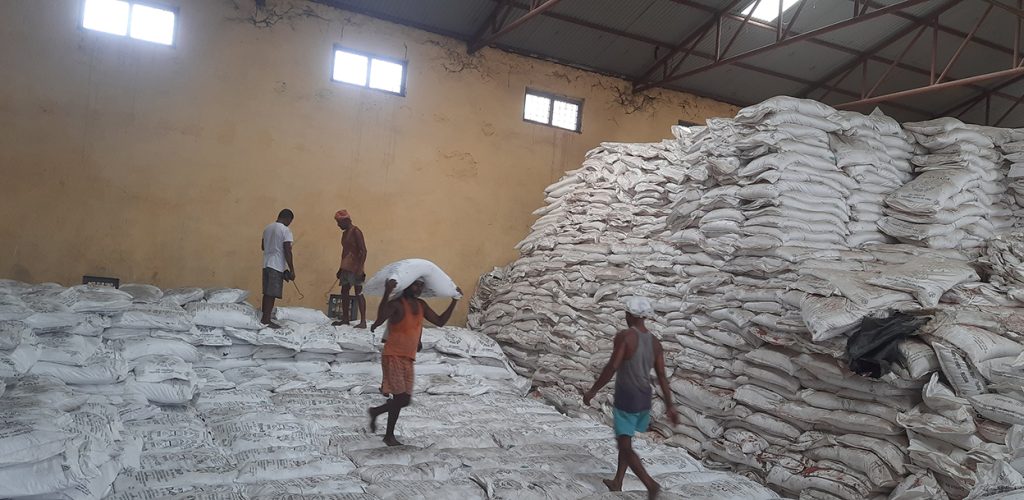
Every monsoon, the same story returns to Nepal’s Terai. Farmers queue at cooperatives that have run short of urea, and the government turns once more to India. This year was no different: in early May, Nepal arranged to import 60,000 tonnes of urea and 20,000 tonnes of DAP from its southern neighbour under a 2022 government-to-government deal, short of the 150,000 tonnes it had originally requested.
On the other side of the same economy, something quieter was unfolding. The Nepal Electricity Authority recorded a system peak of 2,901 megawatts on July 1, 2025, with 687 MW exported to India. During the 2025 wet season, the independent power producers’ association reported, surplus generation reached about 1,400 MW against an Indian export approval of 1,141 MW, and the rest was spilt, unused. The surplus will only grow: the new budget plans to add 670 MW of hydropower and 370 MW of solar to the grid in the coming year.
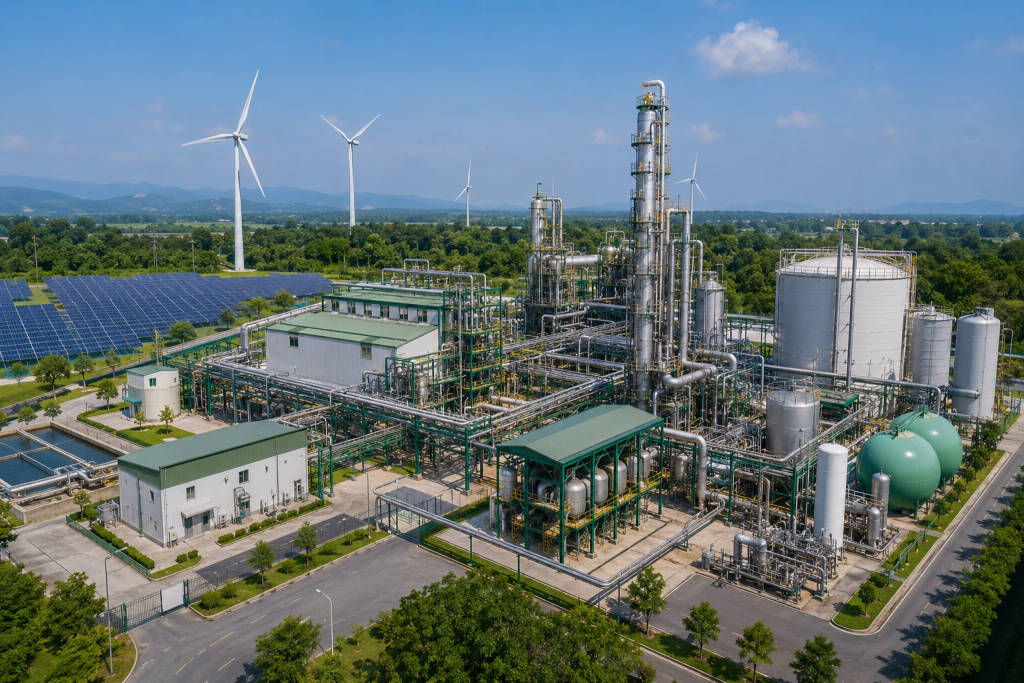
Put the two pictures together. A country that cannot keep fertiliser on its shelves is, in the same months, letting clean electricity go to waste because it has nowhere to put it. The obvious answer, using that surplus to make “green” urea at home, fertiliser produced by splitting water with renewable electricity instead of relying on natural gas, has been studied since at least 1984, when the Japan International Cooperation Agency first ran the numbers. It has been studied every few years again. Forty-two years on, not one plant exists.
The list of studies is long. The 1984 review concluded the idea would work only if electricity prices fell by 40 per cent, and it was shelved. In 2015, consultants working under the Office of the Investment Board of Nepal recommended a 700,000-tonne plant at Dhalkebar, fed by natural gas piped 108 kilometres from India. In 2020, an agriculture-ministry task force under then-secretary Rajendra Prasad Bhari was asked to chart a way forward. Kathmandu University’s Green Hydrogen Lab modelled a 200,000-tonne green-urea route in 2022. In 2023, the Investment Board brought in Germany’s DIAG Industries, whose 2025 study valued the plant at no less than Rs 240 billion and sought a five-year tax holiday, 300 MW of uninterrupted power, and a 30-year licence. In May 2025, Koshi Province announced its own Rs 26 billion plant between Sunsari and Udayapur, intending to use carbon dioxide from the state-owned Udayapur Cement factory and make 200,000 tonnes a year. Its detailed report is, once again, three years away.
Why does so much careful paper produce so little concrete? Part of the answer is politics. A fertiliser factory is easy to announce when farmers are angry and easy to forget once the season passes. Across three budgets, one finance minister’s wording drifted from “establishment of the factory” to, eventually, “necessary preparations will be made.”
The budget finance minister, Swarnim Wagle, presented on May 29, breaking from that pattern. It raised the chemical-fertiliser allocation to Rs 32.46 billion, and it committed, for the first time, to the approach reformers have long urged: a green-urea industry under a “company-model” partnership between the Nepal Electricity Authority and the private sector, with electricity supplied at a subsidised rate through a “purchase-guarantee agreement.” Alongside it, the budget funded a 2.5 MW green-hydrogen pilot in Hetauda—a small first step toward the ingredient that green urea would need at an industrial scale. The shift is meaningful. The harder question is what comes next: what purchase price will be guaranteed, in what volume, for how many years, with whom as offtaker, and through what dispute-resolution forum? Those specifics are what turn a budget line into a bankable contract.
Part of the answer is harder economics. Most of Nepal’s hydropower is “run-of-river”—plants without a reservoir that generate from a river’s natural flow, so their output falls to about a third of monsoon levels once the rivers shrink in winter. A urea plant, by contrast, must run near full capacity around the clock to recover its enormous cost. DIAG’s need for 300 MW of uninterrupted power is, by the project report’s own account, an exceptionally large appetite for a single industry. Until reservoir projects such as Budhi Gandaki come online, the country is promising year-round power it does not yet have.
Then there is price. India sells urea to its farmers at a fixed ₹242 for a 45-kilogramme bag — a rate unchanged since 2018 — with the government covering the difference. Green urea costs more. In India, green ammonia was bought at around $800 a tonne in 2024 against $398 for the conventional kind made from natural gas—a premium even the world’s largest clean-energy markets are struggling to close. Yara, the world’s biggest fertiliser company, shelved its flagship green-hydrogen project in Norway in 2024, citing competitiveness and shareholder returns. If a company of Yara’s scale cannot make the sums work, a smaller Nepali plant competing with subsidised imports needs more candour than feasibility-study optimism usually allows.
There is also the question of who carries this forward. Hydrogen policy sits with the Ministry of Energy, Water Resources and Irrigation; fertiliser subsidies with the Ministry of Agriculture and Livestock Development; the DIAG file with Investment Board Nepal; the Sunsari–Udayapur proposal with the Koshi provincial government; and the new budget’s proposed green-urea joint venture with the Nepal Electricity Authority—itself to be split into three companies for generation, transmission, and distribution. That is a wide field of capable hands. Coordinating across them, and designating one of them to hold the file and the timeline, is the next piece of work.
The case for making urea at home is real: Nepal imports roughly Rs 40 billion of fertiliser a year, and even heavy subsidies buy only late, partial deliveries. The question is not whether to build, but how to make this budget’s promise binding.
Three shifts deserve debate. The first is to put numbers behind the purchase-guarantee language: a long-term commitment to guarantee the sale of a domestic plant’s urea at an agreed price, much as India’s fertilizer subsidy regime underwrites its own producers—for fifteen years or more and in a volume large enough to bank against. Without a tenor, a price formula, and a named offtaker, no lender will finance a project of this scale. The second is to fit the plant to Nepal’s rivers rather than fight them: instead of one giant factory needing steady year-round power, smaller units paired with existing cement plants—whose carbon dioxide is itself a raw material—could run hard in the wet season and store ammonia for the dry one, though studies so far have favoured continuous supply. The third is to give one statutory body the file, with a timeline that survives each change of government.
The timing matters. Prime Minister Balendra Shah’s government, elected in March on a youth-led wave, has promised delivery over rhetoric. The new budget has also formally committed to seeking a two-year deferral of Nepal’s graduation from least-developed country status, due in November 2026—a change that will make the low-interest international finance such a plant needs harder to secure. The window before that deferral expires is the right test of whether this budget’s words become a factory.
The dream is genuine, the rivers are real, and the demand is real. Forty-two years of studies have shown the idea can work on paper. The harder task, still untried, is to make it work in the field.