
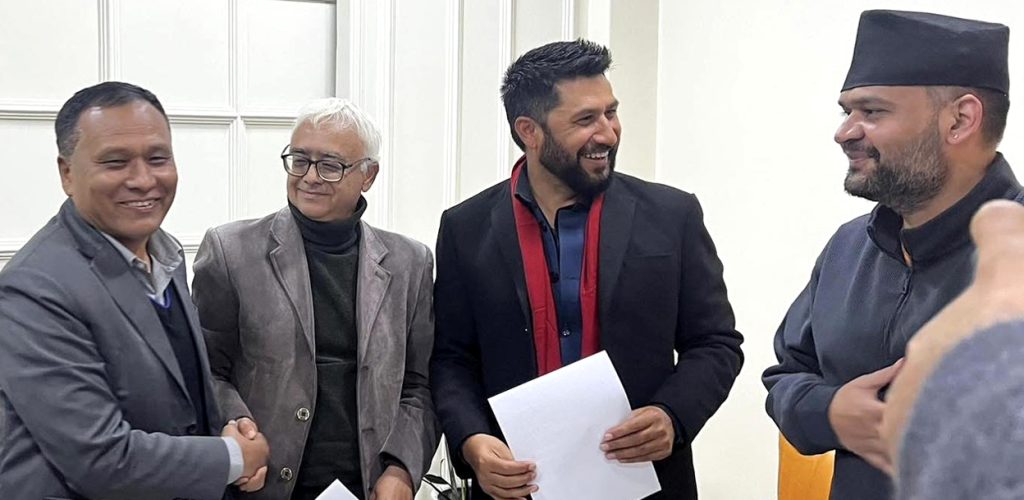
In September 2025, Nepal’s political climate suddenly appeared unstable due to the Gen-Z revolution. Following the interim government formed under Prime Minister Sushila Karki, public discourse across the country has centred on a pressing question: who will lead ‘Nepal’ next, and can they finally deliver the real changes?
As an NRN woman, I have worked with several NGOs and INGOs operating in Nepal. My perspective on the coalition of the big three, namely Balen Shah, Rabi Lamichhane, and Kul Man Ghising, is shaped by lived experiences with family-led initiatives, engagement with educational institutions, and direct exposure to the realities faced by Nepalis both at home and overseas. So, it’s time to understand the challenges that the country is facing, and with the ‘Big 3’, there is this question: could they deliver what the country is hoping for?
As an NRN woman, I have worked with several NGOs and INGOs operating in Nepal. My perspective on the so-called “Big Three”, Balen Shah, Rabi Lamichhane, and Kul Man Ghising, is shaped by lived experience through family-led initiatives, engagement with educational institutions, and direct exposure to the realities faced by Nepalis both at home and abroad.
At this moment, it is important to clearly understand the challenges the country is facing. With the emergence of the “Big Three,” a key question remains: can they deliver what the country is hoping for?
A nation caught between fatigue and fear
The Nepali diaspora, particularly Gen-Z members, remains concerned about the possible return of the government that was previously overthrown. While some politicians have expressed remorse, others continue to seek power without addressing the needs of the Nepali people.
The whole point of the Gen-Z revolution was for a ‘New Nepal’. With former politicians returning to power, will remains counter-productive and remains a widespread concern within Nepal as well as across the diaspora.
Against this backdrop of instability and public fatigue, remarkably, the three new trailblazers of change have formed a coalition between the Mayor of Kathmandu, Balen Shah; the founder of Rastriya Swantra Party, Rabi Lamichhane; and engineering pioneer and former Managing Director of Nepal Electricity Authority and currently a minister in the interim government, Kul Man Ghising. With this occurring, Nepalis across the globe are hoping for a ‘New Nepal’. All of them, even with criticism, are notoriously known for always favouring public interest over personal economic gain. It is evident in the work they have done for the Nepali people.
The emergence of Nepal’s ‘Big Three’
As mentioned above, they are known as the Icons of Nepal due to their impressive careers in public service. Balen Shah (Mayor of Kathmandu) was the first mayor to win the Kathmandu election as an Independent. As a mayor, he has accomplished tremendous work in his short time in office.
In my opinion, the main thing he improved was Nepal’s urban cleanliness and the enhancement of Kathmandu’s infrastructure. He enforced rules and reclaimed footpaths and roads that had been neglected in Kathmandu for several decades. It was commendable how, within a few years, he changed the landscape of Kathmandu.
Rabi Lamichhane (Founder of RSP & Investigative Journalist) has been at the pinnacle of journalism and politics, exposing deep-rooted corruption in Nepal that has persisted for centuries. He made the voice of ordinary Nepalis heard by using live TV without any editing, to be as transparent with the public as possible. He has always been the voice of unvoiced Nepali, especially working under inhuman working conditions around the Middle East and as a journalist, he has rescued 100s of poor Nepali workers from abroad. Lamichhane is regarded as the most famous amongst the politicians and has successfully delivered his tenure as an honest home minister of Nepal.
Kul Man Ghising has been an extraordinary figure in Nepal’s engineering fraternity, as he was the one who ended load-shedding that had impacted Nepali people for many decades. I remember my parents mentioning that seeing light for more than 5 hours in a day was a miracle, and that he ended darkness from the country during his years in office as managing director of Nepal Engineering Authority by taking bold risks with maximum outcomes. Ghising also gets the credit for bringing electricity to over 97% of the Nepali population.
With all of them allying, it powerfully highlights the vision of a ‘New Nepal’. They are widely recognised for prioritising public interest over personal gain and for resisting the exploitation of resources that have long hidden our beautiful country. Their credibility is shown in the tangible work they have delivered to the Nepali people (Balen Shah: Infrastructure development and law enforcement; Rabi Lamichhane: Exposing corruption and creating RSP; Kul Man Ghising: Ending load shedding and leading development of new Nepal. Through their hard work, they have delivered to the Nepali people and earned their trust, and in my opinion, they are the most credible path towards the ‘New Nepal’, the country we all seek religiously.
New Nepal’s meaning
But what does the ’New Nepal’ actually mean? We have seen in recent times that there are several interpretations and meanings, and everyone’s perspective is distinct due to different backgrounds.
As someone who is trying to split her time between Nepal and London, the ‘New Nepal’ looks like a Nepal where young people don’t leave just because they no longer have a choice. I no longer want to see young adults forced to flee their country of new hopes and crying at the airport, not knowing how their journey would look like and when they may next see their family. From working for my family charity, Subodh Foundation UK, and assisting my dad at ‘Society of Nepali Engineers in UK,’ I have come to realise that in recent years, Many Nepalis have only come for financial gains.
Perhaps their hearts belong to Nepal. It has been a common theme among many in the Nepali diaspora: the highlight of their years is their trip to Nepal. This phenomenon highlights how NRN’s deep love for Nepal. So, as a twenty-three-year-old girl in the airport, seeing young adults of her age leave the country for work and education, it becomes disheartening for me, as I realise it’s out of necessity, not out of want.
Did you know that, according to Nepali time, roughly 700,000 people left the country in 2023? That is an alarming figure. So, it’s a must that ‘New Nepal’ now focuses on young people’s needs, or else Nepal may risk becoming a country with no young workforce. This wouldn’t mean not having social stagnation, but also a dying economy with no workforce to sustain its future.
Secondly, and perhaps most importantly at this time, the ‘New Nepal’ must be led by individuals who prioritise the interests of the Nepali people over personal gain. For nearly two decades, the role of prime minister has changed frequently (As an outsider, it feels like the game of ‘Musical chairs’). In the context of international politics, such instability appears unusual and undermines effective governance.
This reflects a broader range of consequences stemming from Nepal being consistently treated as an inferior nation and may affect how Nepal is perceived internationally, which, in turn, would impact trade and investment.
Several politicians and ministers have compared promised Nepal with Switzerland and Singapore on multiple occasions; they persistently sold fake dreams with no follow-up. Hence, the excitement of the significant three combining forces has excited the Nepali diaspora across the world, as they have shown action on their vision, which is the most vital tool for a New Nepal.
Fundamentally, all Gen-Z want the New Nepal to have leaders who are trailblazers, who create jobs, empower the youth, and don’t make blanket statements with no follow-up.
Lessons for history and risk ahead
Throughout history, the formation of alliances has been a strategic move in political conflicts. During World War II, the concept of the “Big Three” emerged, involving the British leader Winston Churchill, Franklin D. Roosevelt of the USA, and Joseph Stalin of the USSR. This alliance was instrumental in their combined efforts to overthrow the Nazis during the 1940s.
However, like any relationship, the coalition did in fact collapse in 1945. Hence, it is vital to recognise that Nepal’s big three (Balen Shah, Rabi Lamichhane & Kul Man Ghising) could collapse in the future. Still, as of this moment, their alliance is the most essential to rebuilding public trust, extinguishing the idea of corruption, and creating a new face of Nepal.
We all want real change for Nepal, and having leaders like Balen Shah, Rabi Lamichhane, and Kul Man Ghising is a step towards anticipated changes. These leaders actually get implementation done, leading to the economic prosperity and infrastructure development prioritising Nepal desperately needs. That’s why the Nepali diaspora worldwide is thrilled about the Big Three teaming up. They’ve proven that they take action on their vision, which is crucial for building a ‘New Nepal’.
For example, Balen Shah has played a monumental role in transforming Kathmandu’s infrastructural development. A notable project he spearheaded was the revitalisation of the Tukucha River, turning a neglected area into a vibrant public space that significantly improved local livelihoods. He also implemented a rule-based urban management approach by launching the “Clean City Initiative,” which enforced stricter waste management regulations.
His collaboration with youth volunteers to clear the streets of Kathmandu led to the removal of over 1,000 tons of waste within a year. Furthermore, Shah has made it a priority to reclaim over 200 acres of public land that had been encroached upon, setting a precedent for urban management in Nepal. These innovative actions had never been undertaken before his leadership.
Additionally, Rabi Lamichhane, during his time as a deputy prime minister and home minister, initiated a significant anti-smuggling campaign called ‘Project Safe Border.’ Through this initiative, he implemented stricter border controls and introduced advanced surveillance technologies to intercept illegal goods. This policy not only reduced the decades-long smuggling operations that had plagued Nepal but also restored trust in government operations.
Furthermore, Rabi actively advocated for the rights of Nepali citizens from less elite backgrounds, becoming a vocal representative for their issues. His time abroad as a non-resident Nepali has given him a unique perspective, allowing him to deeply understand and empathise with the diaspora’s unwavering love for their homeland. Lamichhane has successfully delivered this supreme leadership quality by successfully establishing his lead political party (RSP) as the 4th National party within a few years.
Last but not least, Kul Man Ghising has solved Nepal’s load shedding, which had been a nightmare. He implemented several strategic measures to address the issue, including increasing the capacity of existing power plants, importing electricity from India during peak demand, and optimising electricity supply and demand. He also focused on improving the efficiency of the power distribution network. The fact that he spent all his holiday during Tihar operating and understanding electricity shows his dedication to his goal of making Nepal prosper.
Everything I have mentioned, all their achievements, is a testament to the proactive and results-driven approach of these leaders. They have consistently reached out to the Nepali people, understanding and addressing their needs. Unlike past leaders, whose strategies often revolved around bureaucracy and stagnation, Balen Shah, Rabi Lamichhane, and Kul Man Ghising have adopted innovative measures and decisive actions.
This distinction and dedication explain why Nepalis around the world are excited for a ‘New Nepal’. While these leaders have effectively addressed the pressing needs of the average Nepali citizen, many past leaders struggled to align their policies with the people’s aspirations, often failing to meet the fundamental requirements of progress and development.
What remains to be discussed and seen is whether the big three will uphold the expectations the Nepali diaspora has of them. Having three prominent personalities can be incredible, especially Balen, Rabi, and Kul Man, working together, as they each hold significant roles and have different skill sets that can create a prosperous Nepal. Balen Shah, as the Mayor of Kathmandu, brings his visionary leadership to urban development.
Rabi Lamichhane, a notable media personality and a fresh political figure, offers a powerful voice for change. Kulman Ghising, renowned for his tenure as a successful and crucial revolutioniser for Nepal’s energy sector. Still, if there is a dis-alignment, it can repeat what has occurred in Nepal previously: the oscillation of the prime minister, which means the idea of New Nepal would become extinct. However, there is a strong reason for optimism.
I wholeheartedly believe that history will not repeat itself and that the Nepali diaspora will no longer see musical chairs in the prime minister’s position, as the new upcoming politicians and the Big Three have demonstrated their deep understanding of the Nepali people’s needs and their commitment to public service.
I strongly believe and duly hope that the new year 2026 will bring new sunshine to new and prosperous Nepal.