
In the long story of our land, daughters like Bhrikuti and Sita were our first true messengers of peace. Then they crossed mountains and borders; they did not go as silent objects; they carried the heart of Nepal with them, building bridges of culture and spirit that lasted for centuries.
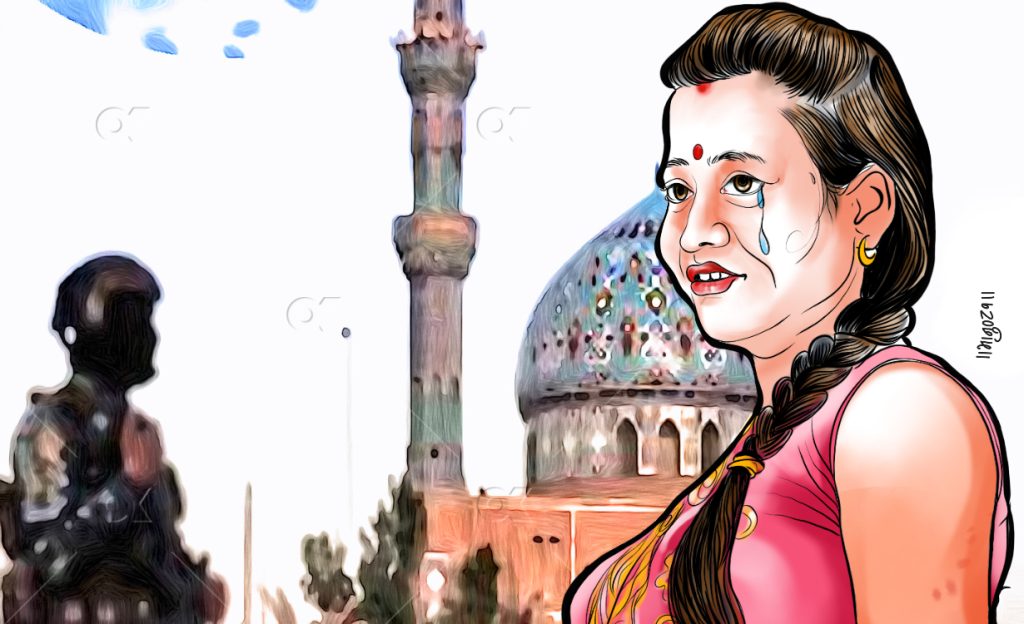
They were the threads that tied us to the world with dignity and love. But today, that warmth has turned into something cold and hard. We are now packing up our “living heritage”, the very soul of our forests and sending it away to the scorching sands of the desert. When these gentle creatures weep, their tears are ignored by a government that chooses to see only a biological reaction rather than a
broken heart.
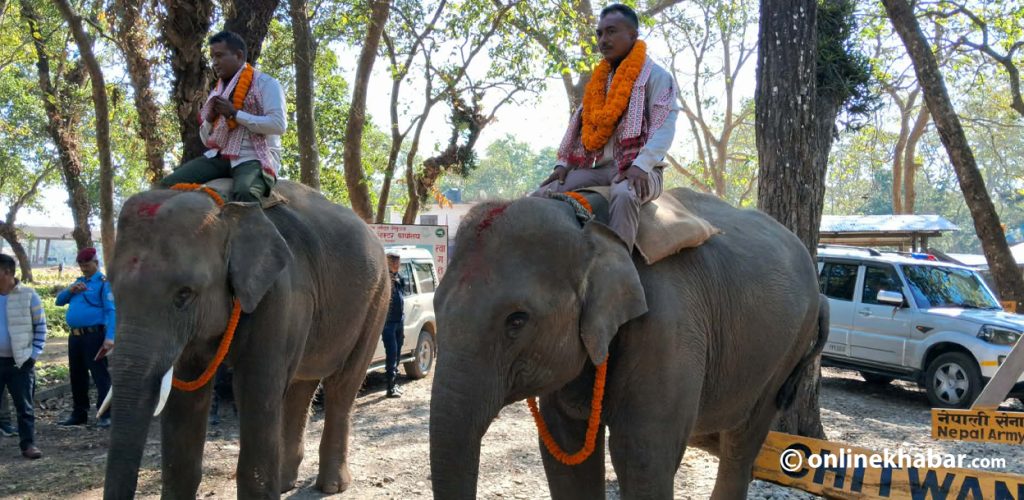
On the night of December 17, 2025, this heavy change felt final. Two young souls, Rudrakali and Khagendra Prasad, born in the lush, green heart of Chitwan, landed in the heat of Doha. They travelled in the dark belly of a giant metal plane, carrying a weight of sadness far heavier than any cargo manifest could ever measure. While the state holds ceremonies to celebrate this “Wildlife Diplomacy,” those who watched the calves being forced into steel crates felt a deep ache. To the people, this did not look like a gift of friendship. It felt like a mechanical Kanyadan.
The tragedy of Rudrakali and Khagendra Prasad is written in their biology. An elephant’s brain is a sanctuary of memory, containing a hippocampus, the part of the brain that processes emotions and long-term memory, so developed that it rivals the human capacity for grief.
When these calves were moved, they did not just leave a forest; they left a “sensory home.” While we are told they will adapt to the climate-controlled enclosures of Doha, no machine can replicate the deep, vibrating “social rumbles” of a matriarchal herd or the specific scent of a Chitwan monsoon. For an animal that remembers for decades, displacement is not a change of scenery; it is a lifelong exile.
On paper, Nepal’s promise to protect its wildlife is strong and unbreakable. The National Parks and Wildlife Conservation Act (1973) and the CITES Act (2017) list the Asian Elephant as a “Schedule I” species. This means they are supposed to have the highest level of legal protection possible. Under these laws, the state is not the “owner” of these living beings; it is their custodian, a guardian trusted to keep them safe. However, behind these strong words lies a hidden weakness. Animal welfare experts have long pointed out a legal trapdoor in the Fifth Amendment of the Wildlife Rules.
This small piece of fine print allows the government to bypass the very protections meant to keep elephants in their natural homes. The most troubling part is how these choices are made. Decisions to send elephants abroad often happen behind the closed doors of the Council of Ministers, far away from public discussion or expert debate.
When a gift like this is suddenly announced during a fancy state visit, it leaves us with a haunting question: Is this really about conservation, or are these living, breathing beings just a form of diplomatic currency used to buy favours for humans?
There is a biting irony in sending these calves to Qatar. Every day, the bodies of young Nepali migrant workers return from the Gulf in boxes; on December 17, we sent two of our most sacred animals to the same destination, also in boxes.
One could view Rudrakali and Khagendra Prasad as Nepal’s newest labourers. Just as millions of Nepalis go abroad to support the family back home, these elephants appear to have been sent to support the family of the state. While the public is shown a gift of friendship, we must wonder if such gestures are silently exchanged for invisible favours, the kind of quiet understandings that happen in the halls of power but are never written on the official gift tag.
If a gift is used to settle an unspoken debt, is it still a gift, or is it a transaction? In true friendship, a gift is a spontaneous act of love. We have sent away two souls who will spend their long lives remembering a home that chose to trade them away. If diplomacy is the art of the yes, then sovereignty is the courage of the no.
True diplomacy does not require the surrender of one’s heritage to maintain an alliance. It would mean standing before a powerful partner and asserting, ‘Our fifty-year bond is invaluable, but our wildlife is not a diplomatic asset. We will give you our expertise and our partnership, but we will not give you our souls.’
A gift that is demanded is no gift at all, and a nation that cannot protect its most vulnerable has lost its compass. Scaling up our diplomacy means moving away from the symbolic sacrifice of animals and toward a relationship built on skills and professional exchange. We may take comfort in the fact that Rudrakali and Khagendra Prasad will receive high-end care in Qatar.
But we must reflect on why such a traditional, heartbreaking method was necessary at all. If our diplomatic foundations were strong enough, we would not need to use the tears of a calf to cement a treaty. Let this be the final Kanyadan of its kind. Let our future diplomacy be written in ink, not in the displacement of those who cannot speak for themselves, but who will never, ever forget.