
Kathmandu
The Nepal Army has been approved for deployment for the upcoming House of Representatives election scheduled for 21 Falgun (March 5).
President Ramchandra Paudel approved the cabinet’s recommendation on 11 Mangsir (November 27), clearing the way for army mobilization. Prior to this, several preparatory steps had already been taken for election security.
On 9 Asoj (September 25), the Central Security Committee formed a task force under the coordination of Home Ministry joint-secretary Anand Kafle to draft the Integrated Election Security Plan 2082 BS.
The task force included representatives from all security agencies. The plan was approved by the Central Security Committee, chaired by Home Minister Om Prakash Aryal, on 30 Kartik (November 16). The plan outlines how security agencies will be mobilized during the election period. The meeting had also decided to propose army mobilization, which was then sent to the National Security Council. On 4 Mangsir (November 20), the Council’s 41st meeting held in Singha Durbar endorsed the proposal and recommended army deployment to the cabinet.
Following the Council’s recommendation, the cabinet forwarded the proposal to the President’s Office for approval. Once approved, the army deployment process is now officially open.
This has raised questions about when and how the Nepal Army will be mobilized.
When will the army be deployed?
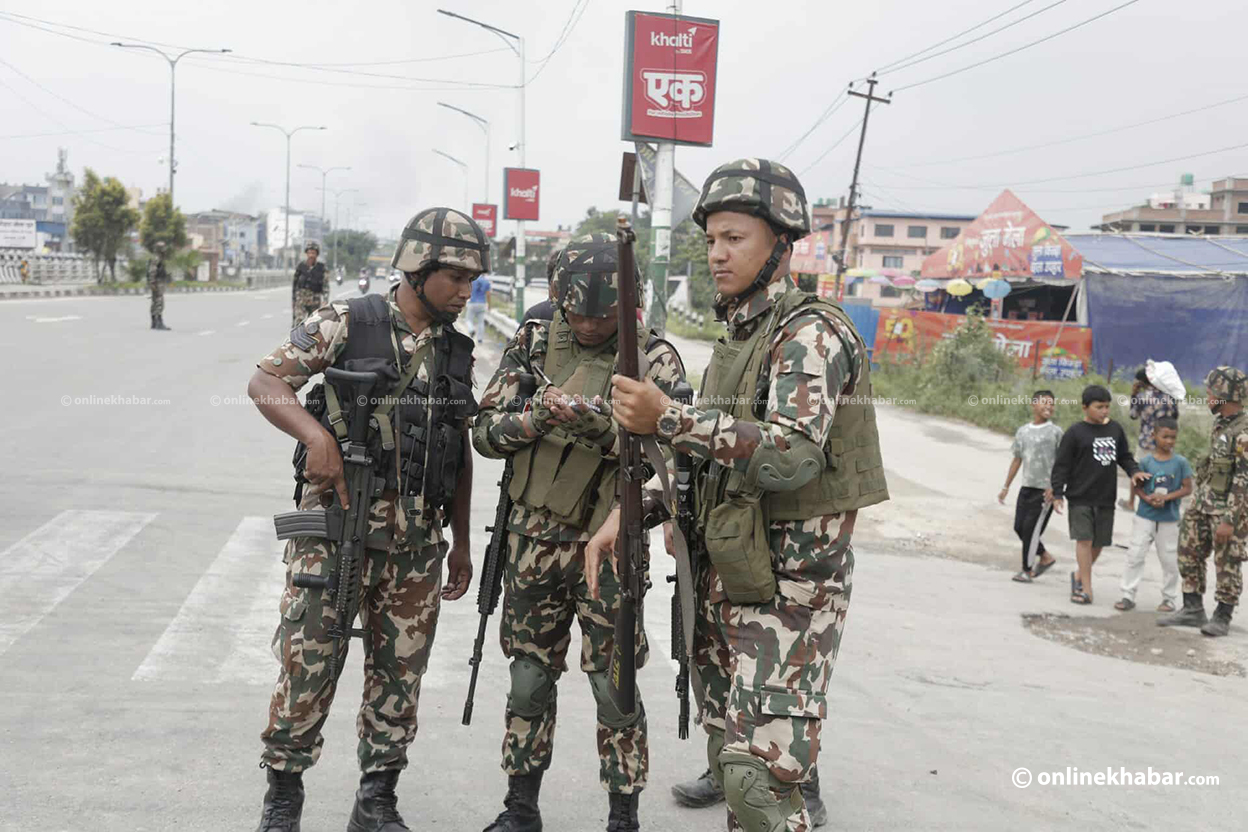
Compared to previous elections, the security threat is assessed to be higher this time, leading to early approval of army deployment nearly three months ahead of the election.
Factors contributing to increased security concerns include:
– The situation following the Gen-Z movement,
– The disappearance of large quantities of weapons and ammunition from security agencies,
– A significant number of prisoners and detainees escaping from jails and custody.
Considering these issues, the President’s Office approved army deployment earlier than in past elections.
Though deployment will begin well before election day, an exact start date has not been confirmed yet. Nepal Army spokesperson and Assistant Rathi Rajaram Basnet said, “The exact date for army deployment has not been finalized. Discussions are ongoing.”
However, internal preparations suggest that army patrols may begin from the first week of Poush (mid-December). Preparations have been underway for about two months.
How will the army be deployed?
The army plans to mobilize in three phases.
Spokesperson Basnet confirmed this, saying, “Security challenges have been categorized into three phases, and the army will be deployed accordingly.”
The three phases are:
- Pre-election period
- Election period
- Post-election period
During the pre-election phase, the army will conduct patrols in areas classified as highly sensitive, sensitive and moderately sensitive. The objective is to create a peaceful election environment and reassure the public.
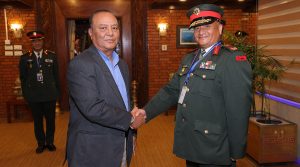
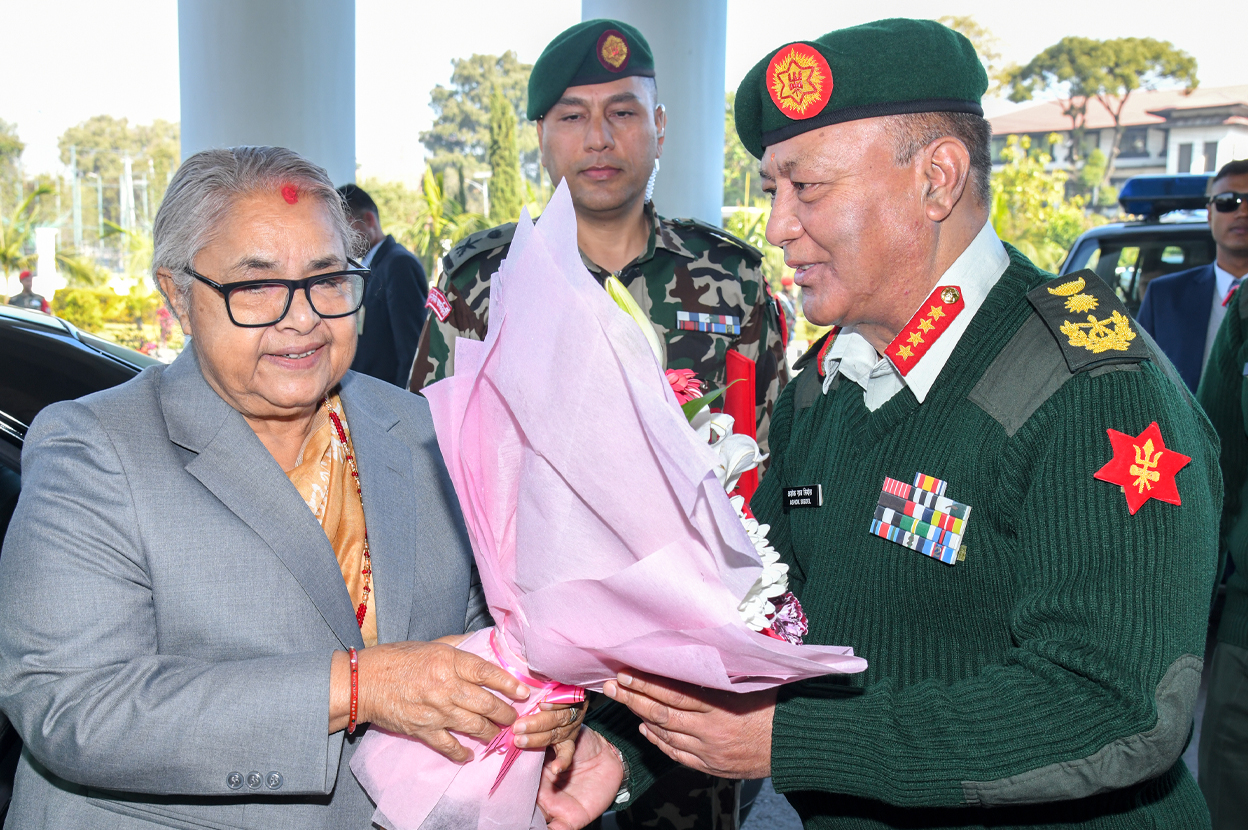
The day after approval, Prime Minister Sushila Karki visited the Army Headquarters and instructed army personnel to ensure that “not a single drop of blood is shed in the upcoming election.”
During the election period, the army will remain in the outer security cordon at some distance from polling centers. If any incident occurs that cannot be controlled by the Nepal Police or Armed Police Force, the outer cordon of army personnel will be activated.
After voting, the army will also be involved in securing the collection and transportation of ballot boxes, and guarding vote-counting centers.
Earlier, the army had formed an internal task force under the Assistant Rathi to prepare for election security, with participation from Nepal Police, Armed Police Force and the National Investigation Department.
On 16 Kartik (November 2), Chief of Army Staff Ashokraj Sigdel held consultations on election security with chiefs of Nepal Police, Armed Police Force and the National Investigation Department, reviewing the post–Gen-Z situation and security challenges.
How many army personnel will be deployed?
A proposal has been made to recruit more than 132,000 temporary police personnel for election security, although no final decision has been made.
In addition, Nepal Police, Armed Police Force, the National Investigation Department and the Nepal Army will all be mobilized for election security.
Currently, there are: 79,000 Nepal Police; 37,000 Armed Police; 3,000 intelligence personnel and around 100,000 Nepal Army personnel.
The exact number of army personnel to be mobilized is yet to be decided. The army may reduce personnel from offices, VIP security posts, important institutions and international missions to allocate the required manpower. The number of police and armed police to be deployed also remains undecided.