
Kathmandu, January 26
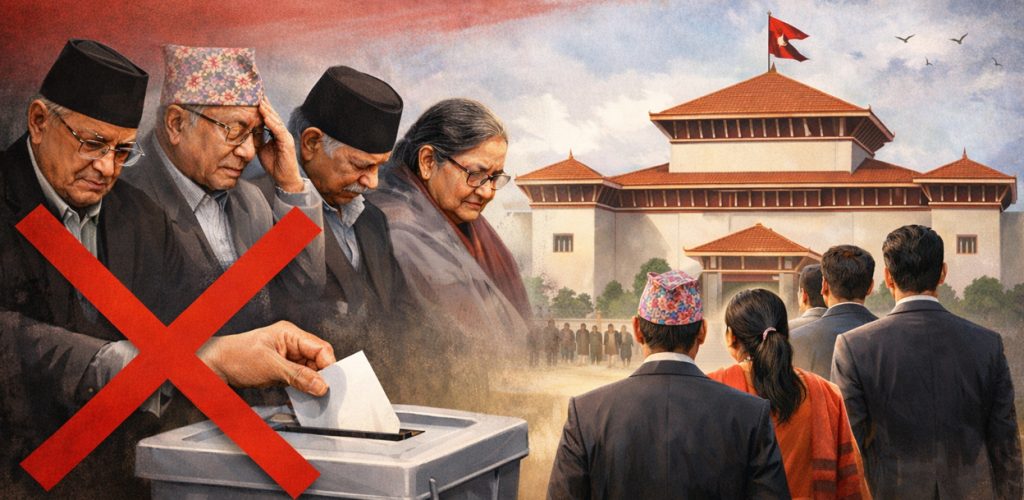
Nearly two-thirds of the current members of the House of Representatives (HoR) will not be seen in the new parliament to be formed after the Falgun 21 election. Of the lawmakers who served in the House dissolved last Bhadra, around 170 are not even in the race this time.
In some constituencies, outgoing lawmakers are competing against one another. Even if incumbent candidates manage to win in as many seats as possible, it is almost certain that more than two-thirds of the members, both from the direct and proportional systems, in the next House will be new faces.
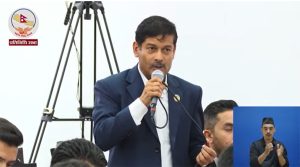
“Yes, looking at the candidates and their backgrounds, it is clear that around two-thirds of those elected will be new,” says former Federal Parliament Secretary-General Manohar Prasad Bhattarai. “Even among those contesting now, not all incumbents will win. Many will exit politics through the election itself, which could further increase the number of new lawmakers.”
How new faces will enter
Of the 165 incumbent lawmakers elected through the direct system, 70 are not candidates this time. Among the 110 proportional representation lawmakers, at most only 10 are in the race. There is no guarantee that nearly all 100 incumbents elected in 2079 BS who are contesting again will win. Eight former lawmakers are competing against one another.
Several senior leaders from major parties are not contesting. In the Nepali Congress, former party president Sher Bahadur Deuba, former vice-president Dhanraj Gurung, and current vice-president Bishwo Prakash Sharma are not in the race. Leaders, including Prakash Man Singh and Arzu Rana, are also not contesting. In the UML, former deputy general secretary Top Bahadur Rayamajhi, Yogesh Bhattarai, and Bidya Bhattarai are out of the race.
In Jumla, Jhapa–2, Sarlahi–4, and Dhanusha–3, multiple incumbent lawmakers are competing against one another, meaning only one from each constituency will be elected. At least six incumbents from these areas will not return to the House.
In Jhapa–2, former Speaker Devraj Ghimire, Congress proportional lawmaker Sarita Prasain, and former Deputy Speaker Indira Rana Magar are contesting; two of them will not make it to the House. In Sarlahi–4, only one of the Congress leaders, Gagan Thapa and the Rastriya Swatantra Party (RSP) candidate, Amresh Kumar Singh, will become a lawmaker.
In Dhanusha–3, UML incumbent Juli Kumari Mahato, Congress proportional lawmaker Bimalendra Nidhi, and RSP incumbent Manish Jha are competing; only one will return after Falgun 21. In Jumla, at least one of RPP’s Gyanendra Bahadur Shahi and RSP’s Binita Kathayat will fail to enter the House.
How many from proportional representation?
None of the UML lawmakers elected through proportional representation last time are on either the direct or proportional lists this time. However, those elected before 2079 BS have sought safety on proportional lists.
Ram Bahadur Thapa, who was not in the House after the new constitution, is on the proportional list, while Padma Aryal, elected in 2074 BS, also appears on the list. UML, Congress, and RSP did not repeat their previous proportional lists.
From Congress, only Dr Prakash Sharan Mahat and Bimalendra Nidhi from the previous proportional list are in direct contests. In the Maoist Centre and other allied groups forming the NCP, the proportional lists also feature new faces.
From the RSP, six lawmakers previously elected through proportional representation are now contesting direct seats, including Dol Prasad Aryal (Kathmandu–9), Nisha Dangi (Jhapa–1), Binita Kathayat (Jumla), Indira Rana Magar (Jhapa–2), and Manish Jha (Dhanusha–3). Former RSP member Santosh Pariyar is on the proportional list of the Progressive Democratic Party, while Sumana Shrestha is not contesting this time.
From Bhattarai to Sharma
In Taplejung, UML has fielded Kshitij Thebe in place of former lawmaker Yogesh Bhattarai. In Panchthar, Aindra Sundar Nembang replaces Basanta Nembang. In Ilam–1, Kaji Man Kagate has been nominated instead of former UML lawmaker Mahesh Basnet.
In Jhapa–1, Congress has nominated Keshav Raj Pandey in place of former vice-president Bishwo Prakash Sharma. In the remaining four Jhapa constituencies, previously elected candidates are contesting again.
In Sankhuwasabha, Tehrathum, and Bhojpur, Congress and the Maoist Centre did not field their previously elected lawmakers. Congress nominated Dipan Kumar Shrestha instead of Dipak Khadka in Sankhuwasabha, Santosh Subba instead of Sita Gurung in Tehrathum, and the unified NCP nominated Ajambar Rai instead of Sudan Kirati in Bhojpur.
In Morang, two incumbent lawmakers are not contesting. Congress nominated Khadga Bahadur Phago instead of Dig Bahadur Limbu in Morang–1, while UML nominated Dilip Kumar Agrawal instead of Rishikesh Pokharel in Morang–2.
In Sunsari–1, the Janata Samajwadi Party did not field a candidate to replace Ashok Rai, while in Sunsari–2 UML nominated Sujan Lama instead of Bhim Acharya.
In Solukhumbu, Khotang, and Okhaldhunga, previously elected lawmakers are not contesting. UML nominated Kalpana Rai instead of Manbir Rai in Solukhumbu, while Hari Roka received the ticket in place of the Maoist Centre’s Ram Kumar Rai. In Okhaldhunga, Congress nominated Kumar Luintel instead of Ram Hari Khatiwada.
In Udayapur–1, Congress nominated Bidur Basnet instead of Dr Narayan Khadka. In Saptari–1, Shyam Sundar Sardar is contesting in place of former JSP lawmaker Naval Kishor Sah Sudi.
Party switches and Upper House moves
In Siraha, all four constituencies have incumbent lawmakers contesting, but two have changed constituencies or parties. In Siraha–2, Raj Kishor Yadav has moved to Siraha–4, while Birendra Prasad Mahato is contesting from Siraha–4 under the Janamat Party.
In Dolakha, Ramechhap, and Sindhuli–1, previously elected lawmakers are not contesting. In Sindhuli–2, only NCP’s Lekhnath Dahal is repeating.
In Mahottari, three of four constituencies have former lawmakers contesting. In Mahottari–3, Mahanta Thakur is set to become a National Assembly member, ensuring a new face in the House.
One-third new in the valley
In Bagmati Province’s Rasuwa, Dhading, and Nuwakot, incumbents are contesting, except in Dhading–2 where Congress nominated Ramesh Prasad Dhamala instead of Ram Nath Adhikari. In Nuwakot–2, Congress lawmaker Arjun Nar Singh KC is on the proportional list.
Of the 15 constituencies in the Kathmandu Valley, at least five will elect new lawmakers as incumbents are not contesting. Congress nominated Prabal Thapa instead of Prakash Man Singh in Kathmandu–1. In Kathmandu–2, RSP lawmaker Sobita Gautam is contesting from Chitwan–3.
Congress has fielded new candidates in Kathmandu–3, Kathmandu–10, and Bhaktapur–2. UML nominated Ajay Kranti Shakya instead of Krishna Gopal Shrestha in Kathmandu–9. Lalitpur’s three constituencies still have incumbents contesting.
Both constituencies in Kavre will see new lawmakers, as Surya Man Dong and Gokul Baskota are not contesting. In Sindhupalchok–2, Congress nominated Banshalal Tamang instead of Mohan Basnet.
From Kaski to Kapilvastu
In Kaski, UML did not re-nominate incumbents in two constituencies, fielding Bain Bahadur Chhetri in Kaski–1 and Rashmi Acharya in Kaski–2. In Tanahun, both incumbents are contesting again.
In Syangja, Congress has fielded Bharatraj Dhakal and Bhagwat Prakash Mall as new candidates. In Arghakhanchi, UML nominated Pitambar Bhusal after Top Bahadur Rayamajhi was jailed in a fake refugee case.
In Rupandehi, new faces are almost certain in three of five constituencies. UML nominated Dadhiram Neupane instead of Chhabilal Bishwakarma in Rupandehi–1, while Bishnu Poudel is contesting in Constituency 2.
Several incumbents across Kapilvastu, Nawalparasi, and other districts are not contesting, ensuring new representation.
Impact of new faces
Former Secretary-General Bhattarai says that even with a large number of new lawmakers, parliamentary procedures can be learned quickly through practice and study.
“Concerns that parliamentary practice will weaken with new lawmakers are nothing new,” he says. “Past experience shows that those with strong oratory skills and political grounding adapt quickly. Active lawmakers can become effective within four to six months.”
He adds that an influx of new lawmakers could help curb parliamentary distortions and strengthen discipline, provided party leadership enforces accountability and refrains from protecting those involved in criminal activities.
“Publicly questioning old lawmakers exiting and new ones entering can raise hopes for controlling parliamentary malpractice,” he says. “Whether this becomes an opportunity for political cleansing depends largely on party leadership and how responsibly they guide their representatives.”