
Livestock, poultry, and fisheries form the backbone of Nepal’s food security, nutrition, and rural economy. While agriculture contributes 24.09% to the national Gross Domestic Product (GDP), the livestock sub-sector plays a decisive role in employment generation, income growth, and nutritional security. According to the Ministry of Agriculture and Livestock Development (FY 2080/81), Koshi Province alone contributes 19.17% of national milk production, 17% of total meat, 13% of poultry meat, and 39.26% of fish production, underscoring its strategic importance in Nepal’s agri-food system.
Koshi Province accounts for 22% of Nepal’s livestock population and 16% of poultry numbers. Over the past decade, milk, meat, egg, and fish production have increased steadily. As per the Trade and Export Promotion Centre (FY 2081/82 BS), the province exports Chhurpi (traditional hard cheese) worth nearly Rs 4 billion annually, with exports during the first four months of the current fiscal year (2082/83 BS) already surpassing Rs 1.35 billion.
This growth reflects strong collaboration among provincial government agencies, private enterprises, and cooperatives, resulting in significant industrial expansion. The recent establishment of large-scale powdered milk production plants has further initiated a process of import substitution, strengthening domestic value chains.
With the ongoing Foot-and-Mouth Disease (FMD) Control Program, modernisation of livestock farming, productivity enhancement, and growing international market access, ensuring superior quality of milk and dairy products has become both a necessity and a strategic priority. At the heart of this transformation lies systematic feed testing and quality management, the most critical yet often neglected component of livestock production.
The quantity-quality paradox
While production volumes are rising, the decisive link connecting quantity with quality remains feed testing and nutritional management. The principle that “safe food begins at the farm, not in the marketplace” has never been more relevant.
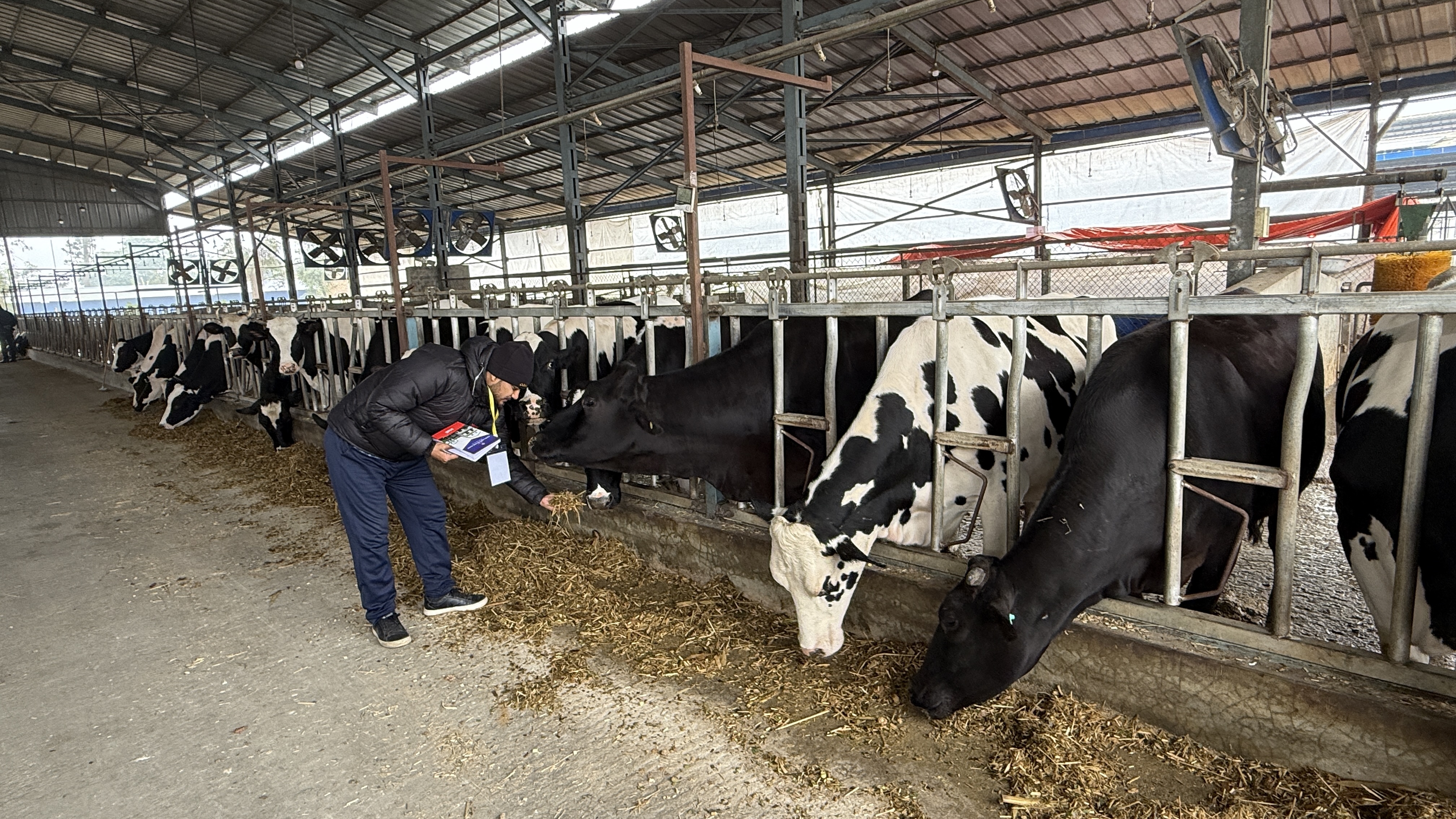
In livestock, poultry, and fisheries enterprises, nearly 70% of total production costs are spent on feed. Despite this heavy investment, the absence of scientific feed analysis and quality assurance systems prevents farmers from achieving optimal productivity and profitability. Animals require precisely balanced nutrients, energy, protein, vitamins, and minerals based on age, species, and physiological stage. Substandard, adulterated, or contaminated feed leads to reduced milk yield, inferior meat quality, poor growth performance, reproductive inefficiencies, and increased disease vulnerability. Moreover, contaminated feed introduces mycotoxins, heavy metals, and chemical residues into the food chain, directly threatening public health.
Nepal’s organised dairy development began in 1952 with Swiss-supported yak cheese production in Langtang. Subsequent institutional developments, including the establishment of the Dairy Development Corporation (1969), the National Dairy Development Board (1992), and the National Dairy Development Policy 2021, have significantly expanded the sector. Today, farmers benefit from milk price subsidies, concessional credit, livestock insurance, and cooperative-based support services. However, feed quality regulation and laboratory-based testing infrastructure remain disproportionately underdeveloped, undermining these substantial public investments.
Food safety, export competitiveness, and global market demands
Koshi Province’s annual Chhurpi exports worth nearly NPR 4 billion represent a growing export success story. Yet, international markets, particularly in developed economies, impose strict food safety and traceability standards, allowing zero tolerance for contamination. Feed-borne hazards, especially aflatoxins and chemical residues, easily transfer into milk, meat, and dairy products, jeopardising export access and national credibility.
As Nepal’s leading Chhurpi production and export hub, Koshi Province stands at a strategic crossroads. The ongoing FMD control zoning initiative offers unprecedented opportunities to expand international market access. However, without robust feed quality assurance systems, milk safety, disease control efforts, and long-term export sustainability remain at serious risk.
Therefore, institutionalised testing and monitoring of livestock feed, fodder, silage, and concentrate mixtures are no longer optional. They are essential to ensure safe milk production, strengthen disease-free zoning, and comply with international sanitary and phytosanitary standards, thereby safeguarding Nepal’s export competitiveness.
Unless livestock feed is safe, nutritionally balanced, and scientifically validated, the quality of milk, meat, and export-oriented dairy products such as Chhurpi cannot be guaranteed. Laboratory-based feed testing is not merely a technical requirement; it is the foundation of profitable farming, public health protection, and export sustainability.
The combined efforts of federal and provincial governments, livestock development agencies, cooperatives, financial institutions, and development partners have created strong production incentives. Yet, without parallel investments in feed testing laboratories, regulatory frameworks, and farmer awareness, these initiatives will not achieve their full potential.
For high-value export commodities such as Chhurpi, ghee, and specialised dairy products, animal health and feed quality management are decisive success factors. Consequently, systematic feed quality testing and nutritional management must be elevated to a national priority if Nepal is to secure a sustainable, competitive, and export-driven livestock sector.