

Photos: Chandra Bahadur Ale/Kamal Prasai
Rasuwa, September 3
For eight days, they waited and watched the roads, hoping their missing relatives would return. Whenever they heard that search teams had reached a particular area, a glimmer of hope emerged—perhaps their loved ones had been found.
But seven nights passed without any news. Now, many flood victims from Paharebesi in Ward No. 5 of Uttargaya Rural Municipality have begun to give up hope. They are preparing to make a decision that is difficult to accept: to perform funeral rites for their missing relatives, accepting that they are unlikely to return.
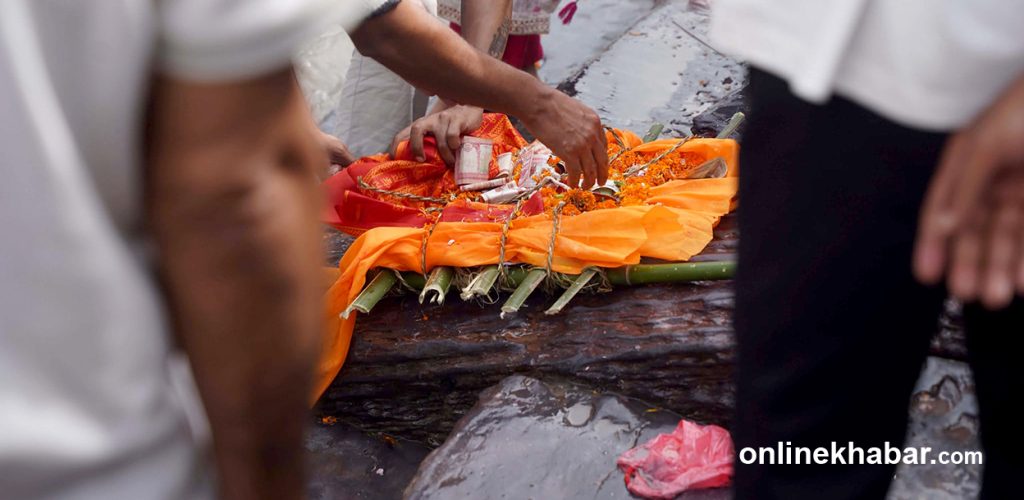
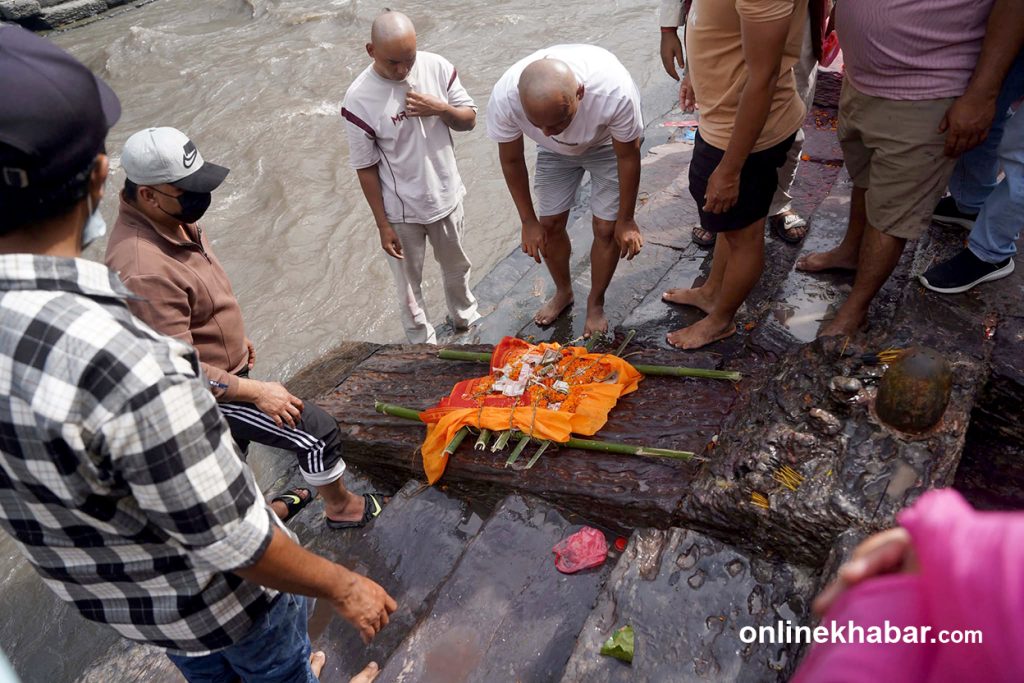
According to Ramchandra Thapa Magar of Paharebesi, many bodies have been recovered along the banks of the Koshi River. However, residents of Paharebesi were able to identify only one of them, and the body has already been cremated. There is no information about where the floods may have carried the others.
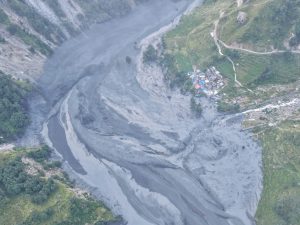
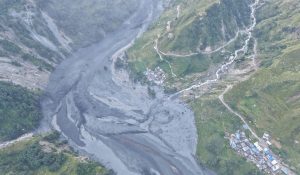
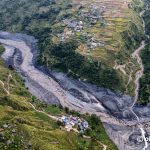
“Today marks eight days. After discussions among neighbours and community members, we have concluded that those who remain out of contact are unlikely to return, and we have begun preparations for the funeral rites,” Ramchandra told Onlinekhabar. The floods swept away 49 houses in Paharebesi, leaving only the ruins of some homes behind. More than 400 people are estimated to have lived in the village.
However, there is no confirmed figure on how many people were caught in the floods. According to information collected by locals, 54 people from Paharebesi alone are missing. Residents estimate that the number could exceed 70 when people from other places are included.
Even performing mourning rites is difficult
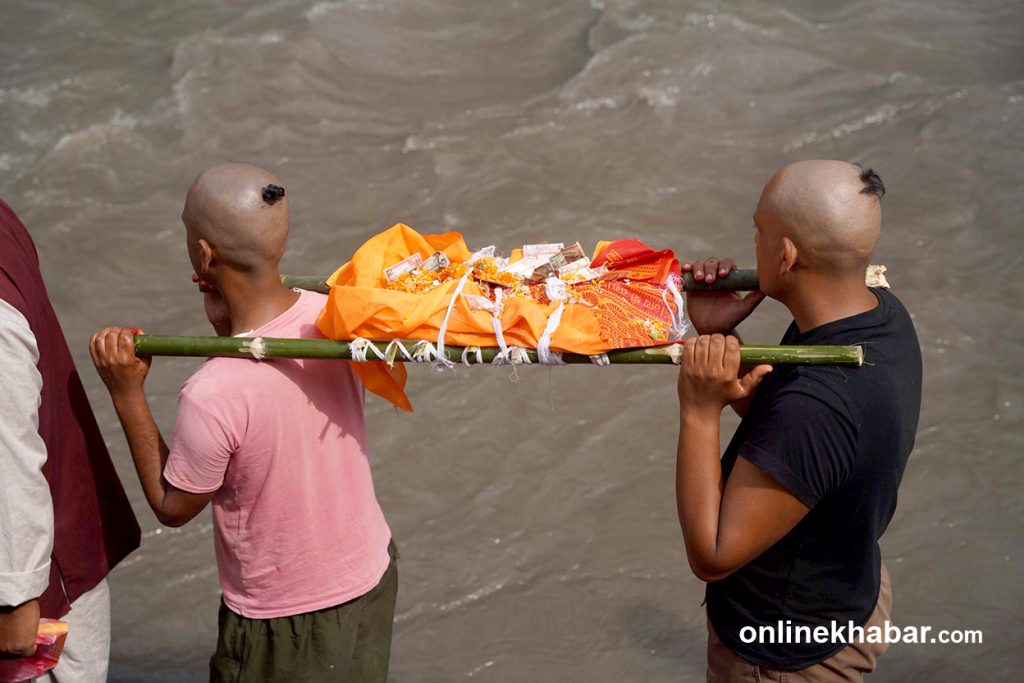
According to Uttargaya Rural Municipality Chairperson Madhav Prasad Aryal, families who have accepted that their missing relatives will not return have begun the process of performing the final rites. “Those who believe their relatives will no longer be found have started the necessary procedures,” he said.
However, the process has not been easy. First, there is a shortage of space in the village to perform the death rituals. Second, there is a shortage of priests to conduct the funeral rites. “Almost nothing remains of the old settlement. It is not possible for everyone to stay together while observing the mourning rituals,” said Deputy Chairperson Chameli Gurung. “Since there is no suitable place, some people have gone to stay with relatives to perform the rites, while others have travelled to Kathmandu.”
Displaced residents of Paharebesi have been divided between two camps, one in Majhgaun and another in Kuwapani. Around 50 people are staying at the lower camp, while about 25 are staying in Kuwapani. Under such circumstances, it has not been possible to provide separate spaces for families performing mourning rituals. The problem is even more serious for families that have lost several members.
On the eighth day, they are preparing to make symbolic effigies from kusha grass and perform the final rites, begin the mourning period, and continue other traditional funeral rituals. As all rituals must be completed within 13 days according to tradition, they say they can no longer afford to wait.
Therefore, they have concluded that the community must move forward with the rituals even if the bodies are never recovered. Families that have lost several members must perform separate mourning rites for each of them. Those observing the rituals require separate spaces, and because tradition requires them to wear white clothing and remain apart, it is not possible to accommodate many people performing the rites in a single room.
As a result, more than 20 families have left for Kathmandu and other places. When the Onlinekhabar team visited on Wednesday, around 20 more people were preparing to travel to Kathmandu. Following the deaths and disappearances of a large number of people in the floods and landslides, finding priests to conduct funeral rituals has also become difficult. Priests who previously performed such ceremonies are themselves mourning losses.
Entire families lost
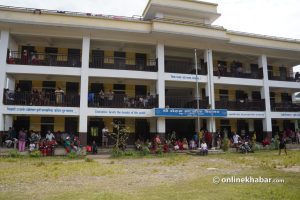
People are missing from almost every household in Paharebesi. Some of the families who survived the floods are now staying in Majhgaun of Uttargaya Rural Municipality–5, where a school has been turned into a temporary camp. The camp is overcrowded. Some people sit on the floor, while others lean against the walls.
New mothers, sick people, children and elderly people are all staying there. They share the same concern: Where will they go now, and what will they do? The floods swept away their homes and, along with them, many of their loved ones. Some have lost their parents. Others have lost their husbands. Some have lost their children. In some cases, entire families have disappeared.
Two children from Paharebesi have lost their entire families and are now under the care of relatives. In one family, 10 members remain missing, leaving behind only one boy. In another family of four, three were swept away by the floods, leaving only a young girl alive. “Some are staying with relatives, while others have gone to Kathmandu. In some families, only small children remain. The floods swept away both their fathers and mothers,” Ramchandra said.
Such heartbreaking stories are not limited to Paharebesi. Similar tragedies can be found in households across Nuwakot and Rasuwa. “Two children have lost contact with their entire families,” Ramchandra said. “They have now been taken in by relatives.”