
Kathmandu, August 31
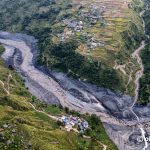
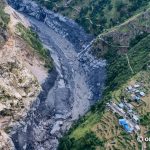
The government has declared 15 local units affected by the devastating floods of August 26 as disaster crisis-hit areas. Four of the five local units in Rasuwa are on the list.
Uttargaya, Gosainkunda, Kalika and Amachhodingmo rural municipalities have been designated as disaster crisis-hit areas. Among them, Uttargaya is the second-worst affected local unit in Rasuwa after Gosainkunda.
However, an accurate figure for those killed or missing in Uttargaya has yet to be established.
According to the 2021 census, Uttargaya has a total population of 8,555. No reliable figures have yet emerged on the number of local residents affected by the flood, or on workers employed at hydropower projects, labourers who had travelled to the area for work, and pilgrims who may have been caught in the disaster.
Elected representatives and chief administrative officers have been repeatedly urging the federal government to step up rescue and relief efforts.
According to Uttargaya Rural Municipality Chief Administrative Officer Jayaram Upreti, authorities have not yet been able to establish the condition of residents in Ward No. 1.
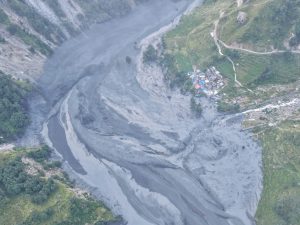
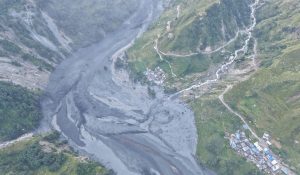
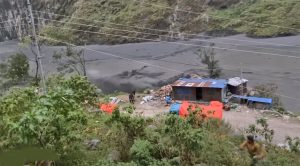
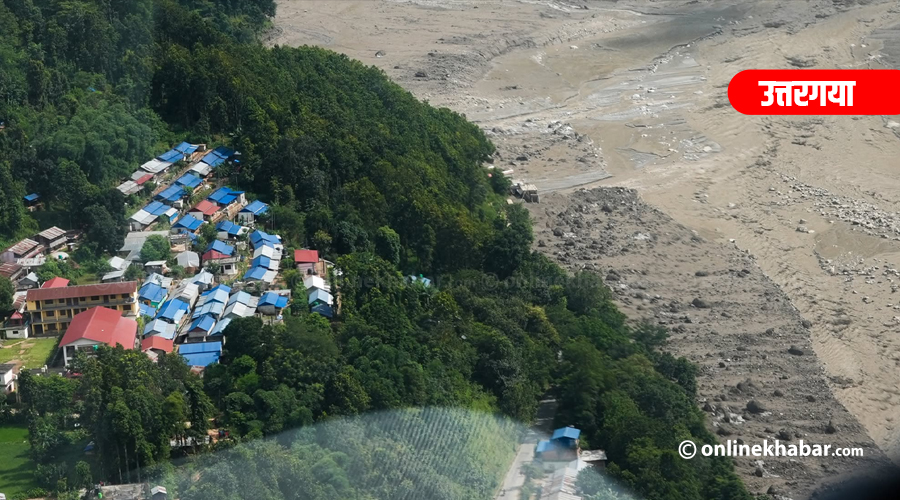
The area, known as the Tiru area, is still waiting for rescue. Tiru lies across the Trishuli River and at a higher elevation.
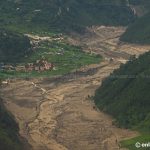
Major settlements in Uttargaya, including Mailung, Salletar, Simle, Pahirebesi, Betrawati, Kaidletar and Naubise, have also suffered damage.
Upreti said information had been received that around 150 flood victims were still waiting to be rescued.
“There is no phone contact there. With no electricity, people cannot charge their phones,” he said.
With all means of communication cut off, authorities have been unable to establish the exact number of casualties or determine how many people remain alive and safe.
Children used to trace missing parents
According to the 2021 census, Ward No. 1 of Uttargaya has a population of 1,176. Authorities have not been able to determine what happened to those who were at home when the flood struck.
“Since there are settlements where nothing remains and there is no communication, we have not been able to establish the number of missing people,” Upreti said.
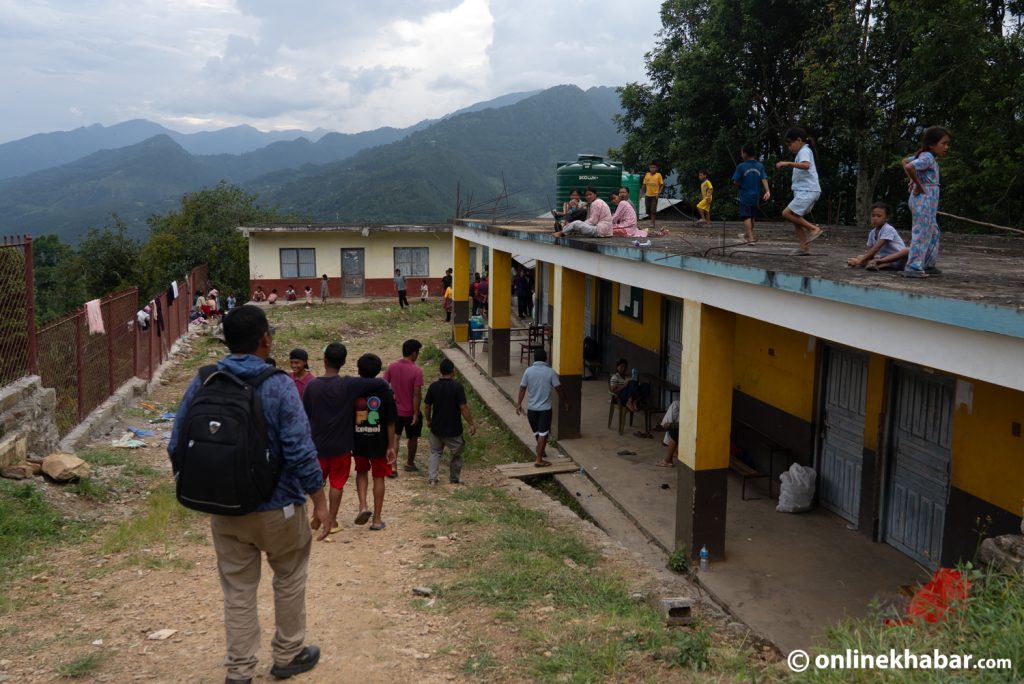
Authorities have been trying to gather information about missing parents from children who survived the flood.
An attempt was made to trace missing family members by questioning children who survived in the Khalte area. So far, data has been collected showing that the mothers and fathers of 40 children in Uttargaya are missing.
There are 27 children who have only one of their parents accounted for.
“This is the data we have at present. The number could increase,” Upreti said.
Municipality left without offices
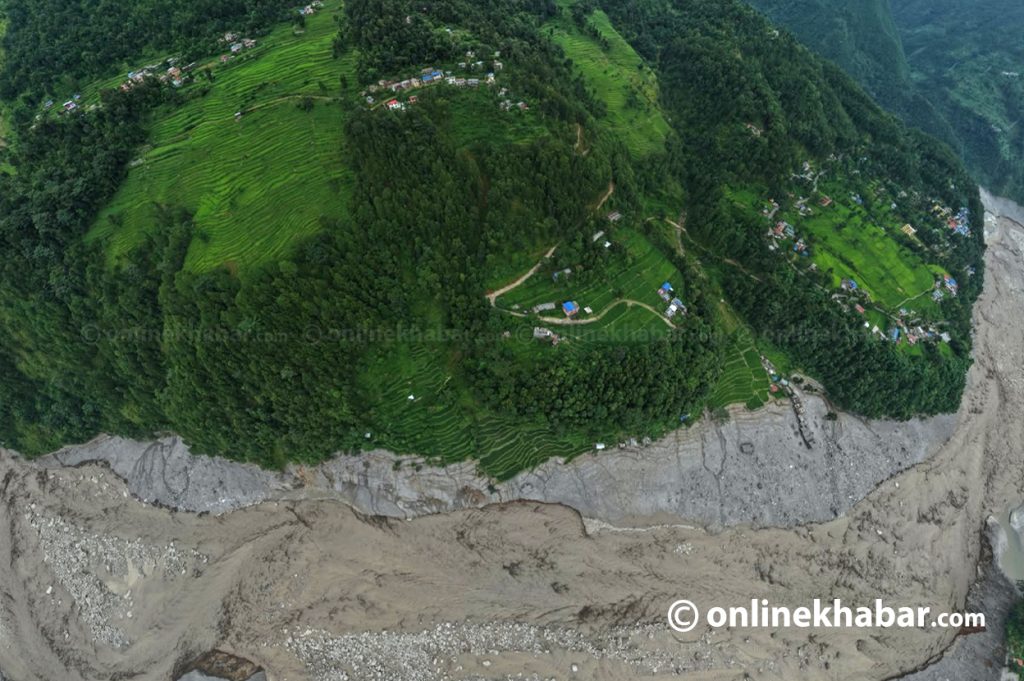
The flood swept away virtually all government offices in Uttargaya.
The municipality’s main office building and two ward offices have been completely destroyed. Two community schools and one boarding school have also suffered complete damage.
Buildings housing community health, veterinary and agricultural service offices were also swept away.
Although Uttargaya has been designated a disaster crisis-hit area, rebuilding government offices will not be straightforward. Construction cannot begin until the required procurement procedures are completed, meaning the rebuilding process is unlikely to move quickly.
“We are now left with only the people working in the office. We have been reduced to zero,” Upreti said. “To re-establish the local government, we have to complete the procurement processes all over again.”
Uttargaya’s elected representatives have begun approaching ministers and secretaries seeking assistance to construct new buildings and procure vehicles.
Holding centres operating
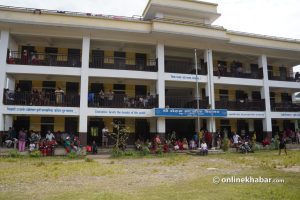
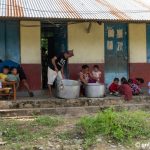
Holding centres have been established at four locations—Shivalaya, Shantibazar, Bhimsensthan and Kalika—to accommodate people rescued from flood-affected areas.
Two meals and snacks are being provided at the centres.
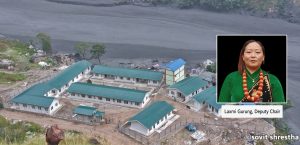
Ward chairpersons of Wards 2 and 3 have reached their respective wards and are staying there. Health workers, teachers and ward secretaries are operating the holding centres.
“After a disaster, we are following international practices on what needs to be prioritised first,” Upreti said. “We have made maximum efforts within the resources, knowledge, capacity and judgment available to the local government.”
Upreti said rescue and casualty verification have been difficult because ward chairpersons themselves have been affected by the disaster.
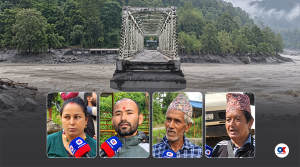
An alternative road route to Uttargaya has now been opened, and food supplies have started reaching Wards 4 and 5 since Monday. Authorities said only four-wheel-drive vehicles can currently travel along the route.
Hydropower projects add to concern
Uttargaya is home to several large and small hydropower projects under construction.
The 216-MW Upper Trishuli-1 Hydropower Project is being built in the municipality, with more than 1,000 workers employed at the project.
With five days having passed without an effective search for missing workers, relatives of workers staged a protest at the project’s construction company on Monday.
Relatives of missing workers staged a sit-in outside the Kathmandu office of Nepal Water and Energy Development Company (NWEDC) in Thapathali.
Other hydropower projects in Uttargaya include Upper Mailung Khola, Mailung Khola, Upper Mailung ‘A’, Middle Mailung and Upper Mailung-B.
The growing concern among local authorities is that while relief and rescue resources are being concentrated in neighbouring Nuwakot, the scale of the disaster in Rasuwa—particularly in areas where communication and road links have been cut off—could leave some of the worst-affected communities without timely assistance.